Archives for posts with tag: Colossians

See https://bible.oremus.org/?ql=610162457

Rejoice! Let me speak to you in Latin. ‘Laetare Hierusalem et conventum facite omnes qui diligitis eam: gaudete cum laetitia…’ : it means, ‘ … be ye glad for Jerusalem, all ye that delight in her: exult and sing for joy with her,’..

It says on your pew sheet that today is Mothering Sunday. So what is all this Latin stuff – ‘Laetare’ – all about? This is also, and indeed it has been for a lot longer than it has been Mothering Sunday, what is called ‘refreshment’, or Rejoice! Sunday, which is what the Latin word ‘laetare’ means: laetare, ‘rejoice!’

Traditionally, pink vestments can be worn by the priest on Refreshment Sunday, so it’s also known as Rose Sunday. It’s halfway through Lent, and it’s a chance to relax the rigours of fasting. So if you have been denying yourself, today you have no need to lay off the Ferrero Rocher and vino di tavola rosso di Toscana. Today, you can indulge without feeling guilty.

Mothering Sunday is an old mediaeval concept, which fell into disuse, but was revived during the last century by a lady called Constance Adelaide Smith, a vicar’s daughter, who picked up on plans in the USA to introduce Mother’s Day, which came to fruition in the USA in 1914. Miss Smith wrote a booklet called ‘The Revival of Mothering Sunday’ in 1921, and it started to be celebrated again in the UK around that time, on the fourth Sunday in Lent, Refreshment Sunday.

The rather formidable Miss Smith campaigned for Mothering Sunday to be a celebration of a number of various aspects of motherhood: these were ‘Mother Church’ (the church where you were baptised), ‘mothers of earthly homes’, Mary, the mother of Jesus; and Mother Nature. It is a very wide spread of people and places and things, all to be celebrated as being aspects of motherhood, motherhood to rejoice in on Mothering Sunday.

I think it’s fair to say that these days we mainly think of it as a day to celebrate our mothers, ‘mothers of earthly homes’. It’s a nice opportunity to make a fuss of them, for those of us who still have mothers around, or if not, at least to think about and remember our wonderful mothers.

At this point I must say that in the midst of all this happy celebration, for quite a number of people Mothering Sunday or Mother’s Day are not happy times. If you are a mother who has lost a child, or who has not been able to have a child, this is not a time you want to celebrate. We should pause, and take that to the Lord in prayer. If any of you are suffering in that way, I hope you will excuse my carrying on in a way that may not suit the way you feel. You are not forgotten, and you are in our prayers today.

I don’t think that you really need a homily from me on how to be nice to your mother or to be nice about her. But I would just like to take a minute or two to look at a couple of the things that come up in our Bible readings. I’m struck that in two of them the interesting thing is that the compilers of the Lectionary have selected passages, which come just after, in one case, and just before, in the other, verses which are perhaps more familiar to us and more significant than the ones which have been selected.

The first story, from the first book of Samuel, is the story of the birth of Samuel to his mother, Hannah – obviously today, one of the common themes is stories of mothers – and it is a bit like the story of the birth of John the Baptist to his mother, Elisabeth. Neither woman had been blessed with children for a number of years.

Hannah was praying to the Lord for children, and eventually her prayers were answered. In her prayers, she had said she would dedicate any son who was born to the Lord as what was called a Nazarite. This meant that she would give him over to the priests of the Temple to become somebody who was dedicated, set apart, for the Lord in the Temple. He would not be allowed to cut his hair, touch strong drink, and a whole load of other restrictions, which are all set out in the law of Moses in the book of Numbers.

But the bit which you might expect the story to go on to tell us, is what Hannah did to celebrate, because she sang a song. The song that she sang is very similar to another song in the Bible. She sang:

‘My heart rejoices in the Lord. …

Strong men stand in dismay…

Those who faltered put on new strength …

Those who had plenty sell themselves for a crust,

The hungry grow strong again.’

It has strong echoes of Mary’s song, the Magnificat, that everybody will remember from Evensong.

‘My soul doth magnify the Lord,
and my spirit hath rejoiced in God my Saviour.…..

He hath shewed strength with his arm.
He hath scattered the proud in the imagination of their hearts.
He hath put down the mighty from their seat
and hath exalted the humble and meek. ….

He hath filled the hungry with good things.
And the rich he hath sent empty away.’

Clearly, Mary knew her Bible, and she remembered Hannah’s song from the story of the birth of Samuel. And not only that, but in these songs the two mothers-to-be really forecast the way that God wants us to do things. The last shall be first. The humble and meek shall be raised up. The hungry shall be filled up with good things. A really important message. Think what the world would be like if we really followed it.

And then, in our reading from Saint Paul’s letter to the Colossians, ‘..[C]lothe yourselves with compassion, kindness, humility, meekness, and patience..’, all those lovely ideas about how Christians should treat one another. ‘Clothe yourselves with love, which binds everything together in perfect harmony.’

Wonderful words; but the ones, that are not captured by our reading, come just one verse above.

‘There is no question here of Greek and Jew, circumcised and uncircumcised, barbarian, Scythian, slave and freeman; but Christ is all, and is in all.’

No such thing as Jew and Greek. This is the first sign of Christianity bursting out from being just a small denomination within Judaism.

Anybody could become a Christian. Christ was, is, there to become a saviour for anyone. It’s the origin of Inclusive Church, which is a charity that the Ministry Area Committee have decided to register our churches with. Of course, we know that we are inclusive, we welcome everybody: but we will also have signs outside, and we will do lots of practical things, to let everybody know that they can come in, and that they will be welcome.

The Lord is here. His spirit is with us. His spirit is for everybody, whatever they look like, wherever they come from.

I suppose if you go away and do your homework and read the lessons at home, you will come and tackle me to say that, when I was mentioning things that weren’t in the lessons, I should have mentioned not just the bit that comes before our lesson from Colossians. but also the bit after, because it has St Paul’s rather infamous words, “Wives, be subject to your husbands“, and to be fair, “Husbands, love your wives, … children, obey your parents, for that is pleasing to God, and is the Christian way“, and so on. Given that there is nothing really about mothers in the lesson from Colossians that we heard, it is quite important to remember that St Paul did include, in this great letter, his own ideas on what makes for happy families.

But then perhaps in our Gospel reading, there is the most moving reference to a mother in the Bible, the story of Jesus on the cross, and what he said, while the three Marys were standing there.

More Latin – ‘Stabat Mater dolorosa’: ‘His sad mother was standing there’; the Marian Hymn, as it’s called. Some of us will no doubt be able to hear in our heads one or other of the beautiful musical settings, by Palestrina, or Charpentier or Vivaldi, among many others right up to today, including James McMillan and Karl Jenkins.

When I was looking at this heart-rending scene in my mind, it did slightly remind me of another time when his family was mentioned, in Saint Matthew’s Gospel chapter 12, at the end of the chapter, where he was speaking to the crowd when his mother and brothers appeared, and someone said, “Your mother and brothers are here outside, and want to speak to you”. Jesus said, “Who is my mother? Who are my brothers?” And, pointing to the disciples, he said, “Here are my mother and my brothers. Whoever does the will of my heavenly father is my brother, my sister, my mother.“

This is different; it’s more simple than that; it’s just the story of Jesus, as he was dying on the cross, making sure that his mother was looked after by the disciple whom he loved, (who is sometimes identified with John the Evangelist). It looks as though his earthly father, Joseph, was no longer there, and had perhaps died already.

What a nice example Jesus was setting. Even in a moment of the most acute pain and suffering, he took time and made sure that his mother was looked after. I don’t think there’s anything I can say to improve on that. ‘I was glad’ – and I hope that today, you mothers, and children of mothers, on this Mothering Sunday, are glad too.

Amen.

Hugh Bryant
Sermon for Mattins on the Festival of St Luke the Evangelist, 18th October 2015
2 Timothy 4:5-15, Luke 10:1-9

What is it to be a doctor? St Luke the Evangelist, whom we are commemorating today, was a doctor: ‘the beloved physician’, ιατρός αγαπητός, according to St Paul in his Letter to the Colossians, [4:14].

He was the author of the Gospel that bears his name, and it looks as though he was the author of the Acts of the Apostles too. Both books are addressed to somebody called Theophilus. It’s quite clear from the beginning of the first chapter of Acts that it is a continuation of the story which was told in Luke’s Gospel. If you look at Acts chapter 16, you’ll see that, all of a sudden, the narrative changes from third-person, ‘they’ did this, that and the other, to ‘we’ did this, that and the other; so it’s pretty clear that Luke was one of the people who actually went around with St Paul.

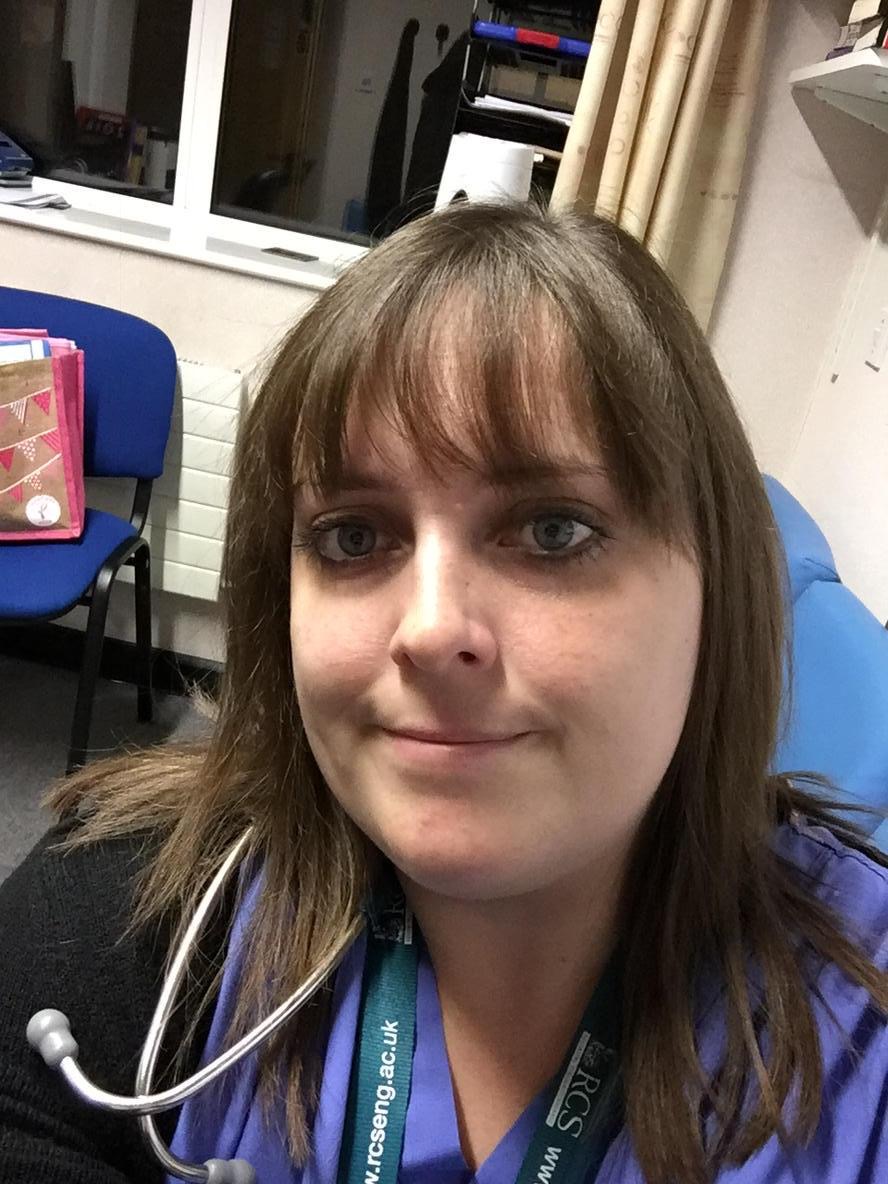
My daughters, Emma and Alice, are both doctors. They’re probably not evangelists as well, like Luke was, but I think they would both say they had their hands pretty full, just being doctors.

This weekend doctors are in the news. My daughter Alice travelled up from Exeter in order to join yesterday’s demonstration in Parliament Square by thousands of so-called ‘junior’ doctors – because that is what she is. It’s a misleading description. ‘Junior’ doctor, in this context, means any doctor who is not a consultant or GP.

But even a really junior ‘junior doctor’ – and I think that Alice, as an F1 hospital doctor (what used to be called a Junior Houseman) would accept that she is one of those – is somebody who has had at least five years of academic study and whose career then goes forward through more or less constant further training until they either become a general practitioner, or a Senior House Officer, Registrar or Consultant in hospital.

Alice’s elder sister, my elder daughter Emma, is a junior surgeon, a Senior House Officer in the Royal Glamorgan Hospital working for her MRCS qualification (she’s half-way there) which will enable her to apply for a Registrar’s post. She has two degrees, has published academic papers, and she is just entering her tenth year of study and training since she started at Bristol University.

Emma will be very happy to take your, or your children’s, tonsils and adenoids out, or to fit grommets in their ears – all of which she does very well, every day of the week, including weekends. She’s at work now, right now, on Sunday morning. She often is.

image

Dr Emma Hallett, surgeon

I’m not sure whether St Luke was a physician or a surgeon: whether he worked with drugs or other non-invasive therapies, or whether he wielded a scalpel. It’s interesting that, in the Gospel reading, (from St Luke), Jesus sends out his 70 or 72 missionaries in pairs, travelling very light; and after they have wished peace upon those whom they visit, they are told to heal the sick – which is something that St Luke, the doctor, reports without comment.

I would be really interested to know what he thought about this healing. We have, even today, almost a parallel set of disciplines here: on the one hand you have the medical profession, that my daughters belong to, who practise medicine as a scientific discipline with drugs, with other non-invasive therapies, and with surgery. On the other hand you have healing ministries. In many churches – including St Andrew’s, our sister church – there is a healing ministry, where during the service, people are available to lay on hands and pray for people who feel they need God’s healing touch.

Of course Jesus himself healed many people, even including raising people from the dead – Jairus’ daughter and Lazarus, who’d both definitely died. That must be the ultimate form of healing. There were also many other healing miracles: the blind man, that Jesus had to have two goes at healing; the man who had been lame from birth: ‘Take up thy bed, and walk’; the woman who had had a haemorrhage for 12 years – she touched his clothing, and it was enough for her to be healed; people who had ‘devils’ – what we perhaps would now characterise as a kind of psychiatric illness: in all these cases, Jesus didn’t use any drugs or psychiatric techniques or behavioural therapies – or surgery.

Jesus did seem to approve of surgery. He said, If thy right hand offend thee, cut it off, and cast it from thee: for it is profitable for thee that one of thy members should perish, and not that thy whole body should be cast into hell. (Matt. 5:30).

There are people who sincerely believe that one or other branch of healing, scientific, medical on the one hand, and faith-based on the other, should oust the other one entirely. A very important ministry in the church is our ministry as chaplains in hospital. On the whole our chaplains are not medically qualified – although some are. I know a very experienced hospital chaplain who started as a nurse.

On the whole, everybody in the NHS believes that having hospital chaplains is a very good thing, simply from the point of view that it helps people to get better; it helps people to cope with the stresses and strains of being in hospital. You could almost say that hospital chaplaincy offers a kind of complementary therapy.

What about today’s ‘beloved physician?’ What do we, as Christians, have to say about a situation where our beloved physicians feel that things are so wrong for them that they have to actually have a demonstration, in public outside Parliament?

Jesus was pretty clear that someone who needs medical assistance should receive it. The Good Samaritan found the man who had been hurt and helped him. He didn’t ask to see his credit cards or the details of his insurance. He helped him because he was hurt. That is the principle of our National Health Service. The Health Service should be available to all, free at the point of need.

I believe that Margaret Thatcher said that we should note that the Good Samaritan had the means to look after the poor man that he found injured on the road from Jerusalem to Jericho. He took him to an hotel, had them swipe his credit card, and undertook that he would be responsible for the cost of the injured man’s accommodation until he was better. That wouldn’t have been possible if the Good Samaritan had not had the wherewithal to do it.

Actually I’m rather uneasy about the conclusion that Margaret Thatcher drew from that. When I go collecting for charities, particularly Christian Aid, it’s always easier to get money from the poorer roads. People who have less, tend to give disproportionately more of what they have, in charity.

The National Health Service is, effectively, a collective charitable operation by all of us, paying through our taxes, so that everyone can receive medical treatment if they need it, irrespective of the cost of that treatment and the ability of the patient to pay for it.

But it is very wrong, I think, for us who enjoy the benefits, at the same time to ask the professionals who actually deliver that medical care, the doctors and the nurses and the ancillary workers, to give their time and energy, and not have decent living conditions or proper salaries, because we, through our politicians, are not prepared to pay enough for what they do. I think that we should be brought up short – and I hope that our leaders are brought up short – by the sight of thousands of the cleverest, most dedicated and most highly qualified people in our society gathered outside Parliament and demonstrating against the conditions which the government is threatening to impose upon them: demonstrating not only that they are not being paid enough or given enough rest time, but that they are being forced by those conditions to deliver substandard or possibly dangerous care.

If a doctor in this country wants to practise abroad, in Australia, Canada, South Africa, mainland Europe or the USA, or anywhere in the world, they usually require a certificate of competency which the Health Service has to provide on request. Applications for these certificates are now running at the highest level they have ever done since the Health Service began.

We are losing doctors in significant numbers because they believe they can no longer practise in a way which is consistent with their Hippocratic oath and with the ability to have a decent life. Remember, the Good Samaritan had enough money, and so he was able, to help the injured man.

The whole business of healing was obviously central to Jesus’s ministry. The son of God – God in man – didn’t want people to be ill. He healed people, and when he sent out the 70 or 72 as missionaries, they were medical missionaries. They were there to bring healing to sick people.

I’m very proud of my two daughters – Dr Emma and Dr Alice. But I am deeply troubled that Dr Alice had to be in a demo yesterday and Dr Emma would have been there but for the fact, as she tweeted earlier in the week, that #IAmInWorkJeremy.

I do pray that the politicians will start to realise that however expensive the mission of healing is, it is a cost that society, in the sixth richest country in the world, should meet gladly and in full. As we remember Saint Luke, the beloved physician, let us also remember, and give proper support for, our beloved physicians as well.

image

Dr Alice Bryant, right