Archives for posts with tag: debt relief

Sermon delivered at All Saints Church, Penarth, on 7th July 2024
Prymer (Prayer Book), 1538

And fogyue vs our trespasses, as we forgyue them that trespas agaynst vs.

Luke 11:4

Greek original: καὶ ἄφες ἡμῖν τὰς ἁμαρτίας ἡμῶν, καὶ γὰρ αὐτοὶ ἀφίομεν παντὶ ὀφείλοντι ἡμῖν·

NRSV: 4 And forgive us our sins,

for we ourselves forgive everyone indebted to us.

Matthew 6:12

Greek original: καὶ ἄφες ἡμῖν τὰ ὀφειλήματα ἡμῶν, ὡς καὶ ἡμεῖς ἀφήκαμεν τοῖς ὀφειλέταις ἡμῶν·

NRSV: And forgive us our debts,

as we also have forgiven our debtors.

Vulgate, St Jérôme, 4th century:  et dimitte nobis debita nostra,

sicut et nos dimittimus debitoribus nostris.

Sermon:

Today we continue our series on the Lord’s Prayer. We have reached ‘Forgive us our trespasses, as we forgive those who trespass against us.’

Have you done any trespassing recently? Maybe you’ve been put off by one of those fierce signs which say ‘Trespassers will be prosecuted’. Maybe you are involved with Just Stop Oil or XR – Extinction Rebellion. Maybe you plan to lie down on the M4 to stop the traffic. That would be a trespass.

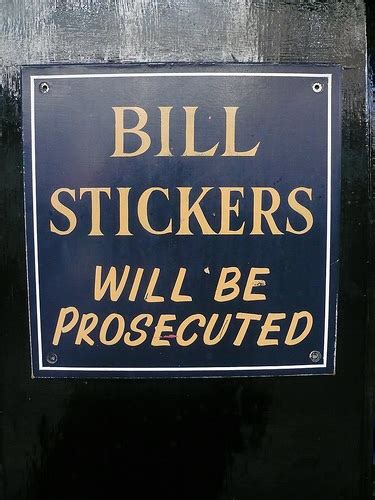
My Dad used to make a rather weak joke about one of those notices, not about trespassing, but about fly-posting, or ‘sticking bills’. The notice threatened that ‘Bill Stickers will be prosecuted’. Dad said, ‘Poor Bill’. …
But it looks as though what Jesus wanted us to pray about wasn’t really just a question of slipping through someone’s fence like Peter Rabbit.

So what is the meaning of ‘trespass’ here, in this context? It’s

something done against, an ‘intrusion’, into someone else’s space; and then by extension, to do harm against them.

So it means basically, forgive us for the harmful things we have done, as we forgive those who’ve done things to us.

But what did Jesus mean by ‘as’? ‘As’ we forgive? Does it mean a condition, ‘…only to the extent that we forgive …’ (and if we don’t, then what?), or ‘…as we definitely do forgive’?

The Lord’s Prayer comes twice in the Bible, in St Matthew’s Gospel [6:12f] and in St Luke, [11:4f]. Neither version uses exactly the words which we now say. In St Matthew, the Prayer comes at the end of the Sermon on the Mount – you know, about turning the other cheek and loving our enemies – and in Luke, it follows the parable of the Good Samaritan, that great story of unconditional love. The Samaritan didn’t think about whether the poor man who had been hurt deserved his help. He just saw his neighbour in need, and he followed the great Commandment to ‘love your neighbour’.

In both those places, where the Lord’s Prayer comes in the Bible, the words aren’t exactly what we now say.

In St Matthew, it says, ‘And forgive us our debts,

as we also have forgiven our debtors’. In St Luke, ‘And forgive us our sins, for we ourselves forgive everyone indebted to us’.

Leaving aside the question precisely what it is we are asking to be forgiven, these texts bring us go back to the question whether there’s a condition, whether we can only ask for God’s forgiveness on condition that we forgive those who have ‘trespassed against us’.

If we look at the different texts in Matthew and Luke, in Matthew we find – ‘.. as we have forgiven..’, and in Luke, ‘for we ourselves forgive’, which translates Greek words which literally mean

‘.. for truly (καιγαρ) we do forgive’.

There are different tenses used. Matthew says, ‘as we have forgiven’ in the past, so maybe Matthew’s version is a bit conditional, that we couldn’t come to the Lord without clean hands, without having done to others what we are asking Him to do to us.

But there is definitely no conditionality in Luke’s version. Perhaps, although it reflects the ideas in the Sermon on the Mount, loving enemies, turning the other cheek, in Luke, it comes after the story of the Good Samaritan, which is about unconditional love.

But does the Bible really say that Jesus told us to pray to be forgiven for ‘trespassing’? The Greek words used in the two Gospel accounts don’t say this.

Depending on which translation you use, the thing to ask forgiveness for is ‘sin’, ‘debt’, ‘obligations’, what we ‘owe’ to other people, or just wrongdoing.

The word ‘trespass’ in English seems to have been first used early in the 16th century at the time of the Reformation, when the services were being translated from Latin so that they could be ‘understanded of the people’ as Art XXIV of the 39 Articles puts it. But really it has changed its meaning over the years.

‘Sin’ is the word used in some modern versions of the Lord’s Prayer – ‘forgive us our s…’ It’s the word used by Luke. The word for ‘sin’ means literally ‘missing the mark’. ‘Sin’ has a connotation of wrong-doing, missing the mark, as between us and God, not as between us and other humans. Sin is what separates us from God.

What if it has connotations of ‘debt’ or ‘obligation’? This would reflect the Jewish idea of debt relief, Jubilee, every 7 years. It is such a powerful idea. Think of the implications for justice between nations, for the rich as against the poor. Jubilee, debt relief, is the only real way that could lead to hope for long-term justice in the world. That’s a wonderful thing for us to pray for.

But – a final word – what about ‘forgive’ – forgive us, as we forgive? The word in Greek means to ‘let go’. Jesus is putting good psychological principles in the prayer. It is unhealthy to hang on to feuds and to bear grudges and resentment. Just let it go. Take it to the Lord in prayer!

And by the way – trespassers can’t be prosecuted: (in the law of England and Wales, just for trespassing, which is a tort, a civil wrong, and therefore only open to a private civil remedy, and that only if damage is caused. There is no public, criminal, remedy: no ‘prosecution’.)

Note

To deter trespassing on to land, a landowner would often erect signage stating ‘trespassers will be prosecuted’. However, those with legal knowledge know that trespass was, in fact, a civil wrong and not a criminal offence, meaning trespassers could not be prosecuted.

However, the introduction of the Police, Crime, Sentencing and Courts Act 2022 (‘PCSAC’) on 28 June 2022 makes trespass, in some cases, a criminal offence punishable by imprisonment of up to four months and/or a fine of up to £2,500”. Quoted from https://www.hilldickinson.com/insights/articles/trespassers-can-now-be-prosecuted, q.v. for more details. It is still essentially the case that simply entering on someone else’s land is not an offence, provided no damage is done to property on that land.

Sermon for Evensong on the Sixth Sunday after Trinity, 12th July 2015
Job 4:1; 5:6-27

Why do bad things happen? Has it got anything to do with God? Sadly, we’ve had several cases in point in the last couple of weeks. This week we remembered the ‘7/7’ bombings. Last week there was the dreadful shooting of tourists in Tunisia. Before then, more shootings of innocent people, in a church in the United States.

Poor old Job had a similar experience. He was a rich and successful livestock farmer. He had a large and happy family.

‘There was a man in the land of Uz, whose name was Job; and that man was perfect and upright, and one that feared God, and eschewed evil.
And there were born unto him seven sons and three daughters.
His substance also was seven thousand sheep, and three thousand camels, and five hundred yoke of oxen, and five hundred she asses, and a very great household; so that this man was the greatest of all the men of the east.’

Then various disasters struck, and he lost everything; even his family were killed in a hurricane which destroyed the house they were staying in. The story in the first chapter of the Book of Job puts it all down to Satan, who had challenged the Lord God: strike down Job, he tempted, and he will curse you. The Lord didn’t exactly fall for the temptation, but

‘… the LORD said unto Satan, Behold, all that he hath is in thy power; only upon himself put not forth thine hand.’

So according to the story, Job came to grief not at the hand of God, but of Satan – or perhaps more relevantly, he came to grief not as a result of anything he himself had done. Job is portrayed as a wholly good man. But nevertheless something, some external force, has brought disaster on him.

That’s quite an important step. There is an idea in parts of the Bible called technically ‘eudaimonism’, according to which, if you become ill or suffer misfortune, it is because you have done something wrong, you have sinned against God: and God has punished you. For example in St Matthew chapter 9:

And, behold, they brought to him a man sick of the palsy, lying on a bed: and Jesus seeing their faith said unto the sick of the palsy; Son, be of good cheer; thy sins be forgiven thee. ‘Thy sins be forgiven thee’, not, ‘Here’s some medicine for your palsy.’ In this theory, illness is caused by, is a punishment for, sin.

Here, in Job’s case, it’s made quite clear that Job isn’t the author of his own misfortune. But I would just pause there, and say that eudaimonism isn’t an attractive idea anyway. Would a God of love make people ill? How would it be if, when you met someone who was poorly, your first thought was not, ‘I hope you get better soon’, but, ‘What did you do wrong, in order to bring your suffering upon yourself?’

And at first Job doesn’t blame anyone. He worships God and accepts his terrible lot. Then along come his three friends, the original Job’s Comforters.

In tonight’s lesson we hear from the first one, Eliphaz. His explanation for Job’s trouble is that troubles are just part of being human. There’s no-one specific to blame. Just put your trust in God, God

‘Which doeth great things and unsearchable; marvellous things without number:
Who giveth rain upon the earth, and sendeth waters upon the fields:
To set up on high those that be low; that those which mourn may be exalted to safety.’

It reminds me of the Magnificat: ‘Who hath exalted the humble and meek, but the rich he hath sent empty away.’

That doesn’t seem to me to offer Job much real comfort. If God has the power to right wrongs, to impose justice – then why has He allowed suffering to take place at all? If God is so capable, why has He allowed Job to get into trouble? This is something which still troubles us today. Even people with the strongest faith can find that it is tested to destruction. There was a moving dramatic recreation, on the TV this week, of the story of Rev. Julie Nicholson, whose daughter was caught up in one of the bombings on 7/7, and was killed. This terrible loss effectively destroyed the mother’s faith, and her ministry in the church. She just couldn’t square the idea of a loving God with what had happened.

Eliphaz goes on with a fine piece of Job’s Comfort:

‘Behold, happy is the man whom God correcteth: therefore despise not thou the chastening of the Almighty:’

I have never understood why people receiving punishment are supposed to be grateful for it. There are all those school stories involving corporal punishment, from Tom Brown’s Schooldays onwards. It is nonsense – and in a rather sinister way, getting the victim of brutality to thank the perpetrator, must be intended somehow to amount to consent – so that ‘volenti non fit injuria’.

This is the legal principle that ‘to a willing man, it does not turn into a hurt’, it does not become the cause of legal action. This is why rugby matches do not usually end up in the High Court, even when people are seriously injured. It is surely nonsense in this context. Hurting someone by way of punishment is not something which can or should be consented to by the person being punished.

But to go back to Eliphaz. He has introduced the idea that God may punish. He may punish, may do harm – but it’s all right, because He will heal the wounds afterwards.

‘For he maketh sore, and bindeth up: he woundeth, and his hands make whole.’

I suppose this is a refinement of the earlier idea that God is good, God only does good things – which clearly seems not to be true.

But God does everything. God is the creator and sustainer of all – so He must make or do bad things as well as good. The created world needs light and shade, black and white, good and bad.

But if in a given instance, in your bit of creation, you encounter the bad side, you may still, quite naturally, want to protest, to cry out against God in pain. ‘Why me?’ you will ask.

Eliphaz accepts this, and says that although there may be pain and suffering, God will heal and comfort. That’s the first part of what he says. But then he says that God ‘reproves’, ‘correcteth’. Although Job may think himself to be blameless, perhaps he isn’t.

Eliphaz’ first scenario is where the person who suffers is innocent: the second is where they are somehow at fault. But God still puts things right –

‘He shall deliver thee in six troubles: yea, in seven there shall no evil touch thee.’

There is an echo here of the Jewish idea of the Sabbath, the seventh day, the seventh year, the jubilee, the day of the Lord’s favour. It is described in Isaiah 61, which Jesus quoted in Luke 4:18-19 –

‘The Spirit of the Lord is upon me,
because he has anointed me
to bring good news to the poor.
He has sent me to proclaim release to the captives
and recovery of sight to the blind,
to let the oppressed go free,
to proclaim the year of the Lord’s favour.’

Just in passing, I’m uneasy about the way that the restrictions on Sunday trading have been relaxed in this week’s Budget. Of course, we Christians have changed the original sabbath from Saturday to Sunday – it happened when the Romans adopted Christianity as the official religion of the Roman Empire, in the fourth century. Some people have said that one reason for changing from Saturday to Sunday was to get away from the Jewish idea of jubilee, of relief from debt and time off for recreation.

Canon Giles Fraser indeed commented this week that Sunday has become a day of worship – of shopping, not of God.[http://www.theguardian.com/commentisfree/belief/2015/jul/10/money-is-the-only-god-the-tories-want-us-to-worship-on-a-sunday] The thing which worries me is that for many people, Sunday will become just another working day.

The Jewish idea of the Sabbath, when, on the seventh day, the Lord of creation rested from his labours, is still vitally important today. Perhaps it is right that the weekly day of rest should not automatically be Sunday: perhaps it is better that the business of life (or the life of business) should not stop only on Sundays. But I do hope that the government realises that there must be a right for people to have a day off each week. I hope they – and the other European governments – remember about debt relief in the Greek context too.

Things do come right for Job. He gets his family back, and his sheep, and oxen, and camels, even more than he lost before. At the end, the Lord acknowledges that, unlike his friends, Job hasn’t tried to explain away how God works, and somehow thereby put himself above God. He hasn’t tried to be clever. He has just accepted that God is more than he can see or understand, and that God has infinite power.

There are things which we can’t understand. Awful things. But God has assured us, revealed Himself to us. In the Old Testament, He appeared through the prophets: for us, He has appeared in Jesus Christ. We have to acknowledge that this will not of itself take away our pain. But we can believe that God is there, God cares for us. He has told us what to do with pain and suffering. The answer is in Matt.25:35-40.

‘For I was an hungred, and ye gave me meat: I was thirsty, and ye gave me drink: I was a stranger, and ye took me in:
Naked, and ye clothed me: I was sick, and ye visited me: I was in prison, and ye came unto me.
Then shall the righteous answer him, saying, Lord, when saw we thee an hungred, and fed thee? or thirsty, and gave thee drink?
When saw we thee a stranger, and took thee in? or naked, and clothed thee?
Or when saw we thee sick, or in prison, and came unto thee?
And the King shall answer and say unto them, Verily I say unto you, Inasmuch as ye have done it unto one of the least of these my brethren, ye have done it unto me.’

We have the power to feed the hungry: we have the power to heal the sick: we have the power to house the homeless: we can accept the refugees. We ought to do something about it. And then, just as Job found out, the Kingdom of heaven will be ours.

‘And God shall wipe away all tears from their eyes; and there shall be no more death, neither sorrow, nor crying, neither shall there be any more pain: for the former things are passed away.
And he that sat upon the throne said, Behold, I make all things new.’ [Rev. 21:4-5]