Archives for posts with tag: great fish

Sermon for Evensong on the First Sunday in Lent, 9th March 2025

At St Peter’s Church, Old Cogan

Jonah 3

Luke 18:9-14

https://bible.oremus.org/?ql=608348962

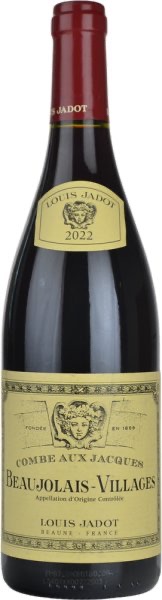
Last Wednesday, Ash Wednesday, I did some shopping in one of our local supermarkets. I accidentally walked down the aisle containing wine and beer, and stumbled across Beaujolais Villages from one of the finest Burgundy producers, rather curiously marked as ‘clearance’ – at less than half the normal price. 

Now on the first day of Lent this was rather a challenge. Could I resist buying it at less than half price? On Ash Wednesday it was the start of Lent, and one of the things which one is supposed to do is to give things up, to fast. What was I supposed to do about this wonderful wine bargain? 

At the same time I was starting to think about this service, and what I would say to you in my sermon. I looked at our Bible lessons prescribed for today, and came across the third chapter of the little book of Jonah.

A little like Louis Jadot’s fine Beaujolais, the passage chosen wasn’t quite what I had expected. That was nothing about the whale. If I asked you what you associate with the name of Jonah, I would be mighty impressed if the name ‘Nineveh’ was on your lips instead of something about a whale. 

Our lesson today tells you about Jonah going and uttering a prophecy to the people of Nineveh who have been misbehaving in a sinful way, telling them that God had warned that they would come to a bad end if they did not mend their ways. The ruler of Nineveh told the people to put on sackcloth and ashes, to put on visible signs of repentance, and to turn back to the true God. But you have to know that this is Jonah’s second go at this task from God. The first time around, when God was telling him to give this bad news to the people of Nineveh, he ran away, bought a passage on the ship and then, as a result of the ship being caught in a storm, he drew the short straw and was chucked overboard so as to lighten the load on the ship and to save it from being overwhelmed by the waves. And he was eaten up by a whale.

At this point when I am talking about the book of Jonah, as an ancient maritime lawyer I always use the opportunity to mention this as an early instance of the legal doctrine of general average, an “extraordinary sacrifice made to preserve the safety of the ‘maritime adventure’”, as the Marine Insurance Act1906, which is still good law, puts it; although general average doesn’t involve chucking people over the side as opposed to cargo or the ship’s tackle, of course, or making a special payment for services to prevent the ship being lost. So I won’t mention that particularly here but rather we should concentrate on Jonah’s encounter with the whale.

I’m not sufficiently up on marine biology to be able to express a view on how plausible this is as a literal account, but I think it is fine as a colourful illustration of how God might intervene to persuade somebody who was a bit reluctant. Jonah having been spat out safely, as you are, if you’re eaten by a whale, after three days, he was indeed persuaded, and he went and undertook his task. He told the people of Nineveh how awful they were, how they needed to change their ways, to repent: a bit like what we are supposed to do in Lent, I suppose. 

You can see why Jonah was reluctant. Being the bearer of bad news is never a popular thing to do, especially when you are speaking truth to power. It’s something we’ve noticed in recent days in the way in which our various leaders are not telling President Trump what time of day it is. 

Not but what Jonah, no doubt emboldened by his whaling experience, did deliver his message to the people of Nineveh, and he received a reception which was entirely different from what he had feared. God had noticed the fact that the people of Nineveh had changed their ways, and he did not punish them. 

So – what should we do? How should we change our ways in the 40 days leading up to Easter? What about fasting? Well, another thing to put into the mix is that we mustn’t crow about whatever it is that we do do; so if you are able to write a cheque for an eye-watering amount of money to the United Nations High Commissioner for Refugees, say, or even, maybe, for the Penarth Ministry Area, such that you make that gift instead of treating yourself to a holiday in Gstaad for skiing, you mustn’t talk about it. You mustn’t crow about it. Think about the Pharisee and the publican. All you should do is to ask the Lord for forgiveness because you are a sinner. Whatever sins you have committed, you just say, quietly and privately, ‘Have mercy on me, a sinner.’

I guess that bears on how you should conduct yourself at charity auctions. Maybe you will have to appoint a proxy to bid for you next time you are minded to go and support Welsh Rugby at some appropriate dinner or other, but I leave that to your discretion.

What about that Beaujolais? Well I offer this as a true story which may or may not inspire you. I know that I am very bad at giving things up, but equally I’m not sure that my giving things up really has any benefit to anybody else except possibly me. But I am enormously comforted by a verse in Isaiah about fasting. Let me quote it to you.

‘Is not this the fast that I choose: to loosen the bonds of injustice, to undo the thongs of the yoke, to let the oppressed go free, and to break every yoke? Is it not to share your bread with the hungry, and bring the homeless poor into your house; when you see the naked, to cover them, and not to hide yourself from your own kin?’ (Isaiah 58: 6,7)

Now I do think that that is more my kind of fast. So what I usually do – and I am going to do it this Lent – is, every time I eat out, (and that includes pies on the motorway), I will keep a note of what I spend; and at the end of Lent I will look at all those bills and work out what it would have cost to invite another person to join me each time: an absent guest, if you like. I will tot up the cost of the absent guests and I will give that to the United Nations High Commissioner for Refugees. Maybe that’s a sort of fast that you could undertake too. 

Oh – and, yes, about the Beaujolais. I bought three. 

Amen.

Hugh Bryant
Sermon for Mattins on the 12th Sunday after Trinity, 19th August 2018

Jonah 1 – Jonah and the Whale

Jonah didn’t want to go to preach in Nineveh. Nineveh was a big city in Assyria, Syria today – it’s now called Mosul. Jonah was a Jewish prophet. His people had been enslaved by the Assyrians – ‘The Assyrian came down like a wolf on the fold’, as Byron put it – and the Assyrians definitely didn’t believe in the One True God of the Israelites. They believed in the Baals and the sacred poles and various other idols, and they were generally immoral and badly behaved. But God had told Jonah, as his prophet, to go and preach to them.

But Jonah decided to disobey God, and he ran away to sea. Our lesson says he took a passage in a ship to a place called ‘Tarshish’, but that word is just a general Hebrew word for ‘the ocean’. He just went anywhere except to Nineveh.

It didn’t go well. They were caught in a storm, and they had to throw cargo overboard to lighten the ship. As an aside, I wonder whether this is an early reference to the ancient maritime law concept of General Average, defined by the Marine Insurance Act 1906 (s66.2) as ‘… any extraordinary sacrifice or expenditure … voluntarily and reasonably made or incurred in time of peril for the purpose of preserving the property imperilled in the common adventure.’

I don’t want to wander off the track too far, telling you all about the more esoteric things in English maritime law, but I ought to just mention that our law has a wonderful expression, the ‘marine adventure’. It just means the business of sending a ship to sea on a voyage. The Marine Insurance Act, where so many of the principles which still govern maritime law and trade are found, says ‘there is a marine adventure where… Any ship goods or other moveables are exposed to maritime perils.’

‘Other moveables’: this was a law passed in 1906! It gives flexibility for any kind of transport by sea – what about an ‘Ekranoplan’, for instance? [https://goo.gl/images/ydMN5r] Or more mundanely, a hovercraft? Or a marine drone? I think they could all be described as ‘moveables … exposed to maritime perils’. They were very far-sighted in 1906, obviously.

But never mind which shipping line he took, whether they declared General Average, or which flag the ship was flying. The point was that Jonah didn’t want to preach in Nineveh. It begs the question why anyone, never mind just Jonah, would want to stand up in public in a strange place and tell their audience that they’re a bunch of godless no-good libertines. Come to think of it, though: if I stand up in this pulpit and say anything that some of you might call ‘political’, some of you may well give me a hard time. It has been known …

Imagine what it would be like if I were a Jewish rabbi – a preacher – today, going to Gaza and telling the Palestinians that they are all sinners, that the god that they worship is not real – well, not that their god is not real, because the Moslem God is the same God that Jews and Christians worship – but suppose this imaginary rabbi preached that the Palestinians’ understanding of god is faulty – and that the end is coming. I doubt that they would be particularly receptive. It’s not a preaching assignment I would want. And indeed, Jonah didn’t.

But there was a very important extra factor, which would also have influenced Jonah. That was nationality. Jonah was an Israelite, and the people of Nineveh were Syrians (or more precisely, Syrians under the overall rule of Persians.)

Incidentally, I hope it won’t disturb your repose just now if I mention – dangerously, perhaps – that we never, these days, refer to the Jewish people in the Old Testament as ‘Israelis’, but always as ‘Israelites’. Why is this?

When the great pianist and conductor Daniel Barenboim was interviewed on BBC Radio 3 before his BBC Proms concert on Tuesday this week, he said something along these lines; (I haven’t tracked down a verbatim recording, but my recollection is) he said that, in the current context of conflict between Israelis and Palestinians, if you criticise the Israelis, you are also, automatically, criticising the Jews – and people may allege it is anti-semitic to do so. But Maestro Barenboim, who is an Israeli citizen and a Jew, clearly did not think that it was necessarily antisemitic to criticise Israel, and the Israelis.

Given what the Bible tells us of the search by the Jews for the Promised Land, it’s certainly difficult to make a distinction between Jews and Israelites. The people of Israel were the Jews: the Jews settled in the land of Israel. They were what we would normally call, Israelis. And if so, then the ancient Israelites have become the modern Israelis, one could argue.

Here, in the story of Jonah, there is a very strong anti-nationalist, universalist, theme. In God’s eyes it doesn’t matter whether the people to be prayed for, or to be preached to, belong to the right nationality, whether they are Israelites. When Jonah has been saved by being swallowed up in the great fish, and God asks him a second time to go to preach in Mosul, this time he doesn’t hesitate.

And it works. The people in Nineveh are very receptive to what Jonah has to tell them. They repent; they are forgiven. God doesn’t destroy their city. If you read on in the Book of Jonah – it’s only got four chapters – you’ll see that Nineveh is saved, but, rather surprisingly, Jonah is unhappy: he is cut up about why the heathens in Nineveh, those totally undeserving layabouts, should get this prize. They aren’t the right people to be saved. It should have been the Israelites, the chosen people.

But from God’s point of view, what difference did it make what nationality they were? Jonah seems to have thought that only the Jews, only Israelites, would understand the full theological background, the need for repentance. Heathens, ‘gentiles’, like the Assyrians, wouldn’t get it. They did not worship the one true God and so they didn’t qualify, in Jonah’s eyes. But when the Assyrians, having realised the power of God, saw that God had accepted their repentance, and wasn’t going to destroy them, they started to worship God too.

I think that we sometimes slip into a similar kind of insularity, a tendency to think that nobody who isn’t like us deserves to do as well as we do. I know I sometimes catch myself out being surprised when I find that someone who’s ‘not British’ turns up doing an important job, or where there’s a foreign-sounding name where we’d expect Smith or Jones.

After all, what is wrong with people coming and living here, earning a salary and paying their taxes? I would argue that the Book of Jonah supports the view that it doesn’t matter where you came from or who your parents were. You are a human being like me. The Jewish Law of the Old Testament said, look after the stranger at your gate. In Deuteronomy 10:19 Moses teaches, ‘Love ye therefore the stranger: for ye were strangers in the land of Egypt’.

God makes it very clear to Jonah that, as He said through the prophet Ezekiel, He loves all people. ‘He does not want the death of a sinner, but rather that he should repent and live’ (Ezekiel 33:11). That’s exactly what He got from the people in the great heathen city of Nineveh. They repented, and He let them live.

The story of Jonah and the whale is a lesson in universalism. It isn’t just a good monster story. It’s wisdom literature: it’s there to teach a lesson. That lesson is that God isn’t just one lot of people’s god, not a local idol. He created all of humankind. All of us: black, white, brown, Polish, Welsh, Indian: all humans, all equally children of God.

It is the origin of the idea of universal human rights. It took the aftermath of the Second World War for the Universal Declaration of Human Rights to be drafted and adopted by the United Nations, (and then for British lawyers, led by David Maxwell Fyfe, to draw up the European Convention on Human Rights, which in our law is the Human Rights Act), but the seeds of the concept were sown in Old Testament times. The people of Nineveh were just as much children of God as Jonah and the Israelites.

Perhaps as a parting thought over your lunch, you might think about this. Today if you, we, are the Israelites, who are our Assyrians?

Maybe we should just keep that gate open. And do we need a whale to keep us out of trouble? I hope and pray, not.