Archives for posts with tag: sermon on the mount

By Hugh Bryant – 13th March 2022

I attended a most interesting discussion where a currently serving bishop said, in the context of nuclear deterrence, that he has ‘lost faith in violence’.

The question I am interested in is whether a particular type of violence, the threat of nuclear retaliation for deterrence, still works, and whether Christians can support it.

The terrible effects of weapons of mass destruction, not only nuclear weapons but also non-nuclear violence such as carpet bombing of cities, for example at Dresden, Hamburg and Coventry, where war extends to include indiscriminate attacks both on combatants and non-combatants alike, surely raise serious questions whether such destruction is ever justified.

In relation to nuclear weapons, the doctrine of mutually assured destruction (MAD) is supposed to have kept the peace and avoided world wars since the end of World War II.

The Christian attitude to war seems to me to be in two parts, what Jesus said and what Christians have interpreted that to mean in succeeding years. What Jesus said is easily stated. In the Sermon on the Mount (Matthew 5), ‘Love your enemies – turn the other cheek – do good to those who hate you.’ And, of course, ‘Thou shalt not kill.’ Later on, in C4 CE, in his ‘City of God’ Book XIX, St Augustine put forward the so-called ‘just war’ theory, which was a Christian concept relating his perception of what he believed Jesus would have said with classical Greek and Roman philosophy (in Aristotle’s Politics and Cicero’s De Officiis).

Anti-nuclear campaigners argue that it is wrong to spend money on nuclear weapons, as the state will be depriving citizens of benefits which they would otherwise be able to enjoy if the money were not being spent on nukes. The reason for this is that these weapons will never be used. If they were used, this would be the end of the world as we know it and calculations of public utility would become completely pointless as there would be nobody left alive to receive whatever benefits there might be.

It is said, just as with the other sayings of Jesus in the Sermon on the Mount, here again what he is advocating is just not practicable in real life. It’s all very well for us to give up our nuclear weapons but, if so, how do we answer an aggressor such as Vladimir Putin? It is also clear that MAD is at work in relation to the current crisis, the war between Russia and Ukraine.

On the face of things there are a lot of parallels with the situation in 1939. An aggressive dictator has invaded a neighbouring country and there is a risk that, if steps are not taken to resist, in this case by operating a so-called no-fly zone, the neighbouring country will likely be overwhelmed and there is a risk that further aggression will take place against other neighbouring countries. In 1939, following the invasion of Czechoslovakia and when Poland was invaded, we declared war on Germany and the second world war began.

Now we and the other NATO countries are refusing Ukraine’s request that we join their fight against Russia. The reason for our refusal is said to be that, if NATO aircraft come into conflict with Russian aircraft this would probably trigger a third world war with a risk of nuclear conflict. This last element seems to be the factor which is making a difference when the situation is compared with what happened in 1939.

Putin has expressly threatened to use nuclear weapons if he is attacked by NATO and, apparently, his threat is being believed. But would the officer tasked with launching the apocalyptic weapon follow orders? Two Russian officers, Capt. Arkhipov during the Cuban Missile Crisis in 1962, and Lt Col Petrov in 1983, both in effect refused orders to launch nuclear weapons, and are said to have saved the world each time.

Clearly, the logic of MAD (if one can put it that way) is that the opponent cannot risk calling the other’s bluff. And I am not suggesting that only Russian officers would prefer to save the world rather than press the nuclear annihilation button. For instance, I understand that Royal Navy nuclear submarine commanders study moral philosophy. Whether that might make them less willing to press the nuclear launch button, one cannot know – but it might help.

If one forgets the nuclear weapons for a moment, what we are talking about is dispute resolution. You and I disagree about something. We can’t persuade each other who is right, whose view is to prevail. But it’s something very important to us. We can’t just let it go. It’s not something we can go to court about. So – do I beat you up? Shall I fight you, and by defeating you, force you to do what I want? Or, more realistically, perhaps, if you start to attack me, do I fight back?

In that context, of course whether one of us will win depends upon our fighting ability and the calibre of weapons each of us is using. That is where armed forces, nukes, and MAD, come into the picture. But surely this is rather like some kinds of bee sting. If the bee stings you, it may kill you – but it will itself die.

St Augustine said that even war is waged in order to bring about peace (City of God, Bk XIX, ch 12). But MAD doesn’t fit with this. If war is waged – if the nuke is launched – it cannot bring about peace, unless a fiery descent into nothingness is to be counted as peace.

So are we, in nuclear deterrence, relying on a strategy which is irrational, which in fact does not even aim at achieving an objective which we would want?

In that, in waging war, we are forcing someone to do what they do not want to do, we are perhaps acting in a similar way to a parent chastising a child, or perhaps, in a grown-up context, we are paralleling the operation of criminal legal sanctions.

What is punishment, in the context of the criminal law? It is a mark of victory. The criminal has been defeated. Then, instead of being beaten over the head, they are punished. What is the purpose of the punishment? Among other things, to protect society, to stop the criminal from doing their crime. And deterrence, to deter others from committing the crime.

That looks like a rationale for waging war against an invader. But ‘What would Jesus do?’ On the face of it, he was not against the invading Romans – although one of his disciples was Simon ‘the Zealot’, a resistance fighter. Turning the other cheek doesn’t chime with fighting to the death against someone. On the other hand, Jesus respected the Jewish Law; ‘I have not come to abolish the Law, but to fulfil it’ (Matt. 5:17). By extension that might imply that he supported the Rule of Law.

This could mean that, in dealing with an invader, the defending state has to abide by international law. That would allow the defenders to use violence (force) in self-defence, provided that they obeyed the rules of the Geneva Conventions (roughly equivalent to the rules of the Just War ‘jus in bello’ – rules governing conduct in a war, as opposed to principles to justify whether to wage war at all – so-called ‘jus ad bellum’).

But – none of this bears on the question whether MAD really works. Just as criminologists argue that it is the likelihood of getting caught which deters criminals, rather than the length of prison sentences, so are unjustified aggressors like Putin actually deterred by our having nukes?

MAD, as understood by Russia, involves the ‘no first use’ principle, (although NATO has not accepted this). So it could be argued that Putin’s threat to retaliate, against NATO use of non-nuclear force in support of Ukraine, does not fit the paradigm of MAD. It could be argued that Putin is expressly threatening first use: and therefore, by the operation of MAD, inviting nuclear destruction.

Either way, surely NATO could in fact respond to Putin and intervene, and at the same time robustly state that his threat of nuclear ‘retaliation’ would amount to a first use. Both sides would shy away from ‘going nuclear’. But a no-fly zone would be feasible, and that would be likely to bring about a ceasefire.

Surely that is an argument in favour of nuclear deterrence? I don’t think so. Even in this Ukrainian case, nuclear weapons are ultimately pointless. If the pilots of Russian warplanes see that NATO targeting radar has locked on to them, they will not fly over their erstwhile targets any more. That will have had nothing to do with the availability of nukes.

Hugh Bryant is a Reader in the Church in Wales.

An edited version of this article was first published on the CRCOnline website, https://www.crconline.org.uk/.

Sermon delivered at All Saints Church, Penarth, on 7th July 2024

Prymer (Prayer Book), 1538

And fogyue vs our trespasses, as we forgyue them that trespas agaynst vs.

Luke 11:4

Greek original: καὶ ἄφες ἡμῖν τὰς ἁμαρτίας ἡμῶν, καὶ γὰρ αὐτοὶ ἀφίομεν παντὶ ὀφείλοντι ἡμῖν·

NRSV: 4 And forgive us our sins,

for we ourselves forgive everyone indebted to us.

Matthew 6:12

Greek original: καὶ ἄφες ἡμῖν τὰ ὀφειλήματα ἡμῶν, ὡς καὶ ἡμεῖς ἀφήκαμεν τοῖς ὀφειλέταις ἡμῶν·

NRSV: And forgive us our debts,

as we also have forgiven our debtors.

Vulgate, St Jérôme, 4th century:  et dimitte nobis debita nostra,

sicut et nos dimittimus debitoribus nostris.

Sermon:

Today we continue our series on the Lord’s Prayer. We have reached ‘Forgive us our trespasses, as we forgive those who trespass against us.’

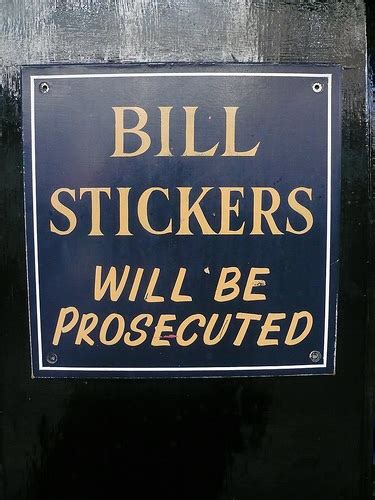
Have you done any trespassing recently? Maybe you’ve been put off by one of those fierce signs which say ‘Trespassers will be prosecuted’. Maybe you are involved with Just Stop Oil or XR – Extinction Rebellion. Maybe you plan to lie down on the M4 to stop the traffic. That would be a trespass.

My Dad used to make a rather weak joke about one of those notices, not about trespassing, but about fly-posting, or ‘sticking bills’. The notice threatened that ‘Bill Stickers will be prosecuted’. Dad said, ‘Poor Bill’. …

But it looks as though what Jesus wanted us to pray about wasn’t really just a question of slipping through someone’s fence like Peter Rabbit.

So what is the meaning of ‘trespass’ here, in this context? It’s

something done against, an ‘intrusion’, into someone else’s space; and then by extension, to do harm against them.

So it means basically, forgive us for the harmful things we have done, as we forgive those who’ve done things to us.

But what did Jesus mean by ‘as’? ‘As’ we forgive? Does it mean a condition, ‘…only to the extent that we forgive …’ (and if we don’t, then what?), or ‘…as we definitely do forgive’?

The Lord’s Prayer comes twice in the Bible, in St Matthew’s Gospel [6:12f] and in St Luke, [11:4f]. Neither version uses exactly the words which we now say. In St Matthew, the Prayer comes at the end of the Sermon on the Mount – you know, about turning the other cheek and loving our enemies – and in Luke, it follows the parable of the Good Samaritan, that great story of unconditional love. The Samaritan didn’t think about whether the poor man who had been hurt deserved his help. He just saw his neighbour in need, and he followed the great Commandment to ‘love your neighbour’.

In both those places, where the Lord’s Prayer comes in the Bible, the words aren’t exactly what we now say.

In St Matthew, it says, ‘And forgive us our debts,

as we also have forgiven our debtors’. In St Luke, ‘And forgive us our sins, for we ourselves forgive everyone indebted to us’.

Leaving aside the question precisely what it is we are asking to be forgiven, these texts bring us go back to the question whether there’s a condition, whether we can only ask for God’s forgiveness on condition that we forgive those who have ‘trespassed against us’.

If we look at the different texts in Matthew and Luke, in Matthew we find – ‘.. as we have forgiven..’, and in Luke, ‘for we ourselves forgive’, which translates Greek words which literally mean

‘.. for truly (καιγαρ) we do forgive’.

There are different tenses used. Matthew says, ‘as we have forgiven’ in the past, so maybe Matthew’s version is a bit conditional, that we couldn’t come to the Lord without clean hands, without having done to others what we are asking Him to do to us.

But there is definitely no conditionality in Luke’s version. Perhaps, although it reflects the ideas in the Sermon on the Mount, loving enemies, turning the other cheek, in Luke, it comes after the story of the Good Samaritan, which is about unconditional love.

But does the Bible really say that Jesus told us to pray to be forgiven for ‘trespassing’? The Greek words used in the two Gospel accounts don’t say this.

Depending on which translation you use, the thing to ask forgiveness for is ‘sin’, ‘debt’, ‘obligations’, what we ‘owe’ to other people, or just wrongdoing.

The word ‘trespass’ in English seems to have been first used early in the 16th century at the time of the Reformation, when the services were being translated from Latin so that they could be ‘understanded of the people’ as Art XXIV of the 39 Articles puts it. But really it has changed its meaning over the years.

‘Sin’ is the word used in some modern versions of the Lord’s Prayer – ‘forgive us our s…’ It’s the word used by Luke. The word for ‘sin’ means literally ‘missing the mark’. ‘Sin’ has a connotation of wrong-doing, missing the mark, as between us and God, not as between us and other humans. Sin is what separates us from God.

What if it has connotations of ‘debt’ or ‘obligation’? This would reflect the Jewish idea of debt relief, Jubilee, every 7 years. It is such a powerful idea. Think of the implications for justice between nations, for the rich as against the poor. Jubilee, debt relief, is the only real way that could lead to hope for long-term justice in the world. That’s a wonderful thing for us to pray for.

But – a final word – what about ‘forgive’ – forgive us, as we forgive? The word in Greek means to ‘let go’. Jesus is putting good psychological principles in the prayer. It is unhealthy to hang on to feuds and to bear grudges and resentment. Just let it go. Take it to the Lord in prayer!

And by the way – trespassers can’t be prosecuted: (in the law of England and Wales, just for trespassing, which is a tort, a civil wrong, and therefore only open to a private civil remedy, and that only if damage is caused. There is no public, criminal, remedy: no ‘prosecution’.)

Note

To deter trespassing on to land, a landowner would often erect signage stating ‘trespassers will be prosecuted’. However, those with legal knowledge know that trespass was, in fact, a civil wrong and not a criminal offence, meaning trespassers could not be prosecuted.

However, the introduction of the Police, Crime, Sentencing and Courts Act 2022 (‘PCSAC’) on 28 June 2022 makes trespass, in some cases, a criminal offence punishable by imprisonment of up to four months and/or a fine of up to £2,500”. Quoted from https://www.hilldickinson.com/insights/articles/trespassers-can-now-be-prosecuted, q.v. for more details. It is still essentially the case that simply entering on someone else’s land is not an offence, provided no damage is done to property on that land.

Sermon for the second week in Lent, preached on 20th February 2024


Genesis 41.46 – 42.5
Galatians 4.8-20

Can we swap places for a minute? Would you come up here and see things as your preacher does, or maybe on your way out, let me know what you feel? We’ve got to deal with two stories today, the first one being Joseph and the amazing Technicolor Dreamcoat.

Joseph’s brothers were jealous of his natty outfit, his coat of many colours, and when they were all on a journey through the desert, they chucked him into a pit, intending to sell him into slavery to the next bunch of traders coming through with their camel train. But unfortunately for them, some other spice traders came across him, pulled him out of the pit and took him away to Egypt. where they sold him to the Egyptian government, to Pharaoh, as a slave.

But Joseph prospered. He did a good job, and eventually, with various twists and turns in the story, he ended up being effectively Pharaoh’s viceroy, running the administration of the country. His secret was that he could interpret dreams. He was a kind of diviner, a seer.

He saw the future in a dream and realised that the crops would fail, and he would need to build up a stockpile of grain, if widespread famine in Egypt was to be avoided; so when the crops duly failed, and the famine broke out, Joseph sold grain to all and sundry and became more and more influential, owning more and more land as people run out of money and had to give him their land in return for food.

Among the people who were affected by the famine was Jacob, living in Canaan. Jacob was Joseph’s father, but he had been told that Joseph had died, torn apart by wild beasts, his brothers having shown their father the coat of many colours, stained with the blood of animals, to simulate the remains of a tussle to the death.

Jacob sent the brothers over to Egypt from Canaan, where they were, to buy grain, not knowing that they were about to buy it from the brother whom they thought they had abandoned to an unknown fate in the desert.

They didn’t know it was that long lost brother that they were buying from, and as you will remember, there is a thrilling story full of suspense about Joseph toying with his awful brothers, and making them think that they were going to be wrongly accused of stealing a whole load of grain from Pharaoh so that they would meet a dreadful fate. Then, at the last minute, the tables were turned and Joseph revealed himself as their brother.

You can imagine that it must’ve been a real ‘Oh something moment’ for them, quite a shock. Imagine how they must have felt. They must have thought that the most likely thing would be would be for their younger brother, who was now in such a powerful position, to get his own back on them; that it would not turn out well for them.

The lovely thing is, in this story, that Joseph didn’t do that. In fact he forgave his brothers, and invited them to bring their father over from Canaan to where they could live in Egypt in a land of plenty. Joseph didn’t blame them because, according to the account in the book of Genesis, he reasoned that his whole story, being abandoned and sold into slavery, and then working his way up with Pharaoh so that he became the head of the government of Egypt, was God’s will, was what God had intended, and no humans, certainly not his brothers, were really responsible or to be blamed.

What a wonderful story! That’s one of the two pieces we are looking at this morning. The other one is part of Saint Paul’s great letter to the Christians in Galatia, which is part of modern day Turkey. This reads almost like one side of a telephone conversation.

We don’t really know what Paul was responding to, and what the Galatians were saying to him. We can only try to draw inferences from what he is saying.

You wouldn’t pick this passage in the letter to the Galatians. I think if somebody asked you what the letter is all about, the bits which everybody quotes are the passage where he says that you are all sons of God in union with Christ Jesus. ‘Baptised into union with him, you have all put on Christ as a garment. There is no such thing as Jew and Greek, slave and free, male and female. You are all one person in Christ Jesus’. That comes at the end of chapter 3. and then, at the end of chapter 5, he talks about the signs of being led by the Holy Spirit. ‘The harvest of the spirit is love, joy, peace, patience, kindness, goodness, fidelity, gentleness, and self-control’. These are the qualities that come when you are a good Christian.

But these two famous passages are not what we are looking at today. This bit is all about the Galatians kind-of hedging their bets about what they really believed in.

They would be Greeks living in the Roman Empire, and you would remember that every Roman house had its household gods, Lares and Penates, and of course, in the Greek world, there was the Pantheon, on Mount Olympus; Zeus, and Hera, and all the other gods, each one representing and upholding a particular sphere of influence: so Ares, or Mars, was the god of war, for example.

The big difference between the theology of the Romans and Greeks and Judeo-Christian theology, (because Christianity originated in Judaism – Jesus was a Jew) was that whereas the Greeks and Romans worshipped lots of different gods, the Christians, as well as the Jews, worshipped one God, one true God, and by and large, they did not make statues or paint pictures of the one true God. He didn’t really have a name – ‘I am who I am’, he said – and certainly in the Jewish tradition, only priests could see God and not be burned up in the experience. ‘Immortal, invisible, God only wise’ sums it up.

But the Galatians wanted to have it both ways. They wanted to go back to the old gods as well, just in case. And St Paul got very cross with them. He said it was a retrograde step and that they would no longer be able to be saved and gain eternal life, if they were enslaved by their worship of elemental spirits, as he called them. it could just have been earth, wind, fire, and water, the basic elements, but whatever it was, Saint Paul was very frustrated by the Galatians’ wanting to worship those elemental spirits as well as the one true God as revealed in Jesus Christ.

So on the one hand, we have the story of Joseph and the amazing Technicolor Dreamcoat, and all the other, a rather bad-tempered rocket written by Paul to the Galatians.

So – imagine you are up here. What do you say about those two passages? What lessons can we draw from them? I would be tempted, I have to say, to draw out how generous Joseph was. He was almost as saintly as Jesus wanted us to be in his Sermon on the Mount. Love your enemies. Turn the other cheek. Certainly not an eye for an eye and a tooth for a tooth where those awful brothers were concerned.

But I suspect that in the wider sweep of the story of the people of Israel, Joseph’s kindness rather gets blotted out. This is all part of the story of Israel being enslaved, and then freed, and then finding a place in the promised land, building the temple, having the temple knocked down, being enslaved again in Babylon, and so on, until eventually, at the time of the second temple, they are established in Palestine.

It’s very tempting to try to draw parallels with what’s happening in the same area today. Just imagine what the possibilities would be if Mr Netanyahu took a leaf out of Joseph’s book and showed compassion and forgiveness. But if you and I swapped places and you had drawn that conclusion, I’m not sure that people would give you an easy ride as they were shaking your hand on the way out at the end of the service. They might say you’d stretched things rather a lot.

And what about Saint Paul and the Galatians? Apparently, according to Paul, they were volunteering to be enslaved again by worshipping the elemental spirits, rather than the one true God. What would you say about that? It’s a different kind of slavery from the slavery which the Israelites endured in Egypt and in Babylon. This is more an intellectual slavery, abandoning their principles and hedging their bets spiritually.

And, in passing, you might want to observe that Saint Paul’s letters, particularly this sort of letter where he takes a congregation of Christians to task for something that he thinks they are doing wrong, is a sort of communication which I don’t think we would get in today’s world. Because St Paul is in effect telling the Galatians what to believe.

We go to great lengths to ensure that we don’t interfere with everyone’s freedom to believe whatever they want to. We regret the history of the missionaries. Who would say now, ‘Don’t believe in Scientology or Mormon, but stick to the real stuff?’ Alternatively, when we are thinking of Islam or Judaism, we are at great pains not to say that people mustn’t be Muslims or Jews, but that people should be only Christians.

No, instead, we emphasise that all three religions, called the religions of the book, effectively worship the same one true God. We just approach that one true God in slightly different ways. So we wouldn’t be tempted to write the sort of letter that St Paul has written if we found, for example, that somebody had converted from Christianity to Islam. Nevertheless, in certain countries the reverse move, from Islam to Christianity or Judaism, is something which is condemned, indeed, sometimes bringing the death penalty.

That happens in Pakistan or Iran, but we don’t tell people what to believe. We have to some extent therefore changed from Saint Paul’s approach. What do you think? What do we make of that?

So those are your reflection points for this second week of Lent. What lessons could we draw from the story of Joseph and the amazing Technicolor Dreamcoat, and what do you think St Paul was up to in his frankly rather tough letter to the Galatians? Would it wash today? Let’s swap places and you can tell me the answers.

Amen.

Sermon for the Morning Service at All Saints Church, Penarth

On 7th April 2024

Acts 4:32-35; John 20:19-31 https://bible.oremus.org/?ql=579426284

You hear that people who go to church describe themselves as Easter people. We are Easter people. I presume that means that, as Christians, our lives have been touched by the momentous events of Easter all those years ago. It has been made a huge difference to our lives and to the way that we carry on. The biggest thing about Easter – not really an elephant in the room, but something altogether bigger – is Jesus’ resurrection from the dead.

Jesus definitely died, and he died in a way which really doesn’t leave it open to anyone to say that he wasn’t really dead. If you die by crucifixion you are most definitely absolutely dead. He was then put in a tomb which was sealed with an enormous rock and put under guard by the chief priests and the Pharisees, who had been given permission to do so by Pilate because they said they were afraid that the Christians would steal his body. So I think we can be sure that he was definitely buried in a grave which would not be easy to get at.

And then on the third day, as we celebrated last Sunday, the stone had been rolled away, the grave was empty, and Jesus had somehow risen from the dead. He saw Mary Magdalene and Mary the mother of James and Joanna, and perhaps other women who had gone to the tomb to dress the body, who all went to tell the disciples. They were not believed initially. ‘The story appeared to them to be nonsense.’

Some versions of the gospel add that Peter took it on himself to rush back to the tomb, and he found it empty and realised what had happened. But the other disciples were sceptical until Jesus appeared to two people on the way to Emmaus and they brought the news back to the disciples. And then Jesus appeared to all of them in the way that we had described to us in Saint John’s Gospel just now. On the first day of the week; when the doors of the house were locked; somehow Jesus got in and stood among them, giving them a chance to touch him and realise that he wasn’t a ghost.

And Jesus stood among them and said, ‘Peace be with you.’ That’s one thing that you will miss this morning. We only share the peace when we’re having holy communion. I’m afraid we’re not doing that today. But this is where sharing the peace comes from. It’s a way of reminding ourselves of that appearance among the disciples, appearance by the risen Lord, Jesus resurrected from the dead.

They saw and they believed. They didn’t know how he had been resurrected, but they had no doubt that he had been. And then along came Thomas, officially known as ‘Thomas the Twin’ but known almost universally afterwards as ‘Doubting Thomas’. Because Thomas just couldn’t believe that Jesus had risen from the dead. Then we have this really powerful story, which I think really appeals to lots of us – it certainly appeals to me – showing how Thomas came to believe, because he saw and touched Jesus, in a way which I think we can all understand. He almost stood for Everyman at that moment. He could be any of us.

And then Jesus said this marvellous thing. ‘Blessed are those who have not seen and yet have come to believe.’ That means all of us. We haven’t seen Jesus. We haven’t touched him. But to a greater or lesser extent, we Christians all believe. We believe that he rose from the dead. That makes a huge difference.

If you accept that this is possible, that that happened, that there is a life after death, that is going to make a big difference to you. But it probably isn’t going to make as much difference as it did to the disciples who actually saw him and touched him. They didn’t have any doubt. They believed.

So what effect did it have on them? One effect, one major effect, was what we have heard described in our reading from the Acts of the Apostles, that ‘those who believed were of one heart and soul’ and ‘no one claimed private ownership of any possessions. There was not a needy person among them,’ for ‘as many as owned lands or houses sold them’ and brought the proceeds of what they sold to be put into the common fund.

It looks like an early form of communism: at which point some of you may start to fidget and mutter about not mixing politics and religion – but perhaps another way of looking at it is to compare this passage with some of the Sermon on the Mount: that Jesus seems to have been talking in a utopian way, not a practical way. Turning the other cheek; not going for an eye for an eye but loving your enemies: just not practical, you might say. Just as you might well say that although a form of communism looks to be ideal, our experience in the last 2000 years has told us that it’s just not practical.

Perhaps meeting Jesus risen from the dead had made the disciples feel that they could do anything, that they could ignore practicalities and just go for whatever was the best and most ideal thing. What do we, 2000 years later, we who have not seen and yet have come to believe, are we able to do idealistic things? Maybe looking again at Thomas we might have to admit that although we do believe, perhaps our belief is not as strong as Thomas’ became – once he had touched the Lord.

Maybe we do still have a few doubts, and therefore to some extent in our lives we still play safe. So although living in a commune and sharing everything sounds great in some ways, we are cautious about throwing caution to the winds and selling up. But there is something there. There is definitely something which we could say. In the context of the extreme difference between rich and poor that the neoliberalism of the last 40 years or so, has produced, the emphasis on individualism, that everyone has the seeds of their own success in them, all you have to do is to get on your bike, as one of the politicians said at the time, all that is beginning to ring rather hollow, because just like the commune which the apostles operated, it doesn’t really work. It doesn’t make us love our neighbours or, increasingly, love God.

So now in this Easter season, when we are Easter people, let’s think hard about what that really means and whether we can say, ‘Lord I believe; help thou mine unbelief’[Mark 9:24]. That still means we believe, and it still means we can do something to show that we believe. Tomorrow it will be the Festival of the Annunciation, the angel announcing to Mary that she will be the mother of the son of God. The Bible lesson will be the Magnificat, which is arguably one of the greatest revolutionary texts in all of literature.

’He hath put down the mighty from their seat:

and hath exalted the humble and meek.

He hath filled the hungry with good things:

and the rich he hath sent empty away.’ [Luke 1]

Maybe Thomas was on to something. No doubt about it.

From a Sermon for All Saints and All Souls, 5th November 2023

By Hugh Bryant

I think we need to give some time, as Christians, not only to the Saints and to the souls of our faithful departed, but also to all the other people who have died and tragically are still dying today, in circumstances where we need to cry out to the Lord and pray for his comfort and relief.

Until a month ago if I had been preaching this sermon, I would’ve mentioned first the war in Ukraine, and indeed I still do so. We will pray for a just and peaceful outcome to that terrible conflict. The same is true of the conflicts in Syria, Yemen and the Sudan.

But I suppose that, particularly as it is happening in or near to places we read about or have made pilgrimages to in the Holy Land, the conflict that is uppermost in our minds today, and which is exercising us so much, is the tragic conflict in Israel and Palestine, and particularly in Gaza – and in the area just outside Gaza where the conflict began, with the terrible attack on the people in the kibbutz and the music festival, by Hamas.

There are saints and souls here as well. In our Old Testament lesson some of us will probably have been moved by the thought that our reading comes in the middle of a passage in Isaiah [chapter 66] where the prophet sets out a vision of the new earth, of the new Jerusalem, of God’s holy mountain; a vision perhaps of heaven. A vision of the promised land, where God’s chosen people will come ‘on horses and chariots’, (and also on ‘dromedaries’, you’ll be pleased to know.) They will come ‘to my holy mountain, Jerusalem’, says the Lord.

But what is happening in Israel and Palestine does not look like what is supposed to be happening on God’s holy mountain. There are Christians caught up in this as well. Admittedly the number of Christians living in the Holy Land has diminished greatly, but there are Palestinian and Israeli Christians as well; and Saint George’s Cathedral in Jerusalem. What do the Christians say? What would Jesus say?

In all the discussions about whether there have been breaches of international law there is a key concept, we are told, which is ‘proportionality’. In self defence, is the response proportional? It sounds very like what Jesus was talking about in the Sermon on the Mount. An eye for an eye and a tooth for a tooth.

Scholars have told us that the principle of an eye for an eye and a tooth for a tooth, which comes in Exodus chapter 21, Leviticus 24 or Deuteronomy chapter 19, means not that there is carte blanche to take revenge without restraint but that, just as in international law, any retaliation must be strictly in proportion, so only one eye for one eye and only one tooth for one tooth.

Let us look at what has happened and what is happening in the light of that. Leave aside for a minute what principles Hamas may have followed to justify their initial attack – and of course we have heard from the United Nations Secretary General Mr Guterres and others that it didn’t come from nowhere, but only after many years of oppression of the people of Gaza.

But leaving that on one side, Hamas killed just under 2000 people, but at the last count Israel has killed over 9000 people, of whom 4000 have been children; and it is not the case that they have been retaliating just against their enemies, because it’s quite clear that only a very small minority of the people in Gaza belong to Hamas. So even according to the Jewish law as set out in Exodus, Leviticus and Deuteronomy, the law of ‘an eye for an eye’, it looks as though what Israel has been doing is wrong. And it follows that it is a clear breach of international law. As indeed was the initial Hamas attack, because, however frustrated and oppressed the people of Gaza may be, nothing would justify the violence which Hamas meted out on seventh October.

So where are the saints? What should we, as Jesus’ saints, say? Jesus had an answer. As reported in Saint Matthew’s Gospel chapter 5, Jesus said, ‘You have heard that it was said, an eye for an eye and a tooth for a tooth. But I say to you, do not resist an evildoer. But if anyone strikes you on the right cheek, turn the other also… And again, you have heard that it was said, you shall love your neighbour and hate your enemies. But I say to you, love your enemies and pray for those who persecute you.’

Just imagine what might happen if Israel adopted that strategy! They would no longer be trying to annihilate Hamas, and if so, Hamas would surely no longer want them to be erased from the earth – it would no longer be an eye for an eye. The Good Friday Agreement shows that it can happen.

So when we pray for all saints and all souls, let us pray also that Jesus’ message, the message of love and peace, will finally be listened to, and that there will be peace in the Holy Land.

Sermon for Mattins on 3rd Sept 2023 at All Saints Church, Penarth

Romans 12:9-21

Matthew 16:21-28

https://bible.oremus.org/?ql=560606098

What does it mean to be a Christian? Is it one of those organisations that have a rule book or a constitution which you have to keep to if you are going to be a member? Some people say that they think that what’s really valuable about Christianity is that it provides a moral compass that people can live by, especially today, when even in public life people do things and say things that perhaps in the past we wouldn’t have thought possible.

I won’t try to trace that pattern through recent history, in case I say something wrong about one of your heroes; but I think one could mention in passing things like former President Trump continuing to repeat a patently untrue story about having won the last election, for example: and I think it would be fair enough to have in mind some of the things that former prime ministers of recent years have said as well, as being ‘economical with the actualité’, as somebody once described it. You hear people say, ‘Things are going to the dogs’: ‘The policeman are getting smaller’: ‘Nobody knows the difference between right and wrong any more’.

So it’s interesting to come across what almost looks like a rule book for being a Christian, in what St Paul wrote to the Christians in Rome. ‘Let love be genuine; hate what is evil, hold fast to what is good’. ‘Rejoice in hope, be patient in suffering, persevere in prayer. Contribute to the needs of the saints; extend hospitality to strangers.’ It reminds us of Jesus’s own Sermon on the Mount (Matthew 5). St Paul says do not repay anyone evil for evil, for example. Live in harmony with one another – and in the Sermon on the Mount, Jesus says don’t just go tit for tat, an eye for an eye, a tooth for a tooth, but turn the other cheek; if someone wants your shirt, give him your coat as well. If a ‘man in authority’ makes you go one mile, go with him two. Give when you are asked to give and don’t turn your back on someone who asks for a loan. Jesus and Paul are pretty similar. This is the moral philosophy of Jesus Christ. Saint Paul, writing to the Romans, was probably writing before any of the gospels were written down, so it’s pretty clear that what he was saying reflected what all the early Christians held to by way of their moral beliefs.

I was thinking about that when I started listening to one of those radio programmes where the Archbishop of Canterbury interviews various people. I don’t know whether you’ve come across them, on BBC Radio 4, but I heartily recommend them. They are absolutely fascinating. The interviews are with a very wide variety of people. I think it’s true to say that most of them are top people, leaders, in one way or another, but they’re not necessarily people who would immediately spring to mind as wanting to have a public chat with the Archbishop of Canterbury.

A person like that was a lady called Dr Susan Blackmore, whom I’m sure some of you will know far better than I do: she was certainly a new one on me. It turns out that she is a ‘psychologist who is interested in the paranormal and matters spiritual’, according to the BBC, and who is keen on ‘Zen meditation’.

A lot of the people that Archbishop Justin interviews are not actually believers but are atheists, and Dr Blackmore is one like that. What struck me was that she and Justin Welby both seemed largely to believe in the same moral principles: they would both, I think, have recognised the same things as being good and bad; and if you took the labels off I think that Dr Blackmore would have been quite happy with most of the moral ideas outlined by Saint Paul – and indeed, by Jesus himself. She certainly believes that mankind is capable of altruism, going the extra mile and so on, being generous to strangers, and also, to some extent, in being ultimately generous: ‘greater love hath no man’ and all that, sacrificing oneself for your friend.

Then a very interesting moment in the conversation happened. These two people, who appeared to be identikit decent middle-class English people, with plenty of goodwill towards their fellow men and women, suddenly came to something which clearly stopped both of them in their tracks.

That was this: Dr Blackmore asked the Archbishop, “Hey, look: what would happen if it turned out that you discovered that there was good scientific evidence that the resurrection of Jesus Christ never happened, and that Jesus had died just like any one of us – and stayed dead?” Clearly Dr Blackmore expected him to say that it wouldn’t matter too much; that he had a ‘belief in the round’ and that he would still be a Christian even if it turned out that Jesus was just another bloke, perhaps a prophet, as Muslims believe.

But Archbishop Justin didn’t say that. He said, “Well, if Jesus wasn’t resurrected from the dead, it would be over. All my Christianity would be washed up instantly.” He said that it might be possible, perhaps, that he would revert to a kind of agnostic position about whether there was a God, in the sense of an ultimate creator, but he was quite clear that, just like St Paul, he believes that the whole thing depends on the resurrection of Jesus. In his first letter to the Corinthians Paul says, “If Christ was not raised, then our gospel is null and void” (1 Cor. 15:14).

It isn’t the case that Christians believe in a sort of generalised creator, a creative force, some kind of ill-defined spiritual positive force, what William Paley in the 17th century referred to as the divine watchmaker: a creator, who, sure enough, created the world and everything in it, and just like a watchmaker he had made the mechanism and set it off, and away it went without any further interference from him. That’s not Christianity.

Christianity is about Christ; and that crunch moment is what we see in the story from Saint Matthew’s Gospel, with Saint Peter trying to talk Jesus out of going to suffer and die in Jerusalem. Jesus knew what was waiting for him, and he told the disciples about it. Peter reacted as I think any of us might have reacted if we’d been there. He didn’t want to see this good man, who’d taught him so much and had shown him so many wonderful things, hurt in any way.

But he didn’t get it. Peter acknowledged Jesus as his Messiah, as his heavenly king come on Earth. But he didn’t really know how that worked. He probably had a picture in mind of something more like an earthly king, a King David or a Roman emperor in triumph; and of course, Jesus turned everything upside down, as he always did. The triumph was a triumph over suffering. He had to suffer first, before his triumph, because he wasn’t a king who was above all suffering, but was rather a king who was at the heart of everything, suffering what his people suffered – and worse.

It might be interesting at that point just to look back to the differences between how St Paul saw morality as it affects Christians – and how Jesus himself did ; and to compare it with somebody like Dr Blackmore the psychologist, who denied that there was any such thing as free will, but seemed to be able to recognise good and evil nevertheless. She certainly didn’t acknowledge that there was a God, or that Jesus was in any way divine. I think that, although she didn’t actually say so, she didn’t believe in the resurrection.

But if you say that you don’t believe that people can choose what they do freely, because you’re determined, pre-programmed, so you are fixed by your evolution, your genes and your experience, then is there any real meaning to good and evil? Dr Blackmore is left looking down an empty hole. On the other hand Saint Paul can say, “Hold fast to what is good”, because he can point to what Jesus has said, and through Jesus, in Jesus, Saint Paul recognised ultimate reality, a justification for everything.

Justin Welby said that when he was 19, in his second year at university, a friend had taken him to church and then on to supper, during which the friend had been telling him about the cross and the resurrection of Jesus, and the Archbishop said there was suddenly a ‘sense of presence’ in the room. “I’m not sure how to explain that,” he said, and his friend had apparently said, “What do you want to do now?” The Archbishop had said, “Whatever it is, it is good – and I need to cooperate with it”.

It’s perhaps a bit like John Wesley, walking down Aldersgate Street to a Bible study meeting, to study one of St Paul’s letters, and he said he was feeling a little bit reluctant, perhaps because he had done too much Bible study that day, and then all of a sudden he ‘felt his heart strangely warmed’. He had a strong feeling that Jesus, God, was there and that He did care, personally, for him.

Dr Blackmore by contrast, when she was 19, had one of those out of body experiences – although she did say she was smoking cannabis at the time – but apparently she experienced a very real feeling of going down a tunnel with a light at the end, which is an experience which quite a number of other people have testified to, but which doesn’t necessarily lead you to believe in God.

So what is it that makes you a Christian as opposed to someone who does Zen meditation? The difference is Jesus. The difference is the unique history of Jesus. After this we will say the creed – we’ll say, “I believe”- and there is nothing like it. Maybe there are some bits that you find difficult to understand or even to believe. But taken as a whole it is like the constitutional document for being a Christian.

I believe. I believe in God the father Almighty. I believe in Jesus Christ, who was crucified, died and was buried. On the third day he rose again. There is nothing like it. Frankly we wouldn’t be here, and there wouldn’t be people in church all round the world, if that was some kind of illusion, if it hadn’t happened.

As the Archbishop himself said, there are today about 85 million Anglicans, let alone the other denominations, Roman Catholics, Baptists, Methodists, Lutherans, Pentecostals, Orthodox, and although in Western Europe and in the northern hemisphere generally, fewer people are coming to Christ, in the world as a whole Christianity it’s still far and away the biggest and fastest-growing religion.

Christ is coming to more and more people. More and more people are being confronted by this amazing story and realising that they can’t make sense of their lives without in some meaningful way coming to terms with it. And they realise that coming to terms with it isn’t necessarily a picnic.

As Jesus himself said, ‘If any want to become my followers, let them deny themselves and take up their cross and follow me’. It’s not a prosperity gospel. It can be tough, but once you’ve confronted it – once it’s confronted you – then your life is changed forever. If you do the things that St Paul recommends, your love will be genuine, you will rejoice in hope, you will be patient in your suffering; and, so far as it depends on you, if it is possible, (because Paul is a realist), you will live ‘peaceably’ with all.

That’s a perfect context for this service. What we are doing is celebrating, praising, the God who came to us in the form of a man, went through terrible suffering, died, in the most horrible and undeniable way, and then, on the third day, he rose again. So today we must give him our praise; and we must show our love, love for God and love for each other.

Sermon for 1030 Holy Communion at St Mary, Oatlands on 14th October 2020

http://bible.oremus.org/?ql=469611667

Galatians 5.18-end; Luke 11.42-46

In our Gospel reading today, it leapt out at me, when I was reading it in preparation for our service today, that Jesus was saying rude things about lawyers. Although, in the Bible translation which we are using today, Jesus doesn’t actually talk about lawyers but about people who are ‘experts in the law’, in Jesus’s time there wasn’t such a thing as a ‘lawyer’ in the same sense that we understand it. Then, what you had were ‘advocates’.

You will recall that the Holy Spirit is referred to sometimes as the advocate, or even a ‘comforter’; in John 14:16, Jesus says he will send us his Holy Spirit to be an advocate and guide. If you went to the right Bible classes you may even have heard the word Paraclete, which is one of those words you only hear in church, but it means an advocate, it means somebody to be with you, to speak for you, in court.

What we have here isn’t a Paraclete, but a νομικός, that Jesus is being rude about. Νόμος, substantive, the thing, means the law; νομικός, adjective its characteristic, means ‘to do with law’; as a substantive, it means somebody who is familiar with the law, so the word is usually translated as ‘lawyer’.

As some of you will know, I used to be a lawyer, a solicitor. It’s now a dim and distant memory – I retired 15 years ago – but still I feel that I should stand up for my old profession. That is, if Jesus is really slagging off lawyers.

Actually, of course, when you see the other lesson, from Saint Paul’s letter to the Galatians, you will see that we are into the distinction that St Paul draws, picking up on what he learned of Jesus’ teaching, that on the one hand you have the Law, meaning the Jewish law, the first five books of the old Testament, the Pentateuch, and on the other hand you have the state of grace for those who have been saved and have come to faith in Christ Jesus. So maybe it is indeed right to talk about people who are ‘expert in the law’, meaning the Jewish Law, rather than simply about ‘lawyers’.

But as Jesus said in the Sermon on the Mount, he didn’t come to abolish the law, but to fulfil it [Matt. 5:17]. He said that all his teaching can be summed up in two supreme commandments, commandments taken from the Jewish Law, to love God and to love your neighbour [Matt. 22:36-40].

Galatians 5 tells you what to expect from someone who has been saved, who has had that revolution in their life and doesn’t need to have a policeman standing over them, but just does the right thing. The right thing is to love your neighbour. All those things that St Paul lists as the Fruits of the Spirit lead to various ways of loving your neighbour. So fortunately it turns out that nothing in our Gospel today is really against lawyers.

Well, I know that Folli [Revd Olokose] and Hugh [Montgomerie, Reader] have an excellent style of preaching here, which always ends with a challenge. So I thought I would try to enter into the spirit of that too; but first of all, I need to tell you a little story.

When I was starting my ministry training nearly 14 years ago, it coincided with my elder daughter Emma starting her university studies in medicine at Bristol University. Very soon in the first term I visited her to see how she was settling into her hall of residence.

When I came back, I was at church for the 10 o’clock service, and after the service I was having coffee with some of the other faithful people. Somebody asked me how I had found my trip to Bristol. Had it been an easy journey? I said that it had been a very easy journey, but that I just suddenly thought – a little cloud had crossed my brain – that it might turn out to have been rather more expensive than I had bargained for.

Why so? Because, just before I turned off on the M32 to go into the city of Bristol, I had passed under a bridge, which, too late, I’d noticed was bristling, bristling with things that looked mighty like cameras. ‘So’, my faithful friend asked, ‘surely that’s not a problem? You were doing 70 miles an hour’.

‘Hmm’, I said, ‘if only; but I did manage to get it below100!’

She took my arm and marched me off into a corner. ‘Now Hugh’, she said. ‘Now that you are in ministry training, you have to do two things. You must stop breaking the law – and the other thing is, you must stop crowing about it!’

Oh dear. She was, of course, right. The Fruits of the Spirit hadn’t quite taken root in me at that point, as you will realise. But what about you? Have you had those sort of moments? Has the Spirit taken root in you and borne fruit yet? What do you think?

And that’s my challenge to you this morning. Not just to get it below 100 – but you know what I mean.

Sermon for 1030 Eucharist at St Mary, Oatlands on 21st October 2020

Acts 16:6-12; 2 Timothy 4:5-17; Luke 10:1-9 (http://bible.oremus.org/?ql=470148758)

On Sunday we were remembering Saint Luke, the ‘beloved physician’, as Saint Paul describes him in his second letter to Timothy, the one who wrote not only the Gospel according to Saint Luke but also the Acts of the Apostles, I want to carry on remembering St Luke this morning, looking at the same Bible passages as we used on Sunday.

Folli [Revd Folo Olokose] treated us to a theological masterclass in his sermon on Sunday. I don’t want to go over exactly the same ground again, but he did make some points which I will just briefly mention, particularly for anyone who was not there on Sunday.

Folli took, as the heart of his sermon, the name of the person to whom Saint Luke dedicates his two books, Theophilus. Who was Theophilus? Folli argued that it is a name for a type of person, not someone in particular – not who, but what. It literally means, ‘a friend of God’. It could mean any of us.

All the other things which might seem to make us different from each other, such as our education, our physical characteristics, or the ability to run a four-minute mile, are all things which can come and go, and might depend on where you have been born, who your parents were. However, being God’s friend is something which lasts forever, and which any of us can be.

So Folli argued that, in dedicating his books to Theophilus, Luke was in fact dedicating them to all of us, to all who love God. And we see from today’s lessons that Luke was a companion of Saint Paul on his travels. ‘We did this..’, rather than ‘they did it’, in the passage from Acts 16 which was one of the lessons prescribed for Sunday.

During the night Paul had a vision: there stood a man of Macedonia pleading with him and saying, ‘Come over to Macedonia and help us.’ When he had seen the vision, we immediately tried to cross over to Macedonia, being convinced that God had called us to proclaim the good news to them.

We set sail from Troas and took a straight course to Samothrace, the following day to Neapolis, and from there to Philippi, which is a leading city of the district of Macedonia and a Roman colony. We remained in this city for some days.’

Luke says, ‘We’. He was there, travelling with St Paul. In a wider sense, who are ‘we’ in this context? From Paul’s letter to the Romans, ‘… there is no distinction between Jew and Greek, because the same Lord is Lord of all…’ (Romans 10:12).

So in our lesson today, Luke reports on Jesus sending his disciples out ahead of him, to prepare people for him coming and preaching among them. Roughly the same report comes in St Matthew’s Gospel too.

You might note that Jesus instructs the apostles, ‘Do not move around from house to house’. I had a bit of an unholy thought – do you think our Lord might have had tier 2 or tier 3 in mind?

Of course they didn’t have a plague then. Sending them out they were a bit like Billy Graham’s people, arranging one of his crusades, securing the venues and booking the hotels – although Jesus stipulated that it should all be done on a shoestring – but what was the message that Jesus was going to preach?

The message wasn’t going to be about life after death. Jesus hadn’t died at this stage. Let’s look at the Gospels where Jesus sends out his disciples to do the Billy Graham thing, that is, our Gospel passage today from St Luke, chapter 10, where Jesus sends out 70 or 72 apostles, and St Matthew chapter 10, where he only sends out 12 apostles.

By the way, the word ‘apostle’ comes from the Greek verb αποστέλλω, which means ‘I send out’, so an αποστολος, the noun from it, means someone sent out, in the same sense that an ambassador is sent out.

The other difference is that in St Matthew’s account, Jesus wanted the apostles just to go to the ‘lost sheep of the house of Israel’, and not to go to the non-Jews, the Gentiles and Samaritans, whereas in St Luke’s gospel the only thing that mattered was whether they were welcomed or not.

Given that Luke and Paul were together for some time, and that actually Paul wrote his letters, like the letter to the Romans, before any of the Gospels were written, I’m inclined to say that Luke’s account is more likely. Paul’s idea that there was no difference between Jew and Greek, between Jews and non-Jews, Gentiles, seems to me to be more in line with what Jesus was teaching.

In St Luke’s Gospel, immediately after the 70 are sent out, we read the story of the Good Samaritan. The point is, it doesn’t matter what nationality he was. He cared for his neighbour, for the person he found hurt on the road. Surely Jesus wouldn’t have warned the apostles off having to do with Samaritans, if he was going to praise the Good Samaritan in his next breath, as He did.

Bear in mind that St Matthew’s Gospel is generally reckoned to have been aimed at a Jewish readership, whereas St Luke probably wasn’t a Jew and was writing for everyone – for ‘Theophilus’. And St Paul definitely had the same idea. No such thing as Jew and Greek.

One thing that these two accounts, in Matthew and Luke, do have in common is that the apostles were sent out just after Jesus preached his great Sermon on the Mount. You know, all those great challenges: love your enemies, turn the other cheek. Think of the lilies of the field: they neither spin nor weave: yet Solomon in all his glory was not arrayed like one of these. Don’t worry about material comforts. The Lord will provide.

Surely, you might say, the sermon on the Mount is great in theory, but not really doable. Impractical instructions. How literally can we take what Jesus said? Why would we have armies, if we really always turned the other cheek?

And according to St Luke, it was all for Theophilus. For anyone who loves God. No one has any special qualification to receive God’s blessing.

So if we are thinking about Jesus’ teaching as he sent out the apostles, and the idea that in God’s sight we are all equal, neither Jew not Greek, can I pose a question for you to think about?

My question is about refugees, about ‘migrants’. If we believe that it is true that all people, from any nationality, are equal in the sight of God, why should we be entitled to live in bounteous Surrey in England whereas a person from another country – Syria or Afghanistan or South Sudan, say – has to pass rigorous checks before they are let in? Why are they not equally entitled?

Is it because they will overwhelm our public facilities, schools, hospitals and so on? Is that true? They will be a drain on our economy, some people say. The statistics say that immigrants contribute 15% more in tax than people who were born here. Or, should we sift out the applications so that we only let in people with a certain minimum level of qualifications?

But just a minute. I wasn’t born in the UK only because I’d won an Oxford scholarship. What does ‘Theophilus’ mean? Are British people more entitled to salvation than, say, Ethiopians? In St Luke’s terms, both could be ‘Theophilus’.

What do you think? It might be a good idea to imagine that we could be like the people on the road to Emmaus, that we might suddenly meet Jesus. What would we say to Him? Would we justify to Jesus what we do, keeping poor immigrants out of ‘our’ country? Even if our country is supposed to be ‘full’, how would we, who have so much, justify drawing up the drawbridge against people who have so little?

I’m not telling you what to think. We have quite a few refugees who’ve come to this area, and we have a local charity to help refugees, Elmbridge CAN. Through them I’ve had refugees and, yes, ‘economic migrants’ staying for a few months in my own spare room. I felt that I was being called to help them. They are all now settled – productively. Should we be doing more of that sort of thing for refugees?

Well, I hope that is food for thought. Please do keep on thinking about St Luke and Theophilus. Theophilus. Everyone.

Sermon for Holy Communion at 1030 on Wednesday 4th November 2020 at St Mary Oatlands

Matthew 5:1-12

See http://bible.oremus.org/?ql=471270293

If you had to say what was the real essence of Jesus’ teaching, the true essence of what it means to be a Christian, I think that a good place to start would be Saint Matthew’s Gospel chapter 5, the Sermon on the Mount.

In his great sermon, Jesus built on the foundations of the Old Testament. He put himself in the tradition of the prophets, like Moses. For instance, Moses went up on Mount Sinai to meet God, and Jesus, who was God, also went up a mountain to give his most important teaching.

Jesus highlighted the old teaching, according to which, if somebody did you harm, you should pay back ‘an eye for an eye and a tooth for a tooth’. Jesus took that much further by saying you should turn the other cheek, go the extra mile; again under the old Jewish law, the rule was to love your neighbour and hate your enemy, but Jesus taught that you should love your enemy and pray for your persecutors.

Jesus said that he had ‘not come to abolish the law but to fulfil it’. He was not rejecting the old Jewish law, but rather developing it. It would be a mistake for us to ignore what is in the Old Testament, but Jesus went much further.

The ‘blessed are they’ sayings, these Beatitudes, are at the beginning of the Sermon on the Mount. I’ve always thought the first one was rather difficult to understand. ‘Blessed are the poor in spirit, for theirs is the kingdom of heaven.’ Or, as the New English Bible translates it, ‘Blessed are those who know that they are poor.’ Poor in spirit – what does that mean? Is it really that they ‘know that they are poor’?

I’m not really sure what it means to be ‘poor in spirit’. It might have connotations of lack of character, being weak-willed or spineless, not, on the face of things, what Jesus might want to give a prize for, in the kingdom of heaven.

The Greek word which many Bibles translate as ‘spirit’, as in ‘poor in spirit’, is the same word, πνεύμα, that is used for the Holy Ghost, sometimes as a translation for the Hebrew word ‘ruach’, meaning a sort of rushing wind, reminiscent of the events on Whit Sunday, when a sort of rushing wind came upon the assembled disciples, lighting tongues of fire on their heads (which didn’t burn them, just as the burning bush which Moses came across was not burned up: again, another parallel between Old and New Testaments in the Bible: it’s a sign of God’s presence.)

That word in Greek, πνεύμα, is related to the word that you have in French for a tyre, pneu, or for something inflated like a tyre, pneumatic; they all involve wind or breath. So, what are the poor blessed in? – they are blessed for being short of wind. Blessed are the people who don’t know which way they’re blowing, don’t know whether they’re blowing hot or cold, say.

Or is it in fact better translated the way the New English Bible has it,‘Blessed are those who know that they are poor’? There, the translation has taken the ‘in spirit’ bit and turned it into a sense of consciousness, knowledge. They know that they are lacking, deficient – but deficient in what? On this interpretation, it doesn’t say. They are just ‘poor’.

But the word which means ‘poor’ in this passage goes grammatically with the word for ‘spirit’ the other way. You are not spiriting out the poverty, the being poor, but being poor, deficient, in spirit. In Greek it says, ‘Blessed are the deficient in wind’. To say they are simply ‘poor’ isn’t really right. They’re not short of money, but short of puff.

On Sunday, the preacher said it meant, ‘Blessed are the humble’. Humble. Not people who think they are big-shots. People who know their limitations. Again, that’s not what the Greek says literally, but you could argue that it’s closer to what the words really imply. In need – lacking; in spirit – in self-esteem, say: so, humble, lacking in self-esteem.

Blessed are the poor in spirit. Think about it a bit, and think what it means for you. Are you humble? Are you running out of puff? Never mind. You are blessed.

But when are you blessed? The other thing you can say about the Beatitudes, and obviously specifically about this first one, is that they are a vision of the future, a vision of the kingdom of God, which Jesus is promising to his followers, but which hasn’t happened yet.

Things may be awful now, but in the world to come it’ll all come right. There might be a snag in this; because you might think, on the basis of this passage, that it was all right to tolerate slavery and oppression in this life, keeping people oppressed, but pacifying them by giving them an assurance that they are on target to inherit heavenly blessings later. That would conflict with what I think is the the heart of the revolutionary message that Jesus gives us.

Those bits of the Sermon on the Mount don’t mean, put up with bad things now because you will be all right later in heaven; but rather, you must do this extra thing, go the extra mile, and not just pay back evil for evil: you must even love your enemy. And the reason for doing that is because it’s the right thing to do, not because it leads to a payoff in heaven.

People often say that the Sermon on the Mount is all very well, but it is just not practical. It demands more than mortal man is capable of. But then you read about people like Nelson Mandela. People can do those impossibly generous things that Jesus recommended. They really can. Really? People like that must need to be saints, you might say.

It’s a good point to make, especially at this time in the Christian year, when we do think about saints. Sunday was All Saints’ Day and the list of the various Beatitudes is, if you like, a list of the things which mark out a saint. Saints – in Latin the word is ‘sancti’ – are people who are marked out, distinguished, holy – holy, which is another word which means the same thing, separate, kept apart from the general run of people. But not necessarily marked out because they’re exceptionally virtuous.

The things that Jesus blesses are all characteristics of saints; but they aren’t superhuman; they are ordinary characteristics, ordinary virtues. Anyone can be a saint. Anyone in any of our churches could be a saint.

St Paul addressed his letters to the ‘saints’ in the various churches he was writing to, and it’s clear that he was just writing to the people in the pews. For example in his First Letter to the Corinthians he wrote: [This is from] ‘Paul, …. unto the Church of God which is at Corinth, to them that are sanctified in Christ Jesus, called to be saints’. Sanctified – there’s the ‘sancti’ word – but I don’t think there’s any suggestion that he was only writing to part of the congregation, just to the good guys. He was writing to all of them.

When you work through the list of the Beatitudes you will realise that it is far from being a catalogue of success or perfection; it’s a catalogue full of weakness and need, the sort of thing that ordinary people suffer from. Jesus is affirming that. He is saying that in the kingdom, people like that, ordinary people, will be saints. Just as they are, they will go marching in.

So be a saint: be a peacemaker; be gentle in spirit, care about justice; you are allowed to be sad; people may make fun of you or even actively persecute you for trying to do all these things as a Christian. But don’t worry; you are a saint; you are blessed, and you do have a place in heaven.

Sermon for 4th October 2020 – St Michael and All Angels (transferred from 29th September); St Francis of Assisi: Animal Welfare Sunday: on Zoom

Revelation 12:7-12; Luke 15:3-7 (see http://bible.oremus.org/?ql=468720899)

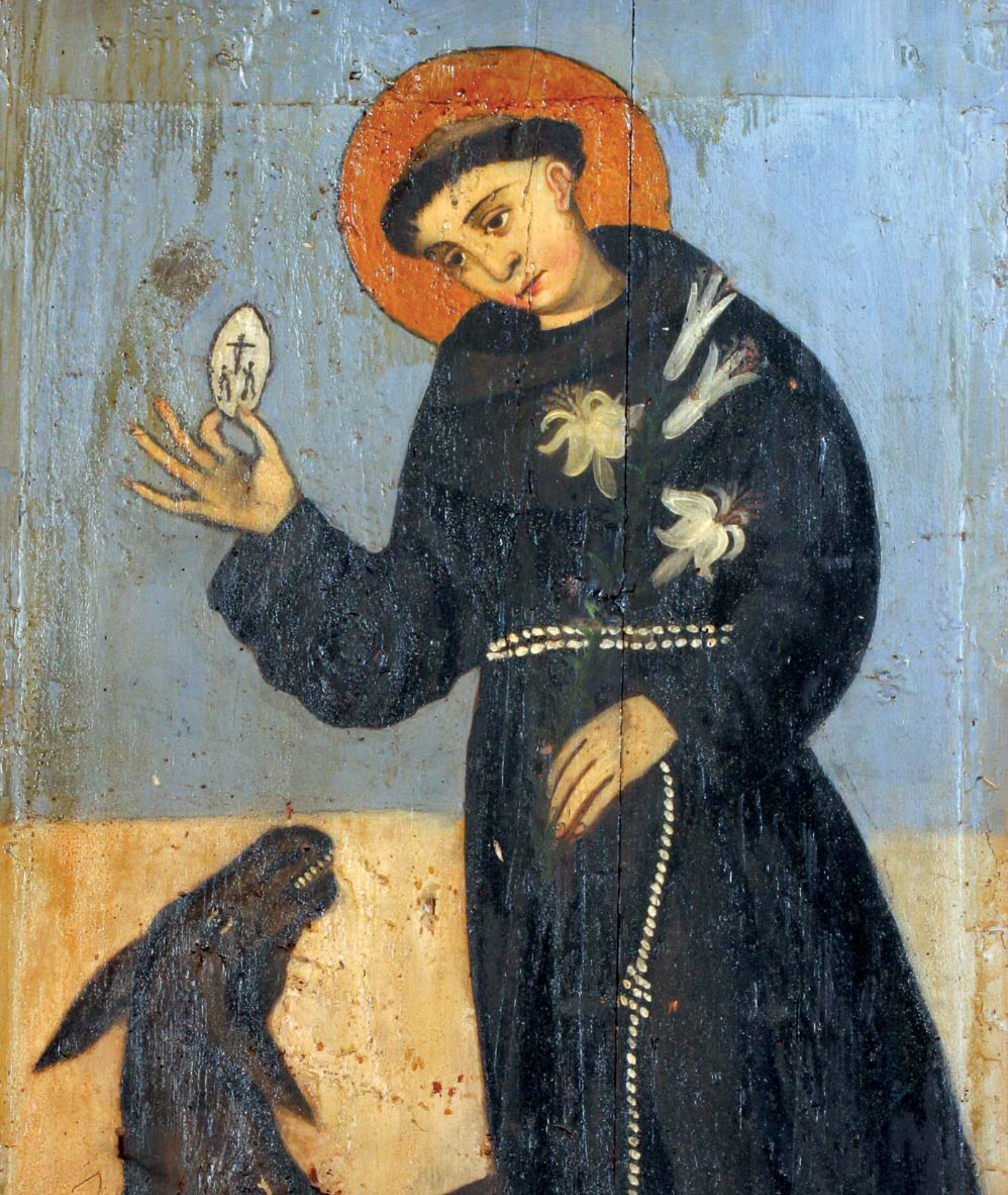
St Francis of Assisi (unknown artist), from https://www.britannica.com/biography/Saint-Francis-of-Assisi/images-videos, accessed 8th October 2020

Today we commemorate St Michael and All Angels, and St Francis and his love for animals. 

Blessings of the animals and pet services are usually great fun, especially for the children – although perhaps a bit less so for their parents, who have to catch the hamsters, cats and other exotic creatures which escape from their baskets during the service. We don’t have that problem, because all our pets are with us at home and they are only appearing and being blessed, like us, on Zoom. But I still think that it is important that our beloved animals, our furry friends, should have the benefit of a blessing at least once a year. In saying Saint Francis’ prayer and in blessing the animals, as we’re going to do, we are giving thanks for all God’s work in creation. 

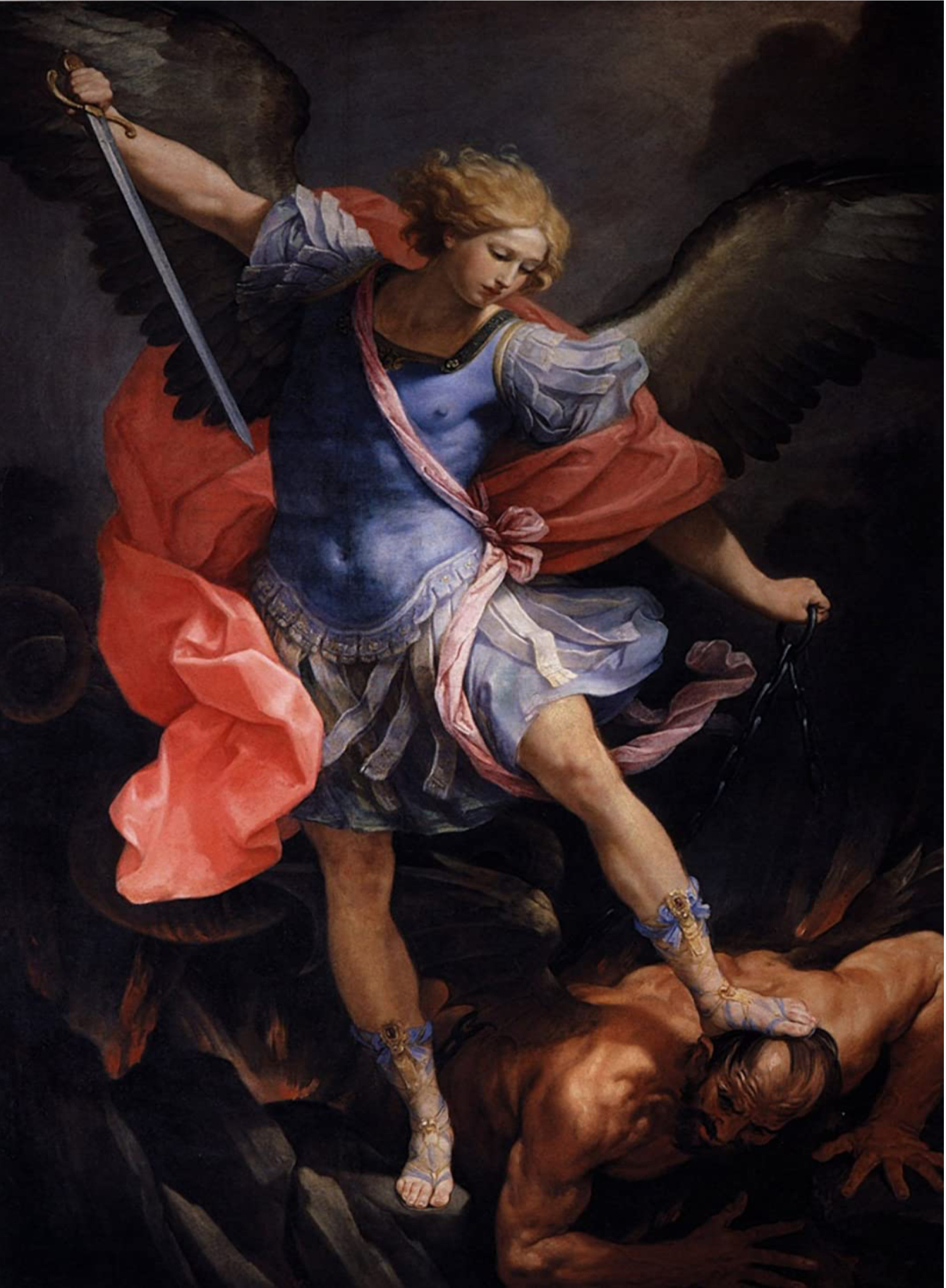
But what about those angels? I am what is called a liberal theologian, which means (among other things) that I am not wedded to taking everything in the Bible absolutely literally. I think this passage about war breaking out in heaven and the battle between Michael and his angels and the Dragon, known as Satan and the Devil on other occasions, is a good case in point. I dare say if we were in the south of Italy, where they are more used to miracles, we would hear this lesson from the book of Revelation without batting an eyelid. We wouldn’t be too troubled about exactly where heaven was or what the Dragon really represented – or indeed possibly who the Devil was. But we do understand the contrast between good and evil and the way in which frequently, in order to uphold the right and the good, there has to be a battle. 

‘Guido Reni’s resplendently theatrical depiction of St Michael, part Roman soldier, part ballet dancer, was painted in 1635 and can be seen in the church of Santa Maria della Consolazione in Rome.’ (Andrew Graham-Dixon at https://www.andrewgrahamdixon.com/archive/itp-238-st-michael-archangel-by-guido-reni.html, accessed 8th October 2020)

We will notice in passing that it is not George who slays the Dragon but Michael, although the stories are a bit similar. Also there is seemingly a second fight. It’s not just Michael. The good angels have conquered the serpent as well, the Dragon, ‘by the blood of the Lamb, by the word of their testimony and by their willingness to die’ for the cause.

So there are perhaps two stories here. One is the story of the war in heaven between Archangel Michael and the great dragon, a.k.a. Lucifer, the devil; and the other, where salvation is achieved and victory over evil by the blood of the lamb. 

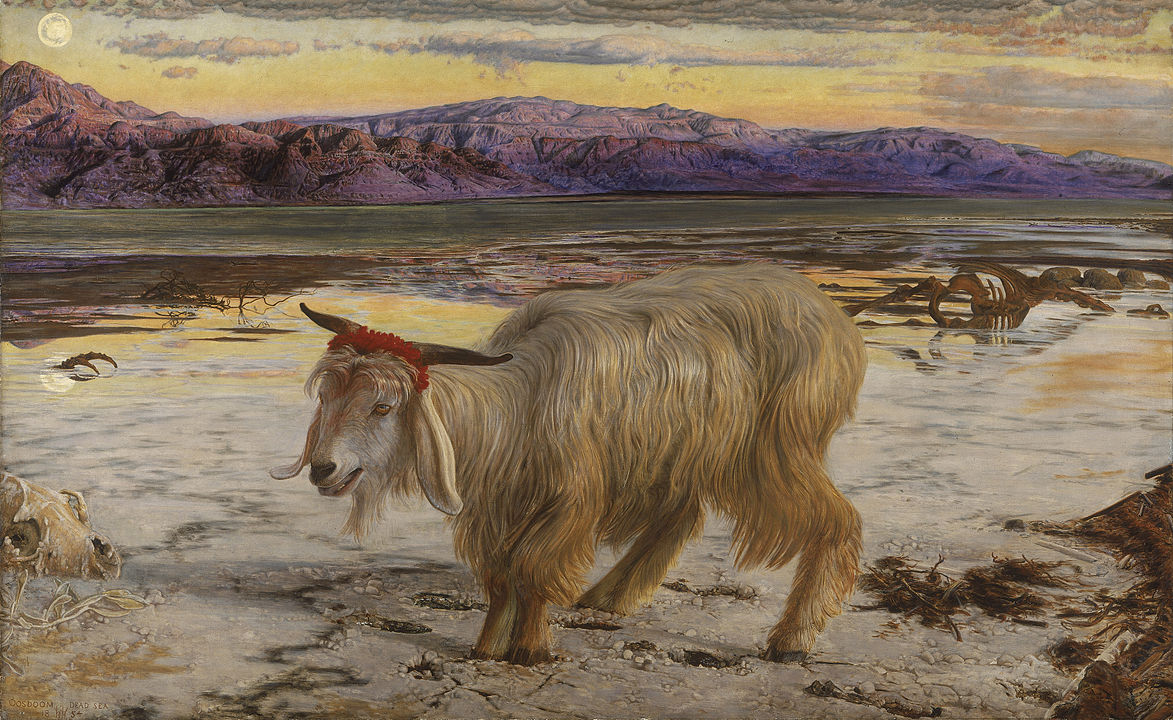
In Jewish tradition there is this idea of a scapegoat, which could also be a ‘scape-lamb’; you read in Leviticus chapter 16 how this is supposed to work sacramentally, where all the sins of the people are symbolically loaded on the back of a lamb or a goat which is then cast off into the desert. In a sacramental sense, the scapegoat ‘takes the burden’ of the people’s sins, and dies for those sins. You can say that the lamb died for the sake of the people’s sin. It is very similar to the idea of what Jesus has done, ‘dying for our sins’ on the cross.

The Scapegoat, by William Holman Hunt (1854-1856) in the Lady Lever Art Gallery, Port Sunlight

Liberal theologians like me have difficulty with the idea that a loving God would have demanded a human sacrifice, but certainly we can follow the development of the idea of the ‘atonement’, as it is called, by Jesus on the cross, by looking at the Jewish tradition of the scapegoat. 

You might think, from this story of the scapegoat, that people at the time of Jesus might not have been very nice to animals. But I don’t think we can necessarily draw that conclusion. There are many instances in the Bible where Jesus appears to love and care for animals. In the sermon on the Mount: ‘Behold the fowls of the air: they sow not, neither do they reap, nor gather into barns; yet your heavenly Father feedeth them’ [Matt.6:26]; and as we can see in the parable of the lost sheep and indeed the other parable of the good Shepherd, Jesus certainly didn’t just think of lambs in the context of sacrifice, but rather as animals to love and care for. 

And this is one of the things which produced Saint Francis of Assisi’s distinctive theology, his famous preaching to the animals and his love for all creation. ‘Brother Sun’ and ‘Brother Moon’, for instance. So on this feast of Saint Francis of Assisi it’s entirely right that we should bless the animals and bring them before the Lord in prayer. In a minute I will ask you to find your pets or pet pictures and put them up for a blessing.

But first, a final thought. This is the last of these Zoom Eucharists and we have become, I think, a proper little congregation. A proper little flock. Soon we will return to the various churches that we came from, as they are able to reopen for worship.

It seems to me that it would be nice to do something, to give some tangible expression to our gathering in the name of the Lord, every Sunday for the last few months. We could, of course, pass the plate round, and we would have to do it virtually using PayPal or something similar. But I think I’ve got a better idea. 

It occurred to me that on the day when we are blessing the animals, we should try to help our various zoos – Regent’s Park,  Whipsnade, Chester and Bristol (where I still hear Johnny Morris in my head) and all the others. They are all having a very hard time. Feeding all the animals at Regent’s Park, at London Zoo, for example, costs £1 million per month. So my suggestion is that, as we give thanks for creation and all the wonderful animals that the Lord has created, we should all consider taking a trip to the nearest zoo to where we are in the next week or two. I think that zoos are eminently safe places to visit even in the Covid epidemic, and the price of admission, if enough people turn up, will help to restore their finances. [Donations – https://tinyurl.com/y2m75jd4, https://www.chesterzoo.org/support-us/, https://bristolzoo.org.uk/save-wildlife/bristol-zoological-society-appeal, or to help a wonderful zoo in Hamburg, https://www.hagenbeck.de/de/_news/tierpark/Unterstuetzung_FAQ.php ]

We shouldn’t forget that the animals themselves will be very pleased to see us, because, as we ourselves have found, being locked down in quarantine with nobody to see is very lonely and no fun. I think that Jesus the Good Shepherd would want you to find out where your nearest zoo is and go and see all the lovely animals in it, very soon. 

Blessing of the Animals

Now we are going to bless all animals. If you have any with you, or any pictures of animals whom you used to have, please do bring them into the picture.

Blessed are you, Lord God, maker of all living creatures. 

You called forth fish in the sea, birds in the air and animals on the land. 

You inspired Saint Francis to call all of them his brothers and sisters. 

We ask you to bless all animals, and those which are or were our pets. 

By the power of your love, enable them to live in peace and harmony. 

May we always praise you for all your beauty in creation. 

Blessed are you, Lord our God, in all your creatures!