Archives for posts with tag: UNHCR

Sermon for Evensong on the First Sunday in Lent, 9th March 2025

At St Peter’s Church, Old Cogan

Jonah 3

Luke 18:9-14

https://bible.oremus.org/?ql=608348962

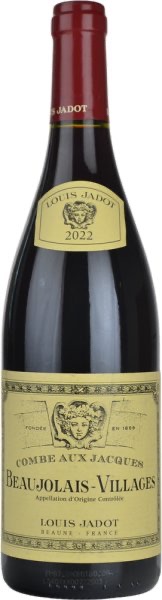
Last Wednesday, Ash Wednesday, I did some shopping in one of our local supermarkets. I accidentally walked down the aisle containing wine and beer, and stumbled across Beaujolais Villages from one of the finest Burgundy producers, rather curiously marked as ‘clearance’ – at less than half the normal price. 

Now on the first day of Lent this was rather a challenge. Could I resist buying it at less than half price? On Ash Wednesday it was the start of Lent, and one of the things which one is supposed to do is to give things up, to fast. What was I supposed to do about this wonderful wine bargain? 

At the same time I was starting to think about this service, and what I would say to you in my sermon. I looked at our Bible lessons prescribed for today, and came across the third chapter of the little book of Jonah.

A little like Louis Jadot’s fine Beaujolais, the passage chosen wasn’t quite what I had expected. That was nothing about the whale. If I asked you what you associate with the name of Jonah, I would be mighty impressed if the name ‘Nineveh’ was on your lips instead of something about a whale. 

Our lesson today tells you about Jonah going and uttering a prophecy to the people of Nineveh who have been misbehaving in a sinful way, telling them that God had warned that they would come to a bad end if they did not mend their ways. The ruler of Nineveh told the people to put on sackcloth and ashes, to put on visible signs of repentance, and to turn back to the true God. But you have to know that this is Jonah’s second go at this task from God. The first time around, when God was telling him to give this bad news to the people of Nineveh, he ran away, bought a passage on the ship and then, as a result of the ship being caught in a storm, he drew the short straw and was chucked overboard so as to lighten the load on the ship and to save it from being overwhelmed by the waves. And he was eaten up by a whale.

At this point when I am talking about the book of Jonah, as an ancient maritime lawyer I always use the opportunity to mention this as an early instance of the legal doctrine of general average, an “extraordinary sacrifice made to preserve the safety of the ‘maritime adventure’”, as the Marine Insurance Act1906, which is still good law, puts it; although general average doesn’t involve chucking people over the side as opposed to cargo or the ship’s tackle, of course, or making a special payment for services to prevent the ship being lost. So I won’t mention that particularly here but rather we should concentrate on Jonah’s encounter with the whale.

I’m not sufficiently up on marine biology to be able to express a view on how plausible this is as a literal account, but I think it is fine as a colourful illustration of how God might intervene to persuade somebody who was a bit reluctant. Jonah having been spat out safely, as you are, if you’re eaten by a whale, after three days, he was indeed persuaded, and he went and undertook his task. He told the people of Nineveh how awful they were, how they needed to change their ways, to repent: a bit like what we are supposed to do in Lent, I suppose. 

You can see why Jonah was reluctant. Being the bearer of bad news is never a popular thing to do, especially when you are speaking truth to power. It’s something we’ve noticed in recent days in the way in which our various leaders are not telling President Trump what time of day it is. 

Not but what Jonah, no doubt emboldened by his whaling experience, did deliver his message to the people of Nineveh, and he received a reception which was entirely different from what he had feared. God had noticed the fact that the people of Nineveh had changed their ways, and he did not punish them. 

So – what should we do? How should we change our ways in the 40 days leading up to Easter? What about fasting? Well, another thing to put into the mix is that we mustn’t crow about whatever it is that we do do; so if you are able to write a cheque for an eye-watering amount of money to the United Nations High Commissioner for Refugees, say, or even, maybe, for the Penarth Ministry Area, such that you make that gift instead of treating yourself to a holiday in Gstaad for skiing, you mustn’t talk about it. You mustn’t crow about it. Think about the Pharisee and the publican. All you should do is to ask the Lord for forgiveness because you are a sinner. Whatever sins you have committed, you just say, quietly and privately, ‘Have mercy on me, a sinner.’

I guess that bears on how you should conduct yourself at charity auctions. Maybe you will have to appoint a proxy to bid for you next time you are minded to go and support Welsh Rugby at some appropriate dinner or other, but I leave that to your discretion.

What about that Beaujolais? Well I offer this as a true story which may or may not inspire you. I know that I am very bad at giving things up, but equally I’m not sure that my giving things up really has any benefit to anybody else except possibly me. But I am enormously comforted by a verse in Isaiah about fasting. Let me quote it to you.

‘Is not this the fast that I choose: to loosen the bonds of injustice, to undo the thongs of the yoke, to let the oppressed go free, and to break every yoke? Is it not to share your bread with the hungry, and bring the homeless poor into your house; when you see the naked, to cover them, and not to hide yourself from your own kin?’ (Isaiah 58: 6,7)

Now I do think that that is more my kind of fast. So what I usually do – and I am going to do it this Lent – is, every time I eat out, (and that includes pies on the motorway), I will keep a note of what I spend; and at the end of Lent I will look at all those bills and work out what it would have cost to invite another person to join me each time: an absent guest, if you like. I will tot up the cost of the absent guests and I will give that to the United Nations High Commissioner for Refugees. Maybe that’s a sort of fast that you could undertake too. 

Oh – and, yes, about the Beaujolais. I bought three. 

Amen.

Hugh Bryant
Sermon for Evensong on the ninth Sunday after Trinity, 18th August 2019

Isaiah 28:9-22, 2 Corinthians 8:1-9 – see http://bible.oremus.org/?ql=433037279 – Not Just a Crown Jewel

Whom shall he teach knowledge? and whom shall he make to understand doctrine? them that are weaned from the milk, and drawn from the breasts. (Isaiah 28:9)

Sometimes I expect you are slightly puzzled by our Bible readings at Evensong. Even the language of Shakespeare might need a little bit of explanation. This is how the New English Bible renders it.

Who is it that the prophet hopes to teach,

to whom will what they hear make sense?

Are they babes newly weaned, just taken from the breast?

It could be a taunt thrown back by the drunken prophets of Judah at Isaiah. J.B. Phillips has translated it as, ‘Are we just weaned … Do we have to learn that The-law-is-the-law-is-the-law, The rule-is-the-rule-is-the-rule…?’. [Quoted by Derek Kidner in The New Bible Commentary, 4th edition 1994, reprinted 2007, Nottingham, Inter-Varsity Press, p 650.]

The background to this prophecy in Isaiah is the situation in Jerusalem between 740 and 700 BCE the two kingdoms of the Israelites, the North, Samaria, and the South, Judah, were being threatened by Assyria – ‘The Assyrian came down like a wolf on the fold’, if you remember Byron’s poem. In 734 the kings of Damascus and Samaria tried to force Jerusalem to join a coalition against Assyria. This ‘Syro-Ephraimite’ war is the background to the main prophecies of Isaiah. So our passage is prophecy addressed to the rulers in Jerusalem.

14 Listen then to the word of the LORD, you arrogant men

who rule this people in Jerusalem.

15 You say, ‘We have made a treaty with Death

and signed a pact with Sheol:

so that, when the raging flood sweeps by, it shall not touch us;

for we have taken refuge in lies

and sheltered behind falsehood.’

16 These then are the words of the Lord GOD:

Look, I am laying a stone in Zion, a block of granite,

a precious corner-stone for a firm foundation;

he who has faith shall not waver.

17 I will use justice as a plumb-line

and righteousness as a plummet;

hail shall sweep away your refuge of lies,

and flood-waters carry away your shelter.’ (Isaiah 28:14-17, NEB)

Godfrey, in some of his sermons recently, has been introducing a ‘that was then: this is now’ angle on what he is preaching about. It’s perhaps a bit tempting, to compare Isaiah’s criticism of the rulers of Judah, whom he criticised as being ‘liars’, and indeed earlier on as ‘complete drunkards’, tempting to compare them with some contemporary politicians today.

What is our prophetic duty at this time? What would Jesus say? What would Isaiah say if he were around today? One thing seems pretty clear, that God wants nothing to do with lies and deception. It’s perhaps sobering to realise that, in 721, the Assyrians did conquer Samaria, the Northern Kingdom, shortly after Isaiah had prophesied; and just over a century later, the Southern Kingdom also fell and the people were largely deported to Babylon. So these ‘scoffers’, whom Isaiah railed against, didn’t end well.

As has been said very well by Godfrey, this is a time of great anxiety, for just about all of us. Nobody knows what is going to happen with our way of life, with our country, and with our relationships with the rest of the world. We don’t like the signs of xenophobia, racism and extreme nationalism that the populist politicians in this country and abroad seem to have encouraged.

These are not just questions of taste. People are getting hurt; refugees are being abandoned on the high seas by populist politicians who seem to have completely forgotten the milk of human kindness, let alone the law of the sea. On the Mexican border with the USA, our closest allies are separating young children from their parents and putting them in cages without any sanitation.

Where should our church fit in, how should we deal with all this? Our second lesson tonight, from 2 Corinthians, is, in effect, about planned giving to the church. I’m sure everybody will be groaning away at that: but even 2,000 years ago, when St Paul was writing to the congregation in Corinth, he was telling them all about the generosity of other new Christian churches in Macedonia. There’s a wonderful piece of Greek which is really untranslatable in the second verse of our lesson, saying that the Macedonians have excelled in generosity although they are poor – the words mean ‘rich from poverty’ – εἰς τὸ πλοῦτος τῆς ἀπλότητος αὐτῶν· It’s the same idea as in Jesus’ story of the widow’s mite (Mark 12:41-44, Luke 21:1-4).

Not that they gave nothing; but that they gave much more than, as poor people, they might be expected to give. Stephen Chater is speaking to as many of us as possible, encouraging everybody to ‘Count ourselves in’. Count me in, so far as supporting our church’s financial position is concerned.

But I suspect that we ought to consider something a bit wider as well. And if we do consider something wider, it will surely lead us on to the sort of sacrificial giving which St Paul praises here.

On September 8th we will open the church at the beginning of the ‘Crown Jewels of Cobham’ scheme organised by Cobham Heritage. We will encourage people to come and look at our beautiful church, along with the other places locally which have been called ‘crown jewels’, (about which you’ll find a nice booklet on your way out if you haven’t already got one).

There’s absolutely nothing wrong with that. I’m sure it’ll be very enjoyable and everybody will have a wonderful time working out whether our brass knights in front of the altar are the real thing or some very clever reproduction. If you haven’t made up your own mind which it is, and you’d like to come and look close up, do come after the service and have a look in the sanctuary. The Sir Johns, D’Abernon, Senior and Junior, are ready to welcome you!

But the thing is that, as a parish church, we surely have a place in the community. We aren’t just a monument to be admired. We have indeed affirmed that in our PCC and at our parish ‘awayday’ a little while ago now.

What we come to church to do is not just to love God, but it is also to love our neighbour as ourself. And at present we haven’t got any settled outward-social-concern or giving projects. They might not just be questions of money – although it usually does involve some money – but there is also the question of a ‘warm embrace’ for our neighbours, as that wonderful local Christian figure Derek Williams, who has sadly just died, used to put it.

At St Mary’s we do a lot of good already in supporting the Foodbank, for example, not only with money but also by providing three of the five trustees who manage it.

There are other important local charities that do a lot of good in this area, that we might want to involve ourselves more closely with as well.

Oasis – sometimes called Oasis Children’s Charity – exists to put families back together and restore the self-confidence of family members who have suffered from break-ups, in particular involving domestic violence. That’s a terrible scourge, which unfortunately is very prevalent in Surrey. Surrey has, if not the highest level of domestic violence in the country, something very close to it, according to those who work in this field. The local authority delegates some important social work functions to Oasis – but at the same time they have cut their funding. Could we help?

We have now, in and around Cobham, Oxshott, Stoke D’Abernon and the immediate vicinity (meaning the areas that the Foodbank covers), I think there are nine of them, Syrian refugee families, who are being helped in various highly practical ways by the local refugee welcome charity called Elmbridge CAN. Maybe we could get involved there.

I was excited to hear that one of our ‘Mums’ has discovered that some local children, some no more than 11 years old, are being left at home on their own in the holidays because Mum and Dad are both out at work. What about a ‘holiday club’ in St Mary’s Hall, with some interesting things to do with friends around – maybe the odd outing, to Bockett’s Farm perhaps – and all with some responsible adults to supervise? If you’re interested, talk to Kelly McConville or Emma Tomalin. The objective is to have the holiday club ready for the Christmas holiday.

And last on my list of local charitable initiatives, there is the Safe Places scheme, which I mentioned last week. The idea is that there will be a network of places to which somebody feeling vulnerable or in a crisis, who wants to find a quiet, safe place for an hour or so, can go to, directed by an app on their phone and social media publicity. It’s an initiative started by Elmbridge Borough Council in response to a national movement; and the churches have been invited to be at the heart of it. After all, churches have been places of refuge since the beginnings of Christianity.

So far, I’m sad to say, people have reacted rather negatively to the idea of St Mary’s becoming a place of refuge, to the effect that ‘We don’t have many people passing by this church, just to drop in: so really, it isn’t worth the effort’.

The point about not being on the beaten track seems to me to be a misapprehension. The whole point is that we should make our church a beacon, a beacon of hope, to which people are attracted. We can use modern technology and social media to help with this. I hope we can think more about becoming a Safe Space.

And then there are all the things abroad that we could consider getting involved in.

In view of the refugee crisis, perhaps we should look at the work of the United Nations High Commissioner for Refugees, UNHCR, or one of the great Christian overseas charities, Christian Aid (not just for Christian Aid Week, but year-round), or World Vision or Oxfam or Save the Children, for example.

I would like to get us talking about this. These things won’t happen overnight, but, as a growing church, we should have some of them on our agenda. The wonderful thing is that, if we look outside ourselves, we will grow, and God will give us the strength. It’s like that wonderful film ‘Field of Dreams’ and the man who dreamed about bringing the legendary Babe Ruth to life again – ‘If you build it, he will come’. And in a more mundane way, in the church, many people come to faith by ‘doing stuff’ – belonging and then believing.

Remember what Isaiah said:

‘Now therefore be ye not mockers, lest your bands be made strong’

‘Lest your bands be made strong’ – lest all those things you’re worried about overwhelm you.

Instead we must love God – and not forget to love our neighbour – if our church is indeed to become a ‘cornerstone in Zion’, a precious corner-stone, a sure foundation, at this worrying time of uncertainty. I pray that with God’s grace, it will happen. And do let’s talk about it.