Sermon for Evensong on the Sunday after Ascension Day, 2nd June 2019

Psalm 68; Isaiah 44:1-8, Ephesians 4:7-16 – see http://bible.oremus.org/?ql=426327011

‘I believe in God’ – we believe in God – ‘the Father almighty, maker of heaven and earth, and in Jesus Christ his only son, our Lord, who was: …. conceived …. born … crucified … buried …. descended …. rose again … ascended,… and sitteth on the right hand of God the father almighty’.

On Thursday we celebrated Ascension Day. At the beginning of the Acts of the Apostles, when the disciples were all together and Jesus appeared to them, after he had been resurrected from the dead, he said to them, ‘You will receive power when the Holy Spirit comes upon you’. When he had said this, ‘as they watched, he was lifted up and a cloud removed him from their sight’. (Acts 1:9)

The first bit points to what we’re going to remember and celebrate next Sunday, that is, the coming of the Holy Spirit, Whit Sunday, Pentecost. But this is the Sunday after the Ascension, and we are still thinking about Jesus’ Ascension: up, down, ascending, descending – disappearing.

It’s quite interesting that the Ascension is only described twice in the Bible, in Acts and in Luke chapter 24, which some scholars think may be a late addition. So possibly it is only the second book of Luke’s gospel, the book of Acts, that tells you anything about the Ascension.

Prof. John Barton, in his new and very good book, A History of the Bible, [2019, London, Allen Lane], makes the point that our creeds date from the second and third centuries AD and reflect the concerns of the church at that time. (Barton pp 326-330). The things that they thought were important then, creation, the Virgin Birth, suffering under Pontius Pilate, being crucified, dead and buried, being resurrected from the dead, ascending into heaven and then sitting in judgement at the end of time, have been emphasised and at the same time have cut out Jesus’ healing miracles and his teaching – there’s nothing in the creeds about them. Raising Jairus’ daughter, bringing Lazarus back to life, turning water into wine, feeding the 5,000: nothing: turning the other cheek, loving your enemies, the Sermon on the Mount: not mentioned. Not even Jesus’ New Commandment, that ye love one another, even as He has loved you: not mentioned.

This sifting out of what the church considered to be important, what Prof Barton calls its ‘rule of faith’, is quite challenging for us. It’s not obvious to us why the Ascension should be given such prominence, should be in the creeds, whereas loving one’s enemies and being a Good Samaritan aren’t.

I think that we would all say quite categorically that, although we believe the things in the Creed, we also believe in the other things as being very important in our Christian witness. Those important things should include trying to carry out the teaching of Jesus, trying to love our neighbours as ourselves.

It’s very clear that, when we try to understand the divine, to understand how God works, what God is, that we can only grasp things in a very partial way. It may be that, although the Ascension doesn’t get mentioned very much in the Bible, there is no reason why it shouldn’t be a key belief. Our lessons today and our psalm emphasise the power and might of God – and the Ascension is one aspect of that power, an illustration of it.

There is a children’s hymn which has always made me smile, ‘Our God is a great big God’. I suppose it makes me smile partly because that sort of language, a great big God, encourages you to think of a mighty figure high above the clouds, up to whom you would go, and up to him, as his father, Jesus went.

In our Psalm, 68, we see this ‘great big God’: there are some wonderful images in Psalm 68, which I commend to you. We only sang the first six verses, but if you’d like to get your little blue Prayer Books out again and turn to page 426, you can follow it again. [Page numbering from the Cambridge edition]

‘O sing unto God, and sing praises unto his Name 

 magnify him that rideth upon the heavens, as it were upon an horse; praise him in his Name JAH, and rejoice before him.

  He is a Father of the fatherless, and defendeth the cause of the widows 

 even God in his holy habitation.

  He is the God that maketh men to be of one mind in an house’ – he makes people agree together – ‘and bringeth the prisoners out of captivity’… And then there’s a splendid line, ‘…  but [God] letteth the runagates continue in scarceness.’

I wondered what ‘runagates’ were. If you just turn that word over in your mind, listening to it, you suddenly realise that it is the same word as ‘renegades’. And indeed the dictionary confirms that. Renegades, the bad people, ‘continue in scarceness’. They have short commons.

It’s the same kind of god that Isaiah, as well, is proclaiming in our first lesson.

‘I will pour water upon him that is thirsty, and floods upon the dry ground: I will pour my spirit upon thy seed, and my blessing upon thine offspring’.

This is the God of creation, but also the God who sustains as well as creates. Pouring spirit upon seed; only God can make things live. Think of St Paul’s First Letter to the Corinthians chapter 15, where he talks about how resurrection to eternal life works, with a seed, being fertilised again.

St Paul again, in his Letter to the Ephesians, has this wonderful sentence, quoting Psalm 68,

‘When he ascended up on high, he led captivity captive, and gave gifts unto men.’

It has two examples of what I’m sure you will all immediately identify as a Cognate Accusative – the example in the textbooks is usually to ‘die the death’. Here we have, to ‘capture captivity’, which is what it literally says in the Greek, and to ‘give gifts’. It’s a figure of rhetoric where the object in the sentence is the substantive of the verb. It’s sometimes called a ‘cognate object’. ‘Cognate’ means ‘known by’. He captured captivity, he led captivity captive – and he gave gifts.

There is a nod to the ‘man upstairs’: ‘He ascended up on high’. And that of course makes Paul, in his Letter to the Ephesians, tackle the logical implications of that. ‘Now that he ascended, what is it but that he also descended first into the lower parts of the earth?’ A number of preachers down the ages have taken this literally, and explored whether, in this period before the Ascension, Jesus went down into Hades, into Hell.

But just a minute! I don’t think I can get much further in this sermon without someone calling me out for talking arrant nonsense. The fact is that these days, or at least since Bishop John Robinson’s ‘Honest to God’ in 1960, we just don’t think of God as being anywhere in particular, located anywhere either up or down. If we talk about heaven, sitting at the right hand of God, ascending up on high and so on, we must of necessity be talking figuratively. Because the minute you allow God to be defined in time and space, he can no longer be the ultimate creator. In order to be omnipotent, to be the ultimate creator, God must be outside the confines of space and time. Therefore he isn’t up there or down there or out there, or anywhere in particular.

But there would be something terribly bleak about worshipping a god whom you could not visualise. I suppose the opposite of that is the Jewish way in which no one can speak the name of God. We see this again in Psalm 68 in verse four. God is called JAH. There are no vowels in Hebrew, so JAH represents ‘Jehovah’, the name of God. We need pictures. We need images: the picture is a picture of heaven.

There are some wonderful pictures in Psalm 68, which I commend to you. We only sang the first six verses, but if you’d like to get your little blue Prayer Books out again and turn to page 426, you can follow it again.

‘The earth shook, the heavens also dropped at the presence of God’

‘Thou, O God, sentest a gracious rain upon thine inheritance 

 and refreshedst it when it was weary.’

You can just see these people plodding through the desert. ‘Lone and dreary, faint and weary, through the desert thou didst go’ [Lead us, heavenly Father, lead us – James Edmeston, 1791-1867 – Common Worship hymn 496, v2].

Again in Psalm 68:

‘Kings with their armies did flee, and were discomfited’

‘Though ye have lien among the pots, yet shall ye be as the wings of a dove’.

The modern translations actually duck this. What is having a lien among the pots? I think it means, having a lien is being tied up, tied up with household chores. Having a lien among the pots – but you will have the wings of a dove! A dove with silver wings and feathers like gold.

Then there are these hills. God’s hill. You remember the second chapter of the book of Isaiah:

‘Come ye, and let us go up to the mountain of the Lord, to the house of the God of Jacob; and he will teach us of his ways, and we will walk in his paths: for out of Zion shall go forth the law, and the word of the Lord from Jerusalem.

And he shall judge among the nations, and shall rebuke many people: and they shall beat their swords into plowshares, and their spears into pruninghooks: nation shall not lift up sword against nation, neither shall they learn war any more.’

That’s what happens on the mountain of the Lord. And here in Psalm 68,

‘Why hop ye so, ye high hills? this is God’s hill, in the which it pleaseth him to dwell.’

Again, modern translations don’t try to translate the hopping business. I have a feeling that the translators of the King James Bible have introduced a glorious and rather touching image of people in a crowd, towards the back of the crowd, jumping up and down, hopping, in order to try to see over taller people in front, to see what is going on. ‘Why hop ye so, ye high hills?’ However high you are, God’s hill is higher.

And then,

‘Thou art gone up on high, thou hast led captivity captive, and received gifts for men’.

The wording which St Paul quotes from this in his letter to the Ephesians is ‘he gave gifts to men’ (ἔδωκεν δόματα τοῖς ἀνθρώποις). I think it’s one of those reverse meanings, ‘that’ll learn you’ rather than ‘that’ll teach you’. You have given gifts, is the right sense, I think, rather than ‘received’ them.

What a wonderful picture of God this all is! But where does it leave us? We have this wonderful picture of God, which we have to admit is pretty fanciful. Have we just invented God, in fact, ourselves? That takes us back to the bare bones of our belief in the Creed. Those startling statements about Jesus, that he was born of a virgin, died, rose again from the dead, and ascended into heaven.

It’s not facetious to say, ‘You couldn’t make it up!’ But whereas it is completely beyond our human capabilities to understand the nature of the divine, God, and we have to resort to figurative language about being in heaven ‘up there’, ascending and descending, even so, we can grasp what happened to Jesus, in a much more straightforward way. We know what it was for him to be born and to die. We can understand what the resurrection looked like, through the eyes of Doubting Thomas.This is God among us. But to say that Jesus ‘ascended into heaven’ brings us back to the figurative, to the divine realm which is beyond our comprehension. But we can see enough to realise that it is perfectly coherent to say that the fact, the history, of Jesus, invites us to have faith in God, in the divine nature. We didn’t make it up. And then we can progress in faith so as to become the body of Christ, not ascended, but here on earth, just as St Paul so elegantly puts it:

‘Till we all come in the unity of the faith, and of the knowledge of the Son of God, unto a perfect man, unto the measure of the stature of the fulness of Christ.’

Sermon for Evensong on the Fifth Sunday after Easter, 26th May 2019

Zephaniah 3:14-20; Matthew 28:1-10, 16-20 (see http://bible.oremus.org/?ql=425693885) – But what about the Bigots?

‘Sing, O daughter of Zion; shout, O Israel; be glad and rejoice with all the heart, O daughter of Jerusalem.’

You can tell, even without reading the whole book, that this passage at the end of the book of the prophet Zephaniah turns things around. The first two chapters of the book are not joyful; they are more like lamentations. The kingdom of Israel, the people who made the exodus from Egypt, who had David and Solomon as kings, had split into two kingdoms, the northern kingdom called Israel, and the southern kingdom, Judah, in which was Jerusalem.

In 721 BC the northern kingdom was destroyed by the Assyrians. Zephaniah was prophesying some time after that, probably about 100 years later, in Jerusalem. The sub-heading in one of my Bibles on this passage is, ‘Doom on Judah and her neighbours’; so the first part of the book is all about how the kingdom of Israel, which has become the province of Judah, has gone to pot.

The great day of the Lord is near, …

That day is a day of wrath, a day of trouble and distress, a day of wasteness and desolation, …. And I will bring distress upon men, that they shall walk like blind men, because they have sinned against the Lord: (Zephaniah 1)

Why is the Lord cross with his people? Zephaniah says,

“Woe to her that is filthy and polluted, to the oppressing city!

She obeyed not the voice; she received not correction; she trusted not in the Lord; she drew not near to her God.’ (Zephaniah 3:1-2)

This was all nearly 3000 years ago, but there are definite resonances with things that are happening here today. I wrote this sermon originally on Friday, and I didn’t think we would know the outcome of the EU election until after 8 o’clock tonight, as we have to wait until all polling stations in all EU member states are closed – and most of the countries are having their vote today.

I suspect that it will turn out to have been a strange business, and whatever the outcome, we will all continue to have a more or less uneasy feeling that something is wrong with our society, and with our country, at the moment.

Whether it goes as far as the sort of thing that Zephaniah was prophesying about is obviously a moot point, but it seems to me that it’s not controversial to say that, wherever you are in relation to modern politics, whatever you believe in, this is a time to be concerned and worried.

The idea that comes from Zephaniah in the part which was our first lesson today, ‘Sing, O daughter of Zion’, … ‘be glad and rejoice’, is something which I think we would all respond very well to. We would love to feel that everything was right with the world, and that we could relax and be joyful.

Unfortunately, we’re not there yet. I don’t think that it’s going to help very much for me to try to spell out to what extent any of the competing parties and interest groups – ‘interest groups’, because the Brexit Party isn’t a political party, it’s actually a limited company – it isn’t going to be easy or productive at this stage to try to relate aspects of each of these people to the eternal verities which we are trying to understand and to carry out in our Christian witness.

It’s no good trying to say whether one or other party or interest group is better or worse at trying to bring the various parts of society back together, so as to finish the various arguments which have so divided people. It isn’t even worth it at this stage to try to express a view on what is going to help people materially, or perhaps more realistically, to hurt them least, in the various proposals advanced by the various parties. People are not listening to rational arguments.

What would Jesus say? I really don’t know. But I think it’s worth reminding everyone that it’s a good question. If we sit down quietly and try to work through the various propositions which have been put to us, from the time of the referendum three years ago until now, it might be a very good exercise to look at each one in the light of that question.

What would Jesus have done? What would Jesus have thought about these various things?

I went on Thursday night to our friends at St Martin’s in East Horsley for a talk which they had organised, by the long-serving former MP, Chris Mullin, who is well known for his many books, including ‘A very British Coup’, which was made into a TV series. After he had given his talk, from the audience a lady stood up and, I think, rather shocked everybody. I should tell you that the audience was about 30 people, and they could easily have been from here. Normal bods, tending towards the middle-aged if not slightly elderly; middle-class, middle-aged, respectable people. When this lady stood up, asked her question and made her point, she looked exactly the same as everyone else. But she wasn’t.

She told us that although she had grown up in this country, had lived here for many years and had worked as a solicitor for a City firm, she was not English. She was German, and her father had been head of the UK division of the great German engineering company Siemens, which has a number of factories here, and has had for many years. She is married to an Englishman. After the referendum result, her husband had said that he thought that it was not going to very nice for their family to carry on living in England – meaning, not very nice for his wife, for his German wife. So they now live in Spain. There they have recently bought a new car. One of their neighbours, she said, wondered whether it was going to be a Range Rover, and said he hoped that it wasn’t – because they didn’t want to see anyone buying anything British for the time being.

And I, as I think some of you will already have heard, had a similar experience shortly after the Brexit referendum when I went to Hamburg, and some of my German friends, several of whom have been friends for 30 or more years, all said more or less the same thing to me, the same simple sentence: they said, ‘But we thought that you were our friends’. Imagine how I felt.

No more comments on that. We all have strong views. But what would Jesus say about it? I wonder.

Let’s move on to our second Bible lesson, from St Matthew’s Gospel. It’s the resurrection story, the empty tomb, which we have read about in St John’s and St Mark’s Gospels already, during this Easter time.

For some reason the compilers of the Lectionary have missed a bit out. You’ll notice that, in St Matthew chapter 28, tonight we have heard verses 1 to 10 and then 16 to 20. The missing bit is a story, which appears only in St Matthew’s Gospel, about the chief priests bribing the Roman soldiers who had been set to guard the tomb – and again, we read about these guards only in this Gospel – bribing these soldiers to spread a story that Jesus’ disciples had come in the dead of night and taken Jesus’ body away. The passage ends, ‘This story is still told among the Jews to this day’. Perhaps that’s why it’s left out now in our lessons, as it could be taken as a a point against Judaism.

That’s one bit which is unique to St Matthew, not too crucial. But the other unique bit is far better known. It is the Great Commission, as it is called.

Go ye therefore, and teach all nations, baptising them in the name of the Father, and of the Son, and of the Holy Ghost:

Teaching them to observe all things whatsoever I have commanded you: and, lo, I am with you always, even unto the end of the world.

It is the great call to Evangelism, to spreading the Good News, the ‘Evangelia’,(Ευαγγελία) the Greek word for good news. Jesus assured us that He is still with us: he said, ‘... lo, I am with you always, even unto the end of the world.’

I began this sermon with a rather gloomy recital of the prophet Zephaniah’s words of lamentation about the godless state of the people of Israel in Jerusalem, and I invited comparisons with the state of our nation today. I invited you to think what Jesus might have to say about it. That is a really tough question.

But what about the Great Commission? How are we doing on that one? Our British reserve tends to make us rather coy about announcing our Christianity to people in public. But increasingly, people are growing up without having read the Bible or been to Sunday School. It’s important, therefore, that we have our family services at St Mary’s and that our PCC is beginning to think about having a youth worker. We invited Esther Holley, the children and young people’s minister from St Andrew’s in Cobham, to come and talk to us about her work, and we all found her account inspiring. As a result of Esther’s work, St Andrew’s has a solid group of children and some teenagers. But nothing stands still. Esther has been accepted for ordination training, so they will be looking for her successor soon. Maybe we should start making moves in this direction too.

And finally, on the question how we are carrying out Jesus’ commission to ‘teach all nations’, I think that it is vitally important that we maintain the warmest welcome, here at St Mary’s, to our services, to our church family, and to our other activities based around St Mary’s Hall, the best church hall for miles around.

I personally would like us to look at joining an organization called ‘Inclusive Church’, which encourages churches not just to be welcoming to all, but to advertise that they are. It’s the old story of the two milkmen competing for business (you can tell it’s an old story, because competition on the same milk round disappeared years ago), and one milkman put a big banner on his milk float saying, ‘We deliver milk every day’. Of course his competitor did the same thing, but they didn’t advertise it. The milkman with the banner doubled his sales!

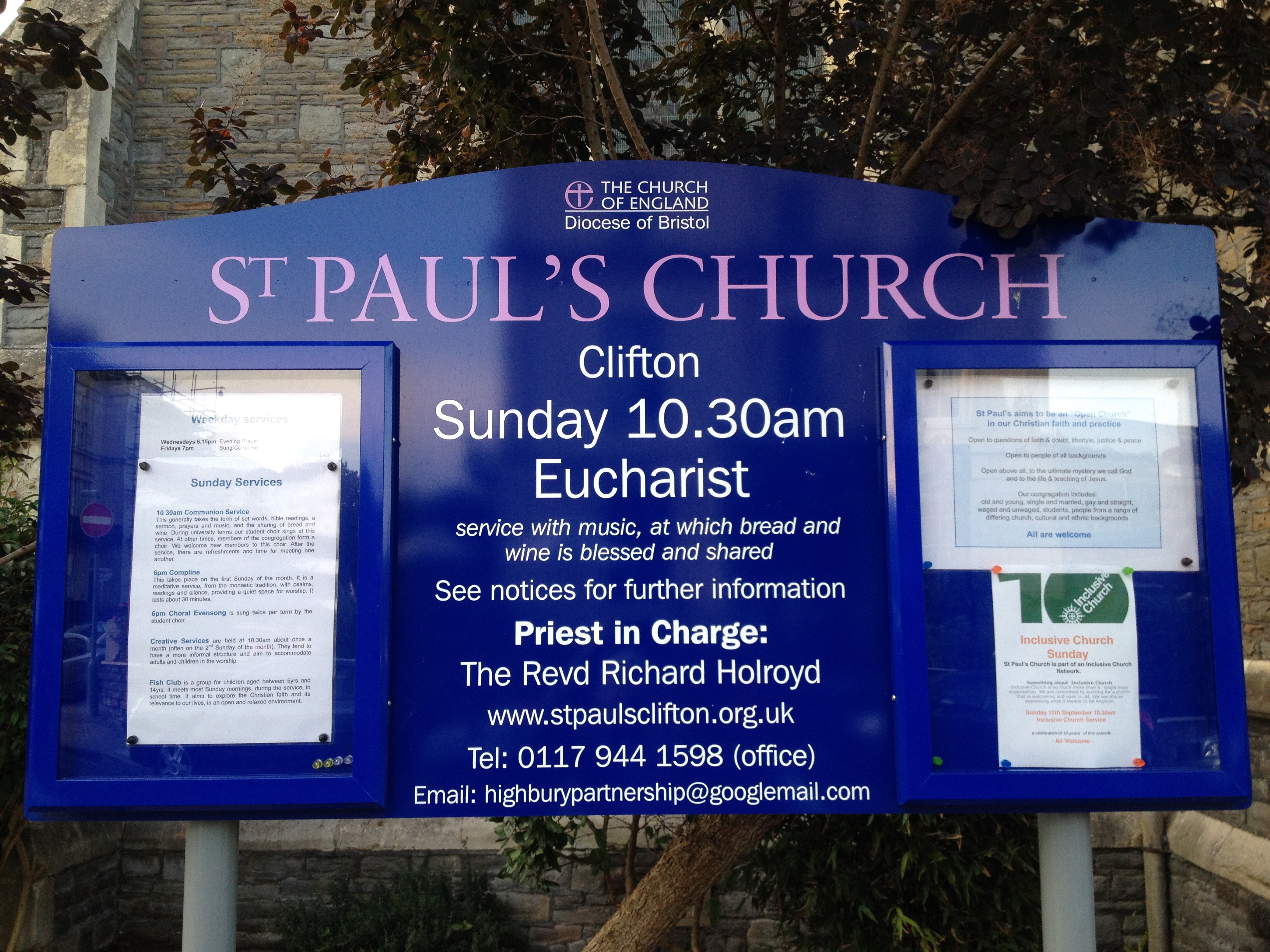
The same reasoning, I think, would work for us. If I have moved into this area and I’m looking for a church to go to: if I’m going through a tough time in my life and I’d like to find somewhere to say prayers: if I want my kids to learn what’s in the Bible: what will St Mary’s be like inside? Now if there’s a big sign outside saying that everyone is welcome – and I’ve put a picture of an Inclusive Church sign from another church with my sermon on the website [see above] – then people can feel confident, and they will dare to open our door and come in.

I know that not everyone agrees with this idea. Some people say we are already a really welcoming church. No need to join organisations or advertise – although I would gently say that it’s noticeable that we have no black people in our congregation. Somebody once even said to me, in this context, ‘But what about the bigots? We mustn’t upset the bigots!’

Well that perhaps takes me full circle, to the outcome of the European election. What about the bigots? What would Jesus say? I think he would say, ‘Look who I have lunch with already. People get shirty that I sit down with tax gatherers and sinners. But they are welcome!’

Sermon for Evensong on the Second Sunday after Easter, 5th May 2019

Isaiah 38:9-20, John 11:17-44; see http://bible.oremus.org/?ql=423915548

If you had to say just one thing about our Christian belief, I think that it would have to be that Jesus was resurrected from the dead. There are all sorts of striking things, miracles and sacred truths, rules to live one’s life by; but there is nothing like the resurrection from the dead. It is the most amazing thing – the most challenging thing – but also the most reassuring thing.

Last week we were reading the story of doubting Thomas. This week, the second Sunday of Easter, we have the story of the raising of Lazarus, coupled with an Old Testament lesson about King Hezekiah, recovering from illness after his triumph over the Assyrian king Sennacherib, a passage in the Bible sometimes called the Psalm of Hezekiah, in which Hezekiah gives thanks for his recovery from what he had thought was terminal illness.

Hezekiah was ill in the first half of the 8th century BC. Isaiah the prophet, who was also one of the king’s counsellors, at first said that God had told him that the king would definitely die; but after Hezekiah, who had been a good king and faithful in his worship of the one true God, had prayed to the Lord and shed tears, Isaiah received another prophecy to the effect that the Lord had heard his prayers: after all, the king would not die, but would live another fifteen years. The proof of this was that time on a sundial would run backwards, the shadow would go back on itself. So Hezekiah did not die, for another fifteen years.

But the story of Lazarus is much more like the story of Jesus later on. Lazarus clearly was dead. He had been in the tomb for four days and his corpse had begun to decay and smell; but nevertheless Jesus asked for the stone sealing up the tomb to be rolled away, and he commanded the dead man to come out, which he did, still wrapped in his burial shroud. This is different in detail from what happened to Jesus, in that he had left the tomb and his burial clothes were neatly folded and left in the tomb for Simon Peter to find them.

Just as the Lord was moved by Hezekiah’s prayer, ‘I have heard your prayer and seen your tears’, said the Lord, and the Lord was moved to spare Hezekiah, so ‘Jesus wept’, which is supposed to be the shortest verse in the King James version of the Bible, but more importantly is a sign that Jesus was moved by ordinary human compassion and by the sadness of the occasion. His friend Lazarus seemed to have just been snatched away in death. So Jesus asks God to help him, in effect; to give people a reason to believe, in the same way as Hezekiah asked for a sign.

You know sometimes, when I’m in church, listening to someone preaching, I feel that they are saying extraordinary things rather too easily. How can we just talk about people being raised from the dead, sundials being reversed, and so on, without at least to some extent acknowledging that this is far from the sort of thing that we come across in our normal lives? And indeed, as Doubting Thomas dared to say, these things are, on the face of them, actually incredible, not believable: so why are we able just to take them in our stride?

Or to put it another way, are we right just to take them in our stride? Is it one of those things, like how old Methuselah was when he died, that we can explain away as being a metaphor, a figure of speech, just a graphic way of illustrating a profound truth, rather than being literally true?

I must confess that those sort of thoughts do occur to me when I read about the sundial: ‘I will bring again the shadow of degrees … ten degrees backward’. Frankly that looks to me more akin to a magic trick than evidence of the existence and power of God. But then again, the story of Hezekiah and his recovery from illness is not such a massive miracle as the story of Lazarus – or indeed, as massive as the story of Jesus himself. And it is 3,000 years old. So perhaps we can allow some licence there. Nothing very big turns on it now.

But Lazarus is different. The story of Lazarus comes in St John’s Gospel but not in the other gospels. St John’s Gospel has an overriding theme, or a dominant purpose, if you will, which you’ll find in the words at the end of chapter 20: ‘But these are written that ye might believe that Jesus is the Christ, the Son of God .. and that believing, that ye might have life through his name’.

There’s a version of that, in a way, in what Jesus says to the disciples at the beginning of the story of Lazarus. ‘Then Jesus said unto them plainly, Lazarus is dead. And I am glad for your sakes that I was not there’. It’s almost as though Jesus is saying, ‘If I’d been there, when Lazarus was about to die, I could have stopped him dying; I could have healed him. But then you disciples wouldn’t have had such a dramatic demonstration of my divinity as I’m now going to give you’.

I do slightly wonder whether that’s something which the gospel writer has added, rather than it being a verbatim quote from Jesus himself. It doesn’t seem to me to be too likely that the man who told the parable of the Good Samaritan would have said, ‘You know, it’s better that Lazarus should actually be dead; because raising him from the dead makes for a more cogent proof’. I think Jesus, indeed the Jesus who ‘wept’, would really have cared much more about Lazarus himself, than about whether he was making a great theological proof or not.

I don’t think that these stories need any extra embellishment. There are a number of factual details – whether the grave clothes were left in the grave or whether the dead person came out wearing them; rolling away the stone; how quickly dead bodies decay in the Middle Eastern heat. And Doubting Thomas’s story itself, with the explicit challenge not to resort to rationalisation, to plausible explanation – because Jesus is not a ghost. Thomas can touch him. These are amazing things. Maybe they are so foreign to our normal way of thought that very often we just keep them out of our minds.

But if we do that, we are keeping the essence of Christianity out of our minds at the same time. For much of our lives we can, I suppose, somehow manage without really worrying too much about God, if I can put it that way. I know that you might well be affronted if I said to you that we don’t bother with God much in the normal course of our lives. What I mean is, we don’t very often focus on what the resurrection to eternal life might really mean. That is, except when we are confronting somebody’s death; maybe our own, maybe someone dear to us whom we’ve just lost, or whom we’re about to lose.

Then of course the church’s teaching about the ‘sure and certain hope of the resurrection to eternal life’ is something that can give us real comfort. You may be a bit challenged by that expression ‘sure and certain hope’. On the face of things, if something is something we hope for, that’s not the same as something which we confidently expect, or have rational grounds for being certain about. If we hope that something will happen, that something will be true: then we want it to happen, but we aren’t certain about it. St Paul makes a similar distinction in his letter to the Romans [8:24f]: ‘For we are saved by hope: but hope that is seen is not hope: for what a man seeth, why doth he yet hope for? But if we hope for that we see not, then do we with patience wait for it.’ If something is right there in front of you, then you can’t say you are hoping for it to be there.

But I wonder whether that is a real, genuine distinction, between things hoped-for and things actually experienced. We expect confidently that we will wake up tomorrow morning, and that our world will still exist. Could we not say that we have a sure and certain hope of our waking up tomorrow, in Stoke or Cobham or Oxshott, in the normal way? Some of the great Bible passages which are used at funerals come to mind here. From St John’s Gospel, from his 14th chapter, ‘In my father’s house are many mansions’, where again he’s talking to our hero Thomas; and St Paul’s first letter to the Corinthians, chapter 15.

‘But some man will say, How are the dead raised up? and with what body do they come?

Thou fool, that which thou sowest is not quickened, except it die:

And that which thou sowest, thou sowest not that body that shall be, but bare grain, it may chance of wheat, or of some other grain:

But God giveth it a body as it hath pleased him, and to every seed his own body.

All flesh is not the same flesh: but there is one kind of flesh of men, another flesh of beasts, another of fishes, and another of birds.’ …. And

‘So also is the resurrection of the dead. It is sown in corruption; it is raised in incorruption: ….

It is sown a natural body; it is raised a spiritual body. There is a natural body, and there is a spiritual body.’

This is a mystery. Indeed St Paul says it. He writes:

‘Behold, I shew you a mystery; We shall not all sleep, but we shall all be changed,

In a moment, in the twinkling of an eye, at the last trump: for the trumpet shall sound, and the dead shall be raised incorruptible, and we shall be changed.’

Before it goes off iPlayer, I should mention to you that in Holy Week Radio 3’s Composer of the Week was Georg Frideric Händel. George Frederick Handel. One of the delights of those Holy Week programmes is that pretty well all the ‘Messiah’ was played. Maybe if you don’t get round to reading the various passages in the Bible which I’ve spoken about, you can listen instead to some of the wonderful arias and recitatives in Handel’s Messiah. ‘The trumpet shall sound’, for example. You will get the same message, with that great music. I pray that, however you do come to it, you will indeed have that ‘sure and certain hope’ of the resurrection to eternal life.

Sermon for Holy Communion on the Second Sunday of Easter, 28th April 2019

Revelation 1:4-8, Acts 5:27-32, John 20:19-32

http://bible.oremus.org/?ql=423140630

_____________________________________________________

This Sunday our Bible readings take us back vividly to the life of the apostles just after the Crucifixion and Resurrection. Each passage illustrates a different angle. First in the Book of Revelation.

What is your favourite hymn? A little while ago there was a series in the parish magazine – well, actually in the old parish mag, before the beautiful St Mary’s Quarterly came out, of course – anyway, the series was on ‘favourite hymns’. People were invited to pick their favourite hymn and to explain what it was they liked about it. What would my favourite hymn be? One strong contender in my heart would be ‘Lo! He comes with clouds descending’, one of Charles Wesley’s greatest hymns. It’s number 31 in our hymn book, if you want to look it up.

Like many hymns, it contains several sermons and profound theological insights. It’s based on our first lesson, from the Book of Revelation, which says:

Look! He is coming with the clouds;

   every eye will see him,

even those who pierced him;

   and on his account all the tribes of the earth will wail.

So it is to be. Amen.

The hymn covers the same ground – in rather better poetry, I think.

The Book of Revelation is a book about the End Time, a vision of heaven, a vision of the divine. It’s a vision of God, and of Jesus sitting at his right hand, ‘up there’. Since Bishop John Robinson’s great little book ‘Honest to God’, or Don Cupitt’s BBC series called ‘The Sea of Faith’ in the early 1980s, we haven’t tended to see God as a man with a white beard sitting on top of the clouds. Even if we weren’t influenced by Bishop John Robinson or by Don Cupitt, you might remember that according to President Krushchev, when Yuri Gagarin, the first man in space, returned to earth, he is supposed to have mentioned that he hadn’t seen God ‘up there’. The great vision in Revelation is a metaphorical one; its truth is not literal. Our reading from it says

Every eye will see him,

even those who pierced him.

‘Those who pierced him.’ We have to be careful not to take early accounts of the passion and resurrection of Jesus as being very anti-Jewish. The Pharisees and the Sadducees, the Sanhedrin, the ‘the whole body of the elders of Israel’, did, as a matter of bare facts, cause Jesus to be crucified: but as Jesus himself said, they did not know what they were doing. They were not consciously killing the Son of God. In the early encounter between the Jewish authorities and the disciples which we heard about in the words of Acts chapter 5, if you read a bit more of the chapter after this, you’ll see that it isn’t simply a question of a brush between the Jewish leaders and the apostles, not simply – or at all, actually – a kind of repeat of the persecution which had resulted in Jesus’ death. The full story tells that the High Priest and the Sadducees, motivated by jealousy, arrested the apostles and put them in prison. But ‘an angel of the Lord’ opened the doors of the prison and let them out during the night, so that when they went to get them in the morning, the police reported that they’d found the prison locked, but no apostles inside. They’d gone back to teaching in the Temple. They sent the police and fetched them to appear before the Council – but without using any force, ‘for fear of being stoned by the people’.

Then comes the passage which was our second reading, the exchange between the High Priest’s group, the Sadducees, and Peter. They asked, ‘Why did you ignore our injunction to prevent you from preaching?’ …. And the answer was, ‘We must obey God rather than men.’ Then Peter went on to rehearse the crucifixion story. ‘The God of our fathers raised up Jesus whom you had done to death’, and most important, ‘We are witnesses’. The Sadducees, extraordinarily, wanted to kill them. They couldn’t cope with how popular the gospel message had already become. To the apostles, it must have felt horribly reminiscent of the time immediately before the crucifixion.

But then another Jewish leader, a Pharisee called Gamaliel, a ‘teacher of the law held in high esteem by all the people’, stood up in the Sanhedrin council and said, ‘Keep clear of these men, I tell you; leave them alone. For if this idea of theirs or its execution is of human origin, it will collapse; but if it is from God, you will never be able to put them down, and you risk finding yourselves at war with God.’ These were wise words – and they came as much from a Jewish source as any of the cruel Sadducees’ threats. Both sentiments came from Jewish sources, enlightened, Gamaliel, or cruel, the Sadducees. You can’t really blame the Jews. They really had no idea what the big picture was.

A quick look back, before we move on to consider Doubting Thomas. An ‘angel of the Lord’ organised the apostles’ gaol break. What was this angel? Given that the name ‘angel’ means ‘messenger’ in the original Greek, rather than thinking about angels as being superheroes like Superman, let’s think instead that they could just have been ordinary Christians, doing the will of the Lord. You can understand quite a few of these apparently supernatural terms in natural, normal terms. Most likely it was just ordinary humans who got them out of jail – but in so doing, they were doing the work of God. But of course, if you want to believe in angels as something magical, between gods and mere men, fair enough. I’ve got no proof either way.

Then we do go on to think about Doubting Thomas. The story of Doubting Thomas has strengthened so many people’s faith. It certainly did mine. ‘Blessed are those who have not seen and yet have come to believe’. That’s us. We haven’t been able to do what Thomas did and verify empirically that they were encountering the risen Jesus. Our understanding, our trust in the whole Gospel, has to have been based on things we ourselves haven’t seen.

The essence of that faith is that Jesus rose from the dead. That’s not just an extraordinary miracle, something to amaze and delight you, which is really what the word ‘miracle’ meant originally, (something to amaze and delight), but also most crucially it means that God, however we understand him to be, the unmoved mover (according to Aristotle), the creator and sustainer, the Almighty, all-powerful, all knowing, He, has a relationship with the human race, with us.

God is bigger and infinitely more detailed than I, certainly, can comprehend. The Bible says, in St John’s Gospel, Jesus is quoted as saying, that whoever has seen him has seen the father (John 14:9). I suppose if you take literally the passages which have Jesus sitting at the right hand of God the Father in heaven, then those glorious images of a heavenly palace above the clouds will resonate with you.

But I think that I am too much a prosaic, matter-of-fact person to believe literally that that is how things are. I’m with Yuri Gagarin. I don’t actually think that God lives above the clouds, or indeed that he can be tied down to a particular time or place. Except of course he can. He can be tied down in a sense to the time and place of Jesus. If we didn’t know about Jesus we wouldn’t know anything at all about God except in purely functional terms, making stuff, creation, and knowing stuff, omniscience, and so on. And the story of Thomas is the most powerful expression of this.

But hang on a minute: if God isn’t somewhere, if there isn’t a sort of Mount Olympus somewhere, with God and his angels and Jesus together on top of the clouds on their thrones in some glorious palace which looks just as we would imagine 20th Century Fox and perhaps one of those great directors like David Lean would portray it, larger-than-life for sure; if that’s not the way it is, and if Jesus was not saying something completely fanciful, when he said that if we have seen him we have seen the father, then can we actually know God a bit more after all?

I wonder whether the angels are a clue. As I said earlier on, when the angel of the Lord came to let St Peter and the apostles out of the gaol, I did just wonder who the angel was. It occurred to me that, just as we say that the Holy Spirit – which is God in one form – just as we say that the Holy Spirit is in our church, is in all of us, and that we are called ‘the body of Christ’, here today as well, so it means that angels, messengers of God, could be ordinary people, just as Jesus was an ordinary human being in one sense.

So we could be angels. Surely we are angels, when the Spirit is at work in us and when we do God’s work. I’ve preached before about saints. I’ve made the point that the saints are all of us Christians. Another hymn:

For all the saints who from their labours rest,

Who thee by faith before the world confessed.

That’s us. We are in that wonderful ‘apostolic succession’, as it’s sometimes called, from the earliest Christians; and thousands and thousands of new Christians are coming forward every minute, who haven’t seen, but yet believe.

Well that’s great. It’s a very major thing – and we could stop it there and go away from this service feeling perhaps that we’d come a little closer to God. But the other major thing that we must consider is that, if we are to be saints and angels, real saints and angels, we must behave like them.

So today in a society where there is a terrible xenophobia, where people say things against immigrants, ignoring the fact that they are human beings like us, where people blame those who go to food banks, for being in some sense feckless or undeserving, where we turn our backs as a country on our relationships and treaties with other countries, where we fail to take our fair share of refugees, where we allow a government ministry to uproot people who have being here working and making their lives among us for decades, and send them to countries which they have not seen for those decades, on the grounds that they are in some way here illegally, where there are so many instances of our society’s meanness and failure properly to provide for those who are less fortunate than ourselves, where we justify it by shrugging our shoulders and saying that it is all very sad but there isn’t enough money to go round; but then, miraculously, the government finds billions for Brexit.

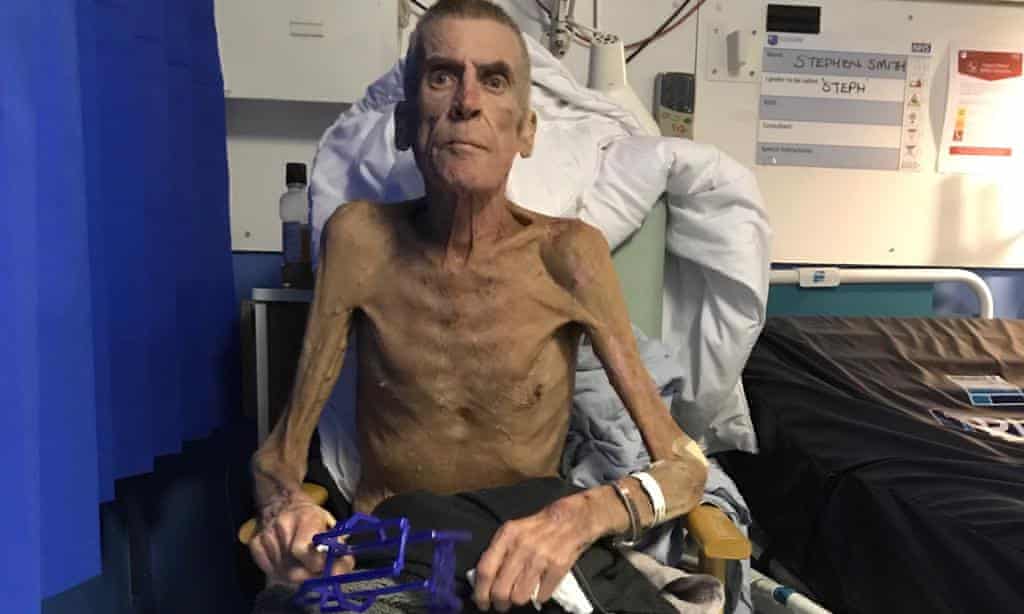
Yes, what I’m saying is political; but it is not intended to be party political. It’s true whether you’re Labour or LibDem or Conservative. The important thing is that we’re Christians. I’m saying that, as Christians, we should have a view on these things. We should call them out; we should stand against them, because we are Christians. We should, if we have a spare room, consider welcoming some refugees to stay with us when they first arrive. We should tell our politicians that it’s not acceptable not to put sprinklers in high rise council blocks like Grenfell Tower, (even though government ministers have promised to do it); tell our politicians it’s not acceptable not to pay proper compensation to the people whose lives have been ruined by the Windrush scandal; it’s not acceptable that thousands of people – last year, over 4,000 – are denied benefits on the grounds that they are fit to work, and then are so ill that they die within three months of that decision. It’s not acceptable that the newspapers should be full of pictures of a poor man, Stephen Smith, so emaciated that his bones are sticking out, so obviously desperately ill, denied benefits, on the ground that he is ‘fit to work’: he died. But not until he had won an appeal in court, as 70% of the appeals are won. [See https://www.theguardian.com/commentisfree/2019/apr/22/stephen-smith-benefits-system-dying]

This institutional meanness doesn’t just come out of the air. Just as we are saints and angels with the Holy Spirit in us, we have God’s power in us. We are not impotent. We have God’s power to do something about it. We need to speak to our MP, to write letters, to demonstrate on the streets if necessary, to rise up.

So today the message, the Easter message, is that we have seen the Lord. We have seen him at work in our fellow saints and angels. Let us join them, let us take that divine power and use it.

Stephen Smith

‘To be a Christian is to be attentive to signs of God’s action in the world, and this is especially true in Holy Week and at Easter when – the faithful believe – Jesus by his death and resurrection revealed the nature of God’s relationship with humanity.’ Sometimes one finds profound theological statements in unlikely places. That sentence was from the first editorial in the Guardian on Wednesday 17th April. It is perhaps a slightly different way of putting the profound words ‘God so loved the world that He gave His only son …’

The three hours’ devotion service on Good Friday is concerned with sacrifice, about Jesus’ sacrifice, his terrible suffering and death. The service is unlike any other one in our Christian year. What makes it special is that we try to get really close to Jesus in his last hours, to understand what happened to him and what he did; as we often say in a theological context, to walk alongside him, or maybe rather to have him walk alongside us, in his time of trial.

To say the service is unlike any other one is not quite right, because every time we celebrate Holy Communion we remember Jesus’ sacrifice – ‘in the same night that he was betrayed, he took bread, and when he had given thanks to thee, he broke it and gave it to his disciples… and likewise after supper he took the cup; and when he had given thanks to thee, he gave it to them, saying, Drink ye all of this, for this is my blood of the new covenant’. The heart of the Eucharist service is a memorial of the Last Supper, before Jesus’s crucifixion and death. I’m not in any way trying to take away the significance of the holy Eucharist, but I am saying that the Good Friday service takes you further and takes you deeper in understanding, or rather, shall we say, in appreciating, what Jesus went through.

What I am going to try to do now is to address that question of understanding. I hope that you will more fully appreciate what Jesus suffered, what he went through; and to some extent you will understand why, at least in the historical sense of who did what to whom.

I’m not going to touch on the mechanics of the crucifixion or the literal historical data; what I want to concentrate on is trying to explain it. Why did Jesus have to die?

Perhaps today it’s more a question ‘Why did He die?’, not necessarily why he had to die. You could say, following the words of the Creed, that Jesus’ death was for us – ‘who for us men and for our salvation came down from heaven and was incarnate by the Holy Ghost and the Virgin Mary and was made man, and was crucified also for us under Pontius Pilate’. Jesus himself said that ‘greater love hath no man than that he should lay down his life for his friend’. (I am quoting from the Book of Common Prayer, 1662, and the Authorised Version of the Bible, 1611, so it is necessary to point out that ‘man’ means ‘human being’). Or again, we hear that Jesus is the ‘propitiation for our sins’, making up for what we have done that is sinful.

There is a powerful romantic theme that occasionally people do heroic things where they suffer in somebody else’s place. St Paul, in his letter to the Romans [5:7-8], contrasts what you might call ordinary heroism, risking your life or even losing your life, to save someone else whom you might not know particularly well, but have nothing against, and what Jesus appears to have done, which is to give his life not for just anybody but for people who definitely don’t deserve it, who are sinners.

We don’t really talk about ritual sacrifice much these days. The idea of going to a temple and slaughtering some animal to give it ritually to God is completely alien to us in our modern world. But I think we know how it was supposed to work: that nobody could measure up to God’s perfect standard, and to the extent that you fell short – an example of falling short would be Adam and Eve in the garden of Eden – to the extent that you fell short you had to ask God for forgiveness, to make it up to him, to turn away God’s wrath.

This is allied with the idea of the Last Judgement, either at the end of the world, (if we can imagine that), or at the end of a person’s life. And again, although we couldn’t really describe with any certainty what to expect at that End Time, as it is called, there is a very common idea that there will be some kind of last judgement; and indeed in the Bible at the end of St Matthew’s Gospel there is a picture of the last judgement, the division of the sheep from the goats. ‘The Son of Man shall come in his glory and all the holy angels with him. Then shall he sit upon the throne of his glory and before him shall be gathered all nations. And he shall separate them one from another as a shepherd divideth the sheep from the goats’ (Matthew 25:31-32). In that context, Jesus is taking the punishment that sinful man would otherwise deserve.

But there is a little question mark. It is easy to miss this, but particularly in the context of this very solemn, contemplative service, when we are trying to get as close as we can to follow in Jesus’s footsteps on the way to the place of the Skull, Golgotha, where he was crucified, the little niggle, if you like, is quite a major issue in fact. It is this. God gave his only son. What does the word ‘gave’ mean, here? God is, after all, the creator and sustainer of everything and

everyone. Did He give his only son over to be hurt, to be whipped, to be insulted, to be humiliated, to be tortured and ultimately killed in the most bestial way? Because if he did that, how can we say that God is a loving God, that God wants the best for all of us, and if there is evil in the world, it has come in against God?

As you know, sin isn’t just, isn’t really at all, a question of doing bad things. It has a very particular meaning. It is about being separated, divided off from God, cut off from God. And the ‘salvation’ that we talk about, that we believe in, the eternal life – ‘so that everyone who believes in him may not perish but have eternal life’ – that salvation is coming together with God, being united eternally. So in that context how could God give his nearest and dearest over to be horribly hurt and then killed? Something doesn’t add up.

At the very least it looks as though there is a paradox. How could the good God hurt anyone, least of all his own son? And if you were concerned about that, put yourself in Jesus’ position. You would feel uniquely deserted. We will say, towards the end of this service, the terrible words of Psalm 22: ‘My God, my God, why have you forsaken me?’ It’s what Jesus said as he suffered. There is no more terrible protest in the whole of literature. ‘My God, my God, why have you forsaken me?’

But at the end of the Stations of the Cross, these days the last station is usually the station of the Resurrection. These days, particularly since the Roman Catholics dusted off the old idea in their second Vatican Council in the sixties, the most important message to the world from Easter is the message of what they call the Paschal Mystery, the ‘unity of the death and resurrection of Jesus’. The Paschal mystery; the mystery is that unity, that putting together, of opposites; that everything to do with Jesus is the opposite of what you would expect.

Think of the Sermon on the Mount. Love your enemies. Turn the other cheek. Don’t retaliate. The exact opposite of the normal thing to do. In the Beatitudes, everything is back to front. ‘Blessed are the poor in spirit.’ You would have thought in the context of being close to God himself – the most theological situation you could possibly be in – that the last thing you would possibly want, in heaven with God, is to have weedy people round you who have no particular spiritual gifts. But they are blessed. ‘Theirs is the kingdom of heaven’. That’s crazy.

It’s more straightforward to understand ‘Blessed are they that mourn’. For ‘They shall be comforted’. That is a contrast, but it is an understandable one. You might hope for comfort. Jesus assures it.

But ‘Blessed are ye when men shall revile you and persecute you, and shall say all manner of evil against you falsely for my sake. Rejoice and be exceeding glad, for great is your reward in heaven.’ Doesn’t sound happy – but happiness is assured.

Think of the Magnificat, the most revolutionary text this side of Karl Marx. ‘He hath put down the mighty from their seat, and exalted the humble and meek. He hath filled the hungry with good things, and the rich he hath sent empty away.’ ‘The rich man in his castle, the poor man at his gate.’ Why don’t we sing that verse of ‘All things bright and beautiful’ any more? Mrs Alexander wasn’t saying it was right when she wrote that verse. We shouldn’t just shut it away. It’s shocking, and it’s meant to be.

There’s a sort of tension on Good Friday, there’s another sort of paradox; in a very sacramental way, for Jesus to be uniquely alive, alive in a new way that no-one had ever seen before, the opposite had to be true. He had to be very, very dead. But except in the very minimal sense that God, the creator and sustainer of all things, must be behind everything, everything that happens, I think we can explain Jesus’ suffering, not in terms of cruelty by his father, but in terms of the waywardness of sinful man.

When you look at the details of the trial before Pontius Pilate, there isn’t an inevitability about what happens. It is the active badness, the active sinfulness of the chief priests and scribes which catches Jesus. Pilate gave them a good way out if they had got carried away by the mob, by offering Jesus as the prisoner to be released in the traditional way at Passover time. But they positively chose – it was deliberate – to release the bad man and to kill off the good one. It was another paradox, and another counterintuitive.

But as you go through the Good Friday service, metaphorically walking behind the cross with Jesus, I do suggest that you can hold your head high and recognise him truly as your king, because that tomb will definitely be empty. This is Jesus working out the way to salvation: salvation, a relationship with God, a close relationship with God. That tomb will definitely be empty.

One implication of that is that there’s no need for a priest to stand between us and God. Jesus is the great high priest, who has opened the sanctuary to us. In the letter to the Hebrews [chapter 10], we will hear that the Lord says ‘I will remember their sins and their lawless deeds no more,’ and the letter goes on to say, ‘where there is forgiveness there is no longer any offering for sin. Therefore my friends since we have confidence to enter the sanctuary by the blood of Jesus, by the new and living way, that he opened for us through the curtain, let us approach with a true heart in full assurance of faith, with our hearts sprinkled clean from an evil conscience’.

It’s not a question of buying off God’s wrath. It’s the other way round. God will raise Jesus from the dead, in the Easter morning miracle that we will joyfully celebrate. There it is. There is forgiveness and there is no longer any offering for sin. There will no longer be any blood sacrifice.

But first we must follow Jesus. To come out into his blessed light, we must follow him into the darkness.

This is an edited version of a reflection originally given by Hugh Bryant at the Three Hours’ Devotion service at St Mary’s Church, Stoke D’Abernon, on 19th April 2019.


I am standing for the Labour Party in Cobham and Downside. I’m general manager of Cobham Area Foodbank. The Tories’ Universal Credit has increased demand on our food bank by over 50% since UC came in at the end of  November. 

I am campaigning to stop the night closure of Painshill Fire Station.

Surrey’s consultation proposal, ’Making Surrey Safer’ foresees ‘savings’ (actually, cuts) of between £2m and £2.5m. 

Closing fire stations at night and relying on risk prevention is not an answer if it is your home that is on fire, perhaps with children or disabled elderly people trapped inside. Your home may not catch fire at night very often, but if it does, you do not want to find that the nearest fire station is shut. 

Animal rescue is to be classed as ‘non-emergency’ and charged for. How does this square with our love of and basic decent instinct to care for animals? 

As a former marine insurance underwriter, I understand catastrophe risk – and I don’t agree with Surrey CC’s proposals.

VOTE FOR HUGH BRYANT LABOUR PARTY X

Sermon for the Second Sunday of Lent, 17th March 2019

Genesis 15:1-12, 17-18, Philippians 3:17-4:1, Luke 13:31-35

As we woke up on Friday, to hear the news about the terrible shootings in the mosques in Christchurch in New Zealand, the New Zealand Prime Minister, Mrs Ardern, made a moving statement about the fact that it seems clear that the 50 people killed were the victims of a racist, Islamophobic terrorist. Mrs Ardern said, ‘Many of those who will have been directly affected by this shooting will be migrants, they will be refugees here. They have chosen to make New Zealand their home and it is their home. They are us.’

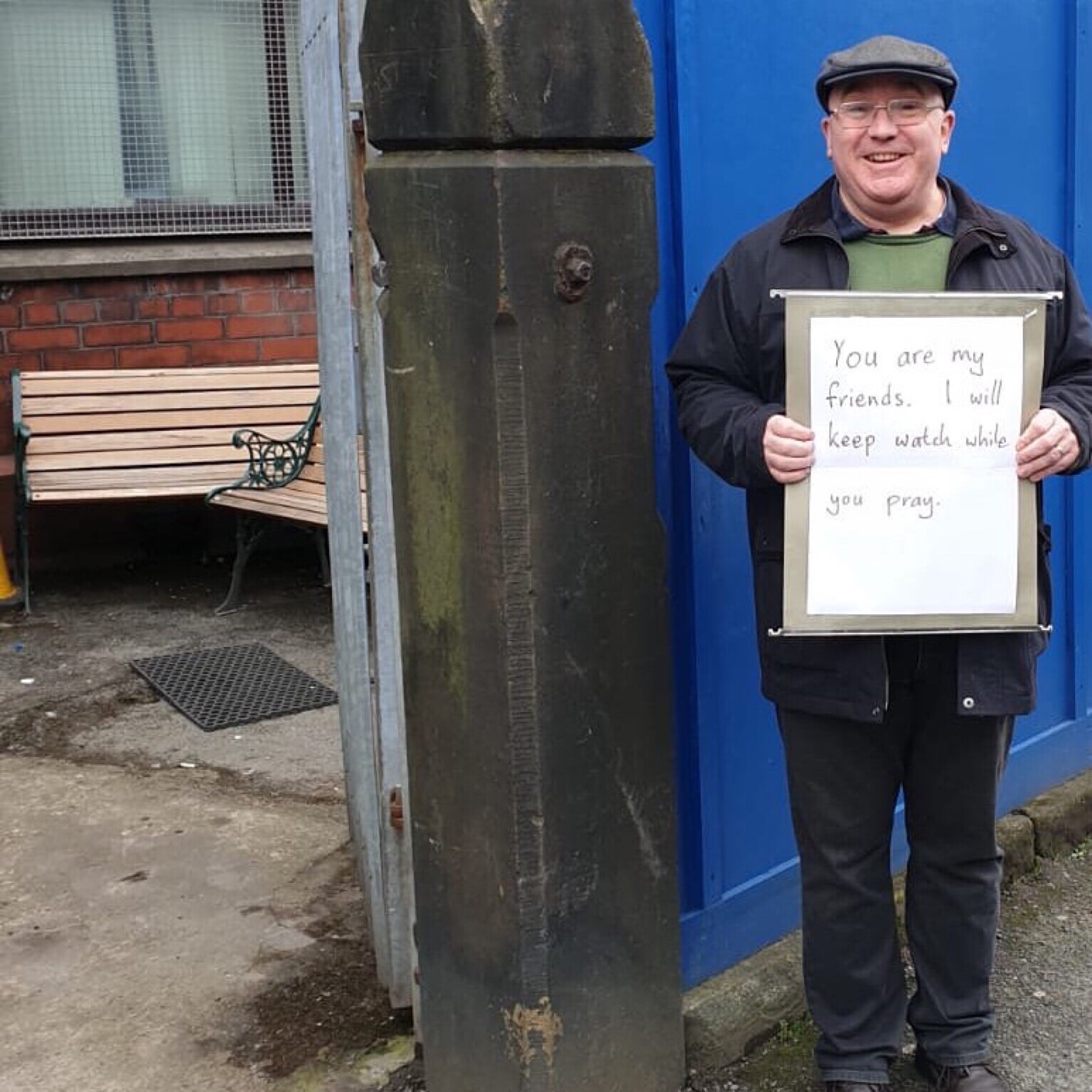
A bit later on, a picture appeared on Twitter [reproduced above] of a man who, if I can say this, did not look like a Moslem, but rather like Andy Capp in the cartoons, in a flat cap, standing smiling outside a mosque in Manchester with a placard which said, ‘You are my friends. I will keep watch while you pray.’

Terrible atrocities do sometimes seem to bring out beautiful and uplifting thoughts, like those of Mrs Ardern and of the man in the flat cap outside the mosque in Manchester.

In our Lent study groups we are going through the Beatitudes, the ‘blessed are they’ sayings which Jesus spoke at the beginning of the Sermon on the Mount in Matthew 5.

The second one, perhaps the right one at a time of tragedy, is ‘Blessed are those who mourn, for they will be comforted.’ This is one of those short sentences that contains impossibly dense and complicated ideas. On the face of things, for somebody to be mourning, to be sad, to be heartbroken, is not in any sense the same as to be fortunate, which is what the word translated as ‘blessed’ means.

How lucky for you that you are heartbroken; what a wonderful thing it is that you are in floods of tears. Clearly there’s something which doesn’t add up. Try telling the distraught people that were on the TV from New Zealand that they were in some way blessed or fortunate. But really it means, as it says, that those who mourn will be blessed, will be comforted in future: and that is a message of hope after all.

St Paul, in his letter to the Philippians, condemns those who live as enemies of the cross of Christ. Earlier in the chapter we had as our reading, he identifies the people that he condemns. He says, ‘Beware of those dogs and their malpractices. Beware of those who insist on mutilation – I will not call it ‘circumcision’’. Beware of people who tell you you have to become a Jew in order to become a true Christian.

Nevertheless, Paul was proud to tell everybody that he had been circumcised and that he was an Israelite of the tribe of Benjamin, a Hebrew born and bred, and a Pharisee [Phil. 3:5]. He’d thrown it all over, after his Road-to-Damascus experience, and in his letters, for example to the Galatians and to the Romans, he made the point that, in the kingdom of heaven, there is no difference between Greeks, (Gentiles), and Jews.

The Israelites had been the chosen people of God, and the others, the Gentiles, the ‘nations’, were the great unwashed. But St Paul’s mission was to bring the good news of Jesus precisely to those Gentiles, to those who were not circumcised. He said, ‘Our citizenship is in heaven.’ Ordinary nationality doesn’t apply in heaven.

But originally, Paul – and Jesus – were Jews, sons of Abraham, descendants of Abraham. The word of the Lord came to Abraham and said, ‘Look toward heaven and count the stars; because that’s how many your descendants will be.’ The sons of Abraham. They were Israelites, the chosen people of God.

The gunman is supposed to have said that one of his reasons for shooting Moslems was because he saw them as strangers, ‘invaders’. At the beginning of this week in morning prayers we were reading from the Book of Deuteronomy, where Moses speaks the words of the Lord, a prophecy about offering sacrifice of the first fruits of the land, the land of milk and honey, which the Israelites have been led into, the promised land. Moses tells them to say in their prayers that they are descended from ‘a wandering Aramean’, or from ‘a Syrian ready to perish’, that they have been led into Egypt and then eventually out of Egypt again, as strangers in the land. Even they, the chosen people, started out as strangers.

There are many passages in the Book of Deuteronomy, and in the Jewish Law generally, which St Paul would have been very familiar with, which impose on Jews a duty to care for a stranger that is within their gates, to care for strangers along with orphans and widows. That is the spirit that Mrs Ardern has so eloquently reminded us of. It is not a spirit of antipathy towards immigrants and refugees, not against strangers, not against people who are different from ourselves.

This is such a difficult area. There are so many apparent paradoxes. The Jews, refugees, made it to the promised land; they went to the holy city, Jerusalem, and set up the temple there. ‘Jerusalem the golden, with milk and honey blest’.

But Jesus points out that, because that is where the council, the Sanhedrin, is based, it is only in Jerusalem that he can be condemned, and that Jerusalem is a city that kills prophets, that throws stones at people who are sent to it.

Mrs Ardern was one of those world leaders, like Mrs Merkel in Germany, who has dared to extend a welcome to refugees. She still extends that welcome. But what about us? The challenge to us today is surely not to be fixated with ‘taking back control’, with restricting immigration and upholding national identity, however important some of those things might seem to be at first.

Jesus said, ‘Strive to enter in at the strait gate. Struggle to get in through the narrow door. For I tell you that many will try to enter and not be able to. You may stand outside and knock: say, ‘Sir, let us in.’ But he will only answer, ‘I do not know where you come from.’ [Luke 13:24]

Where do we come from? You could say that Jesus makes getting into the kingdom of heaven seem like a refugee trying to come ashore in Italy, or trying to get through at the Hungarian border or even being caught up in our own Government’s ‘hostile environment’ at Heathrow today. Contrast that with what Mrs Ardern said. ‘ … They will be refugees here. They have chosen to make New Zealand their home. It is their home. They are us.’

The challenge for us as Christians is to raise our sights above the earthly ghastliness which stems from narrow nationalism, and to seek what is truly heavenly. ‘Blessed are those who mourn, because they will be comforted.’ Let us pray that, with God’s help, we can become channels of peace, so that we too can say that they are our friends, and that we will keep watch while they pray.

Sermon for Evensong for the Meeting of the Guildford Branch of the Prayer Book Society in the Founder’s Chapel, Charterhouse, on 9th March 2019

Psalms 47,48 and 49; Genesis 41:1-24; Galatians 3:15-22

At the moment I’ve got a young Turkish couple staying with me, who are really delightful people, whose only fault, so far as I’m concerned, is that the wife is for ever trying to feed me with Turkish delicacies.

On Wednesday I bumped into them when I got home at the end of the day, and after a certain amount of whispering, the husband asked, excusing himself if it was rude, but, did I know that I had a big dirty mark on my forehead? I had to explain to him – because he is a Moslem – that it was the ash from Ash Wednesday.

So it’s that time again – it seems to come round quicker and quicker as the years go by – when we are supposed to reflect, take stock, follow Jesus on his 40 days in the wilderness, and amend our lives: change our minds, repent, in the face of the momentous events of Holy Week and Easter.

Here in the Prayer Book Society we all come from different parishes, and in each parish I’m sure there are study groups and Lent activities for everyone to take part in. At St Mary’s in Stoke D’Abernon we are following Bishop Steven Croft’s Pilgrim course, in which we study the Beatitudes at the beginning of the Sermon on the Mount: ‘Blessed are the poor in spirit,’ and so on.

We could, I’m sure, take a straw poll of the courses that each of us is following, or the Lent activities or Lent sacrifices which we are all making, in order to make this ‘40 days’ special and to bring home to us the seriousness of it.

I wonder if there is a distinctive Prayer Book approach to Lent: do we get any ideas from the Bible readings prescribed for today? I must confess that when I first read our first lesson, about Pharaoh’s dream, the seven good kine, cows, and the seven ‘ill favoured and leanfleshed’ ones, and the seven good ears of corn and seven shrivelled-up ones, I wondered whether the compilers of the Lectionary were being cruel to us and inflicting yet more worries about Brexit on us.

I’m sure that I’m not the only one who occasionally wakes up in the middle of the night, frankly very worried about what seems to be happening to our country, and not knowing where it is all going to end. Wouldn’t it be nice to have someone who could forecast the future, or at least interpret one’s dreams, as Joseph did for Pharaoh?

But Joseph pointed out that he wasn’t being a fortune-teller in his own right, but that he was doing something prophetic, that the words were being given to him by God. He was God’s mouthpiece. Seven bad years, seven good years; famine is coming along, is what God said to Pharaoh through Joseph. And Pharaoh, with Joseph’s help, was able to organise his country to deal with the famine which was coming. God was speaking to his people through Joseph.

And then again, there is the passage from Galatians, which may be quite difficult to follow. I’m not quite sure how many of us here are lawyers, but I think it probably helps if you are or were one, as indeed I was.

So here goes. ‘Though it be but a man’s covenant, yet if it be confirmed, no man disannulleth, or addeth thereto.’ Once a contract has been signed – a ‘covenant’ is a contract – once it has been agreed, it can’t be unilaterally cancelled or added to. I definitely won’t go anywhere near the discussions in Brussels about the so-called ‘back stop’ here: but you can see the point. Having made an agreement, it is what it is. Unless both sides agree, one side can’t just unilaterally cancel it or change it, add bits to it.

‘Now to Abraham and his seed were the promises made.’ What St Paul is saying is that God made contractual promises to Abraham. They made an agreement. If you worship me and keep my commandments, then I will keep you safe and you will be the founder of my chosen people. This was a promise to Abraham ‘and his seed’, as our Bible puts it: to Abraham and his descendants. Actually, not to his descendants, plural. St Paul’s point is that the word ‘seed’ is singular, so it means, ‘to Abraham and his descendant, singular’. So the beneficiary of the contract is Abraham’s descendant, singular. And that descendant is ‘thy seed, which is Christ’. This is all about a special kind of covenant, a will. God has bequeathed the benefit of his promise to Abraham’s descendant. He is ‘heir to the promise’.

St Paul goes on. ’And this I say, that the covenant, that was confirmed before of God in Christ, the law, which was four hundred and thirty years after, cannot disannul’ You have to read this upside-down. The law, which came 430 years later, can’t override the covenant. St Paul is drawing a distinction between God’s original promise to Abraham, and the law which he gave to Moses in the tablets of stone, the Ten Commandments.

St Paul is pointing out that the Jewish Law, the first five books of the Old Testament, based on the Ten Commandments, is a comprehensive system to keep people on the straight and narrow. ‘It was added because of transgressions’, because people were doing wrong, and it was put there to take care of the situation ‘till the seed should come to whom the promise was made…’ and that is the seed, ‘which is Christ.’

The Jewish Law and the basic promise to Abraham are not in conflict with each other. ‘Is the law then against the promises of God? God forbid …’ But you have to understand what is of fundamental importance and what is, in effect, a temporary expedient, to make for a good society till the kingdom of God comes. Remember that Jesus himself said, ‘Think not that I am come to destroy the law … but to fulfil’ (Matt. 5:17) – but St Paul wouldn’t have been able to read St Matthew’s Gospel, so he might not have known exactly what Jesus had said.

This is all squarely in the ambit of Paul’s main mission, his main task, to bring the Gospel, the good news of Christ, to the Gentiles, to the non-Jews, and like all the letters, it’s like one half of a telephone conversation: you have to imagine what the other party in the conversation was saying.

Paul ticks off the Galatians – ‘O foolish Galatians’, at the beginning of chapter 3; and it becomes apparent, when you read the letter, that what he was berating the Galatians for was the fact that, whereas originally they had simply accepted the Gospel and started to follow and worship Christ, over time they had begun to believe that they couldn’t just become Christians, but they had to become Jews first.

Only the Jews could obtain salvation, and therefore, in order to be a good Christian, you also had to be a good Jew. You had to carry out all the Jewish Law and also, if you were a man, you had to be circumcised. But St Paul pointed out that this was not necessary, not right: that we are saved by faith, not by works, not by simply carrying out the dictates of the Jewish Law. Paul wrote, ‘if there had been a law given which could have given life, verily righteousness should have been by the law.’

And then you will see, if you read on – your afternoon homework, after the match tea, might be to read the rest of the Letter to the Galatians – you’ll see how it works. And you’ll see that although you may be tempted to do bad things, what will straighten you out is not following the dictates of the Jewish Law but having the power of the Holy Spirit in you, which will bring the ‘fruits of the Spirit’. So instead of ‘fornication, impurity, and indecency; idolatry and sorcery; quarrels, a contentious temper, envy, fits of rage, selfish ambitions, dissensions, party intrigues, and jealousies; drinking bouts, orgies, and the like , instead of those, the fruit, the harvest, of the Spirit, as he puts it, is ‘love, joy, peace, patience, kindness, goodness, fidelity, gentleness, and self-control: but he says there is no law dealing with things like this. ‘[T]hose who belong to Christ Jesus have crucified the lower nature with its passions and desires. If the Spirit is the source of our life, let the Spirit also direct our course’. It’s tempting to think that it may be that the idea of being ruled solely by gifts of the Spirit could extend to ways of worship. You know, you don’t need any rules.

It seems to me at least arguable that, if you don’t have to be circumcised, in the context that St Paul found himself in, today we must recognise that people can come to Christian faith and gain salvation through the grace of God in all sorts of different ways.

Worshipping with the help of the Prayer Book is certainly fine, and is a good example of true worship, ‘worth-ship’, bringing our best to God. But equally, we mustn’t turn it into an object of worship in itself. That would surely be idolatry.

Maybe after all, what speaks to us as Prayer Book Society members today particularly is in our psalms. Take Psalm 47:

Clap your hands together, all ye people:

O sing unto God with the voice of melody

This psalm contains the deathless line, which Miles Coverdale wrote and which has even survived almost intact into Common Worship:

God is gone up with a merry noise:

I have to say that I’ve always had, in the back of my mind, a picture of somebody letting off a balloon. I think that is how I picture going up with a merry noise. But why not? If you read all the psalms today, you will be in part uplifted, in part enlightened, and in part, chastened. Remember Psalm 49:

There be some that put their trust in their goods 

and boast themselves in the multitude of their riches.

…[T]hey think that their houses shall continue for ever 

 and that their dwelling-places shall endure from one generation to another; and call the lands after their own names.…..This is their foolishness ……They lie in the hell like sheep, death gnaweth upon them, and the righteous shall have domination over them in the morning.

These psalms, 47,48 and 49, are psalms which it would be very good to meditate on as part of your Lent observance.

But it doesn’t seem to me that there’s any reason for Lent to be relentlessly gloomy. Just thoughtful.

O sing praises, sing praises unto our God:

O sing praises, sing praises unto our King.

Sermon for Evensong on the First Sunday in Lent, 10th March 2019

Psalm 119:73-88; Jonah 3; Luke 18:9-14

Turning is sometimes a bit controversial. ‘The lady is not for turning’ they said about a former Prime Minister. The current Prime Minister is praised for the fact that she ploughs on and does not turn from her desired path. It’s supposed to be a very good thing to be single-minded and steadfast, and not to deviate from your objectives.

But actually, a major theme of Lent is in direct contradiction with this. Lent is, among other things, about repentance, repentance meaning changing your mind, μετανοια in Greek. There’s a good example of it in our first reading from Jonah, about the city of Nineveh, the ancient Assyrian city in upper Mesopotamia, located on the outskirts of the present-day Iraqi city of Mosul. On the banks of the River Tigris, Nineveh was at the heart of the earliest human civilisation.

God didn’t like what was going on in Nineveh. He instructed the prophet Jonah to go there and denounce them, tell them the error of their ways. Jonah didn’t want to face them, and decided to run away to sea instead; but the ship got caught in a storm, and the sailors were deciding, by casting lots, whom they should chuck overboard to lighten the ship. Poor old Jonah drew the short straw. They asked him more about himself: where he came from and what he was supposed to be doing. 

Jonah told them that he worshipped the one true God, who made both sea and land. He also told them that he was escaping from this god. ‘What shall we do with you,’ they asked, ‘to make the sea go down?’ Because the storm was getting worse and worse. Jonah said, ‘Take me and throw me overboard: and the sea will go down.’ Jonah said that he knew it was his fault that their ship had been hit by this great storm, because he, Jonah, had disobeyed God. Well, they chucked Jonah over the side, and Jonah was swallowed up and saved by being in a whale.

Then he emerged from the whale, came back and had another go. This time he did carry out what God had instructed him to do, and he went to Nineveh to tell them the error of their ways. That’s where we come in and pick up the story. When Jonah had warned them that in forty days their city would fall – impliedly, because of their evil deeds – they changed; they repented. The king of Nineveh arose from his throne and covered himself in sackcloth and ashes. He spread a decree through Nineveh, telling the population not to eat or drink, but rather to show their penitence and turn from their evil ways. 

God saw what they’d done, that they’d turned from their evil ways, and ‘God repented of the evil’, he changed his mind about it, and he decided not to destroy the city. Changing your mind, here, is a sign of magnanimity, generosity of heart. God is, by definition, omnipotent. He can do anything. He has no need to change his mind. But he did. It wasn’t a sign of weakness. And so was the way the King of Nineveh reacted to Jonah’s preaching. He didn’t dig in his heels and pretend that what they were doing was right. He was big-hearted enough to admit that they were doing wrong, and they needed to change. 

Knowing that you’re right, and the other fellow is wrong, is all part of this. In the New Testament, Jesus has this telling story about the Pharisee and the publican, the privatised tax-man. Even Margaret Thatcher – of revered memory, of course – never tried to privatise the Inland Revenue: but the ancient Romans did. It was just like Capita or any other other outsourcing people. They incentivised the private tax collectors. You got to keep a percentage of what you collected, so, the more you collected, the more you earned. 

Peter Mandelson and New Labour would have been fine with it. They’re supposed to have said, ‘We’re relaxed about people getting filthy rich’. Just imagine. What a great franchise opportunity. No wonder the people hated the ‘publicans’, the tax collectors. But this publican had an attack of conscience. Although he was working within the rules, he knew it was wrong. 

But the respectable bod, the Pharisee, paraded his virtue and charitable giving. He thanked God that he wasn’t a sinner like the publican, an extortioner, unjust – and sleeping with other men’s wives as well. A thoroughly bad lot. But he, the Pharisee, was just fine. He didn’t do any of the bad things that the publican did. But even so, Jesus reckoned that the bad old taxman was the one who was more worthy of salvation. All he said was, ‘God be merciful to me a sinner’. Jesus reckoned he would get that mercy.

I think this is a lesson for us today. What do we feel about whether we should let people whom we disagree with, or worse, whom we think are doing something evil, worship with us and be part of our church community? There’s an article in this week’s Church Times by the Dean of St Paul’s, Dr David Ison [See https://www.churchtimes.co.uk/articles/2019/8-march/comment/opinion/the-looking-glass-world-of-the-judgemental]. It is focused on the question whether LGBT people can be denied Holy Communion, because allegedly they are sinners, the question whether they are ‘worthy’ to receive. But it could equally be about anyone whose beliefs don’t chime with ours. I know that, for example, I disapprove very strongly of UKIP, and what I think it stands for. I think that in many ways UKIP is actually evil. But I know there are people who come to this church who support UKIP. Dr Ison says, in effect, that when we examine our consciences, we are all to some degree ‘unworthy’. We are all like the people in Jesus’ parable. It would be wrong for me to parade my supposed virtue in contrast with the sins of those whose views I disapprove of. Like the King of Nineveh, I must change my mind, I must repent.

A few years ago I tried to persuade the PCC at Cobham to make St Andrew’s an Inclusive Church, capital I and capital C – part of the Inclusive Church network. It would involve not just being inclusive, welcoming all sorts of people: certainly LGBT, lesbian, gay, bisexual and transsexual – or ‘intersex’, the ‘I’ in LGBTI, but also telling the outside world, putting a statement of welcome for all, in public, outside on the church notice board. 

And not just LGBTI people would be welcome: black people, foreign people, people in scruffy clothes, people who might be homeless dossers, just coming in to be warm. Anyone. If your church belongs to the Inclusive Church network, there’s a sign outside to tell people, whoever they are, that they are welcome.

Do you know how I got on with my proposal to St Andrew’s PCC? Any ideas?  I lost, 19 votes to 2. They said, ‘Of course we’re inclusive. But we mustn’t offend the bigots by making it too obvious’! We mustn’t offend the bigots. Really. That’s what they said. Now I think that Inclusive Church is right within the ambit of what Jesus was talking about with his parable of the Pharisee and the tax-man. Even though the tax-man probably wasn’t ‘worthy’, he was welcome – welcome not just in the church, but even in the Kingdom of Heaven. 

I really think that our churches should be genuinely open and welcoming, and as Dean Ison says, you can’t start to exclude people because they don’t measure up to your personal standards, however apparently scriptural those standards might be. I know from talking to people who have felt shy about coming to a church, because they are worried that they are ‘different’ in some way, that it makes a big difference if the church has a sign outside which confirms publicly that there is a welcome inside for everyone, however different, or even defective, they might appear to some people to be. 

For me, one thing that means is learning to welcome even the UKIP people. It means changing my mind: repenting. During this Lent, what do you think you might change your mind about? Are you like the Pharisee, or like the publican? Or are you like the King of Nineveh, even? I hope and pray that you are.

Amen.

Hugh Bryant

I am the Vice-chair of the local constituency Labour Party and I’m presenting the petition today.

I am also the General Manager of Cobham Area Foodbank. The Foodbank parks its van at Painshill Fire Station, which is also one of the Animal Rescue centres. Because of our regular contact with our firefighters, I believe I am well-placed to know how well-founded the public anxiety about possible cuts is.

We understand that the narrow focus of our petition – that Esher Fire Station should not be closed – may no longer be moot, as I understand that there is currently no longer a proposal to close it – although there has been no confirmation of this. I understand that a new County safety plan will be open for consultation next week, on 4th March.

Our petition is aimed wider than this. We do not think that the fire service – or the animal rescue service – in Surrey should suffer any further cuts. We acknowledge that there has been some new recruitment of fire fighters following the very critical report of HM Inspectorate [for Constabulary and Fire & Rescue Services], which found that Surrey was the worst of the first 14 fire brigades they inspected.

We have very old fire engines – the one at Painshill is 13 years old – and shifts not fully manned, which prevents the fire engines from going out. The previous proposals included ideas of replacing proper fire engines with converted Transit-type vans loaded with fire extinguishers, and further closures of the animal rescue service. This would be saving money at the expense of safety and cruelty.

What if it was your daughter’s pony which had fallen into a ditch and was in distress? If, as happened recently with a cow in a local farm, you had to wait, with the animal in pain, for a Sussex animal rescue team to come out, because the Surrey teams were not sufficiently crewed? What if, when you came home from a nice supper out, it was your house which was on fire because the electrics had shorted or someone had left a pan on by mistake, and the fire engine had to come from the other end of Surrey – or worse, if it wasn’t a proper fire engine at all?

It isn’t right to deny our fire-fighters adequate staffing levels, or to deny them the proper equipment – which means up-to-date proper fire engines with full crews of firefighters. Far from further cuts, local people need the Council to prioritise the necessary extra investment in order to keep us and our animals safe.

Hugh Bryant

26th February 2019