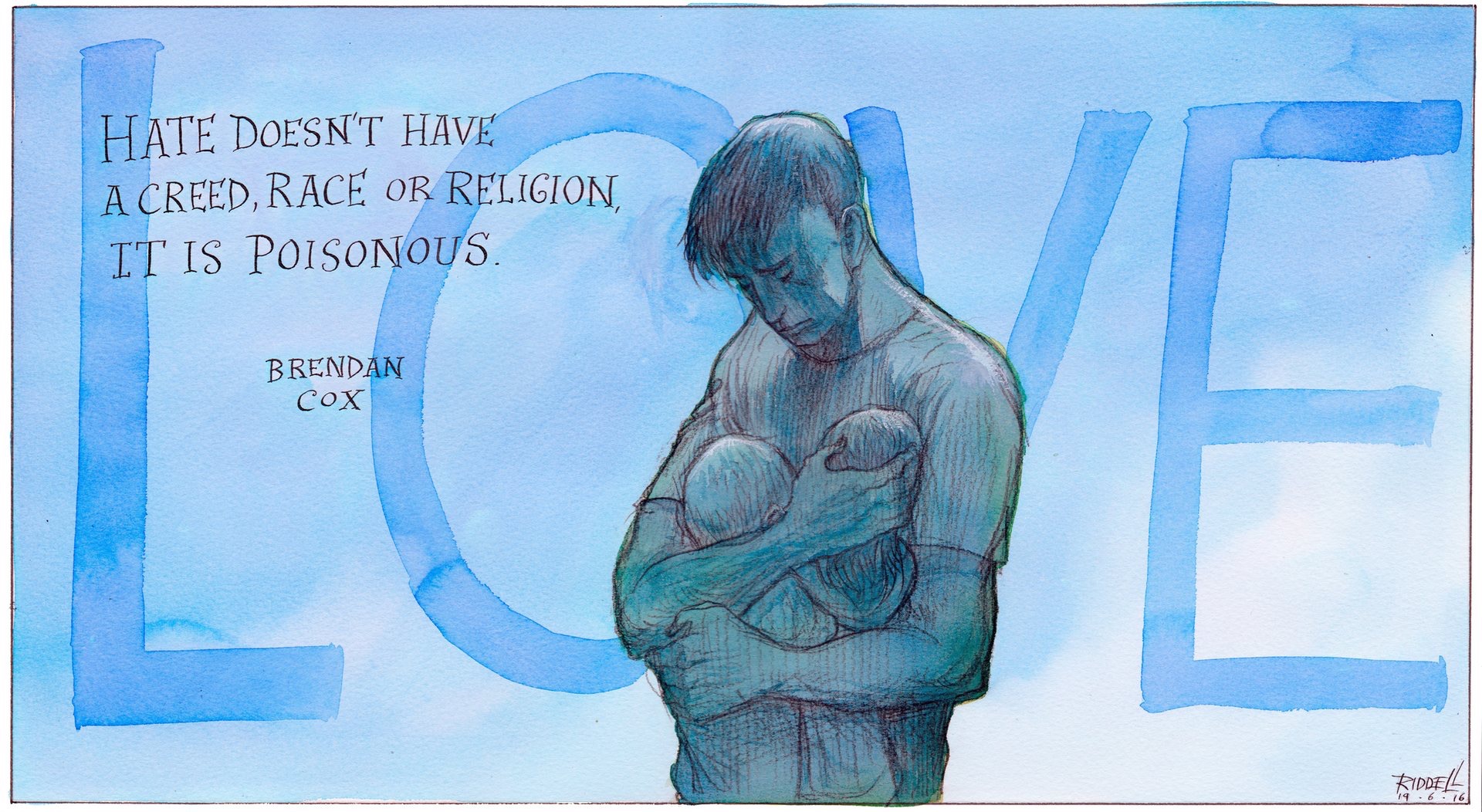
Sermon for Mattins on the Eighth Sunday after Trinity, 17th July 2016
Colossians 1:15-28, Luke 10:38-42

I went to a Confirmation service at Saint Martin’s Church in Camberley this week. Bishop Andrew confirmed seven people, ranging from a teenage boy called Israel to two ladies of mature years, a Mum with grown-up children, a young couple who are getting married, who had attended the Alpha Course and discovered a Christian faith, and the children’s and youth worker at St Andrew’s, our sister church, Esther, who, although she had professed a sincere and deep Christian faith for many years, had never actually been confirmed.

It was one of those services where a couple of the candidates gave a short testimony to explain how they came to faith. These were moving stories. In the midst of adversity or loss, on certain instances, the person had suddenly seen clearly that God, in the person of Jesus Christ, cared for them; that they were not alone in the world or lost, and by bringing Jesus into their lives, their lives suddenly became better; everything made better sense. And they felt the love of their fellow Christians, sometimes as a result of coming to Christian belief, and sometimes as part of coming to Christian belief. 

One lady said how she was walking past the church when there was a carol service; she was bustling along, going off to do some errand or other, when, as she put it, her feet told her to turn off and go into the church, (whereas her mind was telling her to carry on running her errands). And she followed her feet: and in church she found people she already knew in another context, who made her very welcome.

In that fellowship of faith, her own faith was nurtured and grew. In St Paul’s letter to the Colossians, he deals with this, with the heart of our faith, with what St Paul sometimes calls ‘being in Christ’. He describes what Christ is, ‘the image of the invisible God’, the creator, by whom ‘were all things created, that are in heaven, and that are in earth, visible and invisible, whether they be thrones, or dominions, or principalities, or powers. All things were created by him, and for him: and he is before all things, and by him all things consist.’

So Jesus is the image of God the creator, the Unmoved Mover, the creator from nothing. And then St Paul goes on to say, that ‘he is the head of the body, the church: who is the beginning, the firstborn from the dead;’ and that we who are Christians, who are members of his church, are bound up with that creation. It’s not just something that is going on, which we can admire from a distance or comment on with detachment. We are involved: and we are involved in a secret, a mystery, which St Paul proclaimed in his various missionary journeys: ‘the mystery which hath been hid from ages and from generations, but is now made manifest to his saints’. And that secret is ‘Christ in you, the hope of glory’.

In Christ and through Christ, God in Christ is at the heart of our being. And that was what those confirmation candidates, who stood up and told us about their faith, had experienced. Their faith in Jesus had brought them harmony in their lives. They were in a right relationship with God. Bishop Andrew invited the congregation, as we said the prayers towards the end of the confirmation service, to renew our confirmation vows; to reaffirm our faith. We were all very happy to do so, especially as we had all been so inspired by what the candidates said.

Sometimes we let our busy lives intrude and obscure our relationship with God, with Jesus, just as in the story of Martha and Mary. Martha was too busy, doing the chores. She and her sister were at opposite ends of the pendulum swing, I suppose. Mary was almost too spiritual, and Martha, too practical. But Jesus said that Mary had the better part. She was the one sitting at Jesus’s feet and receiving his teaching. And she was doing that rather than preparing lovely food and hospitality – which was what her sister was doing.

I guess we very often come into the same category as Martha, and we are too busy, we have too many things going on. We don’t take enough time, we don’t set aside enough time to say our prayers and perhaps read our Bible or reflect on what Jesus would say or do. Jesus told Martha that she was fretting and fussing about so many things; but that what Mary was doing, sitting at the Lord’s feet: that is the important thing to do. 

Which brings me neatly to another member of the church, somebody who must be unbelievably busy, fretting and fussing about so many things, as Jesus would put it, but who is very happy to let it be known that they go to church; they are part of the Body of Christ, the church.

I am, of course, talking about our new prime minister. As the Church Times editorial said, we wish her well and hope that, with all her duties, she will still get time to go to church. She belongs to the congregation of Saint Andrew’s in Sonning in Berkshire, and her father was a clergyman, the vicar of Wheatley in Oxfordshire.

In her first speech Mrs May went out of her way to emphasise her social concern, saying that her government would look after the poor and the disadvantaged in society. It’s fair to say that a lot of commentators were rather surprised to hear a Conservative Prime Minister offering this message. It was suggested that it might have come just as easily from a Labour leader; but I think the secret is probably that Mrs May is a Christian, and as a Christian she is concerned that we are all one: that we are all one in God’s creation.

‘He is therefore all things, and by him all things consist, and he is the head of the body, the church’. Mrs May is in that body, and she seems very well aware of how it works. Christ in you, the hope of glory. Let us pray that Mrs May continues to feel Christ in her, at work in her, and that she maintains that hope of glory, that sure and certain hope that sustains the family of Christ. 

Sermon for Evensong on the Seventh Sunday after Trinity, 10th July 2016

Genesis 32:9-30, Mark 7:1-23

I’ve just got back from a few days on business in Hamburg. Hamburg is one of my favourite places. As well as being a very beautiful city, a city on a lake, as well as being a very important industrial centre and port, full of life and culture, two universities, two opera houses, a world-class concert hall, a symphony orchestra, and so on, it is also the friendliest city in Germany towards Brits.

They say, ‘When it rains in London, they put their umbrellas up in Hamburg.’ I am very proud to belong to the Anglo-German Club, which is a Pall Mall style club with about 1000 members, which was founded at the end of the Second World War to revive the friendship between the people of Hamburg and the people of the UK. It is situated in a beautiful mansion on the side of the Alster lake.

I met a number of friends last week, a number of German friends. You can imagine that there was an ‘elephant in the room’, something which we had to air before anything else. A typical conversation went this way:
‘What did you do? You were our friends; but now we are not sure. You seem to have rejected us.’ I, of course, as a convinced European and a Remain voter, was extremely embarrassed and apologetic, but I couldn’t get over the fact that a majority of our population have voted to leave the EU.

What happens next? What is the right thing to do? I couldn’t answer my friends in Hamburg. What, indeed, did our country vote for?

It is a difficult question to find out what we as a people actually want to do with the decision to leave the EU. Never mind what we don’t want to do – we don’t want to be part of the EU: but where does that take us?

Is it the case that the people wanted to save £350 million a week and pay it all to the NHS – which is what the Brexit people were promising right up to the end? Although the Brexit people refused to withdraw the promise, as soon as the results had been declared, they admitted that it was not true. There is no more money for the NHS, at least from that source. It never existed.

Does it mean that we are content to allow the NHS to suffer really severe staff shortages rather than continue to employ over 100,000 immigrants in it as we do at present?

Does the vote to leave mean that we should stop immigration into this country completely? Over half of the immigration into this country now is from countries outside the EU, and these migrants are already subject to the ‘Australian-style’ criteria which those in favour of Brexit were arguing for. It still resulted in 180,000 immigrants coming in from outside the EU. Perhaps again, the truth is rather different from the way things were put in the campaign. Perhaps we really need the immigrants.

But, if the popular will really is that there should be a greatly reduced number, does this mean that we don’t want to participate in the single market any more? Freedom of movement of labour is a non-negotiable requirement for entry into the single market. You can’t have it both ways, as Boris Johnson claimed you could.

And so on. All these unresolved questions. I think maybe that some people who voted to leave the EU, if they had met my German friends, and heard what my friends were saying, like “You don’t want us any more; you have rejected us”: might try to say, “Oh no, that’s not what we wanted at all. That’s not what we intended. You are still our friends.”

How? Perhaps people don’t realise that what we have just done as a country is perceived, by the people I met in Germany at least, as doing enormous damage to the European Union. It’s a funny thing for real friends to have done. We might not look like friends any more.

Can we get any guidance from what the Bible says to us today? In today’s Old Testament lesson, there is the story of Jacob coming face-to-face with God. There is the mysterious all-night wrestling bout in which Jacob ends up with a dislocated hip. He brings the bout to an end by demanding and getting from the other side a blessing, a blessing from the mysterious nocturnal wrestler who attacked him.

Perhaps it was a bit like Cato attacking Inspector Clouseau in the Pink Panther; the idea being to keep Jacob on his mettle, on his toes. The place where it happened, Peniel, means, in Hebrew, ‘face to face with God’. It’s a legend. Other ancient writings, like the Epic of Gilgamesh, are said to have similar weird stories about the founders of nations. But it is a very important story, as it marks the founding of the new nation of Israel.

How annoying it is that we, who are looking at, if not the founding of a new nation, at least a revolution in our constitution, how annoying that we have not bumped into God in the way that Jacob did at that crucial time. It would be very good for us to get some confirmation, even indeed after some kind of contest, that we were on the right lines, whichever path we eventually choose: that we are blessed by God.

Think how confused the Pharisees must have felt when Jesus was ticking them off about being hypocrites, playing things by the rules, by the Jewish law, rather than trying to discern what God really wanted.

Why do you wash your hands before you eat? It’s quite interesting that things seem to have gone full circle since the time of Jesus. A lot of the instructions in the Old Testament about what to eat and what not to eat, we would say now, are pretty soundly based in food hygiene. Pork, in a hot country, goes off very quickly, so it’s probably a good idea to steer clear of it.

Similarly, washing your hands before you eat is sensible, because it prevents the transmission of diseases. But then Jesus comes along, and says that it is not what you eat that will do you harm, not what comes in from outside, but the bad stuff that you have in your heart, what comes out from inside you, that causes the trouble.

A philosopher today might well say that Jesus was making what’s called a ‘category mistake’ for the sake of his argument here. The dirt on your hands when you are about to eat is not the same ‘dirt’ as dirty thoughts inside you. They are two different types of ‘dirty’, and strictly speaking, Jesus is confusing them.

I can see that the Pharisees might well have been confused. Why is the Jewish law such a bad thing? It was almost that they were being faced with a kind of revolution. Their old way of life was being upset. After the Brexit vote, we also have been thrown into confusion. What should we do?

What would Jesus have done? Jesus would have been very clearly opposed to the rise of xenophobia and race hatred – a 43% increase in reported race hatred crime – which appears to have been stirred up by the referendum. Of course not everyone who voted for Brexit is a racist or a xenophobe, but it does look as though a significant number of racists and xenophobes have been encouraged in their views by the vote for Brexit.

The Pharisees should have been reassured when Jesus said he came ‘not to abolish the law, but to fulfil it’ (Matt. 5:17): for in fact, Jesus endorsed the Jewish tradition: love your neighbour as yourself, which goes back to the book of Leviticus, chapter 19: and think of all the references in Deuteronomy to looking after the stranger, the alien in your midst, alongside widows and orphans. Love God – and love your neighbour.

In Jesus’ parable of the good Samaritan, the hero, the Samaritan, was not a Jew; he was a foreigner (Luke 10). Or think of the Roman centurion in Capernaum whose servant Jesus healed (Matt. 8), possibly the same centurion who in Acts 10 was called Cornelius: he was definitely not a Jew, but his faith, said Jesus, was greater than anyone else’s he had met, even in Israel. To Jesus, being a foreigner was completely all right.

Think of how the gospels spread. First it was a gospel for the Jews. For the chosen people. Then, mainly through St Paul’s good offices, it became known also to the Gentiles, to the nations of the earth; ourselves among them. No one then was uniquely qualified, by their nationality, to be saved; so why should we, who happen to live here, keep out others who are poor and who are trying to find a place where they can have a better life than where they came from, by working hard? What is the Christian attitude to that?

What do we want now, what did we vote for, in the referendum? There is a Christian way of looking at it; as we weigh up all the twists and turns into which the Brexit vote has led us, we should all remember to try to discern what Christ would have done.

Dear Mr Raab
One of the frustrating things about living in a parliamentary ‘safe seat’ while being a member of a party other than that of the incumbent MP is that one rarely finds oneself in political sympathy with the said MP. You will have noticed this from previous correspondence where I am concerned.
However, in the EU referendum I found myself on the side of the substantial majority of Elmbridge voters who had voted to ‘Remain’, and it was you, as a ‘Leave’ campaigner, who was not in tune.
Now, as I understand things, before any notice can be given for Britain to leave the EU, pursuant to Art. 50 of the Treaty of Lisbon, the provision of Art 50.1 that ‘Any Member State may decide to withdraw from the Union in accordance with its own constitutional requirements’ must be complied with.
In our case, this must mean that the European Communities Act (‘ECA’) 1972 must first be repealed, before notice under Art 50 can be given. This will require a vote in Parliament.
As our MP I call upon you to recognise that a large majority of your constituents do not want to leave the EU, and that a fortiori they will not want you to go against their wishes in voting to repeal the ECA. Will you therefore please assure me that, when the possible repeal of the ECA 1972 comes before Parliament, you will vote against it, in accordance with the express wish of a substantial majority of your constituents?
I look forward to hearing from you.

Yours faithfully

HUGH BRYANT
[Dominic Raab is MP for Esher and Walton.

The Borough of Elmbridge voted 59.5% to remain, and 40.5% to leave the EU, on a turnout of 78% of those entitled to vote.]

Sermon for Evensong on the Fifth Sunday after Trinity, 26th June 2016

Genesis 27:1-40, Isaac blesses Jacob; Mark 6:1-6
Jacob and Esau. Twins. Twins who didn’t get on, even before they were born. Rebekah their mother found that ‘the children struggled together within her’, and she asked the LORD, the Lord God, why. (See Gen. 25:22-23.) The Lord answered, ‘Two nations are in thy womb, and two manner of people shall be separated from thy bowels [which means, born]; and the one people shall be stronger than the other people; and the elder shall serve the younger.’ 
Yes, ‘.. the elder shall serve the younger’. As indeed it turned out. With his mother’s connivance, Jacob conned his aged, blind father Isaac into thinking that he was ‘a hairy man’ like his elder brother Esau, and was in fact Esau – whether one has to imagine some luxuriant chest foliage like the Bee Gees’, I don’t know, but anyway, he was hairy. 
Rebekah dressed Jacob up in his brother’s clothes, and covered his neck and hands in goatskins. Isaac was a bit doubtful – ‘the voice is Jacob’s voice, but the hands are the hands of Esau’, he said, when Jacob first went to see him. The smell of his borrowed clothes seems to have persuaded Isaac – ‘he smelled the smell of his raiment, and blessed him, …’ His raiment, his clothes. But they were not really his. They were Esau’s.
Isaac was taken in. He ‘blessed’ Jacob. He confirmed that Jacob would be the one to inherit. Then in came Esau, the real Esau; it dawned on Isaac that he’d been conned. It’s interesting to see how he reacted. He acknowledged that he’d been taken in. But, for whatever reason, he had given his blessing, and his blessing was his blessing. Jacob would get the inheritance.
The Lord God had been accurate in his prediction. Normally the elder would inherit, by the ancient principle of primogeniture. It still occurs today. When I was little, my younger brother and I had a cousin, older than us, whom we called Uncle John. Uncle John was a kind uncle, and he gave us extra pocket money when he saw us. But he always gave me, the elder one, twice as much as my little brother. Once she found out what was going on, our Mum organised an evening-out of Uncle John’s gifts, so I gave away the surplus and we both had the same.
You can imagine Isaac’s dilemma. Who was telling him the truth? And it wasn’t just an inconsequential thing. Who was going to lead the family when he was gone? 
How does one know whom to rely on? Even Jesus had a credibility problem. ‘A prophet is not without honour, but in his own country, and among his kin, and in his own house.’
Jesus had a problem that all young solicitors know about. It’s never a good idea to stay on at the firm where you served your articles. The older clerks and secretaries will always see you as the callow articled clerk, and not the well-read young assistant solicitor, on his way up. The people you’ve grown up with tend not to be dazzled by your brilliance. 
But the problem is the same. Whom do you believe? Whom do you rely on? Two tribes went to war, as the pop song puts it. Sweeping generalisation follows! The metropolitan elite in London and the Home Counties, educated, graduates, young, not bothered by boundaries or nationalities, on the one hand: and the older, poorer, less educated people, for whom globalisation has not been helpful, in the manufacturing areas on the other. In – or out?
The politicians made strong statements: if this happens, these things will turn out better – or worse. Whom to believe?
In Biblical times, democracy was far more limited than it is today. You would never have had a referendum like the one we’ve just had, in the Roman Empire, or more specifically in Palestine at the time of Jesus. Only the free-born, male, Roman citizens could vote. Educated men.
But even in ancient times, if a popular politician came up who appealed to the masses, unimaginable consequences happened. Here’s what one modern Classics professor has written:
‘For most of its history, the Roman Republic was governed by old political families and reliable power brokers who knew how to keep the masses in line. Elections were held, but they were deliberately designed to give the ruling classes the lion’s share of the popular vote. If the Roman aristocracy, which voted first, chose a man for office, officials often would not even bother to count the ballots cast by the lower classes.
‘On occasion, disgruntled farmers, tavern owners and donkey drivers would rise up and press their rulers for debt relief and a real voice in government, but these revolts were put down quickly with promises of better times ahead and by hiring a few off-duty gladiators to rough up the chief troublemakers. In the late second century BC, the aristocratic Gracchi brothers tried to bring about a political revolution from within only to be killed by the conservative nobility.
‘The man who ultimately brought down the system was a wealthy and ambitious nobleman named Publius Clodius Pulcher, a populist demagogue who refused to play by the rules. ….
‘Nothing was sacred to Clodius. The more audacious his behaviour, the more the public loved him for it. In Rome, for example, Clodius, a noted ladies’ man, committed sacrilege by dressing up as a woman and infiltrating the female-only religious festival of the goddess Bona Dea, with the aim of seducing Pompeia, Julius Caesar’s wife. The scandal led Caesar to divorce Pompeia and gave rise to the famous quip that Caesar’s wife needed to be beyond suspicion.
‘After escaping punishment by employing a large legal team and doling out generous bribes, Clodius entered politics in an effort to secure the respect of the ruling class, which was quick to dismiss him as a buffoon. What Clodius’s critics failed to realise was that he was smart, determined and very much in touch with the frustrations of the common people’. [Prof. Philip Freeman in Huffington Post, http://www.huffingtonpost.com/philip-freeman/trump-rome-populist_b_9659660.html%5D
‘What Clodius’s critics failed to realise was that he was smart, determined and very much in touch with the frustrations of the common people’. He didn’t, however, lead them on towards enlightenment or good government. His leadership of the democracy resulted in the dictatorship of the emperors, and the eventual decline and fall of the Roman Empire. Could this remind you of anyone in politics today?
What, then? Should we distrust democracy? Canon Dr Giles Fraser has written an article [http://gu.com/p/4mt8b?CMP=Share_iOSApp_Other] in which he writes about ‘post-truth’ behaviour. Although it may be stupid to elevate completely uneducated people to high office, there are often ordinary people who can assimilate good theological and philosophical writing, and criticise sloppy thought most incisively. But it is to be regretted the way in which during the referendum campaign academic experts, particularly economists, were shouted down. 
If this is what being in the age of ‘post truth’ means, we should worry about it. During the campaign it was asked about one politician, who was dismissing the possibility that certain adverse economic consequences would follow a vote to leave, whether, if he had appendicitis, he would be content for one of his colleagues to operate rather than a qualified surgeon. He had argued that economists had failed to predict the 2008 crash, so they should not be trusted. This is dangerous nonsense. Sadly, we are already finding out that the economists were right.
Archbishops Justin and John issued a statement on Friday morning, in which among other things they said,
“The vote to withdraw from the European Union means that now we must all reimagine both what it means to be the United Kingdom in an interdependent world and what values and virtues should shape and guide our relationships with others.
As citizens of the United Kingdom, whatever our views during the referendum campaign, we must now unite in a common task to build a generous and forward looking country, contributing to human flourishing around the world. We must remain hospitable and compassionate, builders of bridges and not barriers. Many of those living among us and alongside us as neighbours, friends and work colleagues come from overseas and some will feel a deep sense of insecurity. We must respond by offering reassurance, by cherishing our wonderfully diverse society, and by affirming the unique contribution of each and every one.”
Enlightened. Postmodern. Post truth. It isn’t new. But remember that, whether someone’s forecast turns out to have been ‘Project Fear’, or actually a serious assessment of current reality, let’s pray that our two tribes don’t turn into Jacob and Esau.

22nd June 2016

Dear Neighbour
I hope you will not mind my writing to you to urge you to vote tomorrow for our country to remain in the EU. I believe that this referendum should not be taking place, as there is no change in our relationship with the EU which would call for a referendum as a matter of treaty obligation, and in any event the issues raised are far more complex than are properly susceptible of a simple yes-no answer.
However, given that we have been saddled with it, it is very important that we should vote. Only 24% voted for this current government, but still they claim to have a ‘mandate’ to do some highly-contentious things. Let us ensure that by contrast, whatever the decision tomorrow, it is a clear majority decision.
I passionately want us to remain in the EU. I believe that our future, politically and economically, will be stronger if we are part of a union of 28 countries, and if we continue to have free access to a market of 500 million people. I believe that the EU has created peace in Europe for over 70 years – a longer period than ever before – and that, although NATO has played an equally important part in ensuring peace as against possible threats from the former Soviet Union, it is the shared economic interest between members of the EU which has kept peace within Europe so effectively.
Discussion of numbers of immigrants – ‘too many’, etc – misses the point that people are coming to this country to work: claiming benefits is not legally possible for 4 years. We do not have enough indigenous doctors, nurses, plumbers etc, so immigrants fill the needs.
The reason why the NHS is on its knees is because the government spends 7% of GDP on it, whereas other leading European nations, such as Germany, Italy, France and Holland, spend 10-11% of their GDP on healthcare. It has nothing to do with immigration, from the EU or elsewhere. It is a result of this government’s austerity policy.
It is not ‘project fear’ to point out that an overwhelming majority of professional economic bodies and indeed other countries believe that our economy would be subject to what the German finance minister Wolfgang Schäuble has described as a ‘catastrophe’, in the event of a vote to leave the EU.
I believe that the Brexit catastrophe would cause enormous harm, not only to our industry and financial institutions, but also to our universities and research institutes. The poor in our society, already harmed by the government’s austerity policy, will lose out even more.
As Simon Stevens the NHS chief executive has pointed out, if (as seems highly likely) the pound falls in value, the cost to the NHS, for equipment and drugs paid for in € or $, will rise. You may note that George Soros expects the pound to fall 15% in the event of a vote to leave.
Let us be positive: let us stand together with our friends in Europe, who all want us to stay – and who will be offended if we spurn them. Let us take the opportunity to lead Europe from within, not to cast ourselves off into insular irrelevance.
Yours faithfully
Hugh D. Bryant

Sermon for the Fourth Sunday after Trinity, 19th June 2016Galatians 3:23-29: There is neither Jew nor Greek ….

Luke 8:26-39: What is thy name? And he said, Legion.
‘There is neither Jew nor Greek, there is neither bond nor free, there is neither male nor female: for ye are all one in Christ Jesus.’ This week there are two things that I want to talk about. The first is, that this is Refugee Week.
Give me your tired, your poor,

Your huddled masses yearning to breathe free,

The wretched refuse of your teeming shore.

Send these, the homeless, tempest-tost to me,

I lift my lamp beside the golden door!
Part of Emma Lazarus’ poem, ‘The New Colossus’, which is inscribed on the Statue of Liberty in New York. There’s no ambiguity about the open door to refugees in the United States. The theme of Refugee Week, which is promoted by the United Nations High Commissioner for Refugees, is ‘Welcome’.
I was beginning to write this on Thursday as I was coming home from meetings in London. I opened my ‘Evening Standard’, and I found two disturbing things.
The first was an article by Sophie Dahl, Roald Dahl’s daughter; and I’ll quote you a bit of it.
“Rebecca is 10. Her brother Daniel is five, her little sister Lily is two-and-a-half. Their mother Sasha is a nurse. She is pregnant. Their dad is an architect. They live an hour-and-a-half away from London in a small, Seventies caravan, one room, no toilet. There are no hot water facilities where they live, and the queue for a cold shower can take up to two hours. The nearest toilet is a five-minute walk away. They share it with 500 people. Five minutes can feel very long in the dark if you’re two-and-a-half, five or 10, and with rats to encounter. The children don’t go to school. Rebecca misses it. There isn’t one where they live. There is cholera, scarlet fever, dysentery and impetigo. ….
Richard is a civil engineer. He loves to bake. He speaks three languages fluently. He hasn’t seen his wife and children for a year-and-a-half and he winces when he speaks their names. He does not know when he will see them next. His parents and brother are in Canada. He, like Sasha and her family, is living in limbo, waiting. 
That limbo is the largest refugee camp in Calais. The names above are actually Syrian, Ethiopian or Afghan but the people and their stories are real.”
And I went on reading in some dismay. We have been making a collection of clothes and bedding for the refugees in Calais, but we have not so far been able to take our Foodbank van with a load to Calais, although we have so far put what we have collected into larger consignments. We are standing by to be allocated a crossing date by Guildford People to People, the charity with whom we are working. It still doesn’t make me feel any better that we are not any nearer to fixing the problem for these sad refugees. 
And then I turned over the page in my Evening Standard, and I found a full-page advert placed by UKIP, with a picture of a huge queue of mainly non-white people with a sub-heading, “We must break free of the EU and take back control of our borders”. The picture was, I subsequently learned, of refugees crossing the border between Croatia and Slovenia last year: it is very like pictures which were previously used in Nazi propaganda in the 1930s. The second thing that’s going to happen this week, of course, is the EU referendum on Thursday. 


And then on Thursday I started to hear about the tragic murder of Jo Cox MP in her constituency on the outskirts of Leeds. Jo Cox was killed by someone who is reported to have shouted out, as he shot and stabbed her, ‘Britain first!’ – or ‘Put Britain first!’ – words which have been associated with extremists who are opposed to the EU, opposed to immigration, racists.
I’m sure you do not need me, or want me, to give you any advice about the referendum. Some of you might even argue that it is not right for anyone in the pulpit to do so: although you might note that both our Archbishops and our bishop in Guildford, and various other bishops, have already gone on record saying which way they will vote, and explaining why. They obviously feel that it is appropriate that our church leaders should lead, and should say clearly which way they think it is appropriate to decide.
I won’t do that; but I do think that it might be helpful for us to pause, in the light of the way in which the campaign has turned very nasty. It is never right for there to be racist or fascist propaganda, and there is no room in a democratic and humane society for MPs to be murdered for their beliefs.
At the beginning of Refugee Week, I want to mention immigration and refugees specifically today. How many? Perhaps they are indeed ‘legion’, as some of the campaigners say. Some of the campaigners think that it is terribly important that numbers should be restricted, massively reduced from current levels. ‘Legion’ is too many. Like the devils driven into the poor Gadarene swine, these immigrants are ‘legion’. 
We have reached ‘breaking point’, says UKIP. They say, they take our jobs, they overburden our services (particularly the NHS), and they are ‘not like us’. In the UKIP advert, there is not a single white face. This ‘legion of devils’ is uniformly non-white.
St Paul, in his Letter to the Galatians, says some very important things, which do bear on this context, and which are at the heart of the transformation of Christianity from being just a Jewish sect into the biggest worldwide religion. More people are Christians today than belong to any other religion, even 2,000 years after the death and resurrection of Christ.
St Paul began with the purely Jewish heritage of Christianity – ‘Before faith came, we were kept under the law, … Wherefore the law was our schoolmaster… , ‘ he says. 
But it’s not the case that St Paul is simply saying that ‘That was then, in the bad old days of the Old Testament’ – and then, after Jesus had come, everything was sweetness and light. In Deuteronomy already – in that ‘second book of the law’ – which is what ‘Deuteronomy’ means – the second book of the Jewish Law, Moses says this:
‘You shall not keep back the wages of a man who is poor and needy, whether a fellow-countryman or an alien living in your country’ (Deut. 24:14, NEB); and again, ‘You shall not deprive aliens and orphans of justice, nor take a widow’s cloak in pledge. Remember that you were slaves in Egypt and the Lord your God redeemed you from there. …. When you reap the harvest in your field and forget a swathe, do not go back to pick it up; it shall be left for the alien, the orphan, and the widow … When you beat your olive trees, do not strip them afterwards; what is left shall be for the alien, the orphan and the widow.’ And the same for grapes that are left after the harvest. The alien, the orphan and the widow are people that you have to look after. Yes, the alien, the foreigner, just as much as widows and orphans.
That was in the bad, Old Testament days, the days of an eye for an eye and a tooth for a tooth. But when faith came, when we became Christians, justified by faith, by our faith in the Lord Jesus Christ, in His divinity and in our resurrection – the ‘sure and certain hope of the resurrection to eternal life’ – then the idea of being an alien really ought to have become unimportant. Now, the guiding principle is that ‘We are all one in Christ’. We are all equal, citizens of God’s world. 
Archbishop Justin has pointed out that, in addition to this idea of the brotherhood of man, which is at the heart of the Judaeo-Christian tradition, there are the specific teachings of Jesus; none more important than the parable of the Good Samaritan. The Samaritan was an alien. Not only was he an alien, but he was somebody that Jews were opposed to, that they were taught to despise. But as you remember, the people you’d expect to do the right thing, the priest and the Levite, went by on the other side. But the disreputable guy, the Samaritan, did go to help the man who had been hurt, and he cared for him. 
Of course you might say that aliens, foreigners, are not all refugees. Some are just simply migrants or immigrants, and there are too many of them. But even Deuteronomy, even the old Jewish law, doesn’t make this distinction. They are all just ‘aliens’: and we must look after them.
It is good to remember what the tragically murdered MP, Jo Cox, said in her maiden speech in Parliament. Remember that her constituency in Yorkshire, on the outskirts of Leeds, where she was born and brought up, is somewhere where there are many immigrants: a far higher proportion of the population is an immigrant than we have round here in Surrey.
In her maiden speech to Parliament, Jo Cox embraced immigration and diversity. “Our communities have been deeply enhanced by immigration, be it of Irish Catholics across the constituency or of Muslims from Gujarat in India or from Pakistan, principally from Kashmir,” she said. “While we celebrate our diversity, what surprises me time and time again as I travel around the constituency is that we are far more united and have far more in common with each other than things that divide us.” 
When we vote on Thursday, there are lots of things that could sway us, lots of possible factors that we have to weigh up. We have to decide what is important. You may not be impressed by the fact that nearly all the economic experts suggest that to leave the EU will cause harm to our economy. You may, on the other hand, decide to prefer the argument that it will give us new opportunities economically not to be linked, and so they say, limited, in what we can do, by our membership of the EU.
You may have seen the chief executive of the NHS, Simon Stevens, pointing out how much the NHS relies on immigrants, as doctors, nurses, and support staff. You may have seen him on Andrew Marr’s programme pointing out that economic uncertainty, if it results in a fall in the value of the pound, will greatly increase the cost to the NHS of many drugs and equipment, which have to be paid for in Euros or dollars.
But you may say that those things are a price worth paying, and that it is more important in some sense to be independent – the phrase used is to ‘take back control’. I’m not going to comment on that, because it isn’t relevant to the Christian message which I’m trying to put across this morning about refugees and foreigners, aliens, in relation to our lessons from Galatians and St Luke’s gospel. 
What I am concerned with here is the theology which we can bring to bear in relation to this question of immigration and refugees. There are even reported to be some evangelical Christians who argue that the British are the chosen race. We are the New Israel, they say, and therefore we should not intermingle with people who are not from among us, who are Gentiles to our Jewishness.

But St Paul has written, ‘There is neither Jew nor Greek. There is neither bond nor free. There is neither male not female, for ye are all one in Christ Jesus.’ That means, that it doesn’t matter where you were born. It doesn’t matter whether you are an Ethiopian eunuch, or Naaman the Syrian, or a Roman centurion like Cornelius. It doesn’t matter that you are not one of the chosen race. Like Jo Cox, you should love your neighbours, wherever they come from.


Please do think about these things. When you come to vote on Thursday, please do think, ‘What would Jesus have done? What would He have cared about?’

I’m grateful to Gail Partridge for suggesting the link between Legion and the refugees.

The cartoon by Chris Riddell appeared in ‘The Observer’, 19th June 2016.

Sermon for Evensong on the Second Sunday after Trinity, 5th June 2016
Genesis 8.15 – 9.17, Mark 4.1-20
When I saw that we had the story of Noah’s Ark, or rather the end of the story of Noah’s Ark – the significance of the rainbow – as our Old Testament lesson tonight, and the Parable of the Sower – or, as the Americans call it, of the Four Soils, four types of soil – as the New Testament lesson, I was initially rather stumped, because on the face of things, it is rather difficult to know what to say to add to the content of these beautiful stories as they appear in the Bible. They pretty well stand by themselves. 
Everybody knows them very well, although perhaps these days there is a generation of children coming up who are not really getting to know these Bible stories as we did. There is perhaps a temptation, certainly with the story of Noah’s Ark, to concentrate on the ‘animals going in two by two’ without really looking at why the flood had come about – in effect, without bringing God into it at all. 
There is also the question to what extent, particularly with an Old Testament lesson from the Book of Genesis, we should take any of the story literally. Noah was, as you will remember, over 900 years old when this happened – according to the Book of Genesis. 
Even so far as Jesus himself is concerned, in his starting to teach his disciples by using parables, sort-of extended similes: ‘this is like this: the kingdom of Heaven is like a … [whatever it is]’, there’s a suggestion, there’s more than a suggestion, that what Jesus is saying is not entirely straightforward. ‘Only you, the disciples, will know the inside story, and the ordinary people will see it as mysterious.’ 
It seems odd that Jesus would want somehow to cloak his message and make it obscure. Perhaps the reason is that he had already come into conflict with the Pharisees and scribes. They were out for his blood already, so he didn’t want to stir things up any more. 
But actually the parable of the sower is pretty clear, even if you are not in the inner circle. There’s nothing wrong with the Word of God, the Gospel, the good seed: 
The hymn says:
We plough the fields and scatter

The good seed on the land.
The question is, what sort of soil does the seed land on? 
Again, according to the hymn:
But it is fed and watered 

By God’s almighty hand.
God made the soil. God made the conditions where some seed takes root, grows well, and other seed just withers, doesn’t put down proper roots; grows up quickly and then withers away. All those are possible. 
It’s the sort of thing you could say, for example, about whether somebody is a good member of a team: in a business, is he or she a good employee, are they dedicated and loyal? Is the company’s code of conduct – its word – deeply rooted in them, or have they just bought into it as a short-term thing?
We can apply it to modern-day life quite easily. But the problem is a bit like the situation with the child who has a beautiful wooden Noah’s ark to play with, with lovely carved wooden animals. The animals went in two by two – the kids will enjoy playing with a Noah’s Ark. But they might not remember that God was involved.
How did all that rain come in the first place? These days, people don’t seem to be that bothered. From the standpoint of telling a good story, all you need to know is that there was a big flood. Indeed it’s a bit like the way that Richard Dawkins seems to argue. He doesn’t bother with the idea of a creator, but rather says that things just came into being automatically, and then the mechanism of evolution allowed them to carry on and thrive.
Perhaps it is a bit the same with the sower. My modern analogy a moment ago could have been entirely based in the world of business or commerce. God wouldn’t have come into it at all. 
If you do remember God in connection with Noah’s Ark, and read carefully the story in Genesis, the whole thing is explained by God’s displeasure at the way in which the human race that he has created has gone off the rails and become sinful and evil. 
But what sort of god is the God who sends the flood and tries to wipe out the human beings that he has created? Perhaps a vengeful and angry God, not the God of love which we profess to believe in. 
But surely God was a bit merciful, in that he spared Noah and his precious cargo? Even so, the accent of the story is perhaps less loving and more judgemental than the New Testament stories which Jesus told in parables and stories.
And as disciples, we must pay proper attention to all Jesus’ teachings. We must allow the seed to take root in us. We must not allow ‘the cares of this world, and the deceitfulness of riches, and the lusts of other things entering in’ to ‘choke the word’.
God is still here. If we ignore Him, and especially if we neglect His creation, if we squander the resources given to us in His creation, would He even flood our world as He did Noah’s?
Perhaps that’s taking the story in Genesis too literally. After all, there is a primordial Flood story in several Eastern traditions. The Epic of Gilgamesh has a flood, for instance. The common thread is that doing bad things may bring down the wrath of God on you.
There is that naughty story of the farmer shooting pigeons in a field, and, missing his shot, swearing out loud – just when the vicar was passing by. The vicar remonstrated: ‘The Lord will strike you down if you carry on saying things like that!’
And the farmer took another shot at a pigeon. And missed. And swore. Immediately a thunderbolt from heaven came down – and struck the vicar! And a voice from heaven boomed out, ‘Drat! I missed.’
Of course we believe that God doesn’t work in that way. With Noah He made a covenant never again to flood the earth. In effect, he had forgiven mankind their previous sins. After the Fall from grace in the Garden of Eden, mankind had known right from wrong – but had still done wrong. So God was angered, and sent the flood to wipe them from the face of the earth. But he reacted well to Noah’s blameless conduct, and spared Noah.
Now, after the time of Jesus on earth, we believe that Jesus has won salvation for us, that God has given us grace, the grace of eternal life. We have not won it – Jesus has. But it doesn’t mean that it is all right for us to ignore God, and to neglect His creation. If we are Christians, we must provide good soil for his Word to grow in.
So actually it is pretty important not just to do good things, but also to be alert for God’s presence in what we do. Not just be good team players, but remember what it is that inspires the team. And we must be in it for the long term. Our plant must keep on growing.
Let us pray that God will grant us that good soil; will make us into fruitful fields, good soil for his good seed – and that we will not ignore His presence alongside us. We could start by telling our children the full story of Noah, the bit apart from the animals.

Sermon for Evensong on the First Sunday after Trinity, 29th May 2016Mark 3:7-19 
‘But Jesus withdrew himself with his disciples to the sea.’ What do you think the beach was like? Are we thinking about Hastings or Bognor, or perhaps a little cove in Devon? Or is it one of those rather more formal beaches in the south of France, or in the Ligurian Riviera, perhaps, with a café and some lifeguards, and people wandering about selling you refreshments?
There was quite a crowd. It was so busy that Jesus thought that he might need to get into a boat to avoid being swallowed up in the crowd. Quite a lot of people. I don’t think that they had turned out simply on the bank holiday to have a nice day in the sun by the seaside. They had come for the specific purpose of listening to Jesus and watching him at work performing miraculous cures, especially, on this occasion, in the area of mental health.
He was dealing with people who had unclean spirits, as the Bible puts it. It is generally reckoned to refer to people who had some form of mental illness. The ‘unclean spirits’ recognised Jesus. They had a very clear vision, perhaps in the way in which those people do, whom we call idiot savants. These can be people who may be unable to cope with life in general but are extremely brilliant in some specific areas. Think about Rain Man or the Curious Incident of the Dog in the Night-time, for example. 
‘You are the son of God’, they said. No theological reflection what it is to be God or what it is to be a God who has a son. Or whether the son is in some sense part of the Godhead rather than being a creature; none of the stuff which was going to become controversial in Christianity bothered the unclean spirits on the beach that day. 
And notice that, as Jesus often did after he had healed people, once he had dealt with the people with the unclean spirits, once he had set their minds at rest, ‘… he straitly charged them that they should not make him known,’ which sounds a bit unlikely, if he was doing this great work of healing in front of so many people. Nevertheless, Jesus wanted to try to keep it quiet.
The people were there with Jesus not because they all happened to be there on holiday, but because they had all gone to listen to Jesus in the synagogue. They were his disciples, which really means, his students. He was teaching them. Some of them had been with him in the synagogue, and presumably the crowds got so great that there wasn’t room in the synagogue for them so they went out on to the beach. There was a man with a withered hand that he healed in the synagogue. It was on the Sabbath day, and there was an argument with the Pharisees about whether, according to the Jewish law, Jesus could lawfully heal the man on the sabbath, which seems extraordinary to us, because, surely, healing the man would trump any legal obligation. And indeed, that’s the way that Jesus himself interpreted things. Is it lawful to do good on the Sabbath day, or to do evil? To save life or to kill? That’s what he said.
So he already had a large group of followers, who were disciples, who were studying what he had to say. Bear in mind that, in Judaism, a rabbi is a teacher as much as he is a priest; taking out the scroll of scripture and then interpreting it for the benefit of the congregation. The congregation was there almost as much to learn as to worship.
Interesting that, in modern times, the Taliban in Afghanistan are the extreme religious party; the name ‘Taliban’ means ‘students’, so there also there is a connection between being religious and being a student: studying ultimate truth, divine reality. You can perhaps understand why the Romans were nervous about the Christians. If instead of the word ‘disciples’, you substitute the word ‘Taliban’, that might give you an idea how the Christians were viewed in the eyes of the Roman authorities – and, to some extent, in the eyes of the Jewish authorities, who had devolved power under the Romans. Christians were sometimes seen as extremists, as zealots.
When Jesus decided that his mission needed some administration, some organisation, and he needed some colleagues to work with, to help him to spread his gospel, his good news, his interpretation of Holy Scripture, and his healing ministry, he picked his A team, his ‘apostles’, as he called them. The word means, ‘the ones he sent out’. 
It’s interesting that the authorised version of the Bible uses the word ‘ordained’ for what he did: he ‘ordained twelve, that they should be with him and that he might send them forth to preach, and to have power to heal sicknesses and to cast out devils.’ The Greek original doesn’t actually have the word ‘ordained’: it just says he ‘made’ twelve, whom he called ‘apostles’, so that they would be with him, and so on. ‘Ordained’ in the seventeenth century didn’t necessarily have the specific connotation of making into a priest. It could just mean ‘appointed’.
At this stage we don’t know very much about the apostles. Take the description of John and James as Sons of Thunder – it’s a marvellous description which reminds me a bit of Brian Blessed in ‘Flash Gordon’ – ‘Gordon’s alive…!’ I think Brian Blessed must be a son of thunder. And Simon the Canaanite, as he’s described in St Mark’s Gospel; but in St Luke’s Gospel, where the story of the choosing of the apostles also occurs, Simon is described as ‘the Zealot’, which suggests that he was a member of an extreme sect who were dedicated to the overthrow of the Roman occupation. He was indeed a Taliban.
There was also Matthew, who, we know from other passages, was a tax collector, a ‘publican’ in the Authorised Version, a tax collector who bought a franchise from the Romans, a franchise under which he had the right to collect tax and deduct a collection fee. Just as it’s not universally popular today when things which used to be government activities are privatised, so in those days, tax collectors, privatised tax collectors, were not regarded as being a good thing. In the Authorised Version you always get the word ‘sinners’ coupled with the word ‘publican’. Publicans and sinners.
Jesus was accused of keeping bad company. He associated with, he sat down to eat with, publicans and sinners. Matthew was a publican, a tax collector: a private tax collector. Even today, we don’t have anything like that. Better not give George Osborne any ideas!
So the apostles were the prototype of the Christian church. They were the first church leaders. They were a mixed bunch. They were sent out to preach, to proclaim the gospel; and they were spectacularly successful. Christianity as a religion grew like wildfire. What a heady time. 
But we, we today, have been brought back to earth with a bump this week with the publication of yet another gloomy report on the extent of religious belief in this country, showing that in England there are now more people who say they have no religion than there are who profess any religion. 
We, we in the church, are the disciples today. What does that mean? Are we no good? Time was when the Church of England used to send missionaries all over the world. We were the ones who were spreading the Gospel. Nowadays the growth in the Christian church seems to be coming from where the missionaries went. Christianity as a worldwide religion is still far and away the biggest religion and the fastest growing one, but the growth is in China, in Africa, in South America. They could send missionaries to us!
Why is Christianity not growing in Northern Europe? This week Dr Giles Fraser, in a newspaper article, suggested that perhaps people turn to Christ when they are poor and in need, but they tend not to have time for God if they feel themselves to be self-sufficient: so in the richer parts of the world there is a cult of self-reliance and material success, which has pushed out any recognition that we are all God’s creatures. There is no feeling that we need God’s love. You cannot serve God and mammon.
But nevertheless, faith is still alive here. It is very noticeable that it is the Christians, and Christianity, which are still at the root of much of the charitable activity in our Western world. Jesus’ command, to love one another, and his parable, of the Good Samaritan, still have tremendous traction.
Think of the fantastic work being done by the Italian Navy in the Mediterranean at the moment. I think we could assume that quite a lot of the sailors who did such a marvellous job in rescuing hundreds of refugees who had been tipped into the sea or trapped inside the hull when their boat capsized the other day, in those horrifying pictures – apparently, of five hundred people aboard, they think that only perhaps five were lost – those rescuers were either Catholics, or certainly they came from a very Catholic country. I’m sure they all knew the story of the Good Samaritan.
Let us pray that there will still be many apostles to preach that gospel, and to teach that wonderful parable. All sorts and conditions will be welcome. Publicans, sinners. We can all do it.

Sermon for Mattins on Whit Sunday, 15th May 2016Isaiah 40:12-23, 1 Corinthians 2:6-16
A Mr Platt, from the Isle of Wight, has just won an appeal to the High Court against being fined for taking his daughter out of school during term time to take her on holiday. He argued, successfully, that he had not broken the law, as the Education Act requires only that parents must ensure that their children ‘attend regularly’, and that his daughter had attended for more than 90% of the time.
Predictably, many teachers have pointed out that if this results in parents taking it as being all right for their children not to go to school for three weeks a year – which is what 90% attendance would imply – then children would miss out on important parts of their education. One teacher said that they might ‘miss being taught an important concept’ and be handicapped for ever after.
I didn’t miss much school. I’m sure I had the odd sick note from time to time, of course. But I’ve often wondered whether, when I had that tummy upset before cross-country, I missed out on learning some key concept which would have helped me to understand maths. I’m still a complete dunce in that area. You know, I was quite encod the opening pages of Stephen Hawking’s book, ‘A Complete History of Time’: but alas, twenty pages in, I turned the page – and there was a page of equations. I joined the happy throng of those who have never finished Prof Hawking’s masterpiece of popular science.
This week I heard another mathematician, Marcus du Sautoy, being interviewed on a music programme. He is Professor of the Public Understanding of Science as well as a Professor of Mathematics at Oxford, and he is a great populariser. He has written a book called ‘What We Cannot Know’. He has summed up what he has written about, like this.
 ‘Science is giving us unprecedented insight into the big questions that have challenged humanity. Where did we come from? What is the ultimate destiny of the universe? What are the building blocks of the physical world? What is consciousness?
 ‘What We Cannot Know’ asks us to rein in this unbridled enthusiasm for the power of science. Are there limits to what we can discover about our physical universe? Are some regions of the future beyond the predictive powers of science and mathematics? Are there ideas so complex that they are beyond the conception of our finite human brains? Can brains even investigate themselves or does the analysis enter an infinite loop from which it is impossible to rescue itself?’ 
Surely enough, towards the end of the radio interview, Prof. du Sautoy touched on the theological implications of his research. He said he was an atheist, but was beginning to realise that there are a number of things which – more or less as a result of the application of logic – we could never know. Some things such as various forms of infinity, were more or less theoretical, mathematical. But others he recognised as of highly practical importance, but nevertheless impossible to know.
Were those unknowables in fact in the realm of God? If he was alluding to the Unmoved Mover in Aristotle, the Creator ex nihilo, creator from nothing, then he was moving away from being an atheist. But he couldn’t say very much about this God of the Gaps. He didn’t know whether this God was at all interested in humanity, or took any kind of personal interest in individuals.
Donald Rumsfeld, the former US Secretary of Defense, famously talked about things that cannot be known – ‘known unknowns’ and so on. I think that Prof. du Sautoy is crossing into the territory of the Enlightenment, where, as our scientific knowledge increased, so our need for an idea of God, to explain things we didn’t understand, correspondingly shrank. 
Against that shrinking God concept is Isaiah’s vision in chapter 40: a vision, a prophecy, of the immense power of God: ‘It is he that sitteth upon the circle of the Earth, and the inhabitants thereof are as grasshoppers’ (Is. 40:22). And again, ‘Who hath directed the spirit of the Lord, or being his counsellor hath taught him? (v. 13)
St Paul refers to this in his first letter to the Corinthians. ‘For who hath known the mind of the Lord, that he may instruct him?’
As Christians, we can trace our understanding of God from beginnings in the Old Testament, in prophecies like Isaiah’s; and from there to the Incarnation of God in Jesus. Far from being the blind watchmaker, God has showed his love and concern for us by becoming a man, a man like us.
The disciples did recognise that Jesus was the promised Messiah – or at least Peter said he did. In Matthew 16 or Luke 9, Jesus asked the disciples, ‘Who do men say that I am?’, and they told him that some people thought he was Moses or Elijah or another of the old prophets. But Peter cut through this. Never mind what other people thought. He said, ‘You are the Messiah, the chosen one of God.’
And for those earliest Christians, the first Easter confirmed what Peter had said. To rise from the dead was the ultimate miracle. Jesus truly was Lord. The disciples had seen him resurrected. Even Marcus du Sautoy wouldn’t have doubted it, if he had been around at the time. Doubting Thomas is the patron saint of all of us who want to see proofs of miracles.  
But equally, Jesus wasn’t going to be there for more than a short while. He told the disciples that He would get the Father to send them the ‘Spirit of Truth, the Advocate, the Comforter’, to be God with them when He was gone (See John 14).
And then, after the Ascension, at the time of Pentecost, πεντεκοστη (ήμερα), Greek for the fiftieth day, fiftieth after the Jewish festival of the Passover, after Jesus was no longer physically present, the Holy Spirit came like a rushing wind and flames of fire, so that the disciples were able to speak in various languages, as the story is told in Acts 2. Peter preached to the Jews gathered in Jerusalem for the festival, and he referred to Psalm 110, Dixit Dominus.
“The Lord said to my lord, ‘sit at my right hand until I make your enemies your footstool.'” It meant that his Lord, Jesus, was Lord: his divinity was confirmed. 
Well that’s probably fine – unless you’re Marcus Du Sautoy. You see, if you’ve been brought up in a Christian home, and if you have a trusting faith, that ‘sure and certain hope’, you have a good chance of being caught up in the excitement of Pentecost. It becomes a joyful time: Whitsuntide, a summer holiday. Indeed, some, many Christians call themselves Pentecostals. Their style of worship involves being like those early Christians when the Holy Spirit came among them. They speak in tongues and let themselves go into a sort of ecstasy, when they meet in worship.
But not all of us are very comfortable waving our arms about and singing worship songs, let alone speaking in tongues. For many of us that kind of thing just doesn’t get through to us. 
That could be one reason why Marcus Du Sautoy seems to have dropped off the roundabout of faith. He doesn’t ‘get’ Christian worship, of any kind, apparently. He sees no necessary connection between his perception, that there are known unknowns, things unknowable, and anything he finds in a church. He still doesn’t see any evidence of a personal connection between this ‘God of impossibles’ and him, between this creator and the human race created.
And I suspect that some of us here now might sometimes feel the same difficulty, or something like it. All very well for the early disciples, who had been experiencing events which were – and remain – unique in history. They knew the stories of God and his chosen people, the Israelites. God had an intimate and personal relationship with them. He ‘spake through the prophets’, he appeared in a pillar of cloud, or called out from the burning bush. So when the disciples encountered Jesus, and the indescribable, inexplicable, Resurrection, they were astonished, but they accepted it as real. They believed.
But now how to mediate their experience, which we read about in the Bible, and our lives today? For many of us, our British reserve makes it somewhat unlikely that we will be open to a Pentecostal experience here and now.
But that’s where St Paul is so useful. In his first lesson to the Corinthians, in chapter 15, he explains how the resurrection to eternal life works: 
‘But some man will say, How are the dead raised up? and with what body do they come? Thou fool, that which thou sowest is not quickened, except it die: And that which thou sowest, thou sowest not that body that shall be, but bare grain, it may chance of wheat, or of some other grain: 

But God giveth it a body as it hath pleased him, and to every seed his own body….. It is sown a natural body; it is raised a spiritual body. There is a natural body, and there is a spiritual body. [1 Cor. 15:35-44]
For St Paul, that distinction between the ‘natural’, or the physical, unspiritual, and the spiritual, is the key. There is our mundane physical, unspiritual world, and the world of God, heaven, the spiritual world. And we can be trapped in our earthly nature: 
‘But the natural man receiveth not the things of the Spirit of God: for they are foolishness unto him: neither can he know them, because they are spiritually discerned.’
It’s an idea which St Paul’s familiarity with Greek culture and philosophy might have suggested to him, his familiarity with what Plato called the ‘Forms’, τα είδη. The idea is that on one level there are things, things that we perceive in our everyday life, such as tables or pies or ribbons. Things: a black dress, a bottle of Evian water.
But also there is an understanding of what it is to be a black dress, or a bottle of mineral water: a sort of blueprint for the essence of ‘black-dressishness’, a form, a prototype of whatever it is. Now what it is that makes a table a table is perhaps more of a spiritual concept than my noticing that my dining table has a wonky leg. There is a universality, a transcendence, in the idea, the form. It is from the spiritual realm.
That is at the heart of the idea of a sacrament. How do we connect with the spiritual, the heavenly realm? In our (small-c) catholic worship, our worship for all, we are trying to come closer to God, in word and sacrament. You will remember that the Prayer Book says that a sacrament is ‘an outward and visible sign of an inward and spiritual grace given unto us, ordained by Christ himself, as a means whereby we receive the same, and a pledge to assure us thereof’. You can find it at pages 294 to 295 of your Prayer Books. [Numbering in the Cambridge edition]. It’s in line with St Paul’s distinction between the bodily and the spiritual. A sacrament: an ‘outward and visible sign of an inward and spiritual grace’.
You don’t necessarily have to go to one of those ‘Pentecostal’ services in order to feel the presence of the Holy Spirit, (although plenty of people do). We can also enter into our Lord’s life and death symbolically, sacramentally, whenever we share the Lord’s Table and receive Holy Communion, or when we hear and learn from the Word, in services of the Word, like Mattins, now, or Evensong, tonight. 
However we worship, we try to bring the best of ourselves to God – 
Gracious God, to thee we raise

This our sacrifice of praise.
And in word and sacrament, even we, down to earth as we are – even we can surely feel the presence of His Holy Spirit, we can really have that sure and certain hope.
I do hope that Marcus du Sautoy ‘gets’ it too, soon.

Sermon for the Sunday after Ascension, 8th May 2016
Acts 16:16-34, John 17:20-26

We are marking today the 150th anniversary of the beginning of Reader ministry in the Church. As you know, I’m a Reader. You can tell a Reader in church because they have a blue scarf instead of the black one which ordained ministers have. Readers are lay people in the Church of England who are called by God, theologically trained and licensed by the Church to preach, teach, lead worship and assist in pastoral work, but not ordained. I don’t have a dog collar!

There are things which Readers can’t do; priestly things which I can’t do: those things where the minister is actually interposing himself or herself between us and the divine, mediating for us. I am leading the first part of this service, but I lead you as a deacon, a servant of the congregation and the Minister, just up to the point where the bread and the wine have to be consecrated.

The bread and the wine have to be blessed: and there only an ordained person, somebody who has had hands laid on him or her by the bishop, in the ‘apostolic succession’ from St Peter, will do. But a Reader can preach and be the deacon today – and it’s an honour for me to do it. Let us draw near to Lord in worship!

_____________________________________________________________

Our Archbishops, Justin and John, have written to all the vicars in this country, calling for a ‘great wave of prayer for evangelism during Pentecost’: that as many people as possible in the church should pray, for the renewal of the Holy Spirit and the confidence to share their faith. They have declared a ‘novena’ – a word which is derived from the Latin word meaning ‘nine’ – a novena, a nine-day cycle of prayer, for this purpose.

In the United Benefice, between ourselves and St Andrew’s down the road, there is a programme of prayer events, under the title ‘Thy Kingdom Come’. They are all set out in the leaflet which you got with your pew sheet just now. I hope that you’ll find time to join in some of them. You might want to see the film ‘God is not Dead’ at Spiritual Cinema at 7 o’clock on Tuesday, at Church Gate House.

It seems very apt that, at a time when we are being asked to engage in a great collective act of prayer, our Gospel lesson today is actually a prayer by Jesus: it’s not the Lord’s prayer, not Jesus telling us how to pray, but Jesus actually saying prayers himself, for his followers and disciples, and also for people who would come in future and would believe in him. Jesus’ prayer comes in that part of St John’s Gospel called the Farewell Discourse. Jesus is preparing the disciples for what they will face when he is eventually taken away from them. Jesus will send the Holy Ghost, the Comforter, the Advocate – a word which in Greek has the connotation of a lawyer in court, somebody standing up alongside the accused,representing and supporting them. So the Holy Ghost, the Holy Spirit, will be God’s presence for us now that Jesus is no longer physically here.

And then in the Gospel reading which we are looking at today, the evangelist has Jesus turning from instructing his disciples to making an extensive prayer to his heavenly father. So it seems to be very appropriate that we should have a look at what Jesus himself said when he was saying his prayers. He was praying specifically for his disciples, his followers, ‘They know with certainty that I came from thee; they have had faith to believe that thou didst send me’ (John 17:8, NEB).

Jesus is not, on this occasion, praying for the world. (There’s a big distinction between the world on the one hand and the realm of God on the other). Jesus prays not only for his existing disciples but also for future ones: ‘May they all be one; as thou, father, art in me, and I in thee, so also may they be in us …’ It’s a very intimate prayer. It’s not the sort of prayer which we sometimes pray in our intercessions, although there’s nothing wrong with intercessions. He was not asking for poorly people to be made better or for peace to come in areas of conflict. Instead, this more intimate sort of prayer brought Him closer to God. So in this wave of prayer which the archbishops are proposing, what should we ask for?

I think there’s a clue to the answer in part of the prayer which we said at our Ascension Day service on Thursday night, when we prayed,

‘Hear us as we pray for those among whom we live and work,
Grant that we may be so aware of his presence with us,
that people may take note of us, that we have been with Jesus.’

That’s a quote from the Acts of the Apostles, chapter 4. Peter and the others were going around healing people and doing miracles. There was a query – actually a complaint – about how they came to be doing that. But then it was noticed, that they had been with Jesus.

I think it’s a wonderful idea to behave in such a way that people notice that we have been with Jesus. You might be a bit sceptical at that point and say, well, that is all very nice: the idea that somehow people will think that we have been with this bloke, who was last seen on earth 2000 years ago: I don’t think so!

The heart of Jesus’ prayer is the idea of unification, being at one with God and with Jesus. ‘I ask not only on behalf of these, but also on behalf of those who believe in me through their word, that they may all be one’. The prayer is for unity, the unity between believers and their Lord. God in us, being in God, being in Christ: Christ in us.

In the week of prayer, what are the Archbishops asking us to pray for? It’s for evangelisation and witness; that people should be led to faith and that people should demonstrate their faith, should talk about it. I suppose allied with that is a prayer for people to feel a vocation, to feel called to ministry.

What sort of prayer should we be making? Does it make a difference that there are huge numbers of people praying at the same time – if that is what a ‘wave of prayer’ means? I don’t think it does. I don’t think it matters whether a million people pray, or just one.

Jesus clearly said that it was all right to pray by making requests. ‘If you dwell in me and my words dwell in you, ask what you will, and you shall have it.’ (John 15:7, NEB) That’s not the same as saying you can have whatever you want, however. ‘If my words dwell in you’ means, if you are on the same wavelength, if you are asking for something that is in line with God’s purpose, God’s design for His creation, then your prayer will be answered.

So the prayer that Jesus taught us, the Lord’s Prayer, is like that. We have reverence, respect: ‘Hallowed be thy name’. ‘Thy kingdom come, thy will be done’ is what I’ve just mentioned. We pray, that what God wants, God’s purpose, will be realised. Not what we want, but what God wants.

But sometimes – and I wonder whether this is at the heart of what the Archbishops are suggesting – we can’t just neatly put into words what we want to say to God, and perhaps He comes back to us in the same inarticulate way.

As St Paul said in his letter to the Romans, ‘In the same way the Spirit comes to the aid of our weakness. We do not even know how we ought to pray, but through our inarticulate groans the Spirit himself is pleading for us, and God who searches our inmost being knows what the Spirit means, because he pleads for God’s own people in God’s own way; And we know that all things work together for good to them that love God, to them who are the called according to his purpose’ (Romans 8:26-28, NEB, v. 29, KJV). ‘Inarticulate groans’ are all we need, to talk to God.

This is at the heart of what Jesus’ prayer for his disciples is about. It isn’t a request: no-one is poorly, or in trouble, except Judas Iscariot. He acknowledges that he can’t say any prayers for Judas. ‘Not one of them is lost except the man who must be lost, for Scripture has to be fulfilled’ (John 17:12). Jesus prays that they will be ‘in’ him, as he is ‘in’ the Father.

It’s not something you would say if you were talking about someone else, somebody sitting next to you, or on the other side of the church today, for instance. There’s no sense in which I am ‘in’ Godfrey. We are completely different, separate identities. But Jesus is saying something different. ‘As thou, Father, art in me, and I in thee, so also may they be in us.’ (John 17:21, NEB)

St Paul picks this up when he talks about being ‘in Christ’. It’s usually explained that this means, having Christ in you: having his words in your heart – somehow, being with him still, even though He has ascended from his human incarnation. It betokens a unity, a unity between believers and their Lord. God in us: being in God, being in Christ, Christ in us. Take Jesus’ words to heart.

If we ‘draw near with faith’, people may indeed take note of us, that we ‘have been with Jesus.’ Now that is really something to pray for.