Archives for posts with tag: Don Cupitt

Sermon for Evensong on Sea Sunday, 14th July 2024, at St Peter’s Church, Old Cogan

Reading: Psalm 95 https://bible.oremus.org/?ql=587981145

Today is Sea Sunday, the day which many Christian churches throughout the world set aside to remember and pray for seafarers and their families and to give thanks for their lives and work. Charities such as the Mission to Seafarers and the Sailors’ Society conduct fundraisers today.

From our psalm today, Psalm 95:

When we enter into our worship, we remember God as a god of power, this power being expressed in the mighty ocean:

‘For the Lord is a great God: and a great King above all gods.

In his hand are all the deep places of the earth:

and the heights of the mountains are his also.

The sea is his and he made it’.

The Psalmist never forgot the forces of the sea:

‘There go the ships: there is that leviathan whom thou hast made to play therein’. It’s Psalm 104. The great sea monster, Leviathan; nobody knows what Leviathan was like, except perhaps that he might have been a bit like the Loch Ness monster. Nobody could contradict that.

Jesus’ disciples were fishermen. They were mariners; they were seamen on the sea of Galilee, which some people slightly belittle by calling it just a lake. But it was surely a place where storms could get up and the power of the waves was able to strike terror into the seafarers. The story of Jesus stilling the storm comes in all the three synoptic gospels, Matthew Mark and Luke: ‘Who can this be,’ said the disciples, ‘when even the wind and the sea obey him?’

I’m always impressed by the amount of travelling which went on even in biblical times, even though there weren’t any aeroplanes, motor-ships, trains or cars. Nevertheless, arguably the greatest Christian disciple, Saint Paul, was nothing if not a great traveller. In our lesson today, in the New Testament lesson from Saint Paul’s letter to the Romans, he is writing to the Romans explaining why he hasn’t come to see them yet, but reflecting on the fact that he has been on a mission to visit all the Christians who had not already been visited by others of the disciples as they spread the good news of the Gospel.

Paul travelled through Syria, Palestine, Cyprus, Turkey, Macedonia, Greece and Rhodes, and when he eventually did set off for Rome, he was shipwrecked in Malta, but eventually he did make it to Rome. Pretty impressive travelling – and most of it was done by sea.

And talking about maritime matters in the Bible, we must not forget Jonah and the Whale, which may be rather mythical, but again it illustrates the power of God, as shown in the sea and and in the maritime world. As someone who has been in practice as a maritime lawyer I am particularly partial to the story of Jonah, not because of its physiological and veterinary aspects, but because it illustrates a very early example of the concept of general average, an extraordinary sacrifice made to preserve the ‘maritime adventure’ as a whole, as it is put in the Marine Insurance Act 1906.

And we worship, we make our journey of faith, by ship. How so? You might ask. Look up – not to heaven on this occasion – but just look up to the ceiling of this lovely church. You are sitting in that part of the church which is called the nave, and the nave, that word, comes from the Latin for a ship, navis. If you look up to the roof, the ceiling of the church, you will see that it looks like the upturned hull of a ship. It’s not an accident. The sea is central to our faith.

Today, this year, there is some academic celebration of another sea, the Sea of Faith, the name of the TV series which went out on BBC television in 1984 under that name, Sea of Faith, presented by the great Cambridge theologian and philosopher, Don Cupitt. He took his title from a very well-known poem by Matthew Arnold, the son of Thomas Arnold, the first headmaster of Rugby School.

Matthew was at some time a fellow of Oriel College, Oxford, and he retired to live in Cobham in Surrey. He was briefly churchwarden of St Andrew’s church there. I rather warm to him, not necessarily because of the excellence of his poetry, but because my elder daughter went to Rugby; I went to Oriel; I lived for 30 years in Cobham; and I too was churchwarden at St Andrew’s. I feel we have something in common!

Possibly Matthew Arnold’s best known poem is called Dover Beach. I’ll read it to you.

The sea is calm tonight.

The tide is full, the moon lies fair

Upon the straits; on the French coast the light

Gleams and is gone; the cliffs of England stand,

Glimmering and vast, out in the tranquil bay.

Come to the window, sweet is the night-air!

Only, from the long line of spray

Where the sea meets the moon-blanched land,

Listen! you hear the grating roar

Of pebbles which the waves draw back, and fling,

At their return, up the high strand,

Begin, and cease, and then again begin,

With tremulous cadence slow, and bring

The eternal note of sadness in.

Sophocles long ago

Heard it on the Ægean, and it brought

Into his mind the turbid ebb and flow

Of human misery; we

Find also in the sound a thought,

Hearing it by this distant northern sea.

The Sea of Faith

Was once, too, at the full, and round earth’s shore

Lay like the folds of a bright girdle furled.

But now I only hear

Its melancholy, long, withdrawing roar,

Retreating, to the breath

Of the night-wind, down the vast edges drear

And naked shingles of the world.

Ah, love, let us be true

To one another! for the world, which seems

To lie before us like a land of dreams,

So various, so beautiful, so new,

Hath really neither joy, nor love, nor light,

Nor certitude, nor peace, nor help for pain;

And we are here as on a darkling plain

Swept with confused alarms of struggle and flight,

Where ignorant armies clash by night.

‘The Sea of Faith …. Retreating, to the breath

Of the night-wind, down the vast edges drear

And naked shingles of the world’. He wrote that in 1867. The ‘sea of faith’, he thought, was retreating in the face of the rise of secularism and modern science. Well, that’s 150 years ago and we’re still here. We still debate the ideas which Don Cupitt among others promulgated in the 1960s.

That new understanding of our relationship with God, and our understanding of God himself, led to the other great theological text of the 1960s, Bishop John Robinson’s ‘Honest to God’. It gave people who were beginning to be put off the Christian faith, because they found it difficult to reconcile with modern scientific understanding, it gave them a way of making sense of faith, without them having to believe in things which they had come to think of as nonsensical.

That’s for another day and another sermon, I expect. My point today is simply that it’s a good idea to look at our faith and to reflect on God against a maritime background from time to time. Our God is the God who ‘made heaven and earth, the sea and all that in them is.’ [Exodus 20:11] When we pray, perhaps we should be asking whether we have ‘permission to come aboard’. I think that we can be confident that, as we embark on this boat, we are welcome. Welcome aboard! Amen.
Sermon for Holy Communion on the Second Sunday of Easter, 28th April 2019

Revelation 1:4-8, Acts 5:27-32, John 20:19-32

http://bible.oremus.org/?ql=423140630

_____________________________________________________

This Sunday our Bible readings take us back vividly to the life of the apostles just after the Crucifixion and Resurrection. Each passage illustrates a different angle. First in the Book of Revelation.

What is your favourite hymn? A little while ago there was a series in the parish magazine – well, actually in the old parish mag, before the beautiful St Mary’s Quarterly came out, of course – anyway, the series was on ‘favourite hymns’. People were invited to pick their favourite hymn and to explain what it was they liked about it. What would my favourite hymn be? One strong contender in my heart would be ‘Lo! He comes with clouds descending’, one of Charles Wesley’s greatest hymns. It’s number 31 in our hymn book, if you want to look it up.

Like many hymns, it contains several sermons and profound theological insights. It’s based on our first lesson, from the Book of Revelation, which says:

Look! He is coming with the clouds;

   every eye will see him,

even those who pierced him;

   and on his account all the tribes of the earth will wail.

So it is to be. Amen.

The hymn covers the same ground – in rather better poetry, I think.

The Book of Revelation is a book about the End Time, a vision of heaven, a vision of the divine. It’s a vision of God, and of Jesus sitting at his right hand, ‘up there’. Since Bishop John Robinson’s great little book ‘Honest to God’, or Don Cupitt’s BBC series called ‘The Sea of Faith’ in the early 1980s, we haven’t tended to see God as a man with a white beard sitting on top of the clouds. Even if we weren’t influenced by Bishop John Robinson or by Don Cupitt, you might remember that according to President Krushchev, when Yuri Gagarin, the first man in space, returned to earth, he is supposed to have mentioned that he hadn’t seen God ‘up there’. The great vision in Revelation is a metaphorical one; its truth is not literal. Our reading from it says

Every eye will see him,

even those who pierced him.

‘Those who pierced him.’ We have to be careful not to take early accounts of the passion and resurrection of Jesus as being very anti-Jewish. The Pharisees and the Sadducees, the Sanhedrin, the ‘the whole body of the elders of Israel’, did, as a matter of bare facts, cause Jesus to be crucified: but as Jesus himself said, they did not know what they were doing. They were not consciously killing the Son of God. In the early encounter between the Jewish authorities and the disciples which we heard about in the words of Acts chapter 5, if you read a bit more of the chapter after this, you’ll see that it isn’t simply a question of a brush between the Jewish leaders and the apostles, not simply – or at all, actually – a kind of repeat of the persecution which had resulted in Jesus’ death. The full story tells that the High Priest and the Sadducees, motivated by jealousy, arrested the apostles and put them in prison. But ‘an angel of the Lord’ opened the doors of the prison and let them out during the night, so that when they went to get them in the morning, the police reported that they’d found the prison locked, but no apostles inside. They’d gone back to teaching in the Temple. They sent the police and fetched them to appear before the Council – but without using any force, ‘for fear of being stoned by the people’.

Then comes the passage which was our second reading, the exchange between the High Priest’s group, the Sadducees, and Peter. They asked, ‘Why did you ignore our injunction to prevent you from preaching?’ …. And the answer was, ‘We must obey God rather than men.’ Then Peter went on to rehearse the crucifixion story. ‘The God of our fathers raised up Jesus whom you had done to death’, and most important, ‘We are witnesses’. The Sadducees, extraordinarily, wanted to kill them. They couldn’t cope with how popular the gospel message had already become. To the apostles, it must have felt horribly reminiscent of the time immediately before the crucifixion.

But then another Jewish leader, a Pharisee called Gamaliel, a ‘teacher of the law held in high esteem by all the people’, stood up in the Sanhedrin council and said, ‘Keep clear of these men, I tell you; leave them alone. For if this idea of theirs or its execution is of human origin, it will collapse; but if it is from God, you will never be able to put them down, and you risk finding yourselves at war with God.’ These were wise words – and they came as much from a Jewish source as any of the cruel Sadducees’ threats. Both sentiments came from Jewish sources, enlightened, Gamaliel, or cruel, the Sadducees. You can’t really blame the Jews. They really had no idea what the big picture was.

A quick look back, before we move on to consider Doubting Thomas. An ‘angel of the Lord’ organised the apostles’ gaol break. What was this angel? Given that the name ‘angel’ means ‘messenger’ in the original Greek, rather than thinking about angels as being superheroes like Superman, let’s think instead that they could just have been ordinary Christians, doing the will of the Lord. You can understand quite a few of these apparently supernatural terms in natural, normal terms. Most likely it was just ordinary humans who got them out of jail – but in so doing, they were doing the work of God. But of course, if you want to believe in angels as something magical, between gods and mere men, fair enough. I’ve got no proof either way.

Then we do go on to think about Doubting Thomas. The story of Doubting Thomas has strengthened so many people’s faith. It certainly did mine. ‘Blessed are those who have not seen and yet have come to believe’. That’s us. We haven’t been able to do what Thomas did and verify empirically that they were encountering the risen Jesus. Our understanding, our trust in the whole Gospel, has to have been based on things we ourselves haven’t seen.

The essence of that faith is that Jesus rose from the dead. That’s not just an extraordinary miracle, something to amaze and delight you, which is really what the word ‘miracle’ meant originally, (something to amaze and delight), but also most crucially it means that God, however we understand him to be, the unmoved mover (according to Aristotle), the creator and sustainer, the Almighty, all-powerful, all knowing, He, has a relationship with the human race, with us.

God is bigger and infinitely more detailed than I, certainly, can comprehend. The Bible says, in St John’s Gospel, Jesus is quoted as saying, that whoever has seen him has seen the father (John 14:9). I suppose if you take literally the passages which have Jesus sitting at the right hand of God the Father in heaven, then those glorious images of a heavenly palace above the clouds will resonate with you.

But I think that I am too much a prosaic, matter-of-fact person to believe literally that that is how things are. I’m with Yuri Gagarin. I don’t actually think that God lives above the clouds, or indeed that he can be tied down to a particular time or place. Except of course he can. He can be tied down in a sense to the time and place of Jesus. If we didn’t know about Jesus we wouldn’t know anything at all about God except in purely functional terms, making stuff, creation, and knowing stuff, omniscience, and so on. And the story of Thomas is the most powerful expression of this.

But hang on a minute: if God isn’t somewhere, if there isn’t a sort of Mount Olympus somewhere, with God and his angels and Jesus together on top of the clouds on their thrones in some glorious palace which looks just as we would imagine 20th Century Fox and perhaps one of those great directors like David Lean would portray it, larger-than-life for sure; if that’s not the way it is, and if Jesus was not saying something completely fanciful, when he said that if we have seen him we have seen the father, then can we actually know God a bit more after all?

I wonder whether the angels are a clue. As I said earlier on, when the angel of the Lord came to let St Peter and the apostles out of the gaol, I did just wonder who the angel was. It occurred to me that, just as we say that the Holy Spirit – which is God in one form – just as we say that the Holy Spirit is in our church, is in all of us, and that we are called ‘the body of Christ’, here today as well, so it means that angels, messengers of God, could be ordinary people, just as Jesus was an ordinary human being in one sense.

So we could be angels. Surely we are angels, when the Spirit is at work in us and when we do God’s work. I’ve preached before about saints. I’ve made the point that the saints are all of us Christians. Another hymn:

For all the saints who from their labours rest,

Who thee by faith before the world confessed.

That’s us. We are in that wonderful ‘apostolic succession’, as it’s sometimes called, from the earliest Christians; and thousands and thousands of new Christians are coming forward every minute, who haven’t seen, but yet believe.

Well that’s great. It’s a very major thing – and we could stop it there and go away from this service feeling perhaps that we’d come a little closer to God. But the other major thing that we must consider is that, if we are to be saints and angels, real saints and angels, we must behave like them.

So today in a society where there is a terrible xenophobia, where people say things against immigrants, ignoring the fact that they are human beings like us, where people blame those who go to food banks, for being in some sense feckless or undeserving, where we turn our backs as a country on our relationships and treaties with other countries, where we fail to take our fair share of refugees, where we allow a government ministry to uproot people who have being here working and making their lives among us for decades, and send them to countries which they have not seen for those decades, on the grounds that they are in some way here illegally, where there are so many instances of our society’s meanness and failure properly to provide for those who are less fortunate than ourselves, where we justify it by shrugging our shoulders and saying that it is all very sad but there isn’t enough money to go round; but then, miraculously, the government finds billions for Brexit.

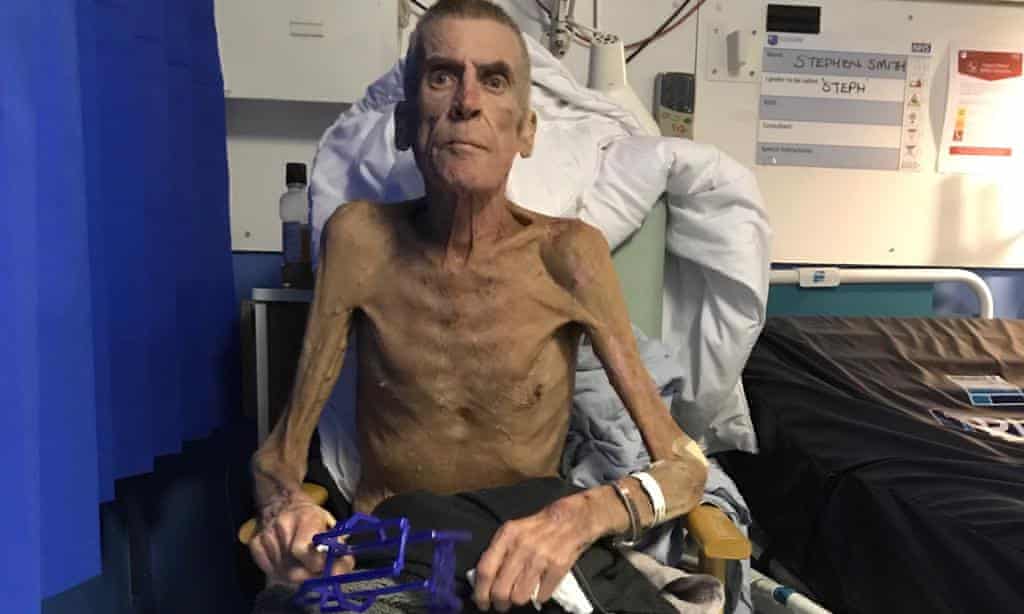
Yes, what I’m saying is political; but it is not intended to be party political. It’s true whether you’re Labour or LibDem or Conservative. The important thing is that we’re Christians. I’m saying that, as Christians, we should have a view on these things. We should call them out; we should stand against them, because we are Christians. We should, if we have a spare room, consider welcoming some refugees to stay with us when they first arrive. We should tell our politicians that it’s not acceptable not to put sprinklers in high rise council blocks like Grenfell Tower, (even though government ministers have promised to do it); tell our politicians it’s not acceptable not to pay proper compensation to the people whose lives have been ruined by the Windrush scandal; it’s not acceptable that thousands of people – last year, over 4,000 – are denied benefits on the grounds that they are fit to work, and then are so ill that they die within three months of that decision. It’s not acceptable that the newspapers should be full of pictures of a poor man, Stephen Smith, so emaciated that his bones are sticking out, so obviously desperately ill, denied benefits, on the ground that he is ‘fit to work’: he died. But not until he had won an appeal in court, as 70% of the appeals are won. [See https://www.theguardian.com/commentisfree/2019/apr/22/stephen-smith-benefits-system-dying]

This institutional meanness doesn’t just come out of the air. Just as we are saints and angels with the Holy Spirit in us, we have God’s power in us. We are not impotent. We have God’s power to do something about it. We need to speak to our MP, to write letters, to demonstrate on the streets if necessary, to rise up.

So today the message, the Easter message, is that we have seen the Lord. We have seen him at work in our fellow saints and angels. Let us join them, let us take that divine power and use it.

Stephen Smith