Archives for posts with tag: Jesus

Genesis 2:18-24, Mark 10:2-12

Sermon preached at All Saints Church, Penarth, on 6th October 2024

https://bible.oremus.org/?ql=595219558

I want to share with you that sometimes when I am thinking about what I am going to say in one of these sermons I have a distinct sensation of cognitive dissonance. I’m sure you all know what that is. You see something, you feel something, and somebody tells you what it is – but their description doesn’t square with what you are feeling, or seeing, or hearing. That’s cognitive dissonance. And I get that feeling quite often when we say our prayers together in church. 

We pray for our ‘broken world’. I don’t really get it. I open the curtains in the morning and the sun is shining – well, sometimes it is – and the birds are singing, and the cats are lying in wait for the birds; the milkman has just come and the paperboy is just delivering my copy of the Guardian. I would be tempted to say that all is well with the world: well, at least it is with my world. It’s not broken – and I thank the Lord for it. Of course if I was waking up in the middle of Gaza or Beirut or Kyiv, or any of those other places where there is terrible death and destruction as a result of war, then I wouldn’t say that. But somehow or other I don’t think it’s the world that is broken; it’s more us. It’s more what we do that’s going wrong.

I felt that same sort of ‘pull’ in two different directions when I was reading our lessons for today. The story of Adam and Eve, where Eve is created from Adam’s rib, in order for her to be a companion for Adam, and then Jesus laying down the law about divorce – ‘Don’t do it’, he said – well, in both of those cases I had that sense of unreality. I don’t believe that all women are descended from an offshoot of the original man, and equally, it doesn’t ring true to me that Jesus, who was so compassionate and understanding in so many other ways, should be so uncompromising about marriage breakdown. 

And then again, when I took another look at these topics, I realised that there is so much that people disagree about here that I could be here for hours and still not really scratch the surface. What is the theology of men and women? What is the Christian way to approach that huge area that we call ‘sex’? 

Let me just try to tackle a couple of things: if you think that this is something that we should come back to, then maybe we should think about putting together a discussion group, or even a sermon series. But I would just caution everybody that this does seem to be an area where there are no very easy answers which everyone agrees about, and there is really quite some potential for putting people off. I’ll try to be careful.

The Ministry Area Council – what we are used to refer to as the PCC – the Parochial Church Council, has decided that the churches in this Ministry Area should join an organisation called Inclusive Church, where the name tells you all about what it does. We want to be able to say, hand on heart, that our churches welcome everyone, whatever they look like, whatever they say their pronouns are, and whatever their gender and sexual orientation may be, because we believe that the biggest thing in our Christian witness, following Jesus, is to carry out his commandment of love, to love our neighbours as ourselves. 

So having said all that, here are a couple of thoughts. First, the apparently simple idea that God made them male and female. I have a feeling that my doctor daughters would want to add some footnotes to that. The first half – God made them – is reasonable shorthand for the process of creation, and it surely covers evolution as well. 

But the second bit – male and female – is now understood in a very nuanced way, because the scientists now understand that people may be physically endowed with organs which normally go with one sex or the other, but also, whatever their physical characteristics; that people may, again as a matter of the way they are made, be inclined to be more or less male or female in their sexual orientation. Gender and sexuality are seen as distinct, as two different things.

So scientists talk about a spectrum of sexuality between being absolutely male and being absolutely female, in the way that people feel themselves to be, quite separately from the gender with which they were born. 

And that also includes sexual attraction. There is again a spectrum. I was going to go on to say, ‘and scientists consider that xyz is the case’, but I think to be fair one has to say straightway that there may be differences of scientific understanding, for instance between scientists in most countries in Africa, and those in most countries in northern Europe and the USA, on the question of sexual orientation. 

The majority of western scientists say that sexual orientation is something that you are born with, and it is not something you can learn – or unlearn. 

But if you were in Uganda or Nigeria, for example, homosexuality is regarded as a crime, something which is voluntary, learned. They believe that people choose to be hetero- or homosexual, not that they are made one way or the other.

Provided that you are a straightforward male-oriented person in a male body or female-oriented in a female body, you’re fine. But if you are at all different from any of those parameters, on the various spectrums which run from those basic positions to the logical extremes of being bisexual or transsexual, things are much more difficult. Are you allowed to use bathrooms which are appropriate for the way you feel yourself to be, irrespective of your physical gender? What if you feel yourself to be female, but still have the body of a man, say?

And of course there are the vexed questions of whether the church should marry people of the same sex, or whether there should be homosexual priests and whether they themselves can be married. 

People find references in the book of Leviticus which they bring forward to say that anything other than basic boy-meets-girl is an ‘abomination’. They conveniently forget that in the same passages all sorts of other bits of behaviour, which no-one would take exception to these days, are identified as being impure in a religious context. Try this, from Leviticus chapter 19:

You shall not plant your field with two kinds of seed. You shall not put on a garment woven with two kinds of yarn.’

It’s clearly ‘of its time’, and not something which we would abide by today – or that we would even vaguely consider to be sinful. And after all, if we are trying to love our neighbours, think what someone else might feel like, if he or she was in one of those different categories. What does it feel like? In the end, everyone is human. Everyone is a neighbour. Everyone deserves to be loved. That’s the important thing about being ‘male and female’.

On the question of divorce, if you compare what Jesus is reported to have said about divorce here in St Mark’s Gospel, with what he said in St Matthew’s Gospel and what St Paul says about marriage in his first letter to the Corinthians, things are not so simple: the three accounts aren’t all the same, they don’t just say that marriage is for a man and a woman and that there should not be any divorces. 

Matthew said that Jesus added a caveat that there shouldn’t be any divorce unless the wife commits adultery (but he doesn’t say anything about straying husbands), and St Paul brings up another situation where one of the parties isn’t a Christian and there are tensions as a result. Paul feels that it’s okay to let a marriage between a Christian and a non-Christian break up if that becomes a bone of contention. 

Bear in mind that the story in Saint Mark’s Gospel of what Jesus said was written down much later than what Saint Paul wrote to the Corinthians. Saint Paul’s letter to the Corinthians probably came 40 years before any of the gospels were written down, so the idea that there isn’t an absolute prohibition on divorce probably reflects the time of Jesus more clearly than the rather fierce quote that appears in Mark’s gospel. 

We have to say that that fierce quote, suggesting that Jesus said that anyone who gets divorced, male or female, is eternally condemned, just doesn’t chime with everything else we know about Jesus. 

I would suggest that Jesus would say that there is room for forgiveness. I hope that I am right in saying that, because, I’m ashamed to say, I am sinful in that way too, as I have been divorced. So I pray that, in all this area, we can follow Jesus more nearly, and love each other more dearly, day by day. 

Amen.

Sermon delivered at All Saints Church, Penarth, on 7th July 2024

Prymer (Prayer Book), 1538

And fogyue vs our trespasses, as we forgyue them that trespas agaynst vs.

Luke 11:4

Greek original: καὶ ἄφες ἡμῖν τὰς ἁμαρτίας ἡμῶν, καὶ γὰρ αὐτοὶ ἀφίομεν παντὶ ὀφείλοντι ἡμῖν·

NRSV: 4 And forgive us our sins,

for we ourselves forgive everyone indebted to us.

Matthew 6:12

Greek original: καὶ ἄφες ἡμῖν τὰ ὀφειλήματα ἡμῶν, ὡς καὶ ἡμεῖς ἀφήκαμεν τοῖς ὀφειλέταις ἡμῶν·

NRSV: And forgive us our debts,

as we also have forgiven our debtors.

Vulgate, St Jérôme, 4th century:  et dimitte nobis debita nostra,

sicut et nos dimittimus debitoribus nostris.

Sermon:

Today we continue our series on the Lord’s Prayer. We have reached ‘Forgive us our trespasses, as we forgive those who trespass against us.’

Have you done any trespassing recently? Maybe you’ve been put off by one of those fierce signs which say ‘Trespassers will be prosecuted’. Maybe you are involved with Just Stop Oil or XR – Extinction Rebellion. Maybe you plan to lie down on the M4 to stop the traffic. That would be a trespass.

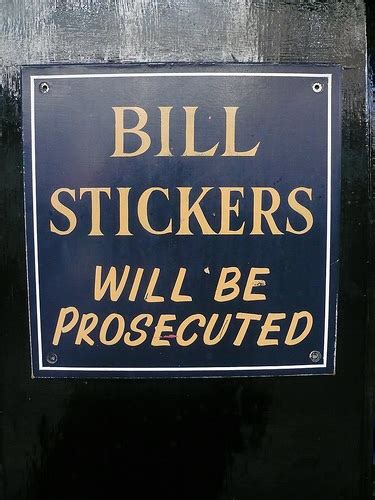
My Dad used to make a rather weak joke about one of those notices, not about trespassing, but about fly-posting, or ‘sticking bills’. The notice threatened that ‘Bill Stickers will be prosecuted’. Dad said, ‘Poor Bill’. …

But it looks as though what Jesus wanted us to pray about wasn’t really just a question of slipping through someone’s fence like Peter Rabbit.

So what is the meaning of ‘trespass’ here, in this context? It’s

something done against, an ‘intrusion’, into someone else’s space; and then by extension, to do harm against them.

So it means basically, forgive us for the harmful things we have done, as we forgive those who’ve done things to us.

But what did Jesus mean by ‘as’? ‘As’ we forgive? Does it mean a condition, ‘…only to the extent that we forgive …’ (and if we don’t, then what?), or ‘…as we definitely do forgive’?

The Lord’s Prayer comes twice in the Bible, in St Matthew’s Gospel [6:12f] and in St Luke, [11:4f]. Neither version uses exactly the words which we now say. In St Matthew, the Prayer comes at the end of the Sermon on the Mount – you know, about turning the other cheek and loving our enemies – and in Luke, it follows the parable of the Good Samaritan, that great story of unconditional love. The Samaritan didn’t think about whether the poor man who had been hurt deserved his help. He just saw his neighbour in need, and he followed the great Commandment to ‘love your neighbour’.

In both those places, where the Lord’s Prayer comes in the Bible, the words aren’t exactly what we now say.

In St Matthew, it says, ‘And forgive us our debts,

as we also have forgiven our debtors’. In St Luke, ‘And forgive us our sins, for we ourselves forgive everyone indebted to us’.

Leaving aside the question precisely what it is we are asking to be forgiven, these texts bring us go back to the question whether there’s a condition, whether we can only ask for God’s forgiveness on condition that we forgive those who have ‘trespassed against us’.

If we look at the different texts in Matthew and Luke, in Matthew we find – ‘.. as we have forgiven..’, and in Luke, ‘for we ourselves forgive’, which translates Greek words which literally mean

‘.. for truly (καιγαρ) we do forgive’.

There are different tenses used. Matthew says, ‘as we have forgiven’ in the past, so maybe Matthew’s version is a bit conditional, that we couldn’t come to the Lord without clean hands, without having done to others what we are asking Him to do to us.

But there is definitely no conditionality in Luke’s version. Perhaps, although it reflects the ideas in the Sermon on the Mount, loving enemies, turning the other cheek, in Luke, it comes after the story of the Good Samaritan, which is about unconditional love.

But does the Bible really say that Jesus told us to pray to be forgiven for ‘trespassing’? The Greek words used in the two Gospel accounts don’t say this.

Depending on which translation you use, the thing to ask forgiveness for is ‘sin’, ‘debt’, ‘obligations’, what we ‘owe’ to other people, or just wrongdoing.

The word ‘trespass’ in English seems to have been first used early in the 16th century at the time of the Reformation, when the services were being translated from Latin so that they could be ‘understanded of the people’ as Art XXIV of the 39 Articles puts it. But really it has changed its meaning over the years.

‘Sin’ is the word used in some modern versions of the Lord’s Prayer – ‘forgive us our s…’ It’s the word used by Luke. The word for ‘sin’ means literally ‘missing the mark’. ‘Sin’ has a connotation of wrong-doing, missing the mark, as between us and God, not as between us and other humans. Sin is what separates us from God.

What if it has connotations of ‘debt’ or ‘obligation’? This would reflect the Jewish idea of debt relief, Jubilee, every 7 years. It is such a powerful idea. Think of the implications for justice between nations, for the rich as against the poor. Jubilee, debt relief, is the only real way that could lead to hope for long-term justice in the world. That’s a wonderful thing for us to pray for.

But – a final word – what about ‘forgive’ – forgive us, as we forgive? The word in Greek means to ‘let go’. Jesus is putting good psychological principles in the prayer. It is unhealthy to hang on to feuds and to bear grudges and resentment. Just let it go. Take it to the Lord in prayer!

And by the way – trespassers can’t be prosecuted: (in the law of England and Wales, just for trespassing, which is a tort, a civil wrong, and therefore only open to a private civil remedy, and that only if damage is caused. There is no public, criminal, remedy: no ‘prosecution’.)

Note

To deter trespassing on to land, a landowner would often erect signage stating ‘trespassers will be prosecuted’. However, those with legal knowledge know that trespass was, in fact, a civil wrong and not a criminal offence, meaning trespassers could not be prosecuted.

However, the introduction of the Police, Crime, Sentencing and Courts Act 2022 (‘PCSAC’) on 28 June 2022 makes trespass, in some cases, a criminal offence punishable by imprisonment of up to four months and/or a fine of up to £2,500”. Quoted from https://www.hilldickinson.com/insights/articles/trespassers-can-now-be-prosecuted, q.v. for more details. It is still essentially the case that simply entering on someone else’s land is not an offence, provided no damage is done to property on that land.

Sermon for Evensong on Sea Sunday, 14th July 2024, at St Peter’s Church, Old Cogan

Reading: Psalm 95 https://bible.oremus.org/?ql=587981145

Today is Sea Sunday, the day which many Christian churches throughout the world set aside to remember and pray for seafarers and their families and to give thanks for their lives and work. Charities such as the Mission to Seafarers and the Sailors’ Society conduct fundraisers today.

From our psalm today, Psalm 95:

When we enter into our worship, we remember God as a god of power, this power being expressed in the mighty ocean:

‘For the Lord is a great God: and a great King above all gods.

In his hand are all the deep places of the earth:

and the heights of the mountains are his also.

The sea is his and he made it’.

The Psalmist never forgot the forces of the sea:

‘There go the ships: there is that leviathan whom thou hast made to play therein’. It’s Psalm 104. The great sea monster, Leviathan; nobody knows what Leviathan was like, except perhaps that he might have been a bit like the Loch Ness monster. Nobody could contradict that.

Jesus’ disciples were fishermen. They were mariners; they were seamen on the sea of Galilee, which some people slightly belittle by calling it just a lake. But it was surely a place where storms could get up and the power of the waves was able to strike terror into the seafarers. The story of Jesus stilling the storm comes in all the three synoptic gospels, Matthew Mark and Luke: ‘Who can this be,’ said the disciples, ‘when even the wind and the sea obey him?’

I’m always impressed by the amount of travelling which went on even in biblical times, even though there weren’t any aeroplanes, motor-ships, trains or cars. Nevertheless, arguably the greatest Christian disciple, Saint Paul, was nothing if not a great traveller. In our lesson today, in the New Testament lesson from Saint Paul’s letter to the Romans, he is writing to the Romans explaining why he hasn’t come to see them yet, but reflecting on the fact that he has been on a mission to visit all the Christians who had not already been visited by others of the disciples as they spread the good news of the Gospel.

Paul travelled through Syria, Palestine, Cyprus, Turkey, Macedonia, Greece and Rhodes, and when he eventually did set off for Rome, he was shipwrecked in Malta, but eventually he did make it to Rome. Pretty impressive travelling – and most of it was done by sea.

And talking about maritime matters in the Bible, we must not forget Jonah and the Whale, which may be rather mythical, but again it illustrates the power of God, as shown in the sea and and in the maritime world. As someone who has been in practice as a maritime lawyer I am particularly partial to the story of Jonah, not because of its physiological and veterinary aspects, but because it illustrates a very early example of the concept of general average, an extraordinary sacrifice made to preserve the ‘maritime adventure’ as a whole, as it is put in the Marine Insurance Act 1906.

And we worship, we make our journey of faith, by ship. How so? You might ask. Look up – not to heaven on this occasion – but just look up to the ceiling of this lovely church. You are sitting in that part of the church which is called the nave, and the nave, that word, comes from the Latin for a ship, navis. If you look up to the roof, the ceiling of the church, you will see that it looks like the upturned hull of a ship. It’s not an accident. The sea is central to our faith.

Today, this year, there is some academic celebration of another sea, the Sea of Faith, the name of the TV series which went out on BBC television in 1984 under that name, Sea of Faith, presented by the great Cambridge theologian and philosopher, Don Cupitt. He took his title from a very well-known poem by Matthew Arnold, the son of Thomas Arnold, the first headmaster of Rugby School.

Matthew was at some time a fellow of Oriel College, Oxford, and he retired to live in Cobham in Surrey. He was briefly churchwarden of St Andrew’s church there. I rather warm to him, not necessarily because of the excellence of his poetry, but because my elder daughter went to Rugby; I went to Oriel; I lived for 30 years in Cobham; and I too was churchwarden at St Andrew’s. I feel we have something in common!

Possibly Matthew Arnold’s best known poem is called Dover Beach. I’ll read it to you.

The sea is calm tonight.

The tide is full, the moon lies fair

Upon the straits; on the French coast the light

Gleams and is gone; the cliffs of England stand,

Glimmering and vast, out in the tranquil bay.

Come to the window, sweet is the night-air!

Only, from the long line of spray

Where the sea meets the moon-blanched land,

Listen! you hear the grating roar

Of pebbles which the waves draw back, and fling,

At their return, up the high strand,

Begin, and cease, and then again begin,

With tremulous cadence slow, and bring

The eternal note of sadness in.

Sophocles long ago

Heard it on the Ægean, and it brought

Into his mind the turbid ebb and flow

Of human misery; we

Find also in the sound a thought,

Hearing it by this distant northern sea.

The Sea of Faith

Was once, too, at the full, and round earth’s shore

Lay like the folds of a bright girdle furled.

But now I only hear

Its melancholy, long, withdrawing roar,

Retreating, to the breath

Of the night-wind, down the vast edges drear

And naked shingles of the world.

Ah, love, let us be true

To one another! for the world, which seems

To lie before us like a land of dreams,

So various, so beautiful, so new,

Hath really neither joy, nor love, nor light,

Nor certitude, nor peace, nor help for pain;

And we are here as on a darkling plain

Swept with confused alarms of struggle and flight,

Where ignorant armies clash by night.

‘The Sea of Faith …. Retreating, to the breath

Of the night-wind, down the vast edges drear

And naked shingles of the world’. He wrote that in 1867. The ‘sea of faith’, he thought, was retreating in the face of the rise of secularism and modern science. Well, that’s 150 years ago and we’re still here. We still debate the ideas which Don Cupitt among others promulgated in the 1960s.

That new understanding of our relationship with God, and our understanding of God himself, led to the other great theological text of the 1960s, Bishop John Robinson’s ‘Honest to God’. It gave people who were beginning to be put off the Christian faith, because they found it difficult to reconcile with modern scientific understanding, it gave them a way of making sense of faith, without them having to believe in things which they had come to think of as nonsensical.

That’s for another day and another sermon, I expect. My point today is simply that it’s a good idea to look at our faith and to reflect on God against a maritime background from time to time. Our God is the God who ‘made heaven and earth, the sea and all that in them is.’ [Exodus 20:11] When we pray, perhaps we should be asking whether we have ‘permission to come aboard’. I think that we can be confident that, as we embark on this boat, we are welcome. Welcome aboard! Amen.

Sermon for Evensong on 16th June 2024

Jeremiah 7.1-16; Romans 9.14-26

https://tinyurl.com/5xdpyys2

On Friday night I was nearly on the wireless. On BBC Radio 4. Completely by chance I had heard, when I was listening to the news in the morning, that Any Questions, which is not to be confused with the TV programme Question Time, and is much more venerable – it is apparently the oldest continuously running radio programme anywhere in the world, 76 years old, so it’s even older than me – that Any Questions was coming that same night to Newport to Newport Cathedral, to Saint Woolos’. There were a few places still available in the audience. I quickly booked a ticket and went over there. When you arrive, you are given a card to complete and hand in, with any suggested questions which you might have for the panel. Some of you may well have listened to the programme on Friday night or possibly when it was repeated at lunchtime yesterday.

The panel was a distinguished group, mostly Welsh people, two socialists, one Plaid Cymru and the other, less socialist, Labour; Boris Johnson’s press spokesman (who actually had had a long and distinguished career as political correspondent for the BBC before working for the Conservatives), a champion of industry with a strange name, and the Conservative Secretary of State for Wales who had apparently had a career as an amateur boxer, fighting under the name the Tory Tornado. It was all chaired by Victoria Derbyshire.

It came out that all the panel had gone to Oxford, except, of course, for the ‘Tornado’. Presumably most of them had gone to Jesus College, so there was a high degree of courtesy and comity between them, despite some very different views. Shortly before the programme began the producer appeared and called out eight names of people who had been selected to put their questions to the panel. I was very excited to learn that my question had been chosen, and I was number six. So we sat at the front clutching little bits of paper on which our questions had been nicely re-typed by the BBC; but alas, by the time they had dealt properly with question number five, the hour was up and I, together with the last two questioners, was left on the bench.

Before my turn there had been some very interesting questions, one involving bets on the likelihood of a conservative victory and the willingness of the panel members to ‘have a flutter’; on whether the allegedly inferior performance of the NHS in Wales was to be attributed to underfunding from Westminster or to mismanagement, by the party of Nye Bevan; about the potential effects of imposing VAT on private school fees; about which party’s manifesto would provide growth and stability; and finally, before my turn, there was this question.

A lady called Julie Pearce asked, ‘Where have honesty truth and integrity gone in politics, and do you think politics has deteriorated as a result?’The politicians on the panel predictably danced on pinheads, and perhaps the apologist for the most egregious immoralist in recent politics, Boris Johnson, produced the most ingenious evasion, when he turned immediately to discussing the merits and demerits of Lloyd George 100 years ago, whom he praised as the greatest Welsh prime minister, even though he was at the same time spectacularly immoral, he said.

Interestingly, none of the panel identified either themselves or other members as exhibiting any tendencies towards vice. Exceptionally, they were all as pure as the driven snow, we were asked to believe. As I sat there in the cathedral, I pondered what we as Christians at All Saints might have said in response to this question. Our Bible readings today are very relevant. The passage from Jeremiah is a prophecy in which God puts words into the mouth of the prophet chastising the men of Judah for their immoral behaviour. Although they went to worship in the temple, they still needed to mend their ways and their doings, the Lord said. Deal fairly with one another, do not oppress the alien, the orphan, and the widow, shed no innocent blood, and do not chase after false gods.

That could be very relevant even today. Deal fairly with one another: don’t just go for the cheapest thing on the internet and do our local shops out of business.

Don’t oppress the alien, the orphan and the widow: surely refugees – aliens – ought to be welcome and we should recognise that immigration is a good thing; after all, quite apart from whether we should offer safety and sanctuary, immigrants supply much-needed skills in industry, in the NHS and in our social services.

Does the policy of a ‘hostile environment’ and sending people to Rwanda in breach of the Refugee Convention amount to ‘oppressing the alien’? What do we do for orphans and widows? How does the two-child benefit cap fit in? What about social care and nurseries?

God isn’t having any. This is what he says: ‘You steal, you murder, you commit adultery and perjury, you burn sacrifices to Baal, you run after other gods whom you have not known; then you come and stand before me in this house, which bears my name, and say, ‘We are safe’; safe, you think, to indulge in all these abominations.’ And he says he will ‘fling them away out of his sight’ as he previously thrown away the people of Ephraim. No prayers would avail to save them.

That was the fierce prescription in the Old Testament. Did things become softer and more understanding after the coming of Jesus? St Paul’s letter to the Romans suggests not. But Paul comes at it from a different angle. Does God’s willingness to punish immorality mean that God is unjust? Paul says that it is up to God whether or not to punish somebody, and it does not depend on what he calls ‘man’s will or effort’. So why does God punish some people, or rather, allow them to be harmed? What are the rules? Is God just capricious, harming some people without a good reason?

Interestingly Paul doesn’t answer that. Instead, he suggests that it’s almost impertinent for us to ask that kind of question. ‘Who are you, sir, to answer God back? Can the pot speak to the potter and say, ‘Why did you make me like this?’? Surely the potter can do what he likes with the clay. Is he not free to make out of the same lump two vessels, one to be treasured, the other for common use?’

We have to recognise that God is bigger than we can understand, beyond our comprehension. As Jesus showed and taught, things are sometimes not what they seem, and values can be turned upside-down. The last shall be first … And being the chosen people of God may not protect you. Again, there are things happening today which might fit into this kind of analysis.

What about the war in Gaza? Does it make a difference that today’s Israelis say, as some of them surely do, that Hamas is like the Amalekites, previous occupants of the Promised Land, whom God told Saul and the Israelites, as told in the first book of Samuel [1Samuel 15:2-4], utterly to destroy – and God took them to task when they left some of them alive? Does that justify what the Israeli army is doing in Gaza?

Or we should consider what Paul points out in what the prophet Hosea said; [Hosea 2:23]: he said, ‘As it says in the Book of Hosea: ‘Those who were not my people I will call My People, and the unloved nation I will call My Beloved. For in the very place where they were told “you are no people of mine”, they shall be called Sons of the living God.’

The message is that just because one goes through the motions of worship, or goes to the temple, to the biggest cathedral, to the poshest church, it doesn’t somehow sanitise the things we do. We must love our neighbours, and worship just the one true God.

And we mustn’t use God as an excuse either. Fergal Keane, the veteran BBC war correspondent, was interviewed recently, and he said this: “It takes human beings to inflict injustice, pain, and cruelty on others. And it is too much of a cop-out to say ‘I blame it all on religion.’ That allows us, people with freedom of choice, off the hook. There are many places where faith has been manipulated, used as a banner, a suit of armour, as something to drive people on to hate their neighbours.” [https://www.churchtimes.co.uk/246585]

Perhaps that’s all a bit deep for Any Questions. But we should keep asking questions – and saying our prayers.

Acts 1.1-11

Luke 24.44-53

https://bible.oremus.org/?ql=582458634

Today is Ascension Day. Having heard the lessons that you have heard, and having recited the Apostles’ Creed, you are in no doubt that we are celebrating Jesus’s Ascension, his going up into heaven.

Perhaps the nicest and most picturesque words in this connection unfortunately are not ones that we in Wales use, but they are in Psalm 47, verse 5, where the Church in Wales sees fit to translate the verse as, “God is gone up with a shout of triumph, and the Lord with the sound of trumpets”, whereas in the 1662 English Book of Common Prayer (which is also authorised for use in Wales), Bishop Miles Coverdale translated the Psalms, and what he said was, “God is gone up with a merry noise”. Gone up with a merry noise: and I am delighted to say that that expression, ‘gone up with a merry noise’, actually survives into Common Worship, the Church of England’s latest prayer book.

It reminds me of someone releasing a balloon, so that it shoots up to the ceiling, with a noise like a loud raspberry. I hope it’s not sacrilegious or blasphemous to have an innocent smile at the thought of Jesus disappearing into a cloud like a balloon – and Coverdale left no doubt what sort of noise it was, by what he said in the second half of the verse, (God is gone up with a merry noise,) and the Lord with the sound of the trump. The sound of the trump.

Am I seriously saying that the best we can do in the face of the Ascension is to make schoolboy jokes? Perhaps we are a bit embarrassed about the story, because honestly I don’t think any of us really believes that Jesus somehow levitated into the clouds, with or without sound effects, and disappeared from sight. I suppose you could say that, if we believe in the Resurrection, that’s so difficult to believe that adding an Ascension doesn’t really make any difference in terms of credibility. In for a penny, in for a pound.

It does bother some people, even faithful people in our churches here in Penarth. I took a service the other day and we recited the Creed; on the way out as I was shaking hands with everybody, one of the faithful said to me, “By the way, he descended into hell: where is hell? Where exactly is that?” And as far as I can tell, they were not trying to pull my leg.

What do these apocalyptic miracles really mean? Are they in any sense true or factual? Those of you who have heard me preach before, will know that at this point I like to bring out the story of the first spaceman Yuri Gagarin, who apparently was asked by President Khrushchev whether he had seen anybody up there – and he was able to confirm that he hadn’t. There weren’t any people with white beards sitting on top of the clouds. But it didn’t actually put Yuri Gagarin off going to church. So far as I know he was a regular churchgoer and he remained one after going up above the clouds.

But equally, if someone who doesn’t normally darken the doors of church came in and listened to what we were saying and what we were professing to believe, they might react with a certain amount of ridicule. So I would say that we ought to be able to cope with the idea that the Ascension is a story. It is the sort of story that you would have to have made up in order to explain why Jesus was no longer there, after a substantial period – it says 40 days – of resurrection appearances. If there hadn’t been an Ascension you would have had to invent one.

Well, maybe that sounds insufficiently respectful, and if so, I hope the Lord will forgive me. But I think it’s important to wrestle away at the true meaning of the Ascension story. As I was in my study writing this, I looked up and there, high up on the windowsill, was Tikka Masala, my beloved Bengal cat. Bengals love to climb up things. My other Bengal, the late lamented Poppadum, who lived to cat 100, 21 years old, was an inveterate tree climber. She scared the pants off us by getting stuck at the top of really tall trees. But she never actually fell, fortunately. She was queen, queen of all she surveyed. Top Cat indeed.

People like going up. If you are ‘high up’ in society, it means you are superior – and indeed ‘superior’ is a Latin word which means above, on top of, something. All the ‘high’ words, or at least most of them, have very positive connotations. To be ‘on high’ is to be at the top, to be superior indeed, to be in charge.

There is a slight exception which is that, certainly at the time of Jesus, it did slightly depend in what context you got up to your high place, whether this was a good thing or not; because if you were strung up, as Jesus was in the crucifixion, then ascension was not divine or praiseworthy but was a sign of disgrace. But that does seem to be an exception that proves the rule.

The idea of the divine being ‘high up’ predates Christianity, of course. The Greeks believed that the gods lived above the clouds on Mount Olympus, and in the Old Testament the Canaanites worshipped the Baals ‘on the high places’. They erected sacred poles and altars in high places. They were obviously meant to be the sort of place where God would be found. The Roman Catholic Church doesn’t just believe in one Ascension, Jesus’s Ascension, but also they believe that his mother Mary ascended into heaven too.

If you are a logical positivist, as I was when I was an undergraduate, studying philosophy – and I was fortunate enough to attend some of the last lectures given by Sir Alfred Ayer in Oxford – you learned that for something to have meaning you had to know what would contradict it: and I wonder whether there is that kind of connotation to the very mysterious thing that the two men in white say to the disciples. ‘This Jesus who has been taken up from you into heaven will come in the same way as you saw him go into heaven.’ Jesus is going to come back, which is a reversal of the Ascension, a contradiction of it. And perhaps as such that flags up for us the possibility that this may look far-fetched, but it’s not. We may not understand how something works, but all we need to know is that it does work. So I think we are allowed to let our imaginations run riot on Ascension Day. God is indeed gone up, with a merry noise.

Sermon for the second week in Lent, preached on 20th February 2024


Genesis 41.46 – 42.5
Galatians 4.8-20

Can we swap places for a minute? Would you come up here and see things as your preacher does, or maybe on your way out, let me know what you feel? We’ve got to deal with two stories today, the first one being Joseph and the amazing Technicolor Dreamcoat.

Joseph’s brothers were jealous of his natty outfit, his coat of many colours, and when they were all on a journey through the desert, they chucked him into a pit, intending to sell him into slavery to the next bunch of traders coming through with their camel train. But unfortunately for them, some other spice traders came across him, pulled him out of the pit and took him away to Egypt. where they sold him to the Egyptian government, to Pharaoh, as a slave.

But Joseph prospered. He did a good job, and eventually, with various twists and turns in the story, he ended up being effectively Pharaoh’s viceroy, running the administration of the country. His secret was that he could interpret dreams. He was a kind of diviner, a seer.

He saw the future in a dream and realised that the crops would fail, and he would need to build up a stockpile of grain, if widespread famine in Egypt was to be avoided; so when the crops duly failed, and the famine broke out, Joseph sold grain to all and sundry and became more and more influential, owning more and more land as people run out of money and had to give him their land in return for food.

Among the people who were affected by the famine was Jacob, living in Canaan. Jacob was Joseph’s father, but he had been told that Joseph had died, torn apart by wild beasts, his brothers having shown their father the coat of many colours, stained with the blood of animals, to simulate the remains of a tussle to the death.

Jacob sent the brothers over to Egypt from Canaan, where they were, to buy grain, not knowing that they were about to buy it from the brother whom they thought they had abandoned to an unknown fate in the desert.

They didn’t know it was that long lost brother that they were buying from, and as you will remember, there is a thrilling story full of suspense about Joseph toying with his awful brothers, and making them think that they were going to be wrongly accused of stealing a whole load of grain from Pharaoh so that they would meet a dreadful fate. Then, at the last minute, the tables were turned and Joseph revealed himself as their brother.

You can imagine that it must’ve been a real ‘Oh something moment’ for them, quite a shock. Imagine how they must have felt. They must have thought that the most likely thing would be would be for their younger brother, who was now in such a powerful position, to get his own back on them; that it would not turn out well for them.

The lovely thing is, in this story, that Joseph didn’t do that. In fact he forgave his brothers, and invited them to bring their father over from Canaan to where they could live in Egypt in a land of plenty. Joseph didn’t blame them because, according to the account in the book of Genesis, he reasoned that his whole story, being abandoned and sold into slavery, and then working his way up with Pharaoh so that he became the head of the government of Egypt, was God’s will, was what God had intended, and no humans, certainly not his brothers, were really responsible or to be blamed.

What a wonderful story! That’s one of the two pieces we are looking at this morning. The other one is part of Saint Paul’s great letter to the Christians in Galatia, which is part of modern day Turkey. This reads almost like one side of a telephone conversation.

We don’t really know what Paul was responding to, and what the Galatians were saying to him. We can only try to draw inferences from what he is saying.

You wouldn’t pick this passage in the letter to the Galatians. I think if somebody asked you what the letter is all about, the bits which everybody quotes are the passage where he says that you are all sons of God in union with Christ Jesus. ‘Baptised into union with him, you have all put on Christ as a garment. There is no such thing as Jew and Greek, slave and free, male and female. You are all one person in Christ Jesus’. That comes at the end of chapter 3. and then, at the end of chapter 5, he talks about the signs of being led by the Holy Spirit. ‘The harvest of the spirit is love, joy, peace, patience, kindness, goodness, fidelity, gentleness, and self-control’. These are the qualities that come when you are a good Christian.

But these two famous passages are not what we are looking at today. This bit is all about the Galatians kind-of hedging their bets about what they really believed in.

They would be Greeks living in the Roman Empire, and you would remember that every Roman house had its household gods, Lares and Penates, and of course, in the Greek world, there was the Pantheon, on Mount Olympus; Zeus, and Hera, and all the other gods, each one representing and upholding a particular sphere of influence: so Ares, or Mars, was the god of war, for example.

The big difference between the theology of the Romans and Greeks and Judeo-Christian theology, (because Christianity originated in Judaism – Jesus was a Jew) was that whereas the Greeks and Romans worshipped lots of different gods, the Christians, as well as the Jews, worshipped one God, one true God, and by and large, they did not make statues or paint pictures of the one true God. He didn’t really have a name – ‘I am who I am’, he said – and certainly in the Jewish tradition, only priests could see God and not be burned up in the experience. ‘Immortal, invisible, God only wise’ sums it up.

But the Galatians wanted to have it both ways. They wanted to go back to the old gods as well, just in case. And St Paul got very cross with them. He said it was a retrograde step and that they would no longer be able to be saved and gain eternal life, if they were enslaved by their worship of elemental spirits, as he called them. it could just have been earth, wind, fire, and water, the basic elements, but whatever it was, Saint Paul was very frustrated by the Galatians’ wanting to worship those elemental spirits as well as the one true God as revealed in Jesus Christ.

So on the one hand, we have the story of Joseph and the amazing Technicolor Dreamcoat, and all the other, a rather bad-tempered rocket written by Paul to the Galatians.

So – imagine you are up here. What do you say about those two passages? What lessons can we draw from them? I would be tempted, I have to say, to draw out how generous Joseph was. He was almost as saintly as Jesus wanted us to be in his Sermon on the Mount. Love your enemies. Turn the other cheek. Certainly not an eye for an eye and a tooth for a tooth where those awful brothers were concerned.

But I suspect that in the wider sweep of the story of the people of Israel, Joseph’s kindness rather gets blotted out. This is all part of the story of Israel being enslaved, and then freed, and then finding a place in the promised land, building the temple, having the temple knocked down, being enslaved again in Babylon, and so on, until eventually, at the time of the second temple, they are established in Palestine.

It’s very tempting to try to draw parallels with what’s happening in the same area today. Just imagine what the possibilities would be if Mr Netanyahu took a leaf out of Joseph’s book and showed compassion and forgiveness. But if you and I swapped places and you had drawn that conclusion, I’m not sure that people would give you an easy ride as they were shaking your hand on the way out at the end of the service. They might say you’d stretched things rather a lot.

And what about Saint Paul and the Galatians? Apparently, according to Paul, they were volunteering to be enslaved again by worshipping the elemental spirits, rather than the one true God. What would you say about that? It’s a different kind of slavery from the slavery which the Israelites endured in Egypt and in Babylon. This is more an intellectual slavery, abandoning their principles and hedging their bets spiritually.

And, in passing, you might want to observe that Saint Paul’s letters, particularly this sort of letter where he takes a congregation of Christians to task for something that he thinks they are doing wrong, is a sort of communication which I don’t think we would get in today’s world. Because St Paul is in effect telling the Galatians what to believe.

We go to great lengths to ensure that we don’t interfere with everyone’s freedom to believe whatever they want to. We regret the history of the missionaries. Who would say now, ‘Don’t believe in Scientology or Mormon, but stick to the real stuff?’ Alternatively, when we are thinking of Islam or Judaism, we are at great pains not to say that people mustn’t be Muslims or Jews, but that people should be only Christians.

No, instead, we emphasise that all three religions, called the religions of the book, effectively worship the same one true God. We just approach that one true God in slightly different ways. So we wouldn’t be tempted to write the sort of letter that St Paul has written if we found, for example, that somebody had converted from Christianity to Islam. Nevertheless, in certain countries the reverse move, from Islam to Christianity or Judaism, is something which is condemned, indeed, sometimes bringing the death penalty.

That happens in Pakistan or Iran, but we don’t tell people what to believe. We have to some extent therefore changed from Saint Paul’s approach. What do you think? What do we make of that?

So those are your reflection points for this second week of Lent. What lessons could we draw from the story of Joseph and the amazing Technicolor Dreamcoat, and what do you think St Paul was up to in his frankly rather tough letter to the Galatians? Would it wash today? Let’s swap places and you can tell me the answers.

Amen.

Sermon for Morning Prayer on 21st April 2024, Fourth Sunday of Easter

Acts 4:5-12, 1 John 3:16-24

I want you to think about the morning after the morning after the morning after the night before. Or possibly, the morning after that.

Think of something that has happened, something that you’ve been involved in, that was really a big deal. Something that really made a difference.

Maybe it was the day you got married, if you did. Or the day when you won an Olympic gold medal. Or the day when something really momentous happened in the world outside. Perhaps you can even remember Armistice Day, or perhaps more likely, the day after the Brexit referendum. In all those cases, things changed; things changed really radically for ever. Nothing would be the same again. In our Bible lessons today the context is another of those enormous events as we enter into the world of the very first Christians, in the first, the earliest, churches.

The momentous event was of course Easter, Jesus’ resurrection. They had either experienced meeting the risen Christ themselves or they had met people who had. That’s one reason why I always find it very exciting to read the Acts of the Apostles, written by St Luke, as book 2 of his gospel, in effect; and St Luke was certainly around at the earliest time even if he didn’t actually meet Jesus. St Paul describes him as the ‘beloved physician’ and there are certainly moments in the Acts of the Apostles, describing St Paul’s journeys, where the third-party narrative, ‘they’ did this, ‘they’ did that, turns to ‘we’ did it, so we can infer that Luke was there.

So it is a very immediate, personal account of what it was like to be an early Christian. And so we are seeing the Easter people, the first Easter people, picking up their lives and carrying on after the amazing events of Easter. And we hear that they ‘met constantly to hear the apostles teach, and to share the common life, to break bread and to pray. A sense of awe was everywhere and many marvels and signs were brought about through the apostles’. They held everything in common, as we heard in one of the lessons a couple of weeks ago.

And then the part which we heard read today: Peter and John had healed a man who had been crippled from birth, who was begging at the gate of the temple. Peter said, ‘I have no silver or gold; but what I have I give you; in the name of Jesus Christ of Nazareth, walk!’ And the man who had been crippled from birth sprang up, stood on his feet and started to walk.

Needless to say it attracted a lot of attention, and Peter said this to the crowd: ‘Why stare at us as though we had made this man walk by some power or godliness of our own? The God of Abraham, Isaac and Jacob, the God of our fathers, has given the highest honour to his servant Jesus… And the name of Jesus, by awakening faith, has strengthened this man, whom you see and know, and his faith has made him completely well.’

The chief priests and the Sadducees, just as they had done with Jesus himself, took exception to this and considered it to be blasphemy. They arrested Peter and John and put them in prison. And the passage describes what happened when they were asked to explain themselves.

It’s very reminiscent of a similar episode when Jesus himself was tackled about healing somebody on the sabbath day. Again, to use a contemporary expression, the disciples pushed back against the criticism. What was wrong with healing somebody who was sick? You might be tempted to say, what does it matter who the doctor was? Just be grateful that the cure worked. But the high priests were concerned that Peter and John were giving credit to Jesus in a blasphemous way. But they insisted that it was Jesus who was the divine agent and it was the sick man’s faith in Jesus which had brought on his healing.

Let’s go back a minute to the question of the morning after the morning after the morning after the night before. Nothing was the same after Easter. Whom could you trust? There were so many people claiming that they were the true believers, that they had an inside track to understanding the story of Jesus.

So let’s look at the first letter of John, the first ‘Epistle General of John’ as the King James Bible puts the heading. It’s possible that the John who wrote the letter was the apostle, or certainly was the same person who wrote Saint John’s Gospel. Although he would have had to be pretty old, it’s not impossible. Some scholars do think that all three of them are the same individual.

Again we are in the world of the very early church, and it’s clear that in that world it was commonly expected that the end of the world was round the corner, and all the references to salvation and eternal life referred to a last judgement at the bar of heaven which was just about to happen. All the more reason, the early Christians felt, to be sure that you were a true believer, that you were one of the people who were truly saved, the elect.

And this is what the letter, John’s first letter, is all about. In one of my Bibles there’s a sub-heading describing the letter as a ‘recall to fundamentals’. It begins with these words: ‘It was there from the beginning; we have heard it; we have seen it with our own eyes; we looked upon it, and felt it with our own hands; and it is of this we tell. Our theme is the word of life. This life was made visible; we have heard it and bear our testimony; we here declare to you the eternal life which dwelt with the Father and was made visible to us.’ Do you remember the beginning of St John’s Gospel? ‘In the beginning was the word’. And it is all about love. The ‘word’ is Jesus, and Jesus is love; and the key to being saved is whether you are ‘in Christ’, which is a rather mysterious expression which is generally reckoned to mean whether Christ is in you.

In John’s First Letter there are a series of illustrations of what it means to be in Christ and to be in the light of Christ. ‘A man may say I am in the light; but if he hates his brother, he is still in the dark.’ Only the man who loves his brother dwells in the light. And then this great passage that we had read to us as the second lesson, contrasting two examples, one, the greatest example, that greater love hath no man…, And we ought to lay down our lives for one another, the supreme sacrifice; and the other, because we can’t be in a position to offer a supreme sacrifice every day, the everyday salvation, the everyday expression of love, which you will remember from the sentences before the traditional Holy Communion service, ‘Whoso hath this world’s good, and seeth his brother have need, and shutteth up his compassion from him, how dwelleth the love of God in him?’ If a man has enough to live on, and yet, when he sees his brother in need, shuts up his heart against him, how can it be said that the divine love dwells in him? That’s how it works. God is love.

God is love; God: Father, Son and Holy Spirit. If we are in Jesus, in the Son, we are in love, love is in us; and the test of that is how we show that love. Let us love our brothers and sisters, let us love our neighbours. If we are Easter people, if we are like those early Christians on the day after the day after the day of the great event, what difference does it make to us? Is it still buzzing in our minds? Does it still draw us irresistibly to do things that we didn’t do before? Let us pray that it does.

Amen.

Sermon for the Morning Service at All Saints Church, Penarth

On 7th April 2024

Acts 4:32-35; John 20:19-31 https://bible.oremus.org/?ql=579426284

You hear that people who go to church describe themselves as Easter people. We are Easter people. I presume that means that, as Christians, our lives have been touched by the momentous events of Easter all those years ago. It has been made a huge difference to our lives and to the way that we carry on. The biggest thing about Easter – not really an elephant in the room, but something altogether bigger – is Jesus’ resurrection from the dead.

Jesus definitely died, and he died in a way which really doesn’t leave it open to anyone to say that he wasn’t really dead. If you die by crucifixion you are most definitely absolutely dead. He was then put in a tomb which was sealed with an enormous rock and put under guard by the chief priests and the Pharisees, who had been given permission to do so by Pilate because they said they were afraid that the Christians would steal his body. So I think we can be sure that he was definitely buried in a grave which would not be easy to get at.

And then on the third day, as we celebrated last Sunday, the stone had been rolled away, the grave was empty, and Jesus had somehow risen from the dead. He saw Mary Magdalene and Mary the mother of James and Joanna, and perhaps other women who had gone to the tomb to dress the body, who all went to tell the disciples. They were not believed initially. ‘The story appeared to them to be nonsense.’

Some versions of the gospel add that Peter took it on himself to rush back to the tomb, and he found it empty and realised what had happened. But the other disciples were sceptical until Jesus appeared to two people on the way to Emmaus and they brought the news back to the disciples. And then Jesus appeared to all of them in the way that we had described to us in Saint John’s Gospel just now. On the first day of the week; when the doors of the house were locked; somehow Jesus got in and stood among them, giving them a chance to touch him and realise that he wasn’t a ghost.

And Jesus stood among them and said, ‘Peace be with you.’ That’s one thing that you will miss this morning. We only share the peace when we’re having holy communion. I’m afraid we’re not doing that today. But this is where sharing the peace comes from. It’s a way of reminding ourselves of that appearance among the disciples, appearance by the risen Lord, Jesus resurrected from the dead.

They saw and they believed. They didn’t know how he had been resurrected, but they had no doubt that he had been. And then along came Thomas, officially known as ‘Thomas the Twin’ but known almost universally afterwards as ‘Doubting Thomas’. Because Thomas just couldn’t believe that Jesus had risen from the dead. Then we have this really powerful story, which I think really appeals to lots of us – it certainly appeals to me – showing how Thomas came to believe, because he saw and touched Jesus, in a way which I think we can all understand. He almost stood for Everyman at that moment. He could be any of us.

And then Jesus said this marvellous thing. ‘Blessed are those who have not seen and yet have come to believe.’ That means all of us. We haven’t seen Jesus. We haven’t touched him. But to a greater or lesser extent, we Christians all believe. We believe that he rose from the dead. That makes a huge difference.

If you accept that this is possible, that that happened, that there is a life after death, that is going to make a big difference to you. But it probably isn’t going to make as much difference as it did to the disciples who actually saw him and touched him. They didn’t have any doubt. They believed.

So what effect did it have on them? One effect, one major effect, was what we have heard described in our reading from the Acts of the Apostles, that ‘those who believed were of one heart and soul’ and ‘no one claimed private ownership of any possessions. There was not a needy person among them,’ for ‘as many as owned lands or houses sold them’ and brought the proceeds of what they sold to be put into the common fund.

It looks like an early form of communism: at which point some of you may start to fidget and mutter about not mixing politics and religion – but perhaps another way of looking at it is to compare this passage with some of the Sermon on the Mount: that Jesus seems to have been talking in a utopian way, not a practical way. Turning the other cheek; not going for an eye for an eye but loving your enemies: just not practical, you might say. Just as you might well say that although a form of communism looks to be ideal, our experience in the last 2000 years has told us that it’s just not practical.

Perhaps meeting Jesus risen from the dead had made the disciples feel that they could do anything, that they could ignore practicalities and just go for whatever was the best and most ideal thing. What do we, 2000 years later, we who have not seen and yet have come to believe, are we able to do idealistic things? Maybe looking again at Thomas we might have to admit that although we do believe, perhaps our belief is not as strong as Thomas’ became – once he had touched the Lord.

Maybe we do still have a few doubts, and therefore to some extent in our lives we still play safe. So although living in a commune and sharing everything sounds great in some ways, we are cautious about throwing caution to the winds and selling up. But there is something there. There is definitely something which we could say. In the context of the extreme difference between rich and poor that the neoliberalism of the last 40 years or so, has produced, the emphasis on individualism, that everyone has the seeds of their own success in them, all you have to do is to get on your bike, as one of the politicians said at the time, all that is beginning to ring rather hollow, because just like the commune which the apostles operated, it doesn’t really work. It doesn’t make us love our neighbours or, increasingly, love God.

So now in this Easter season, when we are Easter people, let’s think hard about what that really means and whether we can say, ‘Lord I believe; help thou mine unbelief’[Mark 9:24]. That still means we believe, and it still means we can do something to show that we believe. Tomorrow it will be the Festival of the Annunciation, the angel announcing to Mary that she will be the mother of the son of God. The Bible lesson will be the Magnificat, which is arguably one of the greatest revolutionary texts in all of literature.

’He hath put down the mighty from their seat:

and hath exalted the humble and meek.

He hath filled the hungry with good things:

and the rich he hath sent empty away.’ [Luke 1]

Maybe Thomas was on to something. No doubt about it.

https://bible.oremus.org/?ql=575175148

Genesis 2:15-17, 3:1-7; Romans 5:12-19

The first Sunday in Lent,  in preparation for the great Easter climax: a time of spiritual reflection, renewal, fasting. We are preparing for the events which revealed God’s love for humanity. God’s love, indeed, for fallen humanity, we often say. and that’s what our Bible readings this afternoon are about. The lesson from Genesis is sometimes described as the story of the Fall, and Christ’s passion and death, followed by his glorious resurrection, described in terms of sacrifice and redemption, salvation. Salvation for fallen humanity.

We know these stories. We know the story of Adam and Eve, and we know Paul’s famous passage contrasting Adam, who brought sin into the world, with the free gift, the grace of God, in giving us Jesus Christ. and I’m sure that as you’ve heard the lessons, as they were beautifully read just now, even if you aren’t word perfect in your memory, they were pretty familiar. 

But in the spirit of Lenten reflection, perhaps not in a full-on 40 days in the wilderness sense, but nevertheless, in the hope that it makes you quietly go away and think about this, let’s have a closer look at the Fall and the ‘free gift’.

Let’s look at the Fall. What did Adam and Eve do wrong? I remember when I first heard this bit of Genesis, where God tells Adam that he can eat the fruit of all the other trees, but not this funny tree called the tree of the knowledge of good and evil; I wondered what its fruit looked like. It’s one clue that this is not meant to be a scientific explanation of anything, that one of the key elements is that there is this mysterious tree. It’s not just a plum tree or an apple tree. 

But then again, what is wrong? What is wrong with getting to know the difference between right and wrong? The idea seems to be that, before the Fall, before the act of disobedience, humans, or at least the first humans, Adam and Eve, didn’t know the difference between right and wrong. They were in some kind of primordial innocence – but they were immortal, or at least that seems to be the implication, because the threat that God makes is that if they disobey him and eat the fruit of the tree of good and evil, “you shall die”. Later on in Genesis, it says, “you shall get your bread by the sweat of your brow until you return to the ground, for from it, you were taken. Dust you are, and to dust you shall return.” You will remember that phrase from the Ash Wednesday service.

But why should it be a bad thing to know the difference between good and evil? And is there any obvious link between acquiring an innate moral sense and becoming mortal? Without wanting to sound flippant, I do think that this is a fairytale. Or perhaps, to put it more positively, it’s a myth, a story told to illustrate a point. So I suppose the attractiveness of it, why it is such a compelling story, is that indeed, we are very drawn to sympathise with Eve. As the serpent says, “when you eat of the  fruit of the tree, your eyes will be opened, and you will be like God, knowing good and evil.“

 The woman saw that “the tree was good for food, and that it was a delight to the eyes, and that the tree was to be desired to make one wise”. 

What on earth is wrong with any of that? The only thing you can find in the text is that God told them not to do it. You might say that there was more to it. There was a suggestion that, as a consequence of them doing it, they would become mortal. 

Alternatively, (and I think this comes out from Saint Paul’s discussion that we will go on to look at in a minute), it’s not that they will become mortal, so much as that God will kill them. There will be a death penalty for their disobedience. They were always mortal, because that’s the nature of being human: but if they disobey God, God will punish them, he will inflict death upon them. Perhaps that is closer to the true meaning.

It’s all painfully like stuff we remember from childhood. ‘Why do I have to stop throwing bread rolls at my brother when we are having our breakfast?’

 Answer, ‘Because I told you not to.’

‘ Why not?’

 ‘Because if you carry on doing that, you will get a thick ear.’

The way that this is written, makes us realise that it isn’t the ability to tell wrong from right that is the problem – that ability is always a good thing – but it’s how Adam and Eve acquired this ability that got them into trouble. 

The important thing is that they disobeyed God. They went off in another direction away from where God had directed them. The problem is not that they knew the difference between good and evil, but that they had become estranged from God. They had ploughed their own furrow; they thought they knew better than God what to do. That is why it is described as sin. What Adam and Eve did was sinful. Sinfulness isn’t necessarily doing something which is morally wrong, so much as becoming cut off from God. 

That’s what Paul picks up on in his letter to the Romans. ‘Just as sin came into the world through one man, and death came through sin’, is what he says, not ‘bad things or doing bad things’ came into the world – and incidentally, St Paul seems to be a bit shaky on gender equality, because he only seems to blame Adam, whereas it looks as though the Fall was proximately caused by Eve: anyway, we’ll leave that for another day. 

St Paul sees the Fall as alienation from God, as sin, not just doing bad things. He repeats what Genesis says about the consequence of sin being death. I can’t help feeling that perhaps Paul reasons backwards from Jesus’s rising from the dead, from Jesus‘s resurrection, from his conquering death, as it is sometimes called, to infer that mortality was the consequence of sin, that alienation from God, disobedience to God, made one mortal.

That seems to be the logic, although I have to say, it’s one part of these passages that you either believe or not, because there’s nothing you can do to prove or disprove whether God made previously immortal people into mortals. 

Be that as it may, Paul contrasts the idea that Adam brought sin into the world – and as Paul says he is not treating Adam as a particular person, but, as the lesson says, “Adam, who was a type of the one who was to come“, or, as another translation [NEB] puts it, “Adam foreshadows the Man who was to come”– either way, it was not particularly Adam – or Eve – who was responsible, but mankind in general going away from the commandments of God.

The Greek word for sin is άμαρτια, which means missing the mark, shooting, and missing the target; Paul then goes on to talk about the effect of what he calls “the law“, that sin existed before the law, but until the law came along, you couldn’t measure how much sin there was. He means law in the sense not of statutes passed by government, but the Jewish law, which is intended to give direction, how to comply with God’s commandments. 

So, if you disobey the Jewish law, which is in the first five books of the Old Testament, and summed up in the 10 Commandments, then you have broken the law, not in the sense of being a burglar or a murderer, (although if you were one of those, you would be contravening some of the 10 Commandments) – but more importantly, you are committing sins, things which drive you apart from God. 

So Paul contrasts the beginning of sin, the Fall, the fall from grace, by Adam, the prototype man, he contrasts that with God’s gift, his grace, his free gift, to fallen mankind, in giving us his son, Jesus Christ.

Paul contrasts judgement following one trespass, which brought condemnation, and the free gift following many trespasses, which brings justification. 

‘Justification’ is a technical term in the Bible. It means being on good terms with God. Sometimes theologians translate it as being right with God, so as to pick up the connotation of justice; but it is more like what an engineer or a carpenter, or a toolmaker, might understand as justification: bringing a work piece into alignment with another work piece, justifying that piece with its intended place. 

You adjust something so that it fits. 

It’s that kind of relationship that St Paul is talking about here: not a question of being acquitted in a court of law. This all comes in the context where Paul has introduced the idea of “justification through faith“. The idea that you’re not put right with God by doing good deeds necessarily, although good deeds are a good thing to do anyway, but that you depend on God’s generosity. 

He is not so much rewarding us as being gracious to us, giving us what is translated as a “free gift” It’s a Greek word, which is translated as a free gift, but it also really means a ‘gifty thing’, a δωρημα as opposed to a δωρον. It’s the essence of generosity, the essence of giving, rather than just a particular present. And that squares again with the idea that we are being put right with God, being brought into adjustment, into a good fit.

Just one more puzzle, before I leave you to carry on musing on these really rich passages with so many things to ponder over. That is the consequence of the free gift. Saint Paul says that those who receive the free gift of righteousness are saved. They “exercise dominion in life” it said in our lesson, through that one man, Jesus Christ. It’s the conquest of life over death. We have the gift of eternal life. That’s what salvation is. 

You need to go on and do some homework and read the 15th chapter of Saint Paul’s first letter to the Corinthians to give you more detail about what eternal life is and how it works. Jesus showed that it is possible, by himself rising from the dead. St Paul gives you some very believable analogies to explain in more detail how we can expect eternal life to come about.

So those are some ideas which you might want to reflect on as you begin your journey into Lent this year. All the Fs, the Fall and the Freebie, the Free Gift.

And just one more thing, for those of you who have been tackling me about this.  What am I going to do by way of giving things up for Lent? I like to follow an idea which a former Lord Mayor of London had a good few years ago, called the absent guest scheme. 

Whenever I go out for a meal or some other refreshment, I keep a note of the bill and then, at the end of Lent, I calculate what it would’ve cost to have had another person present at each of these occasions, an ‘absent guest’. I tot up what the total cost of the absent guests would have been and give it to my chosen charity for that Easter.

This year I will be giving it, I hope, to the United Nations Relief and Works Agency, UNRWA, for their work in Gaza.

Bible readings: https://bible.oremus.org/?ql=567221767

This morning we thought about the parable of the talents and Zephaniah’s prophecy of doom directed at people whose wealth had made them contemptuous of God, who built houses and did not live in them. We were thinking about economics, and wondering whether Jesus and the prophets had to some extent foreseen some of the insights of Karl Marx.

So this morning was economics and this afternoon is politics, or to be more precise, government. We have a description of the change of government, 3,000 years ago in the time of King David. We may look forward to a general election from time to time, but King David could do it simply by having his successor, his son Solomon, anointed, as a result of a promise which he had made to his mother Bathsheba.

You will remember the pretty dreadful story in the second book of Samuel, chapters 11 and 12, telling how King David had taken a fancy to Uriah’s wife Bathsheba when he accidentally saw her in the bath; he engineered for Uriah her husband, who was a soldier, to be put in harm’s way and killed in battle so that he could marry Bathsheba, and how the prophet Nathan had told this story.

‘In a certain town there lived two men, one rich and one poor.  The rich man had large flocks and herds; the poor man had nothing of his own except one little ewe lamb he had bought. He reared it and it grew up in his home together with his children. It shared his food, drank from his cup and nestled in his arms. It was like a daughter to him. 

‘One day a traveller came to the rich man’s house and he, too mean to take anything from his own flock or herd to serve to his guest, took the poor man’s lamb and served that up.’ David was very angry and burst out, ’As the Lord lives, that man deserves to die! He shall pay for the lamb four times over because he has done this and shown no pity.’ Nathan said to David, you are the man.’ [2 Samuel 12:1-7]

And David repented, although the Lord still punished him by saying that the child which he had fathered adulterously with Bathsheba would die, and he did: but then they had another son, Solomon, and David promised to Bathsheba that Solomon would inherit the kingdom after him.

Our lesson today was about how that promise was carried out. David, although he was a bad man in many respects, was a great king, and he kept his promises. I’m not sure that there is more than historical interest in the story so far as we are concerned, because we do depend on democracy in being ruled, rather than the divine right of kings.

Jesus was known as the son of David; he was in a line of descent from King David as the enormous and slightly different genealogies, that you find in Matthew 1 and Luke 3, demonstrate. It was important in that world to be able to prove your ancestry. Perhaps there is a small lesson about how people can change their ways, reform and repent, because there is an interesting little sideline at the very beginning of the lesson from the first book of Kings which we had. The king was very old and Abishag the Shunnamite was attending the King. She was another beautiful young woman, much in the way that Bathsheba had been. But we are told, a little bit earlier, that she had been brought in essentially to keep the old King David warm in bed. But the account takes care to tell us that he did not misbehave. There was no hanky-panky.

In our second lesson we go from divine succession 3,000 years ago to the end times, God the Alpha and the Omega, the beginning and the end. This is something which is far beyond our understanding. If you think of our expanding knowledge of the cosmos, of the billions of years and billions of miles in time and space, it seems odd that one can simply say that God is the Alpha and Omega, the beginning and the end. 

I think that mathematicians and philosophers will struggle today to tell you really what a beginning or an end of everything could possibly be. There will be some who will say that indeed they are logically impossible, because whatever you suggest to be the beginning, you can always imagine something that came before it; and the same is true of numbers, that whatever number you end up with, you can always add another one. 

So St John’s vision, when he was ‘in the spirit on the Lord’s day’, is as good as anything, as a vision of something which is completely beyond man’s understanding. This figure, of the ‘Son of Man’ clothed with a long robe with a sash of gold across his chest, says, ‘Do not be afraid. I am the first and the last, and the living one.’ It’s a vision of the kingdom. ‘Look, he is coming with the clouds. Every eye will see him, even those who pierced him’.

Well, I don’t think we are ready for him. Our world is full of terrible war, and our government, which I guess, at least so far as the ministers are concerned, you could say has not really been democratically elected but rather anointed, seems more concerned to be inhospitable to poor desperate refugees, than to do any of the other things that a good government should surely do. 

This is the time in the Christian year called the kingdom season, when we look forward to the coming of Jesus into the kingdom of God. But are we ready, and would we recognise Jesus? What if he came on one of those boats, or what if he was one of the brave surgeons still operating in the hospitals in Gaza? 

What would Jesus say? Dare one say it, he might well say it was time for a general ceasefire – everywhere.  All hostilities. This is the beginning. This is the ‘alpha’ of the kingdom. Let us pray that, until things get better, until ‘they shall not hurt or destroy on God’s holy mountain’, until then, there may be an alpha – but no omega.