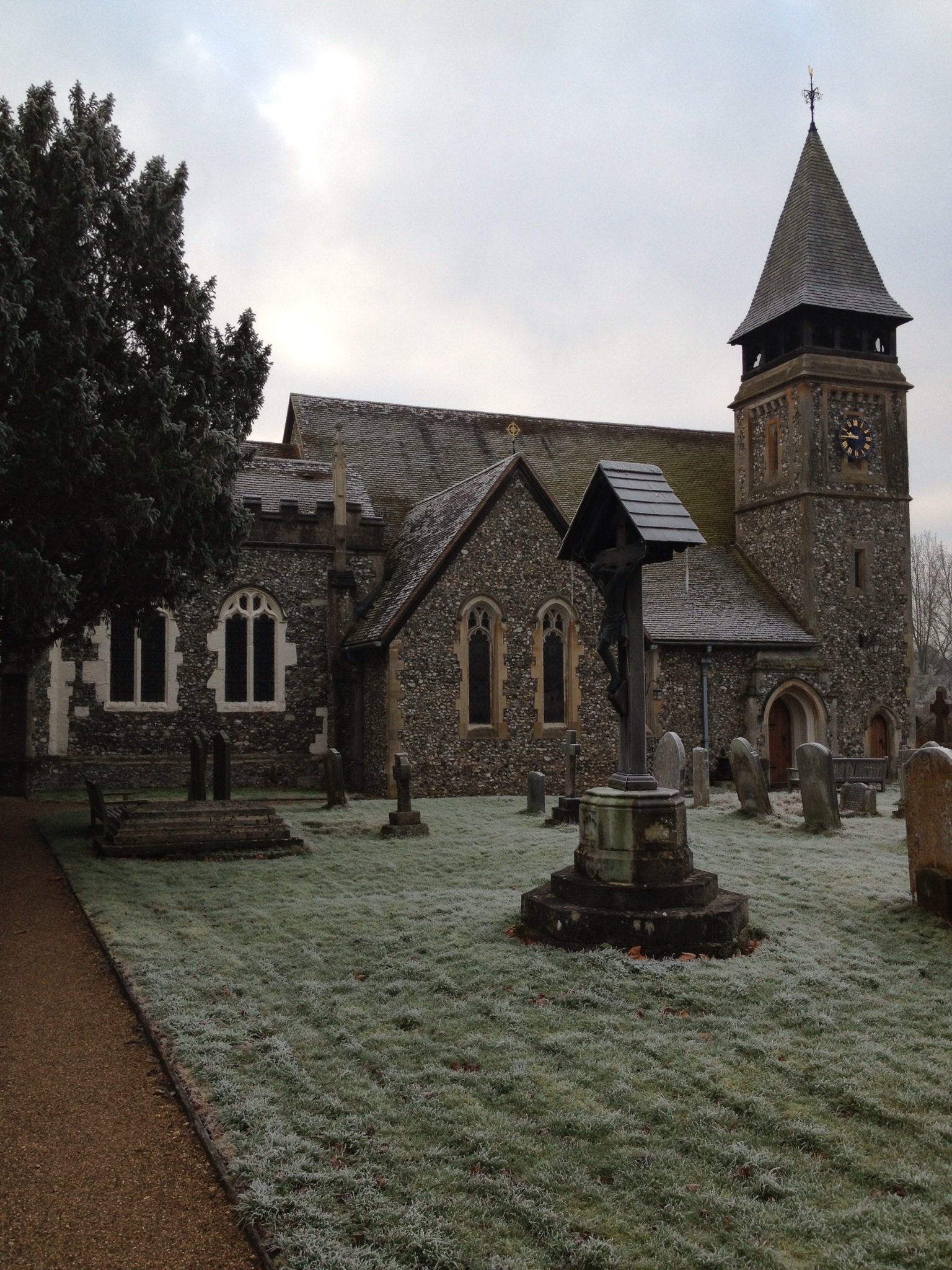
Archives for posts with tag: Moses

Sermon for Mattins on the Second Sunday after Easter, 15th April 2018

Isaiah 63:7-15, 1 Corinthians 10:1-13

I’ve been wrestling with some contrasts in the last day or two. Obviously the civil war in Syria, the apparent poison gas attack: and then the attack on Syria by the Americans, the French and our RAF. 104 missiles, apparently, of which 8 were ours.

And the 50th anniversary of Enoch Powell’s ‘Rivers of Blood’ speech. An actor read it again on the wireless last night – although I didn’t listen to it. Perniciously, some its ghastly racism still comes back. References to black people as ‘smiling picaninnies’ and the cod classical reference to ‘the Tiber red with blood’ are still awful.

And the 70th anniversary of the voyage of the ‘WINDRUSH’ from the Caribbean, bringing people who would become postmen and nurses and drive taxis and do all the jobs which we couldn’t find people to do, whom we had advertised in the Caribbean for. Some of them have been here for most of that time, bringing up children and working hard – but now our frankly nasty Home Office is trying to throw out some of the ones who never applied for a passport, back to the Caribbean, where they haven’t lived for decades. On appeal, the Home Office’s ‘be extra beastly to immigrants’ policy has been overturned in about half the cases. What’s that about? Putting Granny on a plane to Jamaica because, as a British citizen – but a black one – she had no idea that she should keep any old documents to prove her right to be here.

The contrast was with the Easter sunshine yesterday, as lots of people came back from Easter holidays, expecting the usual murky weather back home, and found real, warm sunshine. The contrast was with our Easter happiness in our church, as we celebrated Christ’s resurrection. The story of Doubting Thomas is such a good one for us, because we sometimes feel that the miracle of that first Easter is just too much. But – ‘My Lord and my God!’ said Thomas, he, a person like us, was convinced – and we feel Jesus came back for us too.

But. But just as the Easter story is overlaid with the terrible sadness of the crucifixion, so we can’t help feeling that those simple Galilean fishermen are an awful long way away now. How can what happened so long ago, in such a different world, give us anything useful about the violence in Syria: how can the Easter story make any difference to the message of ‘Rivers of Blood’ which people like Enoch Powell, people like Nigel Farage and perhaps even Theresa May, when she was Home Office minister, gave out, any difference to the message that there is something wrong with people coming to live and work in our country, with immigration?

Actually, not just living and working here, but joining their relatives here. And where children are concerned, there are still a couple of thousand – really, not just a few – just across the Channel in France, who can’t get here. Theresa May, when she was Home Office minister, arranged a disgusting advert displayed on the back of vans, driving around advising immigrants to ‘Go home’. And she went to church faithfully all that time. Apparently, she saw nothing wrong in her deterrent vans.

What use is Easter against all that stuff? Can we learn from the early church? One thing about learning our Christianity from St Paul’s letters, is that we have to imagine what the other side of the conversation might be. So what was St Paul responding to when he wrote to the people in Corinth?

He was pointing out that, if one ignored God’s commandments, the Ten Commandments, God might not keep on forgiving them. The Old Testament is full of stories of the Chosen People, Israel, disobeying God. And it brought bad consequences on them. Plagues of snakes. And St Paul thought it was all pretty symbolic. For him, the Old Testament story of Moses in the wilderness after God had parted the Red Sea and they had escaped from Egypt, was deeply significant. Not everyone made it, because they fell away, they forgot God.

St Paul, in counselling the Corinthians, reminds them of the story of Moses and the Israelites coming out of Egypt. Even though the Israelites were God’s chosen people, it didn’t give them a complete licence to behave any way they wanted. Each breach of a commandment had a price. ‘Fornication’ brought a death sentence for 23,000 in one day.

At first sight, this doesn’t seem to square with the idea that God is our friend, that He cares for us. For if he really did, surely He wouldn’t be so fierce and judgmental towards human failings – because after all, He made us the way we are.

So why does St Paul offer these cautionary tales? It isn’t a question of ‘Be good and you’ll be welcome in heaven’ – and the converse, if you’re not virtuous. That if you’re bad, you’ll be going down.

It’s much more a question that God does love us, unconditionally; but we mustn’t fail to reciprocate. Perhaps the ‘other half’ of the dialogue between St Paul and the Corinthians was some idea that the Corinthians had, that becoming a Christian sort-of inoculated them against the consequences of bad behaviour. Once you’d been baptised and confirmed, perhaps they thought you could give full rein to your baser instincts. St Paul is pointing out that God may still take a dim view if the people who are receiving His blessing, go out immediately and do things more befitted to their old lives, before they saw the light.

St Paul’s point is, that if you are ‘saved’, you won’t want to fornicate and do all the other things, having riotous dinners and ‘putting God to the test’.

But my thought is that, if you are full of the Easter spirit, if you are a good Christian, it won’t just be a question of your avoiding fornication. There will be other signs of your being a Christian. And this is where I get back to my contrasts. How to be full of the spirit of Easter, and at the same time rushing into following Pres.Trump in attacking Syria before the United Nations weapons inspectors have even started? How to be full of the spirit of Easter, but sympathetic to Powell’s racism – as surveys have shown 70% of the British population were at the time. How does that – did that – work? Can you really be a Christian and support have a racist view of immigration? What about things that Nigel Farage has said really recently?

What about us here at St Mary’s? Why don’t we have any black people in our church? Some of us must have black neighbours; we must be more friendly to them, and see if we can get them to join us. It’s part of our vision, a vision of inclusion, of openness. As we start our befriending programme, let’s be open to inviting people who look a bit different to join us and become our friends. Let’s not just think of Easter as a quaint story 2,000 years ago, without any practical effect on us. Let’s show that Easter has made a difference to our lives.

Sermon for Evensong on the Third Sunday in Advent, 13th December 2015
Isaiah 35; Luke 1:57-80

So where are we up to in Advent? This is the third Sunday, and we are thinking about John the Baptist. Our second lesson was about Zacharias and Elisabeth, the faithful old couple who were way past having children when an angel visited Zacharias and told him that Elisabeth would have a son and that they would call him John.

Not surprisingly, Zacharias was rather worried that this was all not real. He asked the angel for some sign that he was telling the truth, and the angel said that he would be struck dumb until the boy was born. At about the same time, the angel Gabriel went to see Mary.

These were instances of special children, children with links to God, being born to women who had previously been unable to conceive, which had happened before in the Old Testament, in the book of Samuel. Hannah was infertile, but she prayed in the temple that if God granted her a son, she would give him up to be a priest. According to the book of Samuel, this happened.

So: John the Baptist. The angel had said that ‘he shall be great in the sight of the Lord and shall drink neither wine nor strong drink; he shall be filled with the Holy Ghost … And many of the children of Israel shall he turn to the Lord their God. And he shall go before him in the spirit and power of Elias, to turn the hearts of the fathers to the children, and the disobedient to the wisdom of the just; to make ready a people prepared for the Lord.’ (Luke 1:15-17) It was the beginning of the Kingdom of God, the time when all the happy things described by Isaiah in our first lesson would happen, the lame man leaping as an hart, like a deer: ‘then the eyes of the blind shall be opened, and the ears of the deaf shall be unstopped. Then shall the lame man leap as an hart, and the tongue of the dumb sing.’ [Isa.35:5f]

John the Baptist, preparing the way of the Lord. But what did he actually do?
He baptised people. What did that really involve? Obviously, dunking them in the river Jordan was what he was doing physically, but why did people turn out in vast numbers, as they apparently did, in order for him to submerge them in the Jordan?

Baptism by total immersion still happens today. The last Deanery confirmation and baptism service was at St George’s, Ashtead, where they have a built-in baptism pool. One of the faithful at St Andrew’s, a grown-up, was duly baptised there this Autumn. According to him, the pool was not heated, but he didn’t seem to mind.

The symbolism of baptism is fairly straightforward. It is a symbolic washing way of all our sins, all the bad things about us. If we are making a stand against evil, and trying to be closer to God, this washing will symbolically wash away the obstacles to our closeness to God. You can see what the washing is intended to signify.

Well that in Ashtead was a couple of months ago, but going back to Biblical times, the story of Zacharias and Elisabeth and their son John needs to be related to the context of the Old Testament. The significance of John’s arrival in this miraculous way has to be understood as it would have been understood at that time, in the context of Old Testament theology.

What John was doing in baptising was not just giving people a wash, but it had ritual significance as well. In the Jewish cult, that is, the way in which the Jews worshipped God, there are all sorts of procedures laid down, particularly in the book of Leviticus, among them for what was called ‘purification’. The Jewish religion was a religion of sacrifice, holiness, purification and atonement.

At every stage in life, Jews had to come before their God and propitiate him, turning away his anger and regaining his love by giving him things, by making sacrifices in his favour. This mostly involved killing innocent animals, unfortunately, and then burning them on the altar. I won’t take you through the whole ghastly procedure. If you really want to look it up, it is in Leviticus chapters 11 to 15.

The Jewish religious rules also laid down foods which were permitted to be eaten and which were not. Jewish people still abide by this – although some of my Jewish friends seem to have given themselves some latitude where bacon sandwiches are concerned!

I always smile when we read Romans chapter 14 about the Christian attitude to foods which were ritually proscribed. ‘One believes that he may eat all things, another, who is weak, eateth herbs’ – or, as for once in my life I prefer a modern translation, ‘the weak eat only vegetables.’ [NRSV, Romans 14:2]

Be nice to your vegetarian friends!

But there is an urgency about this, a dynamic to it, which perhaps we don’t quite ‘get’, if all we understand about John the Baptist and about baptism is a kind of symbolic washing, or even a kind of initiation ceremony. As we say, anyone who has been baptised is welcome to eat at the Lord’s table. That’s not really the full flavour of how it was in the Old Testament. The Jews were God’s chosen people, and their worship was designed to acknowledge that they had been singled out by God.

The whole dynamic of the Old Testament concerns the interaction between the Jews and God. They disobeyed God, and were enslaved by the Egyptians and Babylonians. They obeyed God; God loved them again, he freed them and took them to the Promised Land. It’s an idea of God, a picture of God, which I don’t think we would find convincing today.

Take the stories, that we were brought up on, of the soldiers in the trenches in the First World War, perhaps 100 or 150 yards apart, the Germans and the Brits so close that they could hear each other talking. So close that they could hear each other saying their prayers. They were both praying to the same God. What were they praying for? To survive, not to be hurt, and, dare one say, to win.

How could there be a God who favoured one side over the other? Or both sides against each other? Just as a matter of simple logic, it doesn’t work. It surely can’t be how God works.

Of course some people don’t take it any further than that and simply say that it means that God does not exist. I think in a way that is just as big a mistake as imagining God as some kind of divine helper who can fix things when they are seemingly hopeless, and more importantly, who can favour one lot of people over against another.

Of course the Emperor Constantine, in 312AD, had a vision, before the Battle of the Milvian Bridge, that if he and his soldiers painted the sign of the cross on their shields, God would give them victory. They did paint the sign of the cross on their shields and they were victorious.

After that, Constantine adopted Christianity and made it the official religion of the Roman Empire. That was probably one of the biggest factors in making Christianity a world religion instead of just being a local middle eastern cult.

But it is rather doubtful whether Constantine actually believed in anything which modern Christians would recognise as Christianity. We certainly would not imagine that God would work some kind of magic so that someone would win a battle.

But certainly in the Old Testament time, the time of Moses and Elijah, Jews believed that they had to perform these various sacrificial rituals as part of their proper worship of God. There was a vital significance to this, that unless they worshipped properly, God would be angry with them. If so, God would ultimately enslave or destroy them. Ritual cleansing was all part of this worship.

These days, I don’t really ‘get’ the idea of ritual washing. I’m as fond of a nice spa as the next person, but that has to do with simply enjoying a pleasant experience. If somebody said to me that, in order to get closer to God, to put myself right with God, perhaps to atone for past wrong, for things which I have done, I needed to be baptised, I needed to have a ritual bath, I’m not sure whether I would believe in it.

Perhaps we should look again at what the work of John the Baptist could mean today.

For instance, the idea of purification. In the Jewish religion, purification has a connotation of stripping away things which are not true, bringing people to the true God, to the vital reality of creation.

Such a purification, a weeding out of things that are not true, that are wrong, could still make sense. There are plenty of things that are wrong today. If they were purified, refined back to their true essentials, would it indeed help to bring people to the true God, to the vital reality of creation?

Vital reality. I wonder why it is, therefore, that today there doesn’t seem to be the same kind of urgency. Quite a lot of people, after their Sunday lunch, and perhaps a little walk, may indeed have watched Songs of Praise, but now instead of coming to Evensong, they will be settling down for a pleasant evening catching up with the doings of some Norwegian detective.

I wonder whether we ought to be quite so blasé. Some of the things, which we take as being facts of life, perhaps aren’t. They might perhaps be better for some purification.

Take money for example. We all understand the idea of money: that money is something which stands for things which you can exchange for it. A certain amount of money gets you a certain amount of goods or services. Until 1933, a £1 note could be exchanged for a gold sovereign. There was a gold standard. The idea was that money had a fixed worth.

Clearly that is not true any more (if it ever was). Why is it, for example, that if a poor person goes into debt, maxes out their credit cards at Christmas and then is made redundant, they are immediately in trouble, and there is no one to help them; but if the banks go bankrupt, as they did in 2008, governments will step in to bail them out? It’s all the same stuff: all money.

Indeed the banks were bailed out largely by the government creating money. Clearly that money did not necessarily represent, or have any equivalence with, goods or services in a way we would understand. Is that the reality that suits us human beings best? Is it a true reflection of how things are? Perhaps we need some kind of washing. Perhaps this whole system needs to be washed through, cleaned.

Maybe John the Baptist still has something to say to us. It is something to think about when you are next in the Jacuzzi.

imageSermon for Evensong on the Second Sunday after Trinity, 14th June 2015
Jeremiah 7:1-16, Romans 9:14-26

On Wednesday night the Leatherhead Deanery Synod met in our church hall. It was a very interesting meeting, addressed by the Revd Canon Dr Hazel Whitehead, who is director for Discipleship Vocation and Ministry in our Guildford Diocese. Hazel is dynamic and somewhat formidable. Her topic was so-called ‘Faith Sharing’.

Among other things, she asked us to come up with about 20 words which would sum up the Good News, the Gospel message, which we would want to share with any heathens that we might meet in our ordinary lives. There was discussion about how one could approach people who were not Christians in a way which might open their minds to knowing more about the Gospel.

We all were nervous about possibly seeming like Jehovah’s Witnesses or those earnest people with clip-boards who tackle you at the least suitable time when you are out and about. I think that it’s probably true to say that many of us are not naturally ‘God Squad’ people, but nevertheless we are sincere in our belief, and if we could find a way of doing it, which didn’t make us look like lunatics, we would be very happy to share the Good News with people who don’t yet know about it.

How would I speak to the ‘man on the Clapham omnibus’, to use the old lawyer’s phrase, about the work of a prophet like Jeremiah, who was at work 400 years after the kingdom of David and Solomon had split into two, a northern kingdom called Israel and a southern kingdom called Judah, including Jerusalem.

Israel had been conquered by the Assyrians in 721 BC-

‘The Assyrian came down like a wolf on the fold,
And his cohorts were gleaming in purple and gold’

as you will remember, in Lord Byron’s poem: and in 587 BC the remainder of the Chosen People, the people of Judah, were deported to Babylon:

By the waters of Babylon, we sat down and wept (Psalm 137).

400 years before, there had been the time of the Exodus, and Moses had received the Ten Commandments from the Lord. Jeremiah was reminding the people of Judah that they would only be able to continue to live in the Promised Land if they kept God’s commandments: to love the Lord your God, and not to worship other gods, and to keep the other moral laws, not to steal, not to do murder, not to commit adultery, and so on.

Interestingly, when he is going through the various commandments, Jeremiah doesn’t recite the commandments about stealing, murdering and committing adultery, until he has emphasised, they would only be able to continue to live in the Promised Land, ‘If ye oppress not the stranger, the fatherless and the widow.’

We tend to think of Old Testament morality as being centred around ‘an eye for an eye, and a tooth for a tooth’. Not a bit of it – practical care for the weaker members of society was very important indeed. We perhaps don’t think of it as being part of the Law of Moses – it was not actually part of the Ten Commandments not to oppress the fatherless, the stranger and the widow. But it is part of the Jewish Law: you’ll find it in Deuteronomy (24:17) and in Exodus (22:22). There’s a real strain of socially-directed morality in the Jewish Law.

The Italians and the Maltese today, throwing their navy and their coast guard into rescuing all the refugees embarking from North Africa in unseaworthy craft, are carrying out the Law of Moses. They are saving the strangers, the refugees. Jesus affirmed that Jewish Law. He said, ‘Do not think that I have come to abolish the law and the prophets. I have come not to abolish, but to fulfil’ (Matt. 5:17).

It surprises me that, although they have committed the Royal Navy, our government so readily rejects the proposals of the European Commission, that all the nations of Europe should take a fair share of the refugees. In this our government’s attitude seems to me not only to be contrary to the Law of Moses, but also to the precepts of Christ Himself.

But if even the government is so deaf to God’s commands, how do I get through to the man on the Clapham omnibus about the ‘law and the prophets’? How can I get him to think about whether keeping to the Law and following the prophets would keep him in the Promised Land, as Jeremiah was saying to the people of Judah? Alas, I have a feeling that the chap on the bus will look at me as though I’d just stepped off a spaceship from Mars.

What about what St Paul says? In Romans 9, ‘Is there unrighteousness with God?’ Is God unfair? Is God unjust? St Paul goes back to the original giving of the Ten Commandments, God saying to Moses, ‘I will have mercy on whom I will have mercy, and I will have compassion on whom I will have compassion.’ In other words, nothing that humans can do will necessarily influence the will of God.

But does that make God good, or bad? Again, it looks quite difficult to explain to our chap on the bus. (Perhaps not on the actual number 88 from Clapham, but maybe I might be listened to on a number 9 coming along Pall Mall – a Boris Bus – what do you think?)

It was relatively simple in the time of Jeremiah. Behave decently, look after those who are weak and disadvantaged in your society – and God will look favourably on you. He will not turf you out of the Promised Land.

But St. Paul points out that things aren’t quite so simple. In the passage which comes immediately after that terrific passage which we often have at funerals – ‘I am convinced that neither death, nor life, nor angels, nor rulers, nor things present nor things to come, nor powers, nor height, nor depth, nor anything else in all creation, will be able to separate us from the love of God in Christ Jesus our Lord’,[Rom. 8:38-39], Paul agonises about whether the Israelites, the Jews, are still the chosen people.

Of course much of the Old Testament is a kind of epic love-hate story between the chosen people and God. When the chosen people obeyed God, worshipped the One True God, then they were able to escape from captivity in Egypt and go into the Promised Land.

But then when they mixed with the Canaanites, whose land they had occupied, and started to worship the Baals, the gods that the Canaanites worshipped, and no longer exclusively worshipped the One True God, then God was angry with them, and eventually they lost the Promised Land.

What St Paul points out is that God is not some kind of cosmic prizegiver. God is far greater than that. As it says at the beginning of St. John’s Gospel, ‘To all who received him, who believed in his name, he gave power to become Children of God’. St Paul says, ‘As Hosea prophesied, I will call them my people which were not my people; and it shall come to pass that in the place where it was said unto them, Ye are not my people, there shall they be called the children of the living God’.

God is omnipotent, so of course He can do this: and there’s no point answering back and complaining, railing against God if He doesn’t do what we want.

Back to my 20 words of message to my heathen friend on the top deck of the Number 9 bus. What would he make of a prophet like Jeremiah, and what would he make of a Jewish convert to Christianity like St Paul? Our heathen friend is, by definition, in this context, not an Israelite, not one of the chosen people.

So he won’t be familiar with the terms of art, with the language, of Christianity and Judaism before it. What does a prophet do? Could there be prophets today? In the Old Testament, at the crucial moment, God will speak through a prophet, to His chosen people: ‘Do this. Do that, and you will be able to enjoy the promised land.’

In today’s world, after the New Testament, it may be a bit different. Be alert to the promptings of the Holy Spirit. Try to discern what God has in mind for you, and what God is calling you to do. ‘Amend your ways and your doings. If you truly act justly one with another, if you do not oppress the alien, the orphan, and the widow’, says God through the prophet Jeremiah, ‘then I will dwell with you in this place.’

So what are we to make of all this? How would we share it with our heathen friend? How does God speak to us these days? Do we still have prophets, and if we don’t, how do we know if what we are doing is in line with the will of God?

St Paul doesn’t say straightforwardly that God only does good things. He asks, ‘Is there injustice on God’s part?’ He answers his own question, By no means – or, ‘God forbid.’ But he then goes on to say that God ‘will have mercy on whom [he] has mercy and [he] will have compassion on whom [he] has compassion.’ In other words, justice seems to depend on God’s whim, not on whether something is right or wrong.

It’s an old philosophical problem, and it’s possible that it was something that Paul knew about, from his study of Ancient Greek philosophy, and in particular, Plato. 400 years before the time of Christ, Plato wrote about the teaching of Socrates. Socrates himself didn’t write anything down, but he was reported faithfully, just as Boswell reported Dr Johnson, by Plato.

Socrates’ philosophical investigations usually took the form of dialogues, of conversations that he had with various people, which brought out the issues that he wanted to explore.

One of these dialogues is called Euthyphro. It takes the form of a conversation between Socrates and a man called Euthyphro. In the course of the dialogue, the famous Euthyphro Dilemma comes up. It is this: is something good because it is good in itself or is it good because God makes it good? St Paul seems to come down on the side of the second: something is good because God makes it good. The Ten Commandments are expressions of the will of God not because they are good in themselves but because God has laid them down by giving them to Moses.

It does seem clear, nevertheless, that most of the things that are recommended in the Jewish law are, almost self-evidently, good in themselves. But what about the refugee, and the widow and the orphan? What about the immigrants? Is God telling us to look after them? And if He is, what are we doing about it?

Sermon for Mattins on the Third Sunday of Easter, 19th April 2015
Isaiah 63:7-15, 1 Corinthians 10:1-13

This week I was influenced by two stage plays. On Thursday I went to see Tom Stoppard’s latest play, ‘The Hard Problem’, as a live relay from the National Theatre to the Everyman cinema in Walton-on-Thames. I won’t spoil the play for you, if you haven’t seen it yet: but you won’t be cheated if I tell you that the ‘hard problem’ is the question, if we know how the brain works, as a kind of super-computer, so we know which bits of the brain control different functions, and we know that they do it by switching little electrical currents, the question, what is it to be conscious of something?

Another philosophical problem touched on in the play is the so-called ‘prisoner’s dilemma’. Why do we often do things which aren’t necessarily in our own interests? If Ned Kelly and I rob a bank, and we are arrested, do I give evidence against Ned? If I do, it may go easier for me. But I probably won’t, out of loyalty to Ned. ‘Honour among thieves,’ even.

In pure evolutionary terms – survival of the fittest – there is no reason for altruism. It would serve my interest best to look after myself. But I may well not do. Why are we often altruistic? This is something that Tom Stoppard looks at in his play. But because it’s a play, and not a philosophy lecture, in the ‘Hard Problem’ the altruistic part is played by a pretty girl, who believes in God and says her prayers every night. The Richard Dawkins part is played by a rather suave Irishman, her tutor, who likes to exercise a kind of droit de seigneur with his female students, and who is an atheist, a materialist.

Imagine these actors transposed into the world immediately following the death and resurrection of Jesus. Instead of a rather dry set of arguments about the way that computers, the way that the most able computer, the human brain, works, and Wittgenstein’s conclusion that ‘of which [we] may not speak, [we] must be silent’ [L.Wittgenstein, Tractatus Logico-Philosophicus, 1.21], groping towards an understanding of God by reasoning and inference – which must feel like really inadequate tools – instead of that, they would bump into people who claim to have seen a man who has risen from the dead, who is divine, God on earth.

What a contrast! In the Hard Problem, the actors are tied up with questions about how life – and its creator – works, and whether one can infer from that any information about said creator. Is it an algorithm, or God? The early Christians, by contrast, had accepted the momentous news about the presence of God in their lives, as a fact. They were concerned much more with how they should react to that fact, than whether it was a fact. Doubting Thomas had settled that.

Today our Bible themes, in our lessons, deal with the after-effects of Easter and Jesus’ resurrection. How did it affect Jesus’ followers – and how should it affect us, even though we are so long after it happened? You might be surprised that there is such an Old Testament emphasis, but this is the train of thought used by St Paul in his First Letter to the Corinthians.

St Paul, as a leader of the early church, sought to link the new life, which he called ‘being in Christ’, with the Jewish Law, the tradition of the Jews as spiritual ancestors of the Christians. He was ticking off the people in the new young church at Corinth for forgetting the story of the Israelites, and how by obeying and worshipping the one true God the Israelites of the Old Testament had been saved, led out of Egypt and through the Red Sea.

He goes through the history of the Israelites, how they ‘ate the same spiritual meat’, manna from heaven, but ‘with many of them God was not well pleased: for they were overthrown in the wilderness’. Then comes a moral lesson. ‘Now these things were our examples, to the intent that we should not lust after evil things’. In St Paul’s letter, if you do the wrong thing, if you break the Commandments, you will come to a sticky end.

Looking at things 2,000 years on, it is perhaps a little bit difficult to bring alive in our minds the excitement of the period after Jesus first appeared to the disciples risen from the dead. Even if their lives hadn’t already been changed by being with Jesus, they certainly were when they became aware of His resurrection.

In the light of that cataclysmic fact, some early Christians thought that, as they were God’s elect, saved, they need not worry about how they behaved. There was no need for them to keep the Jewish Law, to abide by the Ten Commandments, any more. They could do what they liked: they could eat, drink and be merry – because tomorrow they would not die, but have eternal life.

In the Old Testament, Moses was receiving from God His Commandments, rules for a good life in the Promised Land. 700 years later, Jesus came, the Messiah. Surely the old Law had had its day. Jesus had given a new commandment, a commandment simply ‘that ye love one another’. But Jesus said He had not come to abolish the Law and the prophets. Instead, His coming was fulfilment of those prophecies, and the Ten Commandments were still valid.

But there is a thread running through Jesus’ teaching, most evident in the Sermon on the Mount, that simply following the letter of the law is not enough: Jesus’ commandment of love involves going the extra mile, doing something extra.

Which brings me round to my second theatrical encounter this week. This one was even more of a ‘virtual’ experience than seeing the Tom Stoppard play by live relay in the local cinema. The second play was one that I read about, in the editorial of a newspaper this Thursday. This is what it said.

‘”The bodies of the drowned are more varied than you’d think,” says the character Stefano in the opening scene of a new play, Lampedusa (in London now …) The work of the young playwright Anders Lustgarten, the title refers to the island where Stefano works rescuing the bodies of those who’d fled from war and disaster in Africa and the Middle East, and found death at sea instead. “They’re overwhelmingly young, the dead,” he observes. “Twenties. Thirty at most. Kids, a lot of them. You have to be to make the journey, I suppose.” The play wants to make its audience ask what kind of society it wants. Within days of its opening last week, 400 people were missing presumed drowned after a wooden fishing boat capsized off the Libyan coast. Its human cargo had all rushed to one side in the hope of rescue. At the start of what is becoming the Mediterranean’s annual drowning season, the question of what sort of society we want to be is a challenge for all Europeans.’ [The Guardian, 16th April 2015 http://gu.com/p/47hb2%5D.

All the commentary on this topic which I’ve read so far concerns itself with how to stop the migrants coming into Europe. Do we set up systems to head them off at the point of original departure, or put up even fiercer barriers at the points of entry?

What would Jesus say? I wonder whether He might point out that it is a matter of luck where we are born. Some are fortunate, and are born in Northern Europe. The majority are born in greater or lesser poverty somewhere else. Is it wrong to try to go where there is a better life? After all, that’s what is celebrated in the Old Testament: the wanderings of the Jewish people, their search for the Promised Land. Just imagine what might be said today if 144,000 people all decided to migrate from a big country into a smaller, more fruitful one. All the talk would be of how to prevent them. Think about it. The population was much smaller then. Think of the effect on their schools and their local services. Much more of an impact than Poles or Romanians might have today.

I think that Jesus might also point out that we are all children of God, wherever we have been born. Rich people are no more deserving than poor. Indeed, ‘He hath put down the mighty from their seat, and hath exalted the humble and meek’. (Luke 1:51) or, ‘For what is a man profited, if he shall gain the whole world, and lose his own soul?’ (Matt. 16:26). It follows that we should not be concerned about nationality in future – we are all, in a real sense, citizens of the same world. There would be no more immigrants, no more strangers. Our sole concern should be to see that no-one should be hungry and in need.

Remember what the early disciples did – no doubt because they believed that this is what Jesus would have prescribed. ‘..all that believed were together, and had all things in common; And sold their possessions and goods, and parted them to all men, as every man had need.’

It’s a challenge. What do we believe Jesus would say? Tom Stoppard’s play made room for God, even in the rational worlds of a business school and a hedge fund: in his play Lampedusa, Anders Lustgarten has posed ‘the question of what sort of society we want to be’, ‘at the start of … the Mediterranean’s annual drowning season’.

What sort of society do we want to be? Will Easter make any difference to us? I pray that it will.

How does Easter work? A Sermon for Evensong at St Mary the Virgin, Stoke D’Abernon, on Palm Sunday 2015
Isaiah 5:1-7; Mark 12:1-12; Romans 7

This time last week I was in St Andrew’s Cathedral in Sydney, Australia. Even allowing for the time difference, at the beginning of the sermon there, you are in for a much bigger sermon than my little efforts here. The Sub-Dean, Canon Chris Allan, preached for nearly 40 minutes – and in the pew sheet there were two blank pages for you to make notes in! He was preaching about Romans, chapter 7. What he said – or rather, some of what he said – was this. It leads rather neatly into what I want to say at the beginning of Holy Week today.

In his letter to the Romans, St Paul wrote that being married is a legal relationship. Break your marriage and you break the law. But if your spouse dies, the law no longer binds you. You can marry again without breaking the law.

Pardon? I thought. Surely, there is no law against cheating on your poor spouse. Instead it’s a classic example of the dichotomy, which all lawyers are familiar with, between something which is illegal and something which is immoral.

But of course in the context of St Paul’s letter to the Romans, the ‘law’ is the Jewish Law, the law of Moses: the Ten Commandments and the books of Deuteronomy and Leviticus in the Old Testament.

That Law was, is, a moral law rather than a civil law. It is against the Jewish Law to commit adultery. To keep to the Jewish Law, generally, is to avoid falling into sin. Paul says, rather mysteriously, that until that Law was given to Moses, there was no sin. Perhaps this is like saying that, unless we have black, we cannot understand white. Until there was a Law to be broken, there were no breaches, no crimes against the law, no sins.

The coming of Jesus has released us, as if, having been ‘married’ to sin, inseparably hitched to it, we had died, ‘died to sin’. As a result, our legal tie, our ‘marriage’ to sin, is over.

This comes about as a result of the death and resurrection of Jesus. Jesus was a man as well as being divine. As such, he was, potentially at least, ‘married’, inextricably linked, to sin. But He died, and the link died as a result. Then He rose again, no longer human, but divine.

If we somehow die with Him, our bondage, our ‘marriage ties’ to sin will be dissolved, like a widow’s former marriage. But as St Paul pointed out in Romans chapter 7, in one sense, perhaps it doesn’t work. Even after we have become Christians, our links to the former partner – dare I say to the old ‘ball and chain’? – are still there. I know what the good is, and I want to choose it, says St Paul, but I don’t do it. I still do the bad thing instead. I can’t help it.

Does that mean that we’re like the bad tenant farmers, the evil husbandmen, in Jesus’ parable of the man who let out his vineyard? God has planted a vineyard, a fruitful vineyard, and has let it out. Will the tenant farmers pay the rent? Or in Isaiah 5, God has dug and planted and done everything necessary for his vineyard, that he has planted, to bear tasty fruit – but it doesn’t.

God will be cross. He will dig up the vines that produce bad stuff, vinegar instead of wine. He will punish the tenant farmers for the way they have abused his rent-collectors.

Those favoured tenants, given leases over Chateau Lafitte (or maybe Château Musar, as we’re in a Middle Eastern context), have spurned their obligations to the landlord. Appallingly, they have even killed the landlord’s son rather than honour their contract and pay the rent to him.

Jesus is telling a parable. He’s drawing a picture, making an analogy – much in the same way as Isaiah did, generations ago. No more special relationship, no more chosen people. They, the Israelites, have produced a duff vintage, not even plonk.

Was this going to turn out badly? On one level, yes. The people in the promised land wouldn’t pay their rent. The harvest was lousy. So God would plough up the vineyard, he would forfeit the lease.

But are we like the evil husbandmen? If St Paul is right, and we never stick to what is right, even though we know what the right thing to do is, will we be cast out of the Lord’s vineyard? The Easter message is that the exact opposite will happen. Although the only Son was killed, he was raised up again. This is a sign, a sign that He was not defeated, not defeated by sin and death. In effect, even though they had murdered Him, the son will go back to those husbandmen and give them a second chance.

The other thing is who the husbandmen were. In the New Testament, when this story comes up in St Mark, or, in almost the same words, in St Matthew or St Luke, the suggested interpretation is that they were the Jews, or more particularly the Pharisees, who were on a course of deadly opposition to our Lord. But ‘the stone which the builders rejected has become the head of the corner’. There is no chosen people under the new Covenant, the Covenant summed up in John 3:16, ‘For God so loved the world, that he gave his only begotten Son, that whosoever believeth in him should not perish, but have everlasting life.’ Instead, whoever believes, wherever they come from, can be saved; everyone, not just the Jews.

The Easter message isn’t that God will miraculously fix us, fix all our faults. St Paul may have found it very frustrating, but the reality is that, in this life, we are not perfect. But in the next – as the hymn says, ‘in this world and the next’, we will have died, we will have left sin a widow, so our bonds will have been broken. And meanwhile, we have this ‘blessed assurance’ in Jesus, that God will forgive us when we fall short – and ‘falling short’ is the literal meaning of the Greek word for ‘sin’, άμαρτια.

So we may indeed, in a sense, be like the bad husbandmen in Jesus’ story. As long as we live, we can’t escape our sinful nature. But it does not mean that we’ll be cast out into the outer darkness. Provided that we repent, that we acknowledge our sins before God and try to improve, we will be forgiven, God will still care for us.

As we start Holy Week by remembering Jesus’ triumphal entry into Jerusalem on his donkey, there is some tension between our feeling joy with those crowds who strewed his path with palm leaves, and the undertow of foreboding, the dark shadow of the cross.

He looks like the one to save his people. It may only be a donkey, but it is a triumphal procession. But are we good enough? In our hands, God’s Château Lafitte has produced plonk. And we haven’t paid the rent.

What next? Come back, come back every day this week, and see. But this isn’t Sydney Cathedral, so I don’t need you to write notes.

Sermon for Evensong at Charterhouse for the PBS Meeting, 14th March 2015

Exodus 1:22 – 2:10; Hebrews 8

The Catechism in your Prayer Books comes after the various baptism services and before the confirmation service. In my Prayer Book, it begins on page 289. It is described as ‘An Instruction to be learned of every person before he be brought to be confirmed by the Bishop’. ‘Learned’ means ‘learned by heart.’

It was, apparently, one of the traditional curate’s tasks to coach the children in learning the catechism so that they could recite it. In the confirmation service, at the beginning the bishop reads a preface, which says, ‘.. the Church hath thought good to order, that none hereafter shall be confirmed, but such as can say the Creed, the Lord’s Prayer, and the Ten Commandments; and can also answer to such other Questions, as in the short Catechism are contained: which order is very convenient to be observed..’

The ‘short Catechism’! These children – maybe some of them as young as ten years old – had to be word-perfect on pages 289 to 296 of their Prayer Books. Well, before we grind to a halt in awe at the brilliance of our ancestors in their childhood years, I would just say that I think the Catechism is still very useful, not for use in school detention, as a point of reference about our faith. As with everything else in the Prayer Book, it sums up in beautiful language, and very clearly, all the elements of the Christian faith: the Creed, belief in Father, Son and Holy Ghost and in the death and resurrection of Christ; the Ten Commandments, ‘the same which God spake in the twentieth chapter of Exodus’, the Law given to Moses, the Lord’s Prayer; questions and answers about the sacraments, that is, what we are doing when we are worshipping in church.

‘What meanest thou by this word Sacrament?’

‘I mean an outward and visible sign of an inward and spiritual grace given unto us, ordained by Christ himself, as a means whereby we receive the same, and a pledge to assure us thereof.’

You can just hear a ten-year-old saying that! But it is the essence of worship.

Today’s lessons take us from the birth of Moses, to whom God spoke, and to whom God gave the Law, the Ten Commandments, who was from the tribe of Levi, the tribe of priests. He was a priest of the order of Melchizedek, the mythical high priest, king of righteousness, king of peace; ‘without father, without mother, without descent: having neither beginning of days nor end of life, but made like unto the Son of God’. That’s Hebrews chapter 7. We go from there, from the birth of Moses, to the new high priest, the new high priest of the order of Melchizedek, Jesus Christ. ‘We have such an high priest, who is set on the right hand of the throne of the Majesty in the heavens.’

So in this part of our time of reflection in Lent, as we come to the fourth Sunday in Lent, we are being encouraged by our Bible reading to think about what it is to worship, and what it is to be a priest, to recognise Jesus as our high priest.

Nowadays we think of a priest as somebody who leads worship, who preaches sermons and acts as a sort of managing director of the management of a church. But in the time of Moses, a priest of the order of Melchizedek was an intermediary, was a mediator between man and God. He was the only one allowed to enter the holy of holies, the inner sanctum, the inner sanctuary in the Temple. The high priest was the only one qualified to encounter God face to face.

Now, the God which we worship with the help of Jesus is not so fierce. He does not demand blood sacrifices. We are able to come to God through grace, through His free gift of love, not through His weighing our merits or pardoning our offences.

But who are we, in this context? This afternoon, this little band of the faithful has a label. We are members of the Prayer Book Society. We are Christians. We are Christians who like to worship, and whose Christianity is informed by, this great and ancient book, the Book of Common Prayer.

But it is our Christianity that is informed by our love of this book, and informed by this book itself. It’s not the case that we are here because we share the love of stamps or Jaguar cars, or some other passion: the London, Midland and Scottish Railway, in my case. We are here as Christians. We are here because we want to worship God, in Christ, and we want to spread the Good News of Christ because we are Christians, and because He commanded us to do so.

The Prayer Book comes into it because we believe that the Prayer Book gives expression to our faith and shape to our worship in a better way than any other liturgy that we know. But it’s not a question of entertainment. The difference between going to see a play of Shakespeare and saying the service, or singing the service, at Evensong or at Mattins, or at the Lord’s table in Holy Communion, is that one is entertainment – maybe edifying, but it is entertainment nevertheless – and the other is worship, is bringing ourselves to God in praise and prayer.

Just as belief in God and in Jesus Christ as His Son has lasted for over 2,000 years, and still seems to be a very lively belief in many parts of the world, for the last 500 years the Book of Common Prayer has been the blueprint for worship in England and Wales. The PBS exists to keep that tradition going.

But where is our faith going to take us in the future? Is there a specifically Prayer Book dimension to this which will keep us together and do the Lord’s work at the same time? We’re not a very big band of people here in the Guildford Branch of the Prayer Book Society. Although it’s fair to say that there are quite a number of loyal members who don’t turn out for our services and meetings, even so we are rather a select band.

Apparently, according to Church of England research which I learned about at the Diocesan Synod last Saturday, if you define a country parish as a parish which has fewer than 10,000 residents in it, over 60% of the churches in England are in ‘country’ parishes. No doubt most of us here in Guildford Diocese live in country parishes, if they are defined in that way, strangely enough.

So if the Prayer Book Society, Guildford branch, was a country parish, with a small congregation, what should we be doing in order to do the Lord’s work in such a parish? At the Diocesan Synod last weekend, I learned that Archbishop Justin has set up working groups among the bishops ‘to grow and enhance the quality of the Christian witness’ in this country, and we were treated to a couple of case histories where churches, which had had rather small congregations and appeared not to be going anywhere, had been turned around and revitalised, and were now giving a much more dynamic witness to their faith in Christ.

Holy Trinity Claygate did a ‘Church-planting’ exercise in East Molesey. 40 people from Claygate have transferred to St Mary’s, East Molesey, along with a dynamic young curate, Revd Richard Lloyd – who, incidentally, was once Chaplain here at Charterhouse. Where there was once a band of about 40 rather elderly people and a large church building to keep up – a gentle air of genteel decline – now, there are still those faithful old people. But there are also about 150 people who have joined the church subsequently. Not just elderly people, but people of all ages, parents and children. And there is another church, All Saints, Weston Green, where again there is new growth, new people are joining the church, and the church is getting involved in more and more things.

In one instance, the relaunch of the church had a lot to do with introducing modern forms of worship, directly appealing to younger people. But in the other, when I looked at the church’s website, at first I wasn’t sure whether I was looking at the right church. They looked pretty normal, pretty standard.

They too had made an effort – a successful effort – to attract younger people. But their view was that it wasn’t the type of services that was keeping the young ones away – it was the time of the Sunday morning service. This was because a lot of the children were attending sports training sessions – mini Rugby in Cobham, for example – at exactly the same time as the Sunday service and Sunday School in church. What was the solution? They switched their family service to 4 o’clock in the afternoon, and made it a weekly service. But the actual liturgy was pretty standard. There has been no rush to wildly evangelical services, led by music groups with guitars. But the people are coming.

So what’s the X Factor? For both these churches, it was the fact that they formed several little groups of people who looked outside at their local communities, and did something practical to get involved. For example, the local food bank. Did you know that there are now 40 food banks in Surrey? Most of them have been started by local churches. Or Citizens’ Advice, or job clubs for people looking for work. Or groups who drive people to hospital and doctors’ appointments. There are lots of ways for members of the congregation to engage with their local community. If you think of Jesus’ great commandments, (which were, of course, just repeating what Moses had said), to love God and love our neighbours as ourselves, our worship is loving God, and our getting out into our local communities and doing some practical good is the Good Samaritan bit.

I pray that this congregation, this branch of the PBS, will thrive and grow. It will grow through your efforts as members of the PBS, helping churches all through our Diocese to worship regularly in Cranmer’s way – remember that Evensong is the fastest-growing service in the C of E – and helping to witness to our faith, by our practical love for our neighbours.

Sermon for Mothering Sunday, 15th March 2015
Exodus 2:1-10 – the Baby in the Bulrushes

Today is Mothering Sunday, as well as being the fourth Sunday in Lent, which incidentally is sometimes known as Rose Sunday or Refreshment Sunday. Depending on how fierce the regime is that you follow during Lent, you may be very pleased to have Refreshment Sunday, because that is the Sunday when you are allowed to relax a bit and go back to some of the things which you’ve given up, like chocolate and Chateau Yquem or a nice Burgundy to go with your Sunday lunch. On Rose Sunday, Refreshment Sunday, you are allowed to have those things.

Alternatively of course, you can follow the theory which says that Sundays are not part of Lent at all, and that therefore you can stoke up on your goodies every Sunday without breaking any rules. I leave it to you and your conscience, because today I want to concentrate on this Sunday’s motherly aspect, to look through the prism of the beautiful story of the birth of Moses, and the way in which he was saved by being left in an ‘ark’ made out of bulrushes, in the flags of the river, in the reeds at the river’s edge, where he was found by Pharaoh’s daughter, who then gave him back to his real mother to bring him up as a nurse. [Exodus 2:1-10]

At this time in Lent we are reading in the Bible how our understanding of God and our encounters with God developed through the covenant with Abraham and God’s dealings with His chosen people, Israel, the Jews: how they were given the Ten Commandments through the prophet Moses, and then how Moses the high priest, of the order of Melchizedek, was succeeded by Jesus, the real, the true high priest, our mediator and redeemer, as we say in our prayers.

We are reflecting on this central part of our faith, that God made Himself known to us directly by being here with us in human form. Coming in human form, through being born of a human mother.

But today I’m not actually going to spend time considering the vital part which the Blessed Virgin Mary played in the Incarnation of our Lord. Instead I am going to look at Moses himself, the great forerunner, the law-giver. You will remember how the Israelites were in Egypt because Jacob’s sons had sold their brother Joseph into slavery. But Joseph had turned himself into being the Pharaoh’s right-hand man, chief of staff, administrator over the country. The brothers had come to Egypt to buy grain at a time of famine, Joseph having prudently stored up supplies of grain in Egypt, and Joseph had brought his brothers and the people of Israel back into the land of plenty, where they settled, as aliens in a foreign land.

They did well: they went forth and multiplied. They were very successful; they worked hard – perhaps did jobs which the indigenous Egyptians didn’t want to do, and generally became quite visible, visibly successful – people noticed the Hebrews. The Pharaoh, the ruler, didn’t like the way that the Hebrews were, in his terms, getting above themselves. So he tried to wipe them out, by stopping them breeding.

First of all he told his midwives, when they were attending a Jewish woman, not to let male children be born alive: but the midwives didn’t carry out his instructions. Their excuse was that the Hebrew women gave birth too fast, so that by the time they had been summoned as midwives, the birth had already taken place, and it was too late to do away with any male children.

So Pharaoh thought again and came up with the idea that any male children that were born to the Hebrews should be thrown into the river and drowned. Genocide, unfortunately, is something that the Jews haven’t only had to contend with in the last hundred years.

Moses’ mother was from the tribe of Levi; Moses’ parents were from the tribe of Levi, the special tribe of priests, who were allotted a share of any produce simply by virtue of being Levites, priests [Deut.18]. But before all else, she was a Hebrew, in circumstances where Hebrews were aliens in the land, immigrants, and they were subject to persecution.

Pharaoh had been working them harder and harder, trying to grind them down. And now he was trying to wipe them out, by killing their first-born sons. It’s a heart-rending picture. Imagine. Somehow or other, the mother felt that the only way that her baby could survive was for her to abandon him in a little coracle in the hope that somebody would find him and save him. It was a long shot just on the chance he would survive at all. What would the odds have been against that somebody, who found him, being the ruler’s daughter?

It must have been a terrifying moment for Moses’ Mum. There she is, hiding nearby to see if somebody will come and save little Moses, and then the very person who turns up is from the family of the man who has decreed that little Moses and all the other Hebrew boys are to be killed, not saved.

But nevertheless Pharaoh’s daughter had a motherly instinct. She couldn’t hurt little Moses. She looked for somebody to look after him – and along came his real Mum. Pharaoh’s daughter knew perfectly well that Moses was an illegal – not exactly an immigrant, but certainly an alien. He was one of the Hebrew children. She said as much. Nevertheless she saved him, and Moses’ real Mum brought him up, so he was able to thrive.

It’s a lovely story. Just imagine, what would be a parallel today? Let’s imagine, perhaps, the Duchess of Cambridge (Kate Middleton, as was) and some of her girl-friends having a few days by the sea in Sicily, staying in one of those beautiful Relais et Chateaux palazzi, with nannies and ladies-in-waiting, all sitting on the beach under an umbrella, enjoying a glass of Prosecco and chatting, setting the world to rights – and then, all of a sudden, on the horizon, they see one of the refugee ships.

The crew has abandoned it. It is on auto-pilot: the engine is still turning the screw, and it is heading straight for the sea shore. But – wait a minute! It looks as though the ship is going to go past the promontory where the ladies are, and it looks as though it’s taking on water. Suddenly someone on board launches a little life raft, and in the life raft is a baby. Clinging to the life raft, but not in it, is a girl, a teenager, just about hanging on. They get washed up on the beach, just down from where the duchess and her friends are sitting.

Kate Middleton says, ‘Look: there’s a baby. It’s one of those refugee babies – we must save him, and we must make sure that he gets a good start in life. Let’s bring him ashore, wrap him up; give him some food. Oh, he’s only a teeny baby. Can someone nurse him? I wonder if that African girl, the one who was clinging to the life raft, could nurse him. Look, she’s still lying on the beach just a little way down. Poor thing, she looks half dead. Let’s give her something to eat and put everything together.’

Can you imagine that? Or are you persuaded by politicians who tell us that to have enough coast guard rescue ships and helicopters in the area to save everyone who is a refugee and in peril, would act as what they call a ‘pull factor’? Their idea is that if you believe that somebody will rescue you if you get into trouble, it will encourage you to embark on a lethal refugee ship, barely able to stay afloat. Frankly that is evil nonsense. Those people are so desperate that they will take those sort of risks irrespective whether there’s anyone to rescue them.

What do you think about those people – those refugees, those immigrants, those illegal immigrants? Some people say, ‘They take our jobs’ – like the Jews were supposed to be taking the jobs of the Egyptians. Next time someone says how dreadful immigrants are, and how we ought to stop people daring to try to come away from the poverty and violence in their country to get into the UK, think of the Law of Moses. God spoke through Moses: He gave Moses the Law, the Jewish Law: and Jesus affirmed it. The Law tells you to care for the alien in your midst. In the Law of Moses, when you harvest a field or pick the grapes, you are supposed to leave something for the alien and the stranger to have, so that they don’t starve. See Deuteronomy chapter 24, or Leviticus chapter 19.

Somebody else might say, ‘We were born in England, or to English parents. We deserve our comforts. We’ve earned them’. They might say. ‘We’ve paid our taxes. We don’t want our hard-earned benefits squandered on people who haven’t earned them. It’s our birthright’.

But just think what it must be like if you’ve been born in Syria, or in Iraq, or in Somalia, or Libya, instead of in England! What is your birthright then? Surely the most important difference between us and them is where you were born, which is a matter of sheer luck. But God loves us all, wherever we were born. So the commandment means, love your neighbour, wherever they come from.

3,000 years later, are we as good as Pharaoh’s daughter was? It is something for us to reflect on, as we enjoy our roast beef – with or without Chateau Yquem with the pudding.

Sermon for Evening Prayer on Saturday 15th June 2014, after the Prayer Book Society, Guildford Branch, AGM
Exodus 34:1-10, Mark 1:1-13

After the AGM. A new beginning. A new deal. Moses had broken the tablets written by God – ‘tables of stone, written by the finger of God’ [Ex. 31:18]. He broke them when Aaron made the Golden Calf and got the Israelites to worship the Golden Calf rather than the One True God. They broke their covenant with God, so Moses broke the tablets containing the words of the covenant [Ex. 32:19].

And then Moses met the Lord, who came down in the pillar of cloud, and begged The Lord to forgive the Israelites and renew His covenant. The God of Israel was not a vengeful god; the Lord forgave His chosen people and renewed the covenant, giving Moses two new replacement tablets of stone on which the Lord had written: various commandments, (more than just the 10 Commandments), all designed to make for decent humane living.

The Israelites experienced God in the most direct way. God, JHWH, revealed Himself to His prophet Moses and He told Moses what He wanted His people to do.

In those days, scripture, holy writing, was supposed to be, literally, the word of the Lord. Even today, Moslem people believe that their scripture, the Quran, is the result of direct divine inspiration.

By the time Jesus came along, the Commandments had been copied, written down many times, and the Jews all knew what the commandments of God were. God had made an agreement with the Israelites, through their representative, through Moses. It was written down: it was a written contract.

With John the Baptist, people were renewed in their Jewish religion by ritual washing, being baptised in the River Jordan. There was no contract-making, nothing written except the original Jewish Bible, containing the words of the covenant between God and Abraham – renewed between God and Moses.

The covenant, the understanding, the link between God and his chosen people, was expressed to be by water and the Spirit. When Jesus presented Himself for baptism, God appeared. God spoke, not just to a prophet, but to anyone who was listening. ‘Thou art my beloved Son’ …[Mark 1:11]. And this began Jesus’ adult mission on earth, those three momentous years which changed the world.

We should perhaps pause at that point, since this is the Prayer Book Society at worship, and observe in a respectful way the fact that, whereas the Lord’s covenant with Israel through Abraham and through Moses was a matter of words. Jesus came in water and spirit [John 3:5] – and then above all, in the flesh, as a man. It wasn’t a question what was written or the detail of what was said, but of who He was that made a difference; so although we set great store by having the right words, the best words, to express the most important things in life, our relationship with God – and we find those words in the Book of Common Prayer – we must draw a respectful distinction between that situation and Moses and Abraham’s tablets of stone.

That covenant, that contract, those words written under the finger of God, were not replicated when Jesus came to be baptised by John the Baptist. Indeed I would suggest that there has been quite a lot of harm done by the idea that Scripture is literally written down by God. I think we can take some comfort from the fact that the Book of Common Prayer was clearly the work of human hands, indeed human hands informed by a lot of prayer, and by the response of the Holy Spirit to that prayer.

But albeit with the benefit of prayer, the book was written by a man, by Archbishop Thomas Cranmer, in the middle of the 1500s. Cranmer based it on existing liturgy, usually in Latin, so he wasn’t making it up. Instead he was using the best bits that had evolved over the hundreds of years beforehand.

I started out by mentioning new beginnings, new years. This, the week of Pentecost, Whit week, is the beginning of the Christian year, the beginning of the Church year. Last Sunday was Whitsunday, when we celebrated the coming of the Holy Spirit: mysterious flames, the disciples speaking in tongues. Although they were recognised as being just ordinary bods from Galilee, what they said was understood by everyone, irrespective what country each person listening came from.

Tomorrow is Trinity Sunday: Father, Son and Holy Ghost, Holy Spirit.

God appearing in the pillar of fire or out of the burning bush to Moses: the father, the creator.

God the Son – ‘Thou art my beloved Son’

and last weekend, God the Holy Spirit, the breath of God. ‘The wind wills where it listeth’ [John 3:8].

None of this will translate literally, either as a matter of language or as a matter of metaphysics.

It’s difficult for us to believe in the sort of God who dealt with the Israelites, taking a very personal interest in what they did and responding to very basic prayers – ‘Save us from the Egyptians!’ ‘Save us from the Ammonites and the Amalekites. Give us victory in battle.’

It’s very difficult for us to believe in that kind of God. Easier for us to believe in God incarnate, in Jesus Christ. He was clearly a historical figure.

It may be easier, today, to recognise the work of the Holy Spirit. All of us, however unspiritual, surely have had those moments when something has happened, or a thought has popped into your brain, which you can’t really account for, but which nevertheless suddenly helps you to make sense of a difficult situation.

Obviously those sort of feelings don’t just pop up at will every time we pray. But it does seem to me that it would be worthwhile to carry on looking out for them. I suppose our take on that, as PBS members, is that on listening out for the ‘still, small voice of calm’, we feel that we may find it more easily using Cranmer’s words than in some twenty-first century banality.

Wherever you are going to find it – that still, small voice of calm, the voice of the Spirit – it is worth looking out for.

Sermon for Evensong on the Seventh Sunday of Easter, 1st June 2014
2 Sam 23:1-5, Eph.1:15-23

First we heard the last words of King David, and then St Paul’s prayer for the Christians at Ephesus. The context is the Ascension, which the church celebrated on Thursday. Leave-taking. The end of the party. I wonder who did the washing-up. When the disciples – and certain women, including Mary the mother of Jesus as well as his brothers, when they were all together after Jesus had left them and a cloud had taken Him out of their sight, when it was over, when the ‘farewell tour’, Jesus Christ Superstar, had come to the end of its run: what do you think they all did?

They went back to the upstairs room and said prayers. And maybe they got busy doing the washing up. Because they must have been feeling very flat. We know that when Jesus had been crucified, if we think of the story of the disciples on the way to Emmaus, they were very sad then, when they thought that Jesus had been taken away from them.

So I think we can reasonably expect that they were also feeling very flat and very sad when Jesus had been taken away from them the second time, when He had ascended into heaven. Whitsuntide, Pentecost, had not yet come, although Jesus had assured them, ‘You will receive power when the Holy Spirit has come upon you, and you will be my witnesses … to the ends of the earth’ (Acts 1:8). But that hadn’t happened yet.

It must have been very difficult, after all the momentous things that had happened. After the roller-coaster ride of following Jesus, suddenly He wasn’t there any more. In the church, we have commemorated that roller-coaster ride, through the Easter season, though the time of Jesus’ passion, and suffering, Good Friday; and then the glorious Resurrection on Easter Sunday; and then His risen appearances, the road to Emmaus, doubting Thomas: all the wonderful stories of the risen Christ.

It is a revelation to us, a sure and certain hope that we have, because of God’s presence with us, His gift of His only Son and His Resurrection from the dead. In Paul’s letter to the Ephesians, Paul prays that God will give them ‘a spirit of wisdom and revelation as they come to know Him, so that with the eyes of your heart enlightened, you may know what is the hope to which He has called you, what are the riches of His glorious inheritance among the saints.'(Eph.1:17)

If you are a Christian, if you go to church, this is a wonderful time of year: the Easter season. It is a time of hope and joy. But in the world outside, there is a sense of challenge. Not everyone is a Christian. Not everyone is aware of, let alone believes in, the wonderful story of Jesus. The Boko Haram people who have kidnapped 200 children, 200 girls, in Nigeria, are actively opposed to the Christian message. They want forcibly to convert people to Islam – forgetting perhaps that the god of Islam is very like the God of Israel and the God of the Christians – and certainly forgetting that God is a god of love.

Also in the world outside, we had an election. Some of you may have heard of my huge success in the Cobham Fairmile Ward election. It was a massive success, honestly: despite representing the Labour Party, I managed to poll in double figures! St Mary’s has much more successful politicians – congratulations to James Vickers!

After the elections, the press and the BBC are talking about the phenomenon of UKIP and what they stand for. It seems that a major part of UKIP’s message is that they are opposed to large-scale immigration and they are opposed to our membership of the EU, perhaps because they see the EU as being a major cause of the immigration which they don’t like.

And then there’s the controversy which has grown up concerning the new book by the French economist Thomas Piketty, called ‘Capital in the 21st Century’, which is all about the widening gap between the rich and the poor worldwide. Prof Piketty offers, at the end of his 573-page tome, some suggested alternatives to the economic policies which are being pursued in all the leading economies. But a Financial Times journalist, Chris Giles, has argued that Prof Piketty’s figures are wrong. If you put more than one economist in a room, they will inevitably disagree! I see that Ed Miliband confessed that he’d only just started reading Thomas Piketty. I have got to page 51.

It does all seem quite a long way away from the world of Easter, from the Resurrection and the Ascension: from the hopeful question from the disciples to Jesus just before He was taken from them, ‘Lord, is this the time when you are to establish again the sovereignty of Israel?’ (Acts 1:6 – NEB), a long way from all that, to the rather gloomy fact that only a minority of people cared enough about the way they are governed, even to cast a vote.

There does seem to be a big gap at the moment, between our church lives and the world outside. It’s all very well St Paul saying in his Letter to the Galatians that ‘the harvest of the Spirit is love, joy, peace, patience, kindness, goodness, fidelity, gentleness and self-control’. (Gal. 5:22f), but how is that relevant to UKIP and to the world of macroeconomic theory?

What we are not hearing, in all this ferment of debate, is a Christian voice. What about immigrants? A politician says he couldn’t hear any English spoken in his carriage on the Tube. An election flyer says that there is some impossible number of East Europeans just waiting to come to the UK, take our jobs and claim all our benefits. Someone else points out, against this, that the NHS would collapse without doctors and nurses from abroad. Another expert points out that immigrants contribute more in taxes than they receive in benefits, and that fees from foreign students are vital to the survival of our universities.

But – and perhaps I haven’t been reading the right paper or listening to the right station on the wireless – I don’t recall anyone bringing the Bible into it, which they could have done. In the Old Testament, it’s a fundamental point of the Jewish Law that you must look after strangers, aliens, foreigners – in Deut. 10:19, Moses says that God ‘loves the alien who lives among you, giving him food and clothing. You too must love the alien, for you once lived as aliens in Egypt.’ In Jesus’ staggering picture of the Last Judgment in Matt. 25, He says that the righteous shall ‘enter and possess the kingdom’ because ‘… when I was hungry, you gave me food; when thirsty, you gave me drink; when I was a stranger you took me into your home …’ When the righteous didn’t get it, and queried when they had done this, Jesus said, ‘I tell you this: anything you did for one of my brothers here, however humble, you did for me.’

Jesus didn’t blame people for being poor. He didn’t think there was anything wrong with being a refugee. His ancestors, the Jewish people, had all been refugees. He didn’t talk about benefit cheats and scroungers. He didn’t talk about corporate tax avoidance – although he did say, ‘Render … unto Caesar the things which are Caesar’s’. Maybe that is a good message for Starbucks, Vodafone and Google.

What about the widening gap between rich and poor, which Thomas Piketty has written about? Are the only things, which can be said, ‘It’s the market’, and ‘There is no alternative?’ If the government gives a tax cut to the highest earners, (which one commentator said was enough for them to go out and buy a Porsche with), at the same time as over 1 million people have had to go to a food bank to avoid starvation – and by the way, that includes 307 people in Cobham and Stoke D’Abernon who have used the Foodbank since we opened five months ago – if there is that seeming bias towards the rich, what is the Christian way to look at it?

Perhaps the answer is in the Magnificat, the song of Mary, the mother of God:

He hath put down the mighty from their seat:
And hath exalted the humble and meek.
He hath filled the hungry with good things:
And the rich he hath sent empty away. [Luke 1:46-55]

You might also remember what Jesus said about camels and the eye of a needle. [Matt.19:24]

But Jesus has been taken away from us. He has disappeared behind a cloud. Disappeared behind a cloud, a cloud of modern stuff. But, you might say, things were much more simple in Jesus’ day. There weren’t any benefit cheats. There weren’t any Romanians using the EU as a way to come and steal our jobs. You just can’t compare how it was then with the situation these days.

I think we should think carefully about it. I know that, in this week in the church’s year, you might argue that Jesus has ascended, and the Holy Spirit is coming – Jesus told his disciples to expect it, in Acts chapter 1 – but it doesn’t arrive till next Sunday. If it looks as though our world is rather godless, that fits with Jesus having left us, with the Ascension time.

But in this world, in our day to day lives, of course the Holy Spirit is here. The Lord is here. His Spirit is with us. So why does it look as though we are we ignoring Him? Is it OK not to want strangers? Is it OK that the rich get richer, and the poor get poorer?

As Christians, what do we think? Have I chosen my Bible references too selectively? Or is it more a question that the world today is more complicated than it was in Jesus’ time, and that some of Jesus’ sayings are out of date these days?

Or have we Christians really got something very distinctive to say, which doesn’t necessarily fit in with conventional wisdom? I’d be interested to hear what your thoughts are.

Sermon for Evensong on the Sunday before Lent, 2nd March 2014
2 Kings 2:1-12; Matt. 17:9-23 – Elijah and Jesus

I’m not quite sure whether you still find some of the stuff in the Bible surprising or not: just in case it did just flow over you, I will just highlight a couple of surprising things which we have heard in this evening’s lessons.

In the second Book of Kings, we heard about the prophet Elijah being taken up into heaven – but first of all, parting the waters of the River Jordan, so that he and his successor Elisha could pass through to the other side: ‘They went over on dry ground’ (2 Kings 2:8). And then ‘a chariot of fire appeared, and horses of fire, and took Elijah up in a whirlwind to heaven’ (2:11).

Then if we turn to St Matthew’s gospel, we have picked up the story, as Jesus, Peter, James and John the brother of James were coming down the high mountain on which they had seen Jesus ‘transfigured’ with Moses and Elijah. A bright cloud had suddenly overshadowed them and a voice came out of the cloud, ‘This is my beloved Son, in whom I am well pleased; hear ye him’ (Matt. 17:5).

And then as they came down the mountain, Jesus cured a man’s son who had epilepsy, by ‘casting out a devil’ which had made the boy have fits. Jesus challenged his disciples by saying that they did not have enough faith: ‘If you have faith no bigger than a mustard seed, you will say to this mountain, move from here to there: and it will move. Nothing will prove impossible for you.’

What do you think? Is there any way these days that we could understand Elijah suddenly appearing with Moses and Jesus, in some way ‘transfigured’? I’m not sure what ‘transfigured’ really means. There is that wonderful piece of music by Arnold Schoenberg, ‘Verklärte Nacht’, Transfigured Night, a night of strange light, a supernatural aspect. What do we feel? Are we in the camp which feels, along with C. S. Lewis, that anything is possible for God, and therefore there is no reason why God could not make miracles like the Transfiguration, or Elijah being taken up into heaven?

Elijah being taken up into heaven, of course, is somewhat like the Ascension of our Lord Himself. So are we comfortable saying, ‘Because of the omnipotence of God, there is no reason why, given that Jesus was God, he shouldn’t be able to have transfigurations and ascensions: and no reason that Elijah, as the prophet of God – as the other great prophet with Moses – couldn’t be taken up into heaven in the way described?’

On the other hand, we could be sensitive to the charge of humanists and rationalists, who object that everything that we believe in ought to be subject to the same rules of logic and science, and that you could not make sense of stories such as Elijah being taken up to heaven in a whirlwind or the Transfiguration in the normal way: just contrast the way in which you would describe the arrival of a number 38 bus with the way in which these stories about Elijah and Jesus are told. Quite different.

We can generally agree that if I tell you about seeing a number 38 bus, you will know what I am talking about, even though perhaps what you and I actually see when we look at a number 38 bus might in fact be different. We can’t get into each other’s heads to prove what it is exactly that we are looking at: whether it is the same thing. Nevertheless it’s sufficiently similar for us to be able to communicate about it successfully. What it is for something to be a number 38 bus is sufficiently similar in my understanding to what it is in yours for us to be able to talk about it.

But on the other hand, if we talk about something like Elijah going up to heaven in a whirlwind, or Jesus being transfigured with Moses and Elijah, we can’t necessarily be confident that we will be understood by everyone in the same way.

Jesus adds a twist, by asking whether or not the disciples have enough faith; if they do have enough faith, even the tiniest quantity, it will be sufficient to move mountains.

But – are you going to beat yourself up over the fact that you aren’t able to go out there and transpose K2 for Everest using pure will-power and faith? Nobody else has done it. So what did Jesus mean? Clearly we are in a different area, different from simple mundane questions like whether the 38 bus has arrived or not.

Of course some of the Oxford philosophers of the 50s and 60s, like the late, great, A. J. Ayer, would have said that, unless a statement is verifiable, in the same way that something about the number 38 bus would be verifiable, then it is meaningless. So everything about Moses and Elijah, transfiguration, being caught up to heaven in a whirlwind and so on, is, according to Prof. Ayer and others, meaningless.

So on the one hand you have C.S. Lewis accepting miracles and saying, ‘This is just the sort of thing that an omnipotent god would do’, and on the other, you’ve got a sort of common sense view, either that they’re not true, or that there’s no way in which we could make sense of these stories in any literal way.

Does it matter? We are just about to start Lent. Ash Wednesday is this Wednesday, and in fact our Lent courses are going to start on Monday morning, so that we can get six sessions in before Holy Week. We’re going to be studying St Paul’s Letter to the Ephesians, under the heading, ‘Be Reconciled’.

St Paul wrote, ‘He has made known to us His hidden purpose – such was His will and pleasure, determined beforehand in Christ – to be put into effect when the time was ripe: namely that the universe, all in heaven and on earth, might be brought into a unity in Christ.’ We will be studying all the various aspects of this ‘unity in Christ’, this reconciliation, over the next six weeks.

But for the purpose of this sermon, I simply want to draw attention to the process, to the way that our faith can work. There must be a very strong suspicion that unless something very remarkable did in fact happen, it’s tempting to feel that no-one would have said that Elijah was a prophet, someone through whom God spoke.

Without the miracles, the revelations, perhaps no-one would have said that Jesus was not only a prophet – as the Moslems and Jews acknowledge – but was in fact God on earth, the Son of God. But it’s not so much a question how God manifested Himself through Elijah, or became incarnate in Jesus Christ, not a question of how, but that He did. The exact mechanism is beyond our powers of understanding.

One can say that these big miracles, like the Transfiguration, or Elijah being taken up into heaven in a whirlwind, are indeed beyond our power fully to describe or explain. But that doesn’t mean to say that they did not happen in some sense. Because if they did happen, we can recognise through them that God cares for us, that God is involved with us.

And in the light of that wonderful fact, we ought to be reconciled, to be reconciled with God and with each other. Sin is being separated from God: salvation is being brought back together, reconciled.

So much for this rather philosophical excursion. You might be rather scornful that I could stay in this rather rarified vein in the face of all the momentous events which have been happening this week. As Christians preparing to rehearse, to act out, the drama of Jesus’ Passion, prepared to accept the reality of God on earth, how do we look at the conflicts in the world, in Syria or in the Ukraine?

Nearer to home, what do we think about the two criminals who murdered the soldier, Lee Rigby? ‘ROT IN JAIL,’ in bold capitals, read the headline on the front page of the Daily Mirror. What is the Christian perspective? How would we see it if we ourselves had just come down from the mountain with Jesus?

Who are the good people and the bad people in these stories? What happens when the dust has settled? When the Syrians have finally stopped killing each other, and the Ukrainians have decided whether they want to go with the Russians or with the Europeans, where are we going to stand as Christians?

Are the killers of Lee Rigby really condemned to rot? Is there no redemption for them? Clearly now the killers don’t appreciate that what they did was wrong. They have a crooked justification for it. But let’s suppose after years in gaol, they appreciate the wrongness of what they have done, and they repent. What shall we say then? Jesus’ message was a message of forgiveness, not ‘rot in jail’. How would it feel to us if we had just come down from that high mountain?

The same with the civil war in Syria and the terrible divisions in the Ukraine. Will people be reconciled? In these situations the church can speak. The church can remind the world of Jesus’ message of forgiveness and reconciliation: we Christians should be fired up by the thought of that mountain-top experience.

We can be prophets; we can let the Holy Spirit speak through us. Let us pray that, at the end of the conflicts in Syria and the Ukraine – and in all other places where there is a breakdown of law and order, where there is civil war or civil unrest – that there will be a resolution, not based on victors’ justice, but rather on true reconciliation. Truth and reconciliation, in Nelson Mandela and Desmond Tutu’s words: truth and reconciliation. Come down from the mountain. Be reconciled.