Archives for posts with tag: Acts of the Apostles

Sermon preached at All Saints Church, Penarth, 29th April 2025

Acts of the Apostles 4:32-37; John 3:7-15 – see https://acrobat.adobe.com/id/urn:aaid:sc:EU:ab09bab9-b3d3-40fb-94f8-e2783f0f51ba

This morning I want to look at two or three words in our lessons which I think in one way or another, by a happy accident, because the lessons were chosen long before this came about, have reminded me about various things to do with the late Pope Francis. I am sure you have read and watched and listened to many reminiscences and obituaries which have given us a very colourful picture of this great man, this great man of God, this vicar of Christ, the man who takes the place of, represents, Christ – which is what the word ‘vicar’ means.

Someone who takes the place of somebody else. Vice, in Latin, as in vice versa; vice, vicar. I was very tempted just to read out to you a really good article in this week’s Church Times by Prof. Paul Vallely, biographer of Pope Francis, about the late pope. At the end I will read out a bit of the article because it is so memorable and, I think, gives a really authentic reminiscence of this good man.

But first let’s look at our lessons today in the light of what we know and remember of Pope Francis. ‘The Lord is king and has put on glorious apparel’; the opening line of our psalm appointed today; as the vicar of Christ, the pope is often dressed in amazingly rich and ornate robes, and I think that on occasions, Pope Francis was no exception: but very often we saw him just simply wearing a simple alb, a monk’s garment, not weighed down by a beautiful gilded and embroidered chasuble; and that was the key to so much about Pope Francis, that he was a man who believed in not being a ‘prince of the church,’ as it’s sometimes called.

I treated myself last night to watching again on Netflix that wonderful film that came out a few years ago called The Two Popes, with Sir Jonathan Pryce as Pope Francis and Sir Anthony Hopkins as Pope Benedict. 

The film is full of lovely contrasts. The grand style of the former Cardinal Ratzinger, Pope Benedict, a great theologian but quite happy to go along with the tradition of the Catholic Church as it had grown up, and to enjoy the trappings: travelling by helicopter to the summer residence outside Rome and coming in to the Vatican, again by helicopter: and then where Pope Francis rings for a takeaway pizza, which is a very sweet moment; and so on. 

I’m sure we have all read about the only time that Pope Francis drove in a Mercedes was when he was in his Popemobile, whereas normally he used a Ford Fiesta. How he didn’t live in the grand rooms are usually allocated to the pope in the Vatican but rather in a modest guesthouse. How he rang up to settle his newspaper bill in Buenos Aires when he had been elected Pope and suddenly had to stay in Rome permanently.

For Pope Francis the image of the Lord was not so much that of a king who had put on glorious apparel but the servant king, the one who washed the feet of the disciples and healed the sick. One of the stories in the Church Times is of the Pope meeting a man who was horribly disfigured and his face was really repulsive – and hugging him, when nobody else would go near him. You feel that Jesus would have been exactly the same. When Jesus healed a leper it had the same connotation of touching the untouchable.

Then we look at the passage from the Acts of the Apostles with its picture of how the early church conducted itself, that ‘they were of one heart and soul, and no one had private ownership of any possessions, but everything that they had was owned in common’. I’m not going to get into a discussion whether the early Christians were communists – although you will remember what Jesus said about the rich man and the eye of the needle – but certainly there is this passage and the approving reference to Joseph of Cyprus, who became Barnabas and then travelled a lot with Paul subsequently, who, after selling some land, brought the proceeds to add to the early church funds.

This passage, the story, is very much in line with the humble approach of Pope Francis, although he wasn’t actually one of the ‘liberation theologians’ from South America who were also Marxists. He had a really big heart for the poor, and he wanted the church to be a ‘poor church for poor people’. The passage in Acts 4 is, though, certainly reminiscent of Marx’s ‘from each according to his ability: to each according to his need’. 

The other thing that it reminded me of, by pointing out that Joseph came from Cyprus, was what happened at the funeral of Pope Francis on Saturday, that after the main funeral service in several languages, which you can read on the Internet on the Vatican website, there was a second mass in Greek celebrated by the Greek Catholics, the eastern Catholics; not quite the eastern Orthodox church, but certainly a nod towards them and the fact that Christians come in all shapes and sizes. 

At the time of Jesus Latin, which only became the international language of the Church from the time of Constantine, 300 years later, wasn’t used everywhere, but Greek was; so also the mention of Barnabas coming from Cyprus reminds us of the Greek heritage of the early church.

Just moving away from Pope Francis for a minute, our second lesson is this rather mysterious passage from St John’s gospel which tells of Jesus’ discussion with Nicodemus, a rabbi, a senior rabbi, a member of the Council who had come to see Jesus secretly by night. It’s worth reading the bit of the chapter which comes before our second lesson so you can see the context more clearly. 

‘‘Rabbi,’ he said, ‘we know that you are a teacher sent by God; no one could perform these signs of yours unless God were with him.’  Jesus answered, ‘In truth, in very truth I tell you, unless a man has been born over again he cannot see the kingdom of God.’ ‘But how is it possible’, said Nicodemus, ‘for a man to be born when he is old? Can he enter his mother’s womb a second time and be born?’ Jesus answered, ‘In truth I tell you, no one can enter the kingdom of God without being born from water and spirit. Flesh can give birth only to flesh; it is spirit that gives birth to spirit. [John 3:2–6, NEB, https://ref.ly/Jn3.2-6;neb]

You ought not to be astonished, then, when I tell you that you must be born over again. [John 3:7, NEB, https://ref.ly/Jn3.7;neb] In the lesson that was read out from a different translation, this line reads, Do not be astonished that I said to you, “You must be born from above.” [NRSV]

Born over again or born from above: which is it? The word in the Greek original – άνωθεν – could mean either of these things, so the different translators have gone in different directions and neither of them is necessarily wrong. But it does seem to me that more logically it must mean born over again, and this passage is all about that division between body and soul, body and spirit, which you come across here and also in Saint Paul’s letters, notably his first letter to the Corinthians chapter 15. 

Paul picked up on Jesus’s teaching here, and said that the mechanism of resurrection, being born again, involves the spirit rather than the body. The other thing to say at this stage is that as well as the word for ‘over again’ or ‘from above’ being capable of two different meanings, one single Greek word can mean spirit, wind, or soul. 

We will all probably remember the King James Version of this passage, ‘The wind blows where it listeth’, which is somehow much more memorable than ‘the wind blows where it chooses’ [NRSV]. The bathos of the modern translation loses the poetry entirely. 

But the point is that it’s not just the wind. The same word can also mean spirit, the Holy Spirit, and thus, the life force. There is clearly a reference here to condemnation and punishment in the reference to Moses lifting up the serpent in the wilderness and the son of a man being lifted up, lifted up on the cross. The idea is that, as Moses made the golden serpent and lifted it up on the pole, and anyone who had been bitten by the snakes which were plaguing the Israelites had only to touch the serpent in order to be healed, so Jesus is suffering and death on the cross has the potential to heal as well. 

The exact mechanism, how this healing works, is really difficult to understand; I think we should have some sympathy with Nicodemus. I think in a way he is a bit like doubting Thomas in the sense that there’s nothing wrong with his intellect but the things that he is expected to believe, the things that he is confronted with, in his encounters with Jesus, are just beyond human understanding. 

But maybe even that passage has a reflection in the life of Pope Francis. Let me close by reading you a story about him from the Church Times, which shows how he answered another, similarly tricky, question about the mystery of God.

A FEW years ago, on a visit to a poor parish on the outskirts of Rome, Pope Francis offered to answer questions from the youngest parishioners. But, when one young boy, aged about six, was invited to step up to the microphone to ask his question, he became suddenly overwhelmed.

“I can’t do it,” whispered the boy to a papal aide. “Go on, go on,” Pope Francis said, sitting on a little stage in front of the children and their parents. Children clapped to encourage the boy, who was called Emanuele. He started to cry. “Come up, Emanuele, and whisper your question in my ear,” the Pope said.

The aide led the boy, still crying, up the few steps to Francis. The boy buried his face in the Pope’s neck and hugged him. Francis patted the boy’s back and placed his hand upon his head. The child began to speak. No one could hear. The crowd sat in silence. The Pope was listening. The boy was speaking. On the Pope’s finger we could see the silver ring that he had worn since he first became a bishop in Buenos Aires. On his wrist we could see his cheap black plastic watch.

Then it was over. The boy was led back to his seat to applause. The Pope spoke to the crowd: “OK. I asked Emanuele’s permission to tell you the question he asked me. And he said Yes. So I will tell you. He said: ‘A little while ago I lost my father. He did not believe in God, but he had all four of his children baptised. He was a good man. Is my papà in heaven?’”

The Pope continued: “God is the only one who says who goes to heaven. But what is God’s heart like, with a dad like that?” he asked the rows of parents. They were silent. The Pope smiled. “This dad, who was not a believer, but who baptised his children and gave them that advantage, what do you think? God has a dad’s heart. Would God be able to leave such a father far away from himself?”

“No,” said a few people in the crowd.

“Louder,” said Francis. “Be brave, speak up. Does God abandon his children, when they are good?” “No,” chorused the crowd. “There, Emanuele, that is the answer. God surely was proud of your father. Because it is easier as a believer to baptise your children than to baptise them when you are not a believer. Surely this pleased God very much.” Smiling at the child, he added: “Talk to your dad. Pray to your dad.” [From Paul Vallely: ‘Pope Francis was pastor to the world’, Church Times, 25th April 2025]

I hope that this Easter will be remembered, and you will remember it, as the Easter when Pope Francis, the humble pope, went home to the Lord. He was a Holy Father indeed.
Sermon for Morning Prayer on 21st April 2024, Fourth Sunday of Easter

Acts 4:5-12, 1 John 3:16-24

I want you to think about the morning after the morning after the morning after the night before. Or possibly, the morning after that.

Think of something that has happened, something that you’ve been involved in, that was really a big deal. Something that really made a difference.

Maybe it was the day you got married, if you did. Or the day when you won an Olympic gold medal. Or the day when something really momentous happened in the world outside. Perhaps you can even remember Armistice Day, or perhaps more likely, the day after the Brexit referendum. In all those cases, things changed; things changed really radically for ever. Nothing would be the same again. In our Bible lessons today the context is another of those enormous events as we enter into the world of the very first Christians, in the first, the earliest, churches.

The momentous event was of course Easter, Jesus’ resurrection. They had either experienced meeting the risen Christ themselves or they had met people who had. That’s one reason why I always find it very exciting to read the Acts of the Apostles, written by St Luke, as book 2 of his gospel, in effect; and St Luke was certainly around at the earliest time even if he didn’t actually meet Jesus. St Paul describes him as the ‘beloved physician’ and there are certainly moments in the Acts of the Apostles, describing St Paul’s journeys, where the third-party narrative, ‘they’ did this, ‘they’ did that, turns to ‘we’ did it, so we can infer that Luke was there.

So it is a very immediate, personal account of what it was like to be an early Christian. And so we are seeing the Easter people, the first Easter people, picking up their lives and carrying on after the amazing events of Easter. And we hear that they ‘met constantly to hear the apostles teach, and to share the common life, to break bread and to pray. A sense of awe was everywhere and many marvels and signs were brought about through the apostles’. They held everything in common, as we heard in one of the lessons a couple of weeks ago.

And then the part which we heard read today: Peter and John had healed a man who had been crippled from birth, who was begging at the gate of the temple. Peter said, ‘I have no silver or gold; but what I have I give you; in the name of Jesus Christ of Nazareth, walk!’ And the man who had been crippled from birth sprang up, stood on his feet and started to walk.

Needless to say it attracted a lot of attention, and Peter said this to the crowd: ‘Why stare at us as though we had made this man walk by some power or godliness of our own? The God of Abraham, Isaac and Jacob, the God of our fathers, has given the highest honour to his servant Jesus… And the name of Jesus, by awakening faith, has strengthened this man, whom you see and know, and his faith has made him completely well.’

The chief priests and the Sadducees, just as they had done with Jesus himself, took exception to this and considered it to be blasphemy. They arrested Peter and John and put them in prison. And the passage describes what happened when they were asked to explain themselves.

It’s very reminiscent of a similar episode when Jesus himself was tackled about healing somebody on the sabbath day. Again, to use a contemporary expression, the disciples pushed back against the criticism. What was wrong with healing somebody who was sick? You might be tempted to say, what does it matter who the doctor was? Just be grateful that the cure worked. But the high priests were concerned that Peter and John were giving credit to Jesus in a blasphemous way. But they insisted that it was Jesus who was the divine agent and it was the sick man’s faith in Jesus which had brought on his healing.

Let’s go back a minute to the question of the morning after the morning after the morning after the night before. Nothing was the same after Easter. Whom could you trust? There were so many people claiming that they were the true believers, that they had an inside track to understanding the story of Jesus.

So let’s look at the first letter of John, the first ‘Epistle General of John’ as the King James Bible puts the heading. It’s possible that the John who wrote the letter was the apostle, or certainly was the same person who wrote Saint John’s Gospel. Although he would have had to be pretty old, it’s not impossible. Some scholars do think that all three of them are the same individual.

Again we are in the world of the very early church, and it’s clear that in that world it was commonly expected that the end of the world was round the corner, and all the references to salvation and eternal life referred to a last judgement at the bar of heaven which was just about to happen. All the more reason, the early Christians felt, to be sure that you were a true believer, that you were one of the people who were truly saved, the elect.

And this is what the letter, John’s first letter, is all about. In one of my Bibles there’s a sub-heading describing the letter as a ‘recall to fundamentals’. It begins with these words: ‘It was there from the beginning; we have heard it; we have seen it with our own eyes; we looked upon it, and felt it with our own hands; and it is of this we tell. Our theme is the word of life. This life was made visible; we have heard it and bear our testimony; we here declare to you the eternal life which dwelt with the Father and was made visible to us.’ Do you remember the beginning of St John’s Gospel? ‘In the beginning was the word’. And it is all about love. The ‘word’ is Jesus, and Jesus is love; and the key to being saved is whether you are ‘in Christ’, which is a rather mysterious expression which is generally reckoned to mean whether Christ is in you.

In John’s First Letter there are a series of illustrations of what it means to be in Christ and to be in the light of Christ. ‘A man may say I am in the light; but if he hates his brother, he is still in the dark.’ Only the man who loves his brother dwells in the light. And then this great passage that we had read to us as the second lesson, contrasting two examples, one, the greatest example, that greater love hath no man…, And we ought to lay down our lives for one another, the supreme sacrifice; and the other, because we can’t be in a position to offer a supreme sacrifice every day, the everyday salvation, the everyday expression of love, which you will remember from the sentences before the traditional Holy Communion service, ‘Whoso hath this world’s good, and seeth his brother have need, and shutteth up his compassion from him, how dwelleth the love of God in him?’ If a man has enough to live on, and yet, when he sees his brother in need, shuts up his heart against him, how can it be said that the divine love dwells in him? That’s how it works. God is love.

God is love; God: Father, Son and Holy Spirit. If we are in Jesus, in the Son, we are in love, love is in us; and the test of that is how we show that love. Let us love our brothers and sisters, let us love our neighbours. If we are Easter people, if we are like those early Christians on the day after the day after the day of the great event, what difference does it make to us? Is it still buzzing in our minds? Does it still draw us irresistibly to do things that we didn’t do before? Let us pray that it does.

Amen.

Sermon for the Morning Service at All Saints Church, Penarth

On 7th April 2024

Acts 4:32-35; John 20:19-31 https://bible.oremus.org/?ql=579426284

You hear that people who go to church describe themselves as Easter people. We are Easter people. I presume that means that, as Christians, our lives have been touched by the momentous events of Easter all those years ago. It has been made a huge difference to our lives and to the way that we carry on. The biggest thing about Easter – not really an elephant in the room, but something altogether bigger – is Jesus’ resurrection from the dead.

Jesus definitely died, and he died in a way which really doesn’t leave it open to anyone to say that he wasn’t really dead. If you die by crucifixion you are most definitely absolutely dead. He was then put in a tomb which was sealed with an enormous rock and put under guard by the chief priests and the Pharisees, who had been given permission to do so by Pilate because they said they were afraid that the Christians would steal his body. So I think we can be sure that he was definitely buried in a grave which would not be easy to get at.

And then on the third day, as we celebrated last Sunday, the stone had been rolled away, the grave was empty, and Jesus had somehow risen from the dead. He saw Mary Magdalene and Mary the mother of James and Joanna, and perhaps other women who had gone to the tomb to dress the body, who all went to tell the disciples. They were not believed initially. ‘The story appeared to them to be nonsense.’

Some versions of the gospel add that Peter took it on himself to rush back to the tomb, and he found it empty and realised what had happened. But the other disciples were sceptical until Jesus appeared to two people on the way to Emmaus and they brought the news back to the disciples. And then Jesus appeared to all of them in the way that we had described to us in Saint John’s Gospel just now. On the first day of the week; when the doors of the house were locked; somehow Jesus got in and stood among them, giving them a chance to touch him and realise that he wasn’t a ghost.

And Jesus stood among them and said, ‘Peace be with you.’ That’s one thing that you will miss this morning. We only share the peace when we’re having holy communion. I’m afraid we’re not doing that today. But this is where sharing the peace comes from. It’s a way of reminding ourselves of that appearance among the disciples, appearance by the risen Lord, Jesus resurrected from the dead.

They saw and they believed. They didn’t know how he had been resurrected, but they had no doubt that he had been. And then along came Thomas, officially known as ‘Thomas the Twin’ but known almost universally afterwards as ‘Doubting Thomas’. Because Thomas just couldn’t believe that Jesus had risen from the dead. Then we have this really powerful story, which I think really appeals to lots of us – it certainly appeals to me – showing how Thomas came to believe, because he saw and touched Jesus, in a way which I think we can all understand. He almost stood for Everyman at that moment. He could be any of us.

And then Jesus said this marvellous thing. ‘Blessed are those who have not seen and yet have come to believe.’ That means all of us. We haven’t seen Jesus. We haven’t touched him. But to a greater or lesser extent, we Christians all believe. We believe that he rose from the dead. That makes a huge difference.

If you accept that this is possible, that that happened, that there is a life after death, that is going to make a big difference to you. But it probably isn’t going to make as much difference as it did to the disciples who actually saw him and touched him. They didn’t have any doubt. They believed.

So what effect did it have on them? One effect, one major effect, was what we have heard described in our reading from the Acts of the Apostles, that ‘those who believed were of one heart and soul’ and ‘no one claimed private ownership of any possessions. There was not a needy person among them,’ for ‘as many as owned lands or houses sold them’ and brought the proceeds of what they sold to be put into the common fund.

It looks like an early form of communism: at which point some of you may start to fidget and mutter about not mixing politics and religion – but perhaps another way of looking at it is to compare this passage with some of the Sermon on the Mount: that Jesus seems to have been talking in a utopian way, not a practical way. Turning the other cheek; not going for an eye for an eye but loving your enemies: just not practical, you might say. Just as you might well say that although a form of communism looks to be ideal, our experience in the last 2000 years has told us that it’s just not practical.

Perhaps meeting Jesus risen from the dead had made the disciples feel that they could do anything, that they could ignore practicalities and just go for whatever was the best and most ideal thing. What do we, 2000 years later, we who have not seen and yet have come to believe, are we able to do idealistic things? Maybe looking again at Thomas we might have to admit that although we do believe, perhaps our belief is not as strong as Thomas’ became – once he had touched the Lord.

Maybe we do still have a few doubts, and therefore to some extent in our lives we still play safe. So although living in a commune and sharing everything sounds great in some ways, we are cautious about throwing caution to the winds and selling up. But there is something there. There is definitely something which we could say. In the context of the extreme difference between rich and poor that the neoliberalism of the last 40 years or so, has produced, the emphasis on individualism, that everyone has the seeds of their own success in them, all you have to do is to get on your bike, as one of the politicians said at the time, all that is beginning to ring rather hollow, because just like the commune which the apostles operated, it doesn’t really work. It doesn’t make us love our neighbours or, increasingly, love God.

So now in this Easter season, when we are Easter people, let’s think hard about what that really means and whether we can say, ‘Lord I believe; help thou mine unbelief’[Mark 9:24]. That still means we believe, and it still means we can do something to show that we believe. Tomorrow it will be the Festival of the Annunciation, the angel announcing to Mary that she will be the mother of the son of God. The Bible lesson will be the Magnificat, which is arguably one of the greatest revolutionary texts in all of literature.

’He hath put down the mighty from their seat:

and hath exalted the humble and meek.

He hath filled the hungry with good things:

and the rich he hath sent empty away.’ [Luke 1]

Maybe Thomas was on to something. No doubt about it.

Sermon for Evensong at All Saints, Penarth, on the 6th Sunday after Trinity, 16th July 2023

2 Samuel 7:18-29

Luke 19:41 – 20:8

See https://bible.oremus.org/?ql=556283310 

When I was little, my folks, especially my Dad, were very fond of a TV show which I think went out on Sunday nights, called the Dave Allen Show. It featured an Irish comedian called Dave Allen. I remember the way the shows always ended. Dave Allen would be sitting on top of a high stool, nursing a glass of Irish whiskey and, somewhat improbably, smoking a cigarette. He would say some warm words of farewell to his audience, and as the applause died down, he would sign off with the same greeting every week: – “May your God go with you”. 

I’ve always found that rather intriguing. It seemed to me that Dave Allen had this picture of everyone having their own private God in their pocket, almost like some kind of super talisman or a piece of ‘Kryptonite’, if you prefer a Superman analogy. Maybe he just wanted to acknowledge the fact that, in his audience of millions, there would be people who had many different beliefs, followed different religions – which is perhaps another way of saying that they followed different gods.

And certainly, when we look at the story of King David making his prayer to God, after he had asked the prophet Nathan to consult God about whether he should make a house for God, now that he himself as a king had a nice house made of cedar wood, in that context, in those days, it looks as though when David was thanking him, for all that he had done for him and the people of Israel, that he was their God, and not a god for anyone else. Indeed it did look as though your religious belief then was all about finding a god who was stronger than your enemy’s god or even your neighbour’s god.

The people of Israel had come in to the promised land out of Egypt; and they had quite a lot of fighting to do against the indigenous people whom they displaced. I don’t want to get involved in discussing Zionism on this occasion, but I did want to point out that people have seemed to have understood what it is to be a God, or to be God, in a fairly local, parochial, sort of way. So they worshipped the one true God partly, we could say, in a Dave Allen sort of way. He was their God, and it was the foundation of their success, or at least of the survival of Israel.

The prophet Nathan told King David that he had consulted God and God did not want David to make a house for him, but David did bring the Ark, the Ark of the Covenant, to Jerusalem, to his capital city, so there was a sense in which God was local; the Israelites’ God, supporting them against the other people and their gods. But God told Nathan that up to that time he had never lived in a house, but rather had lived in a tent or a tabernacle. 

There was a sense in which God and the king were tied up with each other. God wasn’t based anywhere, but He was with the king. It’s a very persistent idea, the idea of the divine right of kings, even in our history. So by having the Ark of the Covenant in his capital, David, in one sense, had God behind him, or possibly, in the Dave Allen sense, somewhere even closer.

But we might feel that’s not quite right, I think. Because surely God is much bigger than that. If he is all powerful, all knowing, the creator – and he may not be ‘he’ or just ‘he’ alone; for instance he could be he, she, they – or all of them. And indeed when David makes his prayer – which was our Old Testament lesson – you can see that he understands how much bigger God is than anything else. 

‘Therefore you are great, O Lord God; for there is no one like you, and there is no God besides you, according to all that we have heard with our ears’. 

But at the same time David also thinks that God is in his pocket too:

‘Who is like your people, like Israel? Is there another nation on earth whose God went to redeem it as a people, and to make a name for himself, doing great and awesome things for them, by driving out before his people nations and their gods?’

My God is mightier than you other people’s gods.

Then along came Solomon and built the first temple. So although God had told Nathan that he didn’t need a house, nevertheless eventually he got one. That temple lasted 400-odd years from 957BC till 587 when the Israelites were captured by the Babylonians and taken into exile. ‘By the waters of Babylon we sat down and wept.’ And the temple was destroyed. Fortunately, 70-odd years later, Cyrus, the Persian king, liberated them from the Babylonians and let them go back and rebuild the temple. It was finished in 515BC. It was God’s house, the place where the Ark of the Covenant was kept; where worship took place and sacrifices were made.

We come back to it 500 years later, when we read in our New Testament lesson from Saint Luke’s gospel, which is a passage taken just after the Palm Sunday story, and Jesus prophesies the overthrow and destruction of Jerusalem. He went on to throw out the moneychangers and people doing business of one kind or another within the bounds of the temple. “My house shall be a house of prayer; but you have made it a den of robbers”. It was an accurate prophecy because the Romans destroyed the temple in 70AD.

The beginning and end of the story of the Temple, the House of God, and the two different ways of thinking of God, living in a house or being over all houses, not confined, were mentioned in one of the first great Christian sermons, when St Stephen went through the history of the people of Israel and their God in the Book of Acts chapter 7. He said, 

‘Yet the Most High does not dwell in houses made by human hands; as the prophet says,
 “Heaven is my throne,
   and the earth is my footstool.
What kind of house will you build for me, says the Lord,
   or what is the place of my rest? 

Did not my hand make all these things?”’ 

He’s quoting Nathan, from our Old Testament lesson.

So where does God live? Is he defined by time and place? Today I don’t think we worry much about asking that question. It seems pretty obvious to us, I think, that the divine can’t be limited in time and space. By definition, someone who is all powerful, all knowing, eternal. But still, I don’t know whether we spend enough time – or any time really – thinking about who it is that we are praying to. Is it God who lives in a house, or is it that God who is characterised by those ‘omni’ words; omnipresent, omniscient, omnipotent?

I don’t think people will necessarily fight you, these days, about whether God is a partisan God – whether our God is stronger than your God – as opposed to tackling you about whether he exists at all. If that happens, if you encounter Richard Dawkins, or one of his acolytes in the new atheists, then it might be tempting to say that your belief is divinely sanctioned; you, as a Christian, sense His real presence. 

But how do you know? How do you know it’s God? It’s the question Jesus was asked. ‘Tell us by what authority you are doing these things. Who is it who gave you this authority?’ Jesus gave quite a tricky answer.  

But we wouldn’t hesitate, surely, knowing what we do. We would say he got his authority from heaven. Then the question is the question Jesus asked. If you think that I get all this stuff from heaven, why don’t you take any notice? 

Fortunately that’s not where we came in. Instead we are back with Dave Allen. Where is our God? Does our God go with us? I pray – I believe – that He does. The Lord is here. His Spirit is with us. Everywhere.

Sermon for 1030 Eucharist at St Mary, Oatlands on 21st October 2020

Acts 16:6-12; 2 Timothy 4:5-17; Luke 10:1-9 (http://bible.oremus.org/?ql=470148758)

On Sunday we were remembering Saint Luke, the ‘beloved physician’, as Saint Paul describes him in his second letter to Timothy, the one who wrote not only the Gospel according to Saint Luke but also the Acts of the Apostles, I want to carry on remembering St Luke this morning, looking at the same Bible passages as we used on Sunday.

Folli [Revd Folo Olokose] treated us to a theological masterclass in his sermon on Sunday. I don’t want to go over exactly the same ground again, but he did make some points which I will just briefly mention, particularly for anyone who was not there on Sunday.

Folli took, as the heart of his sermon, the name of the person to whom Saint Luke dedicates his two books, Theophilus. Who was Theophilus? Folli argued that it is a name for a type of person, not someone in particular – not who, but what. It literally means, ‘a friend of God’. It could mean any of us.

All the other things which might seem to make us different from each other, such as our education, our physical characteristics, or the ability to run a four-minute mile, are all things which can come and go, and might depend on where you have been born, who your parents were. However, being God’s friend is something which lasts forever, and which any of us can be.

So Folli argued that, in dedicating his books to Theophilus, Luke was in fact dedicating them to all of us, to all who love God. And we see from today’s lessons that Luke was a companion of Saint Paul on his travels. ‘We did this..’, rather than ‘they did it’, in the passage from Acts 16 which was one of the lessons prescribed for Sunday.

During the night Paul had a vision: there stood a man of Macedonia pleading with him and saying, ‘Come over to Macedonia and help us.’ When he had seen the vision, we immediately tried to cross over to Macedonia, being convinced that God had called us to proclaim the good news to them.

We set sail from Troas and took a straight course to Samothrace, the following day to Neapolis, and from there to Philippi, which is a leading city of the district of Macedonia and a Roman colony. We remained in this city for some days.’

Luke says, ‘We’. He was there, travelling with St Paul. In a wider sense, who are ‘we’ in this context? From Paul’s letter to the Romans, ‘… there is no distinction between Jew and Greek, because the same Lord is Lord of all…’ (Romans 10:12).

So in our lesson today, Luke reports on Jesus sending his disciples out ahead of him, to prepare people for him coming and preaching among them. Roughly the same report comes in St Matthew’s Gospel too.

You might note that Jesus instructs the apostles, ‘Do not move around from house to house’. I had a bit of an unholy thought – do you think our Lord might have had tier 2 or tier 3 in mind?

Of course they didn’t have a plague then. Sending them out they were a bit like Billy Graham’s people, arranging one of his crusades, securing the venues and booking the hotels – although Jesus stipulated that it should all be done on a shoestring – but what was the message that Jesus was going to preach?

The message wasn’t going to be about life after death. Jesus hadn’t died at this stage. Let’s look at the Gospels where Jesus sends out his disciples to do the Billy Graham thing, that is, our Gospel passage today from St Luke, chapter 10, where Jesus sends out 70 or 72 apostles, and St Matthew chapter 10, where he only sends out 12 apostles.

By the way, the word ‘apostle’ comes from the Greek verb αποστέλλω, which means ‘I send out’, so an αποστολος, the noun from it, means someone sent out, in the same sense that an ambassador is sent out.

The other difference is that in St Matthew’s account, Jesus wanted the apostles just to go to the ‘lost sheep of the house of Israel’, and not to go to the non-Jews, the Gentiles and Samaritans, whereas in St Luke’s gospel the only thing that mattered was whether they were welcomed or not.

Given that Luke and Paul were together for some time, and that actually Paul wrote his letters, like the letter to the Romans, before any of the Gospels were written, I’m inclined to say that Luke’s account is more likely. Paul’s idea that there was no difference between Jew and Greek, between Jews and non-Jews, Gentiles, seems to me to be more in line with what Jesus was teaching.

In St Luke’s Gospel, immediately after the 70 are sent out, we read the story of the Good Samaritan. The point is, it doesn’t matter what nationality he was. He cared for his neighbour, for the person he found hurt on the road. Surely Jesus wouldn’t have warned the apostles off having to do with Samaritans, if he was going to praise the Good Samaritan in his next breath, as He did.

Bear in mind that St Matthew’s Gospel is generally reckoned to have been aimed at a Jewish readership, whereas St Luke probably wasn’t a Jew and was writing for everyone – for ‘Theophilus’. And St Paul definitely had the same idea. No such thing as Jew and Greek.

One thing that these two accounts, in Matthew and Luke, do have in common is that the apostles were sent out just after Jesus preached his great Sermon on the Mount. You know, all those great challenges: love your enemies, turn the other cheek. Think of the lilies of the field: they neither spin nor weave: yet Solomon in all his glory was not arrayed like one of these. Don’t worry about material comforts. The Lord will provide.

Surely, you might say, the sermon on the Mount is great in theory, but not really doable. Impractical instructions. How literally can we take what Jesus said? Why would we have armies, if we really always turned the other cheek?

And according to St Luke, it was all for Theophilus. For anyone who loves God. No one has any special qualification to receive God’s blessing.

So if we are thinking about Jesus’ teaching as he sent out the apostles, and the idea that in God’s sight we are all equal, neither Jew not Greek, can I pose a question for you to think about?

My question is about refugees, about ‘migrants’. If we believe that it is true that all people, from any nationality, are equal in the sight of God, why should we be entitled to live in bounteous Surrey in England whereas a person from another country – Syria or Afghanistan or South Sudan, say – has to pass rigorous checks before they are let in? Why are they not equally entitled?

Is it because they will overwhelm our public facilities, schools, hospitals and so on? Is that true? They will be a drain on our economy, some people say. The statistics say that immigrants contribute 15% more in tax than people who were born here. Or, should we sift out the applications so that we only let in people with a certain minimum level of qualifications?

But just a minute. I wasn’t born in the UK only because I’d won an Oxford scholarship. What does ‘Theophilus’ mean? Are British people more entitled to salvation than, say, Ethiopians? In St Luke’s terms, both could be ‘Theophilus’.

What do you think? It might be a good idea to imagine that we could be like the people on the road to Emmaus, that we might suddenly meet Jesus. What would we say to Him? Would we justify to Jesus what we do, keeping poor immigrants out of ‘our’ country? Even if our country is supposed to be ‘full’, how would we, who have so much, justify drawing up the drawbridge against people who have so little?

I’m not telling you what to think. We have quite a few refugees who’ve come to this area, and we have a local charity to help refugees, Elmbridge CAN. Through them I’ve had refugees and, yes, ‘economic migrants’ staying for a few months in my own spare room. I felt that I was being called to help them. They are all now settled – productively. Should we be doing more of that sort of thing for refugees?

Well, I hope that is food for thought. Please do keep on thinking about St Luke and Theophilus. Theophilus. Everyone.

Sermon for Choral Evensong on Whit Sunday 2019

Exodus 33:7-20; 2 Corinthians 3:4-18 – see http://bible.oremus.org/?ql=427016797

‘O King of Heaven, thou the comforter and spirit of truth,

Thou who art everywhere and bringeth all things to perfection,

Treasury of goodness and life-giver,

Come and dwell in us, cleanse us from all our sins,

And save us, O Lord.’

This is the prayer, originally from the Orthodox church, one of the so-called ‘trisagion’ prayers, ‘thrice-holy’ prayers, which Godfrey uses as a vestry prayer before all our services at St Mary’s. It is a prayer for the Holy Spirit to come; it is in effect a restatement of that great line of the Lord’s Prayer, Thy Kingdom Come, which has been the subject of the ‘wave of prayer’ from Ascension Day until Pentecost. The prayer movement called ‘Thy Kingdom Come’ was originally started by our Archbishops, Justin and John, in 2016, and has spread out all over the world.

Even now, at the same time as we are worshipping at St Mary’s, there is a big outdoor service taking place on Stag Hill outside the Cathedral in Guildford, bringing to an end the nine days of prayer and celebrating the coming of the Holy Spirit among the disciples, the tongues of fire on their heads and the ability, all of a sudden, to speak in a variety of languages; so that each person who heard them thought they were speaking in his or her own native language. It was described in Acts 2, one of the lessons this morning.

It is a time to celebrate; a time to be close to God. Being close to God, in the Old Testament, at the time of Moses, meant not being allowed to see Him, so great was the splendour of the Almighty. He led the Israelites, concealed in a pillar of cloud: and he showed himself to Moses in the burning bush; but the splendour, the glory of the Lord, was so great that Moses’ face reflected the glory of the Lord so brightly that nobody could look straight at him. He had to cover himself up, be veiled, when he came out of the tabernacle when he had been meeting the Lord. As we heard in our first lesson from the book of Exodus, no-one apart from Moses could look on the face of God and survive.

But now, as St Paul says, in our second lesson from his second Letter to the Corinthians, the veil has fallen away, because of the presence of Jesus. It’s no longer the case that no-one can look at God and survive; because God is with us, God is in us. St Paul has this great idea of our being ‘in Christ’, which is a sort of upside-down way of saying that we have Christ in us – and the Christ that is in us is the Holy Spirit.

We pray, ‘Come and dwell in us; cleanse us from all our sins, and save us, O Lord.’ Thy Kingdom come. That Kingdom really has two sides to it. There is the Holy Spirit coming and dwelling in us, so that we are in Christ, which is a personal salvation for us as individuals: and there is the coming of the Kingdom which we pray for in the Holy Communion service, when we pray for that day ‘when your kingdom comes, and justice and mercy will be seen in all the earth’ [Common Worship: Holy Communion Order One, Eucharistic Prayer E – p 197]: where we pray for a public salvation, we could say. Being in Christ is private salvation, and when ‘justice and mercy rule in all the earth’, that is public salvation.

The Holy Spirit is everywhere, public and private. ‘Thou who art everywhere and bringeth all things to perfection’. Christians receive the Holy Spirit in various ways. We here are cool Northerners, I don’t mean ‘North of Watford’, but Northern Europeans. Singing a Moody and Sankey hymn, and responding ‘Amen’ with feeling after a rousing sermon, is as hot as it gets for us.

But not far away there are ‘house churches’, Pentecostal churches, where they invite the Spirit to come, literally to inspire the worshippers, to get them to speak in tongues and reach heights of ecstasy. Gerald Coates and the Cobham Fellowship, which evolved into the Pioneer People and the Pioneer churches, had its origins around here, and Pioneer still attracts many people to worship in this charismatic way.

But still, we in the Church of England are cool customers. Just as Martin Luther wasn’t keen on what he called ‘madness’ or ‘Schwärmerei’ in other parts of the Reformed church, so in the 18th century in England, during the evangelical revival, at the time of the start of Methodism – which was, after all, originally an Anglican movement – Sermon 32 of the 44 collected sermons of John Wesley, (which all Methodist preachers have to familiarise themselves with during their training) is called ‘The Nature of Enthusiasm’, and is a sermon on that line in the Acts of the Apostles, 26:24, when Festus, the Roman governor, was questioning Paul, after Paul had explained the Gospel to him and explained how he had been converted to Christianity, Festus ‘said with a loud voice, Paul, thou art beside thyself’; that is, you are mad.

John Wesley says, “… if you aim at the religion of the heart, if you talk of ‘righteousness, and peace, and joy in the Holy Ghost’, then it will not be long before your sentence is passed, ‘Thou art beside thyself.’” People will think that you are mad. [Revd John Wesley, A.M., 1944, ‘Sermons on Several Occasions’, Peterborough, The Epworth Press: Sermon 32, Paragraph 1]

The term ‘enthusiasm’, in this context, is supposed to come from Greek origins, but John Wesley pours cold water on this supposed etymology. He sums up by saying, ‘Perhaps it is a fictitious word, invented from the noise which some of those made who were so affected.’[Paragraph 6].

If he was being too sniffy about this, and ‘enthusiasm’ was in fact derived from the Greek εν θεω, ‘in God’, and so, metonymically, ‘in Christ’, the word was perhaps coined to distinguish a sort of religious ‘madness’, as opposed to being completely bonkers. People could be perfectly normal and rational in the rest of their lives, but behave irrationally when it came to religion: in this they were being ‘enthusiasts’.

This was, of course, the time of Reason, the time of the Enlightenment, the time of John Locke and David Hume, of Descartes; a time of great challenge to Christianity as well as a time of evangelical revival. Today, as we look back on the Novena of prayer, nine days of prayer between the Ascension and Pentecost, today, if you have been following in the online app [https://itunes.apple.com/gb/app/thy-kingdom-come/id1377639052?mt=8, or website https://www.thykingdomcome.global] which the Church of England has provided, you will have been enjoying some lovely short videos of various church leaders talking about the implications of the prayer ‘Thy Kingdom Come’.

One of these videos is one of our two Archbishops, who between them dreamed up the idea of praying ‘Thy Kingdom Come’ in order to fill up the emptiness after the Ascension with a ‘wave of prayer’. That great wave is breaking now, on Whit Sunday.

There’s a video by John Sentamu, our Archbishop of York. [See https://www.thykingdomcome.global/resources/day-6-prayfor-archbishop-sentamu-prayed-five-people-last-year-and-was-astounded-result]

He recommends that you should write down the names of five friends, five friends who are not churchgoers, and whom you pray for, ‘Thy Kingdom come’, so that they come to ‘know Christ’, as Archbishop John says. I suspect that Archbishop John is a little bit ‘enthusiastic’, in John Wesley’s terms. I would say, as a cool Northern European, that I can’t ‘know’ Christ in the same way that I know any one of you. But I can know about Christ, and I can be open to perceive the operation of the Holy Spirit in my fellow-Christians and in our church.

Indeed, we often do say that we can see the Holy Spirit at work in our church. Why did Revd John Waterson stick out for the really beautiful and grand Frobenius organ, when the Diocesan Advisory Committee sanctioned only something far more modest? It was to the greater glory of God, and this wonderful organ has enabled us to make more music, more beautiful music, ever since. Again, it was the Holy Spirit at work in this and the other churches in this area in the Churches Together in Cobham and Oxshott meeting, which led to the creation of the Foodbank. Who knew? Who knew that, under our noses, there are dozens of people who have to face the choice between paying the rent and buying some food. Right here in Stoke, in Cobham and Oxshott, in the Horsleys, Effingham and Downside. In all these prosperous areas – who knew? The Holy Spirit knew, and inspired us to do something about it. Where will the Spirit lead us next? We must watch and pray. We must pray, ‘Thy Kingdom Come.’

Sermon for Holy Communion on the Second Sunday of Easter, 28th April 2019

Revelation 1:4-8, Acts 5:27-32, John 20:19-32

http://bible.oremus.org/?ql=423140630

_____________________________________________________

This Sunday our Bible readings take us back vividly to the life of the apostles just after the Crucifixion and Resurrection. Each passage illustrates a different angle. First in the Book of Revelation.

What is your favourite hymn? A little while ago there was a series in the parish magazine – well, actually in the old parish mag, before the beautiful St Mary’s Quarterly came out, of course – anyway, the series was on ‘favourite hymns’. People were invited to pick their favourite hymn and to explain what it was they liked about it. What would my favourite hymn be? One strong contender in my heart would be ‘Lo! He comes with clouds descending’, one of Charles Wesley’s greatest hymns. It’s number 31 in our hymn book, if you want to look it up.

Like many hymns, it contains several sermons and profound theological insights. It’s based on our first lesson, from the Book of Revelation, which says:

Look! He is coming with the clouds;

   every eye will see him,

even those who pierced him;

   and on his account all the tribes of the earth will wail.

So it is to be. Amen.

The hymn covers the same ground – in rather better poetry, I think.

The Book of Revelation is a book about the End Time, a vision of heaven, a vision of the divine. It’s a vision of God, and of Jesus sitting at his right hand, ‘up there’. Since Bishop John Robinson’s great little book ‘Honest to God’, or Don Cupitt’s BBC series called ‘The Sea of Faith’ in the early 1980s, we haven’t tended to see God as a man with a white beard sitting on top of the clouds. Even if we weren’t influenced by Bishop John Robinson or by Don Cupitt, you might remember that according to President Krushchev, when Yuri Gagarin, the first man in space, returned to earth, he is supposed to have mentioned that he hadn’t seen God ‘up there’. The great vision in Revelation is a metaphorical one; its truth is not literal. Our reading from it says

Every eye will see him,

even those who pierced him.

‘Those who pierced him.’ We have to be careful not to take early accounts of the passion and resurrection of Jesus as being very anti-Jewish. The Pharisees and the Sadducees, the Sanhedrin, the ‘the whole body of the elders of Israel’, did, as a matter of bare facts, cause Jesus to be crucified: but as Jesus himself said, they did not know what they were doing. They were not consciously killing the Son of God. In the early encounter between the Jewish authorities and the disciples which we heard about in the words of Acts chapter 5, if you read a bit more of the chapter after this, you’ll see that it isn’t simply a question of a brush between the Jewish leaders and the apostles, not simply – or at all, actually – a kind of repeat of the persecution which had resulted in Jesus’ death. The full story tells that the High Priest and the Sadducees, motivated by jealousy, arrested the apostles and put them in prison. But ‘an angel of the Lord’ opened the doors of the prison and let them out during the night, so that when they went to get them in the morning, the police reported that they’d found the prison locked, but no apostles inside. They’d gone back to teaching in the Temple. They sent the police and fetched them to appear before the Council – but without using any force, ‘for fear of being stoned by the people’.

Then comes the passage which was our second reading, the exchange between the High Priest’s group, the Sadducees, and Peter. They asked, ‘Why did you ignore our injunction to prevent you from preaching?’ …. And the answer was, ‘We must obey God rather than men.’ Then Peter went on to rehearse the crucifixion story. ‘The God of our fathers raised up Jesus whom you had done to death’, and most important, ‘We are witnesses’. The Sadducees, extraordinarily, wanted to kill them. They couldn’t cope with how popular the gospel message had already become. To the apostles, it must have felt horribly reminiscent of the time immediately before the crucifixion.

But then another Jewish leader, a Pharisee called Gamaliel, a ‘teacher of the law held in high esteem by all the people’, stood up in the Sanhedrin council and said, ‘Keep clear of these men, I tell you; leave them alone. For if this idea of theirs or its execution is of human origin, it will collapse; but if it is from God, you will never be able to put them down, and you risk finding yourselves at war with God.’ These were wise words – and they came as much from a Jewish source as any of the cruel Sadducees’ threats. Both sentiments came from Jewish sources, enlightened, Gamaliel, or cruel, the Sadducees. You can’t really blame the Jews. They really had no idea what the big picture was.

A quick look back, before we move on to consider Doubting Thomas. An ‘angel of the Lord’ organised the apostles’ gaol break. What was this angel? Given that the name ‘angel’ means ‘messenger’ in the original Greek, rather than thinking about angels as being superheroes like Superman, let’s think instead that they could just have been ordinary Christians, doing the will of the Lord. You can understand quite a few of these apparently supernatural terms in natural, normal terms. Most likely it was just ordinary humans who got them out of jail – but in so doing, they were doing the work of God. But of course, if you want to believe in angels as something magical, between gods and mere men, fair enough. I’ve got no proof either way.

Then we do go on to think about Doubting Thomas. The story of Doubting Thomas has strengthened so many people’s faith. It certainly did mine. ‘Blessed are those who have not seen and yet have come to believe’. That’s us. We haven’t been able to do what Thomas did and verify empirically that they were encountering the risen Jesus. Our understanding, our trust in the whole Gospel, has to have been based on things we ourselves haven’t seen.

The essence of that faith is that Jesus rose from the dead. That’s not just an extraordinary miracle, something to amaze and delight you, which is really what the word ‘miracle’ meant originally, (something to amaze and delight), but also most crucially it means that God, however we understand him to be, the unmoved mover (according to Aristotle), the creator and sustainer, the Almighty, all-powerful, all knowing, He, has a relationship with the human race, with us.

God is bigger and infinitely more detailed than I, certainly, can comprehend. The Bible says, in St John’s Gospel, Jesus is quoted as saying, that whoever has seen him has seen the father (John 14:9). I suppose if you take literally the passages which have Jesus sitting at the right hand of God the Father in heaven, then those glorious images of a heavenly palace above the clouds will resonate with you.

But I think that I am too much a prosaic, matter-of-fact person to believe literally that that is how things are. I’m with Yuri Gagarin. I don’t actually think that God lives above the clouds, or indeed that he can be tied down to a particular time or place. Except of course he can. He can be tied down in a sense to the time and place of Jesus. If we didn’t know about Jesus we wouldn’t know anything at all about God except in purely functional terms, making stuff, creation, and knowing stuff, omniscience, and so on. And the story of Thomas is the most powerful expression of this.

But hang on a minute: if God isn’t somewhere, if there isn’t a sort of Mount Olympus somewhere, with God and his angels and Jesus together on top of the clouds on their thrones in some glorious palace which looks just as we would imagine 20th Century Fox and perhaps one of those great directors like David Lean would portray it, larger-than-life for sure; if that’s not the way it is, and if Jesus was not saying something completely fanciful, when he said that if we have seen him we have seen the father, then can we actually know God a bit more after all?

I wonder whether the angels are a clue. As I said earlier on, when the angel of the Lord came to let St Peter and the apostles out of the gaol, I did just wonder who the angel was. It occurred to me that, just as we say that the Holy Spirit – which is God in one form – just as we say that the Holy Spirit is in our church, is in all of us, and that we are called ‘the body of Christ’, here today as well, so it means that angels, messengers of God, could be ordinary people, just as Jesus was an ordinary human being in one sense.

So we could be angels. Surely we are angels, when the Spirit is at work in us and when we do God’s work. I’ve preached before about saints. I’ve made the point that the saints are all of us Christians. Another hymn:

For all the saints who from their labours rest,

Who thee by faith before the world confessed.

That’s us. We are in that wonderful ‘apostolic succession’, as it’s sometimes called, from the earliest Christians; and thousands and thousands of new Christians are coming forward every minute, who haven’t seen, but yet believe.

Well that’s great. It’s a very major thing – and we could stop it there and go away from this service feeling perhaps that we’d come a little closer to God. But the other major thing that we must consider is that, if we are to be saints and angels, real saints and angels, we must behave like them.

So today in a society where there is a terrible xenophobia, where people say things against immigrants, ignoring the fact that they are human beings like us, where people blame those who go to food banks, for being in some sense feckless or undeserving, where we turn our backs as a country on our relationships and treaties with other countries, where we fail to take our fair share of refugees, where we allow a government ministry to uproot people who have being here working and making their lives among us for decades, and send them to countries which they have not seen for those decades, on the grounds that they are in some way here illegally, where there are so many instances of our society’s meanness and failure properly to provide for those who are less fortunate than ourselves, where we justify it by shrugging our shoulders and saying that it is all very sad but there isn’t enough money to go round; but then, miraculously, the government finds billions for Brexit.

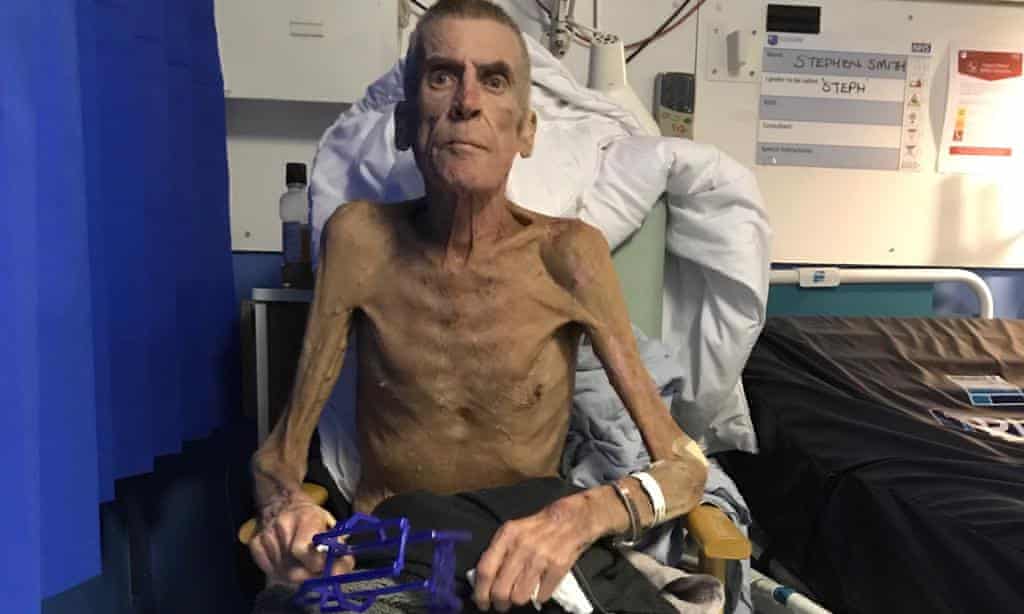
Yes, what I’m saying is political; but it is not intended to be party political. It’s true whether you’re Labour or LibDem or Conservative. The important thing is that we’re Christians. I’m saying that, as Christians, we should have a view on these things. We should call them out; we should stand against them, because we are Christians. We should, if we have a spare room, consider welcoming some refugees to stay with us when they first arrive. We should tell our politicians that it’s not acceptable not to put sprinklers in high rise council blocks like Grenfell Tower, (even though government ministers have promised to do it); tell our politicians it’s not acceptable not to pay proper compensation to the people whose lives have been ruined by the Windrush scandal; it’s not acceptable that thousands of people – last year, over 4,000 – are denied benefits on the grounds that they are fit to work, and then are so ill that they die within three months of that decision. It’s not acceptable that the newspapers should be full of pictures of a poor man, Stephen Smith, so emaciated that his bones are sticking out, so obviously desperately ill, denied benefits, on the ground that he is ‘fit to work’: he died. But not until he had won an appeal in court, as 70% of the appeals are won. [See https://www.theguardian.com/commentisfree/2019/apr/22/stephen-smith-benefits-system-dying]

This institutional meanness doesn’t just come out of the air. Just as we are saints and angels with the Holy Spirit in us, we have God’s power in us. We are not impotent. We have God’s power to do something about it. We need to speak to our MP, to write letters, to demonstrate on the streets if necessary, to rise up.

So today the message, the Easter message, is that we have seen the Lord. We have seen him at work in our fellow saints and angels. Let us join them, let us take that divine power and use it.

Stephen Smith

Sermon for the Third Sunday before Lent, 17th February 2019

Jeremiah 17:5-10; 1 Corinthians 15:12-20; Luke 6:17-26 – see http://bible.oremus.org/?ql=417352294

I have to tell you that, when I read the Bible lessons for today, my sermon pretty much wrote itself. That’s because today we are given a sort of potted guide to several key points in our Christian religion. It’s a different angle on some of the most important things we say in the Creed. See if you agree.

Yesterday we had our Marriage Enrichment day, for everyone who is going to get married at St Mary’s this year – I don’t know whether it was Godfrey’s cunning plan, to schedule it nearly on St Valentine’s Day, or whether it just came out that way. Be that as it may, I had a sneak preview when I was helping to set up the lantern slides for it.

I was impressed by one slide which listed ‘Six Topics’ – actually with an exclamation mark, ‘Six Topics!’ in a marriage. They were Money, Time, Sex, Children, Communication and Difficult times/Conflict (which is really two topics, but never mind). But the interesting bit was that on the side of the picture, alongside the list of the six (or seven) topics, was, in big handwritten style, ‘+Faith’, you know, the word ‘Faith’ in big swirly letters, with a plus sign in front of it. Add faith.

That’s the point of lesson number one today, our Old Testament lesson. Add faith. ‘Cursed are those who trust in mere mortals … whose hearts turn away from the Lord.’ But ‘Blessed are those who trust in the Lord. … They shall be like a tree planted by water … in the year of drought it is not anxious, and it does not cease to bear fruit.’ If people didn’t get so bogged down in everyday life, if they didn’t forget to think of God, perhaps to say their prayers a bit, and to read their Bible, things would go better. God will be with them in the difficult times.

But what is the faith which you need to add, for a successful marriage – or, following the prophet Jeremiah, for a fruitful life?

You could just say to our wedding couples – and have we got anyone here this morning who went to the course yesterday? Or was it enough to be going on with? Anyway, you could just say to them, ‘Pay attention to the words of the Creed. I believe …’ – I believe: in what? What do Christians believe in?

Incidentally, I think it’s important not to get too stuck on saying ‘I’. ‘I believe’. It may be more honest to say, ‘We believe. We.’ There may be some less important things that we struggle with, but we can say the Creed all together, if we say ‘we’, and if we mean, ‘This is what Christians as a body subscribe to – and I’m in that group.’ It need not mean that, in order to belong to the church, you have to believe in every detail. You can just be happy to belong.

So back to the question, what do we believe, as Christians? What is our faith? Our other two lessons, from St Paul’s First Letter to the Corinthians, and from St Luke chapter 6, will give us some more important pointers.

You’ll note that, although we’ve just done our marriage enrichment course, the lesson from 1 Corinthians isn’t the normal wedding one, ‘Though I speak with the tongues of men and of angels, and have not charity, I am become a sounding brass, or a tinkling cymbal’. Oh, all right, ‘… if I speak with the tongues of men and of angels, and have not love’. It’s ‘love’ in a wedding, not charity. But we’re not doing that bit. We’re looking at the fifteenth chapter, about the resurrection of the dead. That, that’s a key point in Christian faith. Faith in the resurrection, in life after death. Starting with Jesus himself, and then growing into what in the funeral service we call the ‘sure and certain hope’ of eternal life. We often have 1 Corinthians 15 at funerals. We have it because St Paul really goes into this key bit of faith, faith in eternal life, in a resurrection of the dead.

St Paul’s letter reads a bit like the transcript of one side of a telephone conversation. We can’t hear exactly what the Corinthians were saying: but it’s pretty clear that some of them were poo-pooing the possibility of life after death. St Paul points out the logical implications of that. If there is no chance of resurrection, then the whole basis of our faith, our belief that Jesus was raised from the dead, would be contradicted. So one of the key points in Christian faith is a belief in life after death – and in particular a belief that Jesus was the first one to be resurrected.

It’s such an extraordinary thing, so contrary to all the laws of nature, that it is difficult to believe. So St Paul goes on, after the passage which we have read today, to tackle the question not just that the dead are raised, but how they are raised. It can be your homework today. Read the rest of chapter 15 of 1 Corinthians. Even if you are a Darwinist, there’s nothing in it to upset your scientific understanding. I won’t spoil it.

So in our first two lessons we see two pillars of our Christian faith, that you need faith, if your life is going to be fruitful – that you shouldn’t try to ignore the Divine – and that our Christian faith is centred on Jesus’ resurrection from the dead. It is a sign, a vital sign. We believe that the empty tomb was real. And then, we believe in what Jesus’ death and resurrection meant, in who Jesus really was, and in what he did. That Jesus is God, God with us. But note that as St Paul says, if that really is too much to stomach, then you need to know what it is you are dismissing. You can’t have Jesus without His resurrection. Without it, he’s not God.

And then in St Luke’s Gospel we go on to hear what the effect of Jesus, the effect of His coming, is, and what it still can be. Our lesson is St Luke’s version of the Sermon on the Mount, Jesus’ great statement of what you must do, if you really follow His teaching. First of all he states how contrarian, how back-to-front, Christianity is. Basically in those days, just as it is today, people tended to equate material success and prosperity with virtue. You couldn’t live in such a lovely house; you couldn’t really have such a nice car, unless you were basically doing the right thing, unless you were a good person. Scruffy people must really be pretty useless, you’re tempted to think. No wonder they’re living in damp rented flats if they only bothered to get one GCSE – in some non-subject or other. Feckless.

But Jesus says that if you’re poor, or hungry, or sad, it’s not a question of blame. There’s no such thing as the deserving – or undeserving – poor. They are ‘Μακαριος’ in the Greek, blessed. That’s what the poor are, what the hungry are. Jesus turns things upside-down. This passage of ‘beatitudes’, blessings, ‘Blessed are the .. [whoever it is]’, runs into the really revolutionary bit, ‘Love your enemies, turn the other cheek, lend without expecting to be repaid.’ Don’t rush to judge someone – it could be you next. All those great, generous ideas – but the problem is that no-one really follows them. Because people say that just as resurrection can’t be real, in real life turning the other cheek is a lovely idea in theory, but it can’t be practical.

But what Jesus is advocating is a bit like what St Paul was saying about resurrection, about life after death. If you’ve got no faith in it, you’ve thrown the baby out with the bathwater. If you make faithful-sounding noises, if you tell everyone you’ve been saved, but you still think that rich people must somehow be better people, and poor people must really be a bit useless, a bit feckless – if being saved doesn’t make any difference to what you do, to how you treat people, then Jesus is there to tell you you’re just not getting it yet.

This is a neat way for me to round off what I’m saying. Godfrey and I are going to be running a Lent Bible study course, and the theme is going to be exactly what our Gospel today was about – the Beatitudes. I do hope you will come. We’ll have a session in the daytime and a session in the evening. I hope you will feel blessed at the end of it – and that you will see that being blessed isn’t the same as being comfortably off. You will need to add faith.

Sermon for Holy Communion for SS Simon and Jude, 28th October 2018

Ephesians 2:19-end; John 15:17-end

Today along with most of the churches in the western world we are commemorating two apostles whom we know very little about, St Simon and St Jude.

There were two Judes, two Judases. We’re not quite sure who this one was, because in the four Gospels he is described as being various things. In St Matthew and St Mark he is not called Judas but Thaddeus, which might be a surname; it is only in Saint Luke and the Acts of the Apostles that he is called Jude. St Jude was not the same as Judas Iscariot, although his name in Greek is the same, Ιουδας. People historically haven’t chosen him to invoke in prayer, because they think he might get mixed up with Judas Iscariot. So he is called the patron saint of lost causes – ‘If all else fails, offer a prayer through St Jude’. The little letter of Jude in the New Testament was not written by this Jude, according to many scholars. In St Luke’s Gospel Jude is described as the son of James the brother of Jesus. ‘Jude the Obscure’, which was the title of one of Thomas Hardy’s novels, is an apt name for him.

Simon – not Simon Peter – had been a terrorist – a real terrorist. He had been a member of the Zealots, who were a Jewish extremist sect that believed that the Jews were supposed to be a free and independent nation; that God alone would be their king, and that any payment of taxes to the Romans or accepting their rule was a blasphemy against God. They were violent. They attacked both Romans and any Jews who they thought were collaborating with the Romans. Simon had been one of them.

So the Apostles were a motley assortment. Humble fishermen; a tax collector; a terrorist (although of course, depending on your point of view, one man’s terrorist is another man’s freedom fighter); James and John, the ‘Sons of Thunder’, whatever that means. It certainly doesn’t sound meek and mild. And of course, Judas Iscariot; the other Jude. Jesus wasn’t choosing people whom we would think of as saintly.

But there isn’t an awful lot that we know about Simon the Zealot and Jude – Jude-not-that-Jude. So our Bible readings today, the message from St Paul’s letter to the Ephesians, ‘You are no longer aliens in a foreign land,’ and the message from St John’s Gospel, about Christians not belonging to the world, are not about them, but rather they are a reminder of some of the teaching that Jesus – and after him, St Paul – gave to the Apostles and to the early Christians.

Paul’s letter to the Ephesians has a great theme of ‘reconciliation’: St Paul’s great mission was to bring the Gospel to the non-Jews, the Gentiles, so that Christianity wasn’t just a subdivision of Jewishness. ‘You are no longer aliens in a foreign land.’ Perhaps it’s not so topical for us nowadays.

But in Jesus’ own teaching, from St John’s Gospel (chapter 15) that we heard this morning, packed into these few lines there are some really deep meanings which still help us to understand the nature of God.

Jesus said, ’Because you do not belong to the world … For that reason the world hates you.’ In Jesus’ day and in that Roman world, being a Christian was definitely dangerous, simply because Christians didn’t worship the Roman emperor as a god. In the reign of some emperors, for example Diocletian, it meant that large numbers of Christians were fed to the lions.

It’s still to some extent true today, in parts of the Middle East and in Northern Nigeria, that Christians are persecuted. But by and large in our part of Surrey, it’s not really controversial to say that you are a Christian. But I do think that perhaps we still should reflect on what it means ‘not to belong to the world’. You don’t ‘breathe the same air’, as people sometimes say. Are we sometimes tempted to keep our religious belief out of things, for fear of offending people? But Jesus said here, don’t be afraid of being different.

What about the next proposition in this teaching passage, ‘Servants are not greater than their master’? The translation is actually wrong. The word isn’t ‘servant’, but ‘slave’, δουλος in Greek. This word also means what was called a ‘bondsman’, somebody who was indentured, bought. In the Roman empire, bondsmen, indentured slaves, could buy their freedom. Their bonds could be remitted, they could be ransomed.

It seems to me that these words surely have echoes of the idea of redemption, that by Jesus’ sacrifice he has purchased our remission from the slavery of sin. Jesus has bought us out, redeemed us. We are no longer slaves. Earlier on in chapter 15, indeed Jesus does say, ‘I call you slaves no longer’.

‘The people who hate you’, Jesus said, ‘do not know the one who sent me’. Again: ‘… the one who sent me.’ This is a reminder of the way that Christians understand God ‘in three persons’, as the Holy Trinity, father, son and Holy Spirit. (Jesus comes to the Holy Spirit later on, when he talks about sending what he calls the ‘Advocate’, the spirit of truth, after he has gone. Here, it’s just him and the One who sent him).

Here we can see what caused some of the controversy in the early church, which ended up in the Council of Nicaea in the fourth century, and in our Nicene Creed. If God ‘sent’ Jesus, the Son, was Jesus also God, or just another creature? And depending on the answer to that question, where did the Holy Spirit come from? God, or God-and-Jesus? And again, was the Spirit, is the Spirit – remember, ‘His Spirit is with us’, we say – is the Spirit made by God, or is it God itself?

If you don’t think of God as a nice old chap with a beard sitting on top of the clouds – and since the sixties, at least, since Bishop John Robinson’s wonderful little book, ‘Honest to God’ [Robinson, J. (1963), Honest to God, London, SCM Press], we mostly don’t – how can we understand the Holy Trinity? Try the logical, a priori, back to logical first principles, way that Professor Richard Swinburne, the great Oxford philosopher of religion, has set out in his book ‘Was Jesus God?’ [Swinburne, R. (2008) Was Jesus God? Oxford, OUP, p.28f]. It goes like this.

There is a ‘divine person’ who is omnipotent, omniscient, perfectly free and eternal. Let us call that person ‘God’. Because He is omnipotent, omniscient, perfectly free and eternal, God is perfectly good.

God could exist alone, but being perfectly good means he won’t be selfish; He will have to have a object for His love. Perfect love is love of an equal: a perfectly good person will seek to bring about another such person, an equal, with whom to share all that he has. That other person is the Son.

But the Son didn’t, in fact, come after the Father. As a matter of logic, because they are perfect, ’At each moment of everlasting time the Father must always cause the Son to exist, and so always keep the Son in being.’

But then, Swinburne says, ’A twosome can be selfish’. ‘The love of the Father for the Son must include a wish to cooperate with the Son in further total sharing with an equal; and hence the need for a third member of the Trinity’ And that is the Holy Spirit.

For the same logical reasons, the Spirit isn’t something ‘made’ by God. As we say in the Creed, the Spirit ‘proceeds from’ the Father, or the Father and the Son. (Saying ‘proceeds from’ is perhaps a philosophical cop-out. We can’t say exactly how the Spirit gets here). The Three-in-One are, is, there. The Trinity is in a sense caused by the One, by God. But it is one with God. The Father, the Son and the Holy Spirit. Three ways of being God.

One more nugget of theology. Jesus says, at verse 24, about the heathen, the worldly people, ’If I had not come and spoken to them, they would not be guilty of sin; but now they have both seen and hated both me and my Father’. It seems that Jesus has a different concept of guilt or criminal responsibility from the one we’re familiar with. We say that ignorance is no defence. Something is either lawful or it isn’t. You might think that sin worked the same way. Something is either sinful or it isn’t, surely, isn’t it sinful, irrespective whether you know it or not? But Jesus has this different idea – you’ll find it also in St Paul’s letter to the Romans [7:7] – that heathens, who know nothing about sin, are not sinful. What makes someone sinful, or capable of being sinful, is being ‘fixed with knowledge’, as a lawyer would put it. So it looks as though ignorance is a defence, where sin is concerned.

But that is perhaps an indication that to ‘sin’ is not the same thing as to do bad things, to do evil, even. The point about sin is that it is a separation, a turning of your back on, God. And you can’t do that, if you don’t know about God in the first place. Of course, if you are sinful, if you have turned your back on God, you may well do bad things. If you are saved by grace, you will show it by your good works. If you aren’t, if you are lost, you will show it by the bad things you do. St Paul sets it out in Galatians chapter 5.

What a concentrated lesson for his disciples it was from Jesus!

– What it means that the Father is ‘the One who sent me’;

– what it means that because of me, the Son, you are no longer servants, or really slaves; and,

– what it means that Jesus will get the Spirit to come to you. (That is the ‘Advocate’, what the Prayer Book and the Authorised Version of the Bible calls the Comforter, ό παρακλητος).

The common thread, the theme of Jesus’ teaching here, might perhaps be relationships, relationships between people, and with God. And the currency used in those relationships. Hate – ‘the world hates you’; service – Jesus has bought us out, redeemed us, so we are no longer slaves; comfort, the Holy Spirit, the Comforter; and love – love from ‘the one who sent me’. And ‘the greatest of these is love’, as you know. [1 Corinthians 13]

Sometimes it’s good to think about these lessons that Jesus taught, never mind who was listening to him. It could even be you, as well as Simon-not-Peter or Jude-not-Judas.

Sermon for Evensong on the 21st Sunday after Trinity, 21st October 2018

Psalm 141: Matthew 12:1-21 – ‘Smite me Friendly’

Set a watch, O Lord, before my mouth 

 and keep the door of my lips.

  O let not mine heart be inclined to any evil thing 

 let me not be occupied in ungodly works with the men that work wickedness, lest I eat of such things as please them.

  Let the righteous rather smite me friendly 

 and reprove me.

That’s from Psalm 141, which is the one set in the Lectionary for tonight.

‘Set a watch, O Lord, before my mouth

and keep the door of my lips.’ Make sure that I only say the right things. But if I should inadvertently stray off-piste,

‘Let the righteous rather smite me friendly

and reprove me.’

I rather like the idea that the righteous should ‘smite me friendly’! Anyway, I have been warned.

As quite a lot of you know, I haven’t been very well. I’ll spare you the details, but I spent a week in Epsom Hospital three weeks ago, and then had a quiet week at my daughter Alice’s outside Exeter, before spending last week getting back up to speed at home in Cobham. It was very nice to hear from so many friends from St Mary’s, and to have some lovely visits too. Thank you for all your kindness!

I don’t know what it is that makes this happen, but my irregular stays in hospital have coincided with momentous events in the world outside. The last time I was in Epsom Hospital, in 1997, coincided with the death of poor Princess Di. I became quite an expert on all the various theories and odd facts surrounding that sad story. Now, just recently, and again in Epsom Hospital, I’ve been trying to keep on top of all the twists and turns in the Brexit negotiations, and particularly the ideas which our government and the European Commission have each come up with in order to avoid creating a ‘hard border’ around Northern Ireland.

Now you will realise why I adopted the ‘smite me friendly’ words from Psalm 141. I may find that you’re smiting me, but not friendly, if I’m not careful when I talk about Brexit!

Well, here’s the thing. There’s a nightmarishness about all the twists and turns of the Brexit process. If you go one way, you bump into an obstacle, perhaps something we’ve agreed beforehand or that Parliament has decided on, which rules out what you now think might be a good idea. So you turn down another entrance, and head off in another direction. You come up with something that you think will square with what the EU will accept – but your own MPs don’t like it. Nightmare. And of course, all the time there are plenty of people reminding you that they feel that nothing can compare with what we already have, as members of the European Union.

People are very passionate about it. Friendships have been broken. Families aren’t speaking to each other. And the worrying thing is, that no-one seems to agree how to decide who is right. People cling to the principle of democracy. More people voted to leave than to remain: 52% to 48%. But other people point out that 67% didn’t vote to leave. So people even disagree about what the democratic outcome was.

A factor in all this, this inability to decide who is right, is that there has been a lot of cheating and lying. There was the infamous red bus which had a banner down each side saying that, if we left the EU, there would be £350m a week more for the NHS – whereas even before Brexit day, as soon as the vote to leave was passed, the NHS has taken huge hits, from the devaluation of the £, making many drugs 20% more expensive, from doctors and nurses from the EU leaving, because they feel that the Brexit vote shows that people don’t like them – and from the 98% drop in numbers of nurses from the other EU countries applying to work here. The message on the bus was a wicked lie.

How do people know whom to believe? What is true in all this? Is it just a question of shouting louder?

Sitting in my hospital bed, and on Dr Alice, my daughter’s, couch, I started to wonder. Does it make a difference if you are a Christian? What would Jesus have done?

Today’s lesson from St Matthew shows him facing a rather similar set of conundrums to the ones that Mrs May and Dominic Raab, our MP, who’s now the Brexit minister, have to wrestle with. The question of eating on the Sabbath. Maybe what was held to be wrong extended to the act of gleaning, picking up the ears of wheat left at the edge of the field. Healing sick people, again on the Sabbath Day. Conflicting realities. Being hungry; worse, being ill: and you have the means to solve the problem. You can see where there is food freely available. Just pick it up. You have the power of healing. Just get him to stretch out his withered hand, and you can restore it to full strength. Does it matter if the Sabbath rules make it wrong to do these things?

Jesus gives a scholarly answer. He quotes the Hebrew scriptures to show that there are exceptions. King David and his men ate the bread offered on the altar in the Temple when they were hungry, which was something only the priests were allowed to do. Jesus pointed out that they had moved on from the limits of the old Temple worship. He was here. He was something else, something more. In Hosea [6:6] is a prophecy which includes these words, ‘I will have mercy and not sacrifice’. In Hosea those words follow a prophecy about rising again from the grave on the third day. This is all about Jesus, Jesus as much more than just a teacher, a rabbi. More than ‘a priest of the order of Melchizedek’ as the letter to the Hebrews describes him. (Hebrews 5:5, 5:10)

And he goes on to give the lovely example of a shepherd rescuing one of his sheep which has fallen into a pit on the sabbath day. We always want to help if an animal is trapped or hurt. That is why I was angry the other day when our local Painshill animal rescue team were not able to be on duty because the austerity cuts had reduced their numbers, so that a cow which had fallen into a ditch locally, and was in distress, had to wait for a crew from Sussex to come. Never mind what Jesus would say about austerity – the point is that He said that the animal, the sheep, must be saved, whatever day it is.

And finally Jesus quoted from Isaiah chapter 42, a prophecy again about the Messiah. Gentle, quiet – and trusted, even by the Gentiles, the non-Jews. ‘A bruised reed he shall not break’.

What can we bring from this, from how Jesus squared the circle with the Pharisees about what you can and can’t do on the Sabbath? He, Jesus, rises above any day-to-day considerations. The Temple rules don’t apply to him. But almost more important, Jesus is the servant, the gentle spirit of kindness. He expects mercy, not ritual sacrifice. It’s not about Him, but about the ones in need. The man with the withered hand, maybe a Thalidomide victim, in today’s world; the sheep which has fallen down into a hole.

So what could we learn from Jesus about the Brexit ‘conundrum’, as Godfrey [Revd Godfrey Hilliard, Rector of Stoke D’Abernon] calls it? What principles can we use as followers of Jesus, as Christians? Obviously no-one can say for sure what Jesus would have said or done. But surely it would be good if we at least thought about it.

Would Jesus have wanted the Jews, his people, to get their independence from the Romans? Was it a bad thing to belong to the great Roman empire? After all, St Paul did very well out of being able to say, ‘Civis Romanus sum’ (‘I am a Roman citizen’, Acts 22, after Cicero, In Verrem, 2.5.162) – and indeed he was very proud of being able to say that. Jesus himself seems to have felt the same way: ‘render unto Caesar that which is Caesar’s’, is what he said. (Matt.22:21)

What about immigration? The Jewish law protected the widow, the orphan – and ‘the stranger that is within thy gate’ (Deut. 10:19, Leviticus 19:34). That stranger is in the same position as the injured man in the story of the Good Samaritan. He was saved by a Samaritan, who was a foreigner, not someone Jewish people would ordinarily have wanted to have living next door. But this foreigner showed compassion and kindness. He showed that human dignity, human rights, the right to life, the right to medical treatment if you are hurt, are far more important than nationalistic considerations. Being a neighbour, a good neighbour, is far more important than what flag you fly.

But as I sat on Alice’s couch I realised that I wasn’t hearing those sort of arguments very much. There are some of our bishops who have said things along the same lines. [See, e.g., https://www.churchtimes.co.uk/articles/2016/1-july/news/uk/church-leaders-seek-to-unite-divided-country] But it occurred to me that we ought to try to work through it, through the Brexit conundrum, with Jesus on our shoulder. What would He think of as important? Would He ‘smite anyone friendly’ for things they said? What about that red bus? What else do the politicians know about that they aren’t telling the ordinary people? Aren’t all the doctors and nurses from other countries who work in our NHS ‘Good Samaritans’, just as Jesus would have wanted?

And we, when we argue passionately for one side or the other, do we give any thought to what our Christian faith might bring to the argument? And if not, why not? I have a feeling that things might work out rather better if we did – and if our leaders remembered Psalm 141.

Set a watch, O Lord, before my mouth 

 and keep the door of my lips.

  O let not mine heart be inclined to any evil thing 

 let me not be occupied in ungodly works ….

  Let the righteous rather smite me friendly 

 and reprove me.