Archives for posts with tag: fasting

Sermon for Evensong on the First Sunday in Lent, 9th March 2025

At St Peter’s Church, Old Cogan

Jonah 3

Luke 18:9-14

https://bible.oremus.org/?ql=608348962

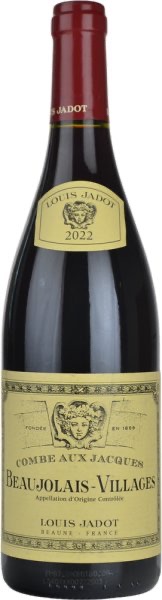
Last Wednesday, Ash Wednesday, I did some shopping in one of our local supermarkets. I accidentally walked down the aisle containing wine and beer, and stumbled across Beaujolais Villages from one of the finest Burgundy producers, rather curiously marked as ‘clearance’ – at less than half the normal price. 

Now on the first day of Lent this was rather a challenge. Could I resist buying it at less than half price? On Ash Wednesday it was the start of Lent, and one of the things which one is supposed to do is to give things up, to fast. What was I supposed to do about this wonderful wine bargain? 

At the same time I was starting to think about this service, and what I would say to you in my sermon. I looked at our Bible lessons prescribed for today, and came across the third chapter of the little book of Jonah.

A little like Louis Jadot’s fine Beaujolais, the passage chosen wasn’t quite what I had expected. That was nothing about the whale. If I asked you what you associate with the name of Jonah, I would be mighty impressed if the name ‘Nineveh’ was on your lips instead of something about a whale. 

Our lesson today tells you about Jonah going and uttering a prophecy to the people of Nineveh who have been misbehaving in a sinful way, telling them that God had warned that they would come to a bad end if they did not mend their ways. The ruler of Nineveh told the people to put on sackcloth and ashes, to put on visible signs of repentance, and to turn back to the true God. But you have to know that this is Jonah’s second go at this task from God. The first time around, when God was telling him to give this bad news to the people of Nineveh, he ran away, bought a passage on the ship and then, as a result of the ship being caught in a storm, he drew the short straw and was chucked overboard so as to lighten the load on the ship and to save it from being overwhelmed by the waves. And he was eaten up by a whale.

At this point when I am talking about the book of Jonah, as an ancient maritime lawyer I always use the opportunity to mention this as an early instance of the legal doctrine of general average, an “extraordinary sacrifice made to preserve the safety of the ‘maritime adventure’”, as the Marine Insurance Act1906, which is still good law, puts it; although general average doesn’t involve chucking people over the side as opposed to cargo or the ship’s tackle, of course, or making a special payment for services to prevent the ship being lost. So I won’t mention that particularly here but rather we should concentrate on Jonah’s encounter with the whale.

I’m not sufficiently up on marine biology to be able to express a view on how plausible this is as a literal account, but I think it is fine as a colourful illustration of how God might intervene to persuade somebody who was a bit reluctant. Jonah having been spat out safely, as you are, if you’re eaten by a whale, after three days, he was indeed persuaded, and he went and undertook his task. He told the people of Nineveh how awful they were, how they needed to change their ways, to repent: a bit like what we are supposed to do in Lent, I suppose. 

You can see why Jonah was reluctant. Being the bearer of bad news is never a popular thing to do, especially when you are speaking truth to power. It’s something we’ve noticed in recent days in the way in which our various leaders are not telling President Trump what time of day it is. 

Not but what Jonah, no doubt emboldened by his whaling experience, did deliver his message to the people of Nineveh, and he received a reception which was entirely different from what he had feared. God had noticed the fact that the people of Nineveh had changed their ways, and he did not punish them. 

So – what should we do? How should we change our ways in the 40 days leading up to Easter? What about fasting? Well, another thing to put into the mix is that we mustn’t crow about whatever it is that we do do; so if you are able to write a cheque for an eye-watering amount of money to the United Nations High Commissioner for Refugees, say, or even, maybe, for the Penarth Ministry Area, such that you make that gift instead of treating yourself to a holiday in Gstaad for skiing, you mustn’t talk about it. You mustn’t crow about it. Think about the Pharisee and the publican. All you should do is to ask the Lord for forgiveness because you are a sinner. Whatever sins you have committed, you just say, quietly and privately, ‘Have mercy on me, a sinner.’

I guess that bears on how you should conduct yourself at charity auctions. Maybe you will have to appoint a proxy to bid for you next time you are minded to go and support Welsh Rugby at some appropriate dinner or other, but I leave that to your discretion.

What about that Beaujolais? Well I offer this as a true story which may or may not inspire you. I know that I am very bad at giving things up, but equally I’m not sure that my giving things up really has any benefit to anybody else except possibly me. But I am enormously comforted by a verse in Isaiah about fasting. Let me quote it to you.

‘Is not this the fast that I choose: to loosen the bonds of injustice, to undo the thongs of the yoke, to let the oppressed go free, and to break every yoke? Is it not to share your bread with the hungry, and bring the homeless poor into your house; when you see the naked, to cover them, and not to hide yourself from your own kin?’ (Isaiah 58: 6,7)

Now I do think that that is more my kind of fast. So what I usually do – and I am going to do it this Lent – is, every time I eat out, (and that includes pies on the motorway), I will keep a note of what I spend; and at the end of Lent I will look at all those bills and work out what it would have cost to invite another person to join me each time: an absent guest, if you like. I will tot up the cost of the absent guests and I will give that to the United Nations High Commissioner for Refugees. Maybe that’s a sort of fast that you could undertake too. 

Oh – and, yes, about the Beaujolais. I bought three. 

Amen.

Hugh Bryant
Sermon for Evening Prayer on Saturday 7th March 2020 for the Prayer Book Society Guildford Branch, at the Founder’s Chapel, Charterhouse

Jeremiah 7:1-20; John 6:27-40 (see http://bible.oremus.org/?ql=450504242)

And Jesus said unto them, I am the bread of life: he that cometh to me shall never hunger; and he that believeth on me shall never thirst.

I want to speak to you not just about the bread of life, but also about baked beans and sausages. At the same time we can’t ignore that it is the end of the first week in Lent.

The baked beans and sausage, you might be a bit surprised to hear, bring into consideration two theologians, one ancient and one modern, and the bread and the Lent give us a topical Christian context for that food, which is, fasting.

And I suppose that the other ingredient which I need to work in is some reference to our beloved Book of Common Prayer, and the theological developments which Cranmer was influenced by in writing it.

The first thing to reassure you about is that there is no command to fast in the Gospels – except that Jesus said that he did not come to abolish the Law of Moses, but to fulfil it. So the days laid down for fasting in Leviticus, for example on the Day of Atonement, mean that it’s not strictly true that there’s no Biblical justification for fasting.

As you will know, the Reformation, which greatly influenced Cranmer, was led certainly by Martin Luther in Germany but also by Zwingli and Calvin in Switzerland.

Diarmaid MacCulloch has written, ‘It was a sausage that proved to be the rallying-cry for the Swiss Reformation.’ A Zurich printer, Christoph Froschauer, with Zwingli and 12 of his followers in Zurich sat down on the first Sunday in Lent in 1522 and ate two large sausages. Zwingli followed up by preaching a sermon in which he argued that it was unnecessary to follow the church’s traditional teaching about not eating meat during Lent. It was a human command introduced by the Church, which might or might not be observed, but which ‘obscured the real laws of God in the Gospel if it was made compulsory’. [MacCulloch, D., 2003, Reformation, London, Allen Lane, p139]. Cranmer and Zwingli are supposed to have met, and the Swiss reformer is thought to have influenced the English archbishop.

So that’s the sausage. In the Reformation context, according to Zwingli, fasting is not divinely ordained. It’s up to you.

Not but what by the time of the Second Book of Homilies, published in the Church of England in Queen Elizabeth’s time, in 1563, whose author was Bishop Jewel, there was a published sermon – a Homily – called ‘Of Fasting’, Homily number 16. The Homilies were intended for the use of vicars who were not good at preaching, so they didn’t make any theological mistakes. We tend to think of a ‘homily’ as a short sermon – the sort that the vicar doesn’t get into the pulpit to deliver, but perhaps hovers invisibly on the chancel steps for; something like Thought for the Day in size and weight. Not so in 1563! ‘An Homily of Good Works and of Fasting’ is in two parts, the first being about fasting, and in the modern edition which I have, it occupies 8 ½ pages of very dense small type!

Some of the early Christian Fathers such as Irenaeus or Chrysostom or Tertullian or Gregory the Great all debated how long a fast should go on for. The possibilities included one day, as on the Jewish Day of Atonement, or 40 hours, mirroring Jesus’ 40 days in the wilderness, or indeed 40 days of fasting.

The ‘Annotated Book of Common Prayer’, edited by the Revd John Henry Blunt, published in 1872, which I’m very fortunate to have a copy of, says this.

The general mode of fasting seems to have been to abstain from food until after 6 o’clock in the afternoon and even then not to partake of animal food or wine. Yet it may be doubted whether such a mode of life could have been continued day after day for six weeks by those whose duties called upon them for much physical exertion… and although it may seem at first that men ought to be able to fast in the 19th century as strictly as they did in the 16th, the 12th, or the third, yet it should be remembered that the continuous labour of life was unknown to the great majority of persons in ancient days, as it is at the present time in the eastern church and in southern Europe; and that the quantity and quality of the food which now forms a full meal is only equivalent to what would have been an extremely spare one until comparatively modern days.’

The Victorians were too busy safely to fast, and their meals were cuisine minceur by comparison with the groaning boards enjoyed in olden times. Think of what we know of Henry VIII’s diet, or Sir John Falstaff’s. Having a rest from eating was probably very good for them, and there was no risk of starving. Come the industrial revolution, however, and meat and two veg in the works canteen was all you might have. If you gave that up, ‘night starvation’, as the Horlicks advert used to warn, was a real possibility unless you had some nourishment at least.

But it’s at least arguable that Jesus, in our lesson from St John’s Gospel, wasn’t talking about the ins and outs of fasting. [6:27] ‘Labour not for the meat which perisheth, but for that meat which endureth unto everlasting life, which the Son of man shall give unto you..’ This leads up to one of the great ‘I am’ sayings in St John’s Gospel, ‘I am the bread of life’. Just as the name of God as He spoke to Moses in the Old Testament was ‘I am’, so in these sayings, Jesus is using the same form of words, giving a sign of his divine nature. And we are no longer thinking about whether or not to eat a sausage. This is spiritual, divine food, ‘meat which endureth unto everlasting life’.

And that, you’ll be amazed to know, brings us to baked beans, and to our second theologian. He is Jürgen Moltmann, the great German theologian, some time Professor of Systematic Theology at the University of Tübingen. (That is the same university at which Pope Benedict taught, once upon a time.) Moltmann is in his 90s now, and so it was a great honour for me to attend his lecture this week at Westminster Abbey, called ‘Theology of Hope’. This was the title of one of his famous books.

Prof. Moltmann comes originally from Hamburg. His excellent English still has the same accent that I know so well from my friends there in the shipping world. He was a boy when Hamburg was bombed, bombed by us, when there was the terrible ‘fire storm’ about which Kurt Vonnegut and others have written so eloquently. Moltmann was conscripted into the German army, and on Monday night he told us he had carefully learned two words of English, which he used when his platoon encountered the British Army for the first time. They were, ‘I surrender’. He told his audience that the abiding memory of his time as a prisoner of war was baked beans – which like all boys, he liked, and I think he still likes, very much.

So if the sausage in our baked beans and sausage is redolent of the Reformation, and the creation of the Book of Common Prayer, so the baked beans lead us to Jürgen Moltmann, and his Theology of Hope. What is this hope?

Moltmann saw, and still sees in the world today, great challenges in our life. They represent death, or even separation from God, which is another way of describing sin. Climate change, the destruction of God’s creation; nuclear war, where the use of nuclear weapons would end the world as we know it, because no-one could survive the nuclear winter. Division and separation among peoples instead of unity and co-operation; the erection or rebuilding of borders in contravention of God’s creation of all peoples as equals. The end time – what will happen when we die?

Maybe it’s not fanciful to say that this, this climate of despair, is somewhat reminiscent of Jesus being tempted in the wilderness. Lent is the right time for this kind of reflection.

Moltmann has argued that we should not despair or become nihilistic in the face of these challenges. Whereas we are often encouraged to have ‘faith’ when we have to confront these existential threats, Moltmann has suggested that what we really need, and what really reflects the presence of God in our lives, is hope. Hope, rather than faith.

For example, in the committal prayer at a funeral, the body is buried ‘in sure and certain hope of the resurrection to eternal life’. You might think that what you need at that end time, at the end of life, is faith, a strong faith. But Moltmann says no, not faith, but hope is what we need. The fact, the great revelation, of Jesus’ life on earth gives us the grounds for hope. It is more than a bare belief, more than blind faith. If I hope for something, I reasonably expect that it will be possible. It’s more than an intellectual construct.

So there we are. Baked Beans and Sausages. Should we abstain from bread, or meat, or drink? Certainly not from the Bread of Life. But if even our spiritual bread is disappearing, overwhelmed in the apocalypse, in what looks like the end time, then what? 500 years ago Zwingli said, don’t stop enjoying your sausage – give thanks to God for his bounty. In the smoking ruins of that great city of Hamburg at the end of WW2, Moltmann discovered Baked Beans, and with them, divine hope. I hope that that will give you some food for thought this Lent.